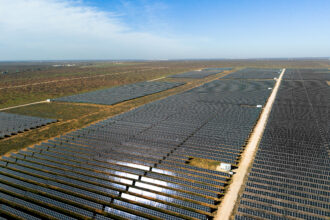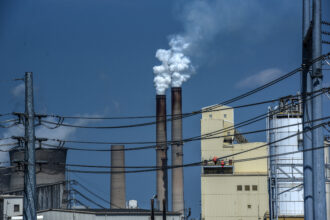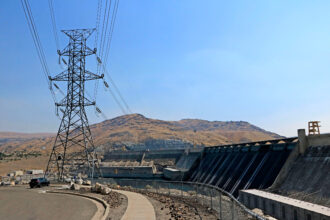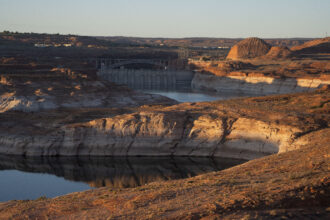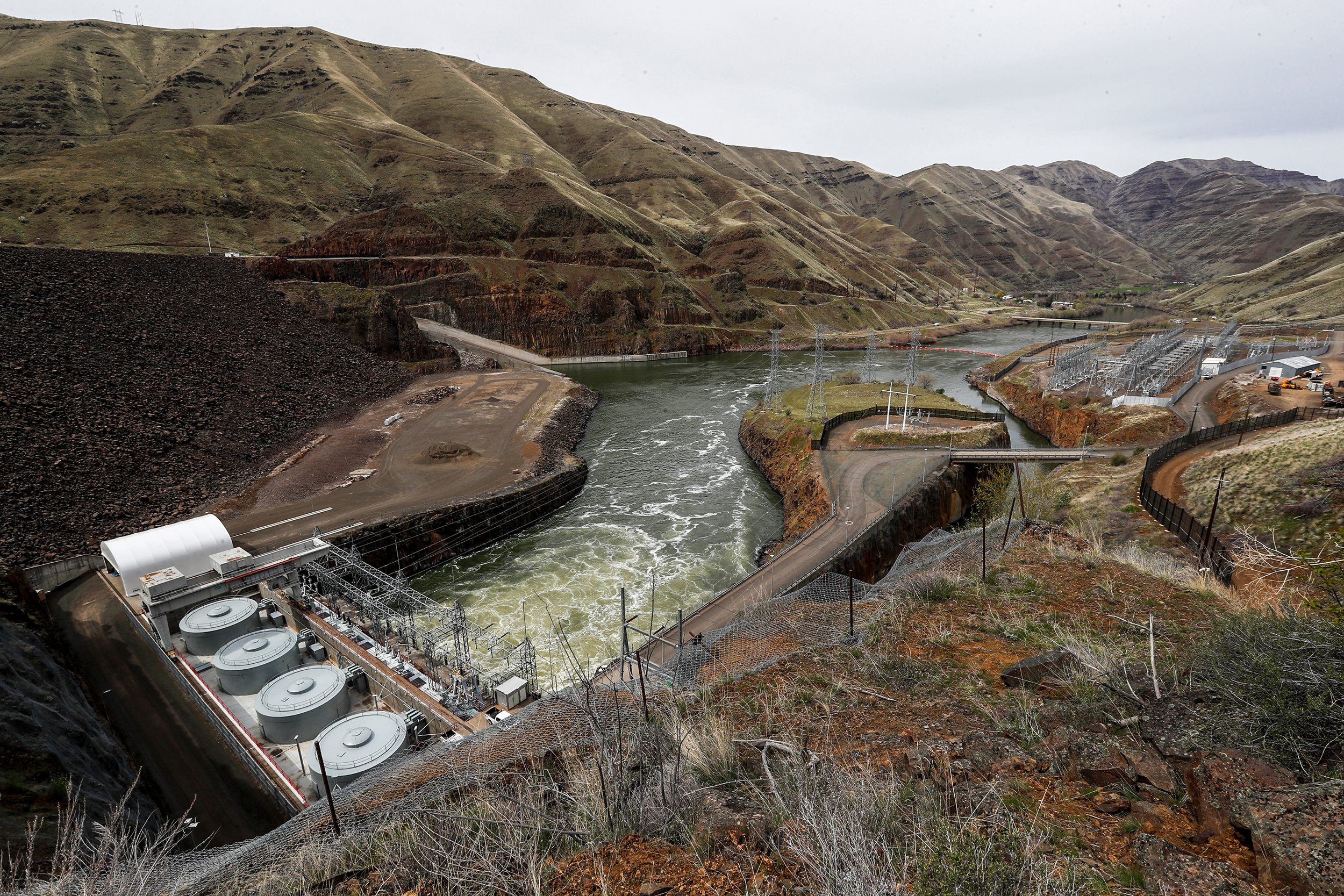


The International Energy Agency’s executive director has called hydropower a “forgotten giant,” and has urged governments to do more to remember it. U.S. President Donald Trump has said hydropower is “fantastic,” a sharp contrast to his disdain for wind and solar.
But federal energy data shows that U.S. hydropower output has been nearly flat while other sources are growing.
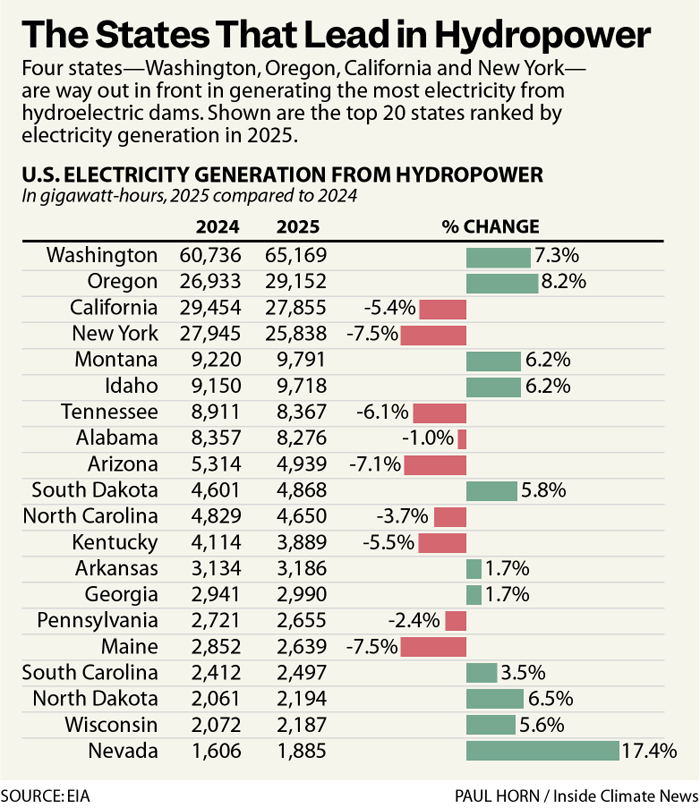
Last year, electricity generation from hydroelectric dams was up 1.7 percent from the prior year, according to the Energy Information Administration. The plants use the force of water to spin turbines and produce electricity.
Hydropower was long the country’s leading source of renewable energy, but it was passed in 2019 by wind and in 2025 by utility-scale solar. It’s still significant, though, with 5.6 percent of U.S. electricity generation. It’s the top electricity source in Washington state and Oregon and an important part of the mix in many other states.
Most U.S. hydroelectric dams are more than 50 years old and some are more than a century old. The last time more than 1,000 megawatts of new hydropower capacity went online in a year was in 1985.
Most recent U.S. projects are small, such as the 1-megawatt Waterman Turnout Hydroelectric Station, which went online in 2024 in San Bernardino County, California.
I spoke with Malcolm Woolf, president and CEO of the National Hydropower Association, to get an insider’s view of this power source. He and his members—which include utilities and equipment makers—are meeting this week in Washington, D.C., at their annual convention.
The association is lobbying the federal government to streamline the process to renew expiring licenses for old hydropower plants and to expand loan guarantees and other aid for new ones.
“Hydropower has never been more important on the grid,” he said.
Woolf previously worked for Advanced Energy United, a trade group for clean energy companies, and before that was head of the Maryland Energy Administration.
He said hydropower and pumped hydro energy storage are well-positioned to meet the rapid increase in electricity demand from data centers and the desire of many technology companies to use carbon-free electricity to power the centers.
In my view, hydropower is ripe for a U.S. renaissance, but it remains to be seen if utilities and investors will find this form of renewable energy compelling compared to other options.
The United States has 79,892 megawatts of hydropower capacity and 23,156 megawatts of pumped hydro storage capacity. For comparison, there are nearly 300,000 megawatts of combined cycle natural gas plants, the country’s leading electricity source.
Most of the projected growth is in pumped hydro storage, which is a form of long-duration energy storage. The plants pump water to a high elevation and store it in a reservoir for later use when the water is released and flows through a turbine to produce electricity.
Among the large pumped hydro storage plants in the works: Goldendale Energy Storage in Washington state, a 1,200-megawatt project from Rye Development and Copenhagen Infrastructure Partners. The project has obtained a license from the Federal Energy Regulatory Commission but still needs to secure agreements from electricity buyers.
Other pumped hydro projects are at earlier stages of development, such as Rorex Creek in Alabama, which the Tennessee Valley Authority would own.
Conventional hydropower development is more active in other countries, including some large projects. One recent example is the $12 billion, 1,100-megawatt Site C dam in British Columbia, which went online last year after 10 years of construction.
The project’s long timetable and high cost may help to explain the lack of activity in the United States. Hydro also shares similarities with nuclear power, another carbon-free electricity source with a hefty price tag that enjoys bipartisan support.
This story is funded by readers like you.
Our nonprofit newsroom provides award-winning climate coverage free of charge and advertising. We rely on donations from readers like you to keep going. Please donate now to support our work.
Donate NowHydropower has its environmental downsides. Environmental advocates and researchers have raised concerns about how dams lead to flooding that affects ecosystems and communities. Hydroelectric projects also have a long history of taking land from Indigenous communities.
And the industry faces questions about climate change and the effects of declining water levels.
“We know that climate change means, particularly out West, that we’re getting less snow in the winter and more rain in the spring,” Woolf said.
This leads to alterations in water flow patterns. While some regions, such as the Colorado River Basin, have seen low water levels and reduced hydropower, others have been steadier, he said.
Woolf pointed to several studies from the Pacific Northwest National Laboratory, including one from 2024 that projected hydropower output to increase, with the possible exception of some parts of the Southwest.
To get a better sense of potential climate effects, I spoke with Patrick Ray, a water resources engineer who teaches at the University of Cincinnati. He co-authored a 2022 paper that found that the impact of climate change on hydropower is “difficult to predict and not globally uniform.”
Ray said a shift toward more extreme weather, with heavy rains and less snow, may pose problems for hydropower for several reasons, including the possibility that water levels could be so high that some water goes over a spillway and can’t be used to produce electricity. And persistent drought reduces the output of hydropower plants.
But, he added, it’s difficult to assess what these changes will mean for how much electricity is produced.
Hydropower’s chief selling point is that water flows around the clock, so this power source isn’t as weather-dependent as wind or solar. A secondary selling point is that these plants will live longer than any person if properly maintained.
A look at the oldest operational plants in the EIA database shows a few hydropower dams dating to the late 1800s. The grandaddy is the Whiting dam, near Stevens Point, Wisconsin, which went online in 1891.
Unfortunately, much of the discussion among power developers today focuses on how to build quickly to serve data centers, with far less attention to the benefits of durability.
Other stories about the energy transition to take note of this week:
The Iran War Brings an Oil Price Shock: Oil prices soared to more than $100 per barrel on Monday as investors reacted to the conflict in Iran. The United States and others have had ample opportunity to reduce their exposure to high oil prices, but they have been slow to make the transition, as I report for ICN. “The biggest lesson: Oil—much like coal and gas—is a commodity,” said Gernot Wagner of Columbia Business School. “Its price will always fluctuate based on geopolitical whims. Solar, batteries, heat pumps, induction stoves are technologies. They can only get better and cheaper over time.”
Long-Duration Energy Storage Had a Growth Spurt in 2025: Long-duration energy storage capacity grew 49 percent last year compared to the prior year, as Brian Martucci reports for Utility Dive, summarizing data from Wood Mackenzie. In this case, Wood Mackenzie defines long-duration storage as a system that can discharge at its full capacity for more than four hours. While this segment of the market is growing in response to evolving needs from grid operators, it’s still just 6 percent of the energy storage market. The leading source of long-duration storage in 2025 was compressed air energy storage, which stores compressed air underground and then releases it to turn a turbine. Most of the development activity was in China—a recurring theme in the energy transition.
Offshore Wind Farms Race to Finish: Cleared by courts to resume work, five offshore wind farms in the United States are on track to hit construction or energy generation milestones this month, as Maria Gallucci reports for Canary Media. The projects had to pause in December following a stop-work order from the Trump administration. The largest one, the 2,600-megawatt Coastal Virginia Offshore Wind, is close to delivering electricity, and the others have also reported progress.
California Appeals Court Upholds Net Metering Changes, a Blow to Rooftop Solar: A California appeals court has affirmed a decision by state utility regulators to reduce the compensation that rooftop solar owners receive from selling excess electricity to the grid, as Ryan Kennedy reports for PV Magazine. The decision, which followed the California Supreme Court’s remand of the case, is a defeat for the Environmental Working Group and other appellants. California is the U.S. leader in rooftop solar, but the state’s policy change has hurt the market by reducing the financial benefits of owning solar panels.
Inside Clean Energy is ICN’s weekly bulletin of news and analysis about the energy transition. Send news tips and questions to [email protected].
About This Story
Perhaps you noticed: This story, like all the news we publish, is free to read. That’s because Inside Climate News is a 501c3 nonprofit organization. We do not charge a subscription fee, lock our news behind a paywall, or clutter our website with ads. We make our news on climate and the environment freely available to you and anyone who wants it.
That’s not all. We also share our news for free with scores of other media organizations around the country. Many of them can’t afford to do environmental journalism of their own. We’ve built bureaus from coast to coast to report local stories, collaborate with local newsrooms and co-publish articles so that this vital work is shared as widely as possible.
Two of us launched ICN in 2007. Six years later we earned a Pulitzer Prize for National Reporting, and now we run the oldest and largest dedicated climate newsroom in the nation. We tell the story in all its complexity. We hold polluters accountable. We expose environmental injustice. We debunk misinformation. We scrutinize solutions and inspire action.
Donations from readers like you fund every aspect of what we do. If you don’t already, will you support our ongoing work, our reporting on the biggest crisis facing our planet, and help us reach even more readers in more places?
Please take a moment to make a tax-deductible donation. Every one of them makes a difference.
Thank you,

Dan Gearino
Reporter, Clean Energy
Dan Gearino covers the business and policy of renewable energy and utilities, often with an emphasis on the midwestern United States. He is the main author of ICN’s Inside Clean Energy newsletter. He came to ICN in 2018 after a nine-year tenure at The Columbus Dispatch, where he covered the business of energy. Before that, he covered politics and business in Iowa and in New Hampshire. He grew up in Warren County, Iowa, just south of Des Moines, and lives in Columbus, Ohio.