

Scientists said this week that a developing El Niño is likely to amplify heatwaves, droughts and floods this year, but warned that the long-term warming caused by burning fossil fuels remains the main driver of climate extremes.
El Niño is the warm phase of a semi-regular temperature oscillation in the tropical Pacific Ocean, during which massive amounts of heat stored in the ocean are released into the atmosphere, temporarily raising the average annual global surface temperature by as much as 0.3 degrees Fahrenheit.
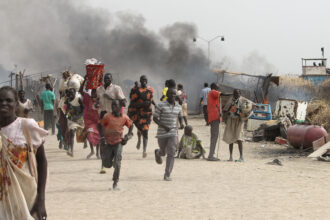
During an online briefing this week, researchers said that the consequences of a moderate or strong El Niño today are more damaging than those of similar events just a few decades ago because the entire global climate system is now substantially warmer.
If the projected El Niño emerges on top of that warmer climate, there is a “serious risk of unprecedented weather extremes” that would not have happened during similar historical El Niños, said Fredi Otto, a professor in climate science at Imperial College London and a lead researcher with World Weather Attribution, a research group assessing how global warming affects climate extremes.
El Niño conditions in 2015-2016 and 2023-2024 helped boost Earth’s long-running fever to new records; climatologists expect another spike in the months ahead. But the planet’s temperature will keep reaching new record highs in any case “because of human-induced climate change,” Otto said during the press conference.
World Weather Attribution has assessed the effects of global warming on more than 100 extreme climate events since 2014. Often, she said, those studies try to isolate El Niño’s role in a particular extreme event to accurately measure the effect of human-caused warming.
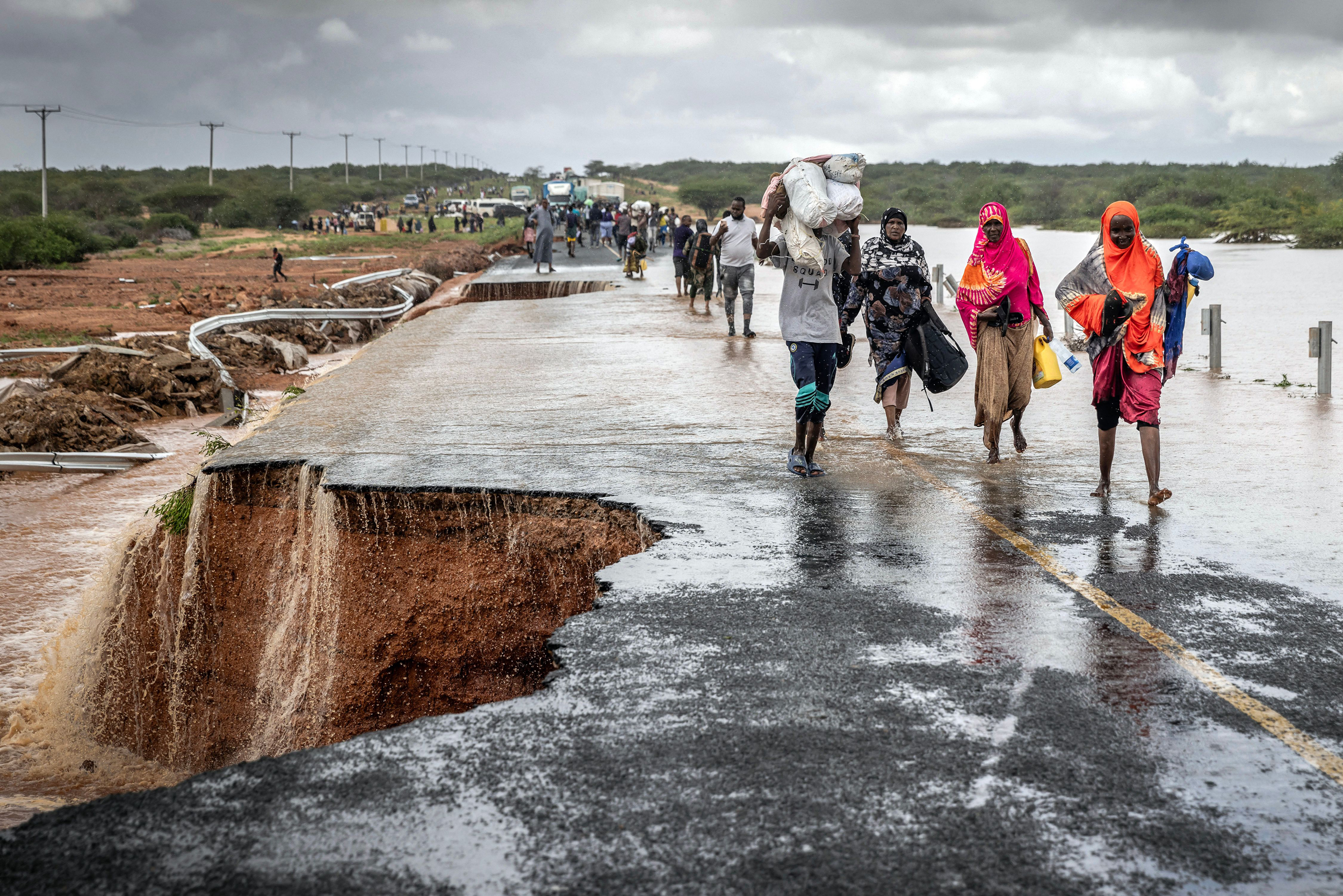
In almost every case, the WWA researchers found “human-induced climate change has a much greater influence on the likelihood and intensity of extreme weather events” than El Niño cycles, she said. One of their assessments showed that human-caused warming “far eclipsed” the effects of a strong El Niño on extreme rains in the Horn of Africa at the end of 2023.
Jemilah Mahmood, director of the Sunway Centre for Planetary Health at Sunway University in Indonesia, said during the press conference that the scientific projections for serious climate impacts from a combination of long-term warming and El Niño this year can be measured in terms of life and death, especially regarding extreme heat.
“Heat is exactly the kind of crisis that our systems are designed to ignore until it’s too late,” Mahmood said.
“It doesn’t arrive with a named storm or a visible floodline. It kills quietly, in homes, in open fields, in the bodies of workers who have no choice but to be outside,” she said, tallying grim statistics like the estimated 546,000 total annual heat-related global deaths.
“We have normalized a public health emergency by failing to name it as one,” she said. “Those who contributed the least to this crisis are often those paying the highest health costs, but that is the equity scandal at the heart of everything we are discussing today.”
“Severe Year” for Wildfires
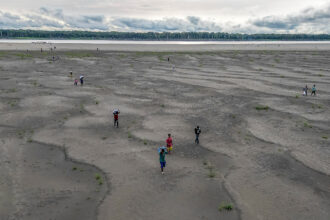
Hotspots at the confluence of El Niño-driven droughts and ongoing planetary heating are expected in wildfire-prone regions, including the Amazon, Canada, the western United States and Australia, the researchers said during the briefing.
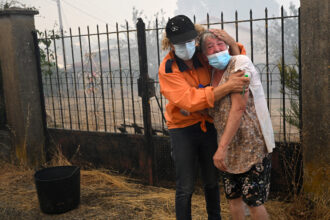
Theodore Keeping, a wildfire researcher at the University of Reading in England, said firefighters in those regions are bracing for a severe year, potentially facing some of the most damaging fire conditions seen in recent history. He noted that the combination of El Niño on top of ongoing warming has driven a “whiplash” between extreme moisture and extreme drought in some regions. Grasses and brush thrive during heavy rains, then dry out quickly when the heat returns, turning into combustible fuel.
This story is funded by readers like you.
Our nonprofit newsroom provides award-winning climate coverage free of charge and advertising. We rely on donations from readers like you to keep going. Please donate now to support our work.
Donate NowThis year, Keeping said, wildfires on several continents have already scorched an Alaska-sized area of land—more than half a million square miles—50 percent more than average over the past 25 years. Almost all countries in West Africa and the Sahel region of North-Central Africa experienced record-breaking wildfires, he added.
But wildfire season is only beginning in many parts of the world, so with “this rapid start, in combination with the forecast El Niño … we’re looking at a particularly severe year materializing,” he said.
Big fires that burned in “normally lusher regions” of East Asia, including Myanmar, Thailand and Laos, were associated with severe droughts that were, in turn, linked with human-caused climate change, he said. Scientists know that ecosystems are drying more rapidly during periods of low rainfall due to warming, he said, adding that “these fires are of particular concern, given how populated the region is.”
Keeping said that a strong El Niño “can have a major effect on wildfire risk” appearing later this year, which could increase the likelihood of severe hot and dry conditions in Australia, as well as the northwestern U.S. and Canada, and the Amazon rainforest.
Even if El Niño leads to “very extreme conditions later this year, it’s not a reason to freak out,” Otto said. “It comes and goes. Climate change, by contrast, gets worse and worse and worse as long as we do not stop burning fossil fuels. So climate change is the reason to freak out.”
A constructive response, she said, is within reach, “because we do know what to do about it. We have the knowledge and the technology to go very, very far away from using fossil fuels.”
About This Story
Perhaps you noticed: This story, like all the news we publish, is free to read. That’s because Inside Climate News is a 501c3 nonprofit organization. We do not charge a subscription fee, lock our news behind a paywall, or clutter our website with ads. We make our news on climate and the environment freely available to you and anyone who wants it.
That’s not all. We also share our news for free with scores of other media organizations around the country. Many of them can’t afford to do environmental journalism of their own. We’ve built bureaus from coast to coast to report local stories, collaborate with local newsrooms and co-publish articles so that this vital work is shared as widely as possible.
Two of us launched ICN in 2007. Six years later we earned a Pulitzer Prize for National Reporting, and now we run the oldest and largest dedicated climate newsroom in the nation. We tell the story in all its complexity. We hold polluters accountable. We expose environmental injustice. We debunk misinformation. We scrutinize solutions and inspire action.
Donations from readers like you fund every aspect of what we do. If you don’t already, will you support our ongoing work, our reporting on the biggest crisis facing our planet, and help us reach even more readers in more places?
Please take a moment to make a tax-deductible donation. Every one of them makes a difference.
Thank you,

Bob Berwyn
Reporter, Austria
Bob Berwyn is an Austria-based reporter who has covered climate science and international climate policy for more than a decade. Previously, he reported on the environment, endangered species and public lands for several Colorado newspapers, and also worked as editor and assistant editor at community newspapers in the Colorado Rockies.