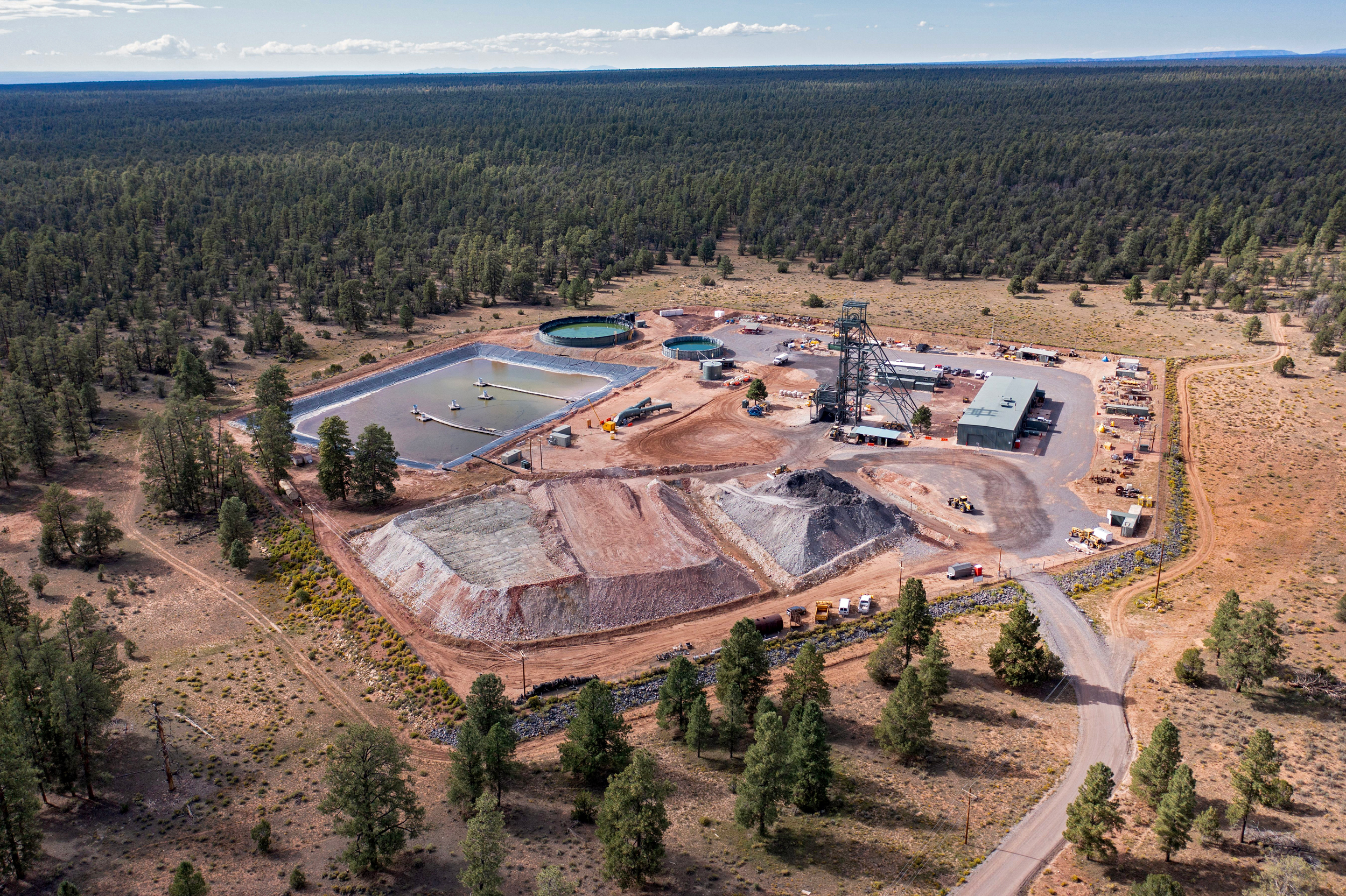


The Trump Administration on Tuesday finalized its repeal of the Bureau of Land Management’s Conservation and Landscape Health Rule, better known as the Public Lands Rule, which gave conservation activities on federal land equal priority with extractive uses like mining and logging. It’s the latest in what is now a long series of decisions from the Trump administration to prioritize industry use of the nation’s public lands.
Aspects of the rule, such as restoring degraded habitat and allowing developers to lease and protect intact public land to offset a project’s impacts on other public parcels, could inhibit resource extraction from the U.S. federal lands, the agency wrote.
“By rescinding the 2024 Rule, the BLM eliminates mechanisms—such as restoration and mitigation leasing—that threatened to restrict productive use of the public lands and introduced uncertainty and unnecessary burdens in planning and permitting,” the BLM wrote in its rescission of the rule in the Federal Register Monday before finalizing the decision Tuesday. “Existing authorities and tools remain sufficient to address conservation objectives without imposing prescriptive mandates or rigid timelines on public land users and the BLM itself.”
The nation’s 245 million acres of BLM land are guided by the Federal Lands Policy and Management Act of 1976, which mandates the agency manage them for multiple uses and sustained yield. But achieving that goal, whether for logging timber, mining minerals, grazing cattle or protecting wildlife—all mandated under the law—“depends on the resilience of ecosystems,” the Public Lands Rule said. The degradation of the nation’s landscapes due to climate change impacts like wildfires and habitat fragmentation from development threaten the durability of the land.
“Ecosystems that collapse due to disturbance cannot deliver ecosystem services, such as clean air and water, food and fiber, wildlife habitat, natural carbon storage, and more,” the Public Lands Rule said.
The BLM did not respond to a request for comment on its decision to rescind the rule.
The 2024 rule had the support of 92 percent of public comments the BLM received on it, and allowed for lands to be leased exclusively for conservation purposes, while also allowing project developers to lease public lands to be protected to counter something like a critical minerals mine built on other public tracts.
Experts said the Public Lands Rule was a natural extension of the 1976 act, which guides the BLM to balance the uses of the federal lands overseen by the agency, and to protect them for both current and future generations.
“You really can’t achieve that kind of multiple use and sustained yield without having some element of conservation in your management policy,” said Jamie Pleune, an associate professor and research fellow in the law and policy program at the University of Utah’s Wallace Stegner Center for Land, Resources, and the Environment, who was on the committee for the implementation of the rule and studied its legality.
But Republican lawmakers and developers criticized the rule, arguing it threatened the multiple-use mandate of the nation’s public lands and would prevent extractive uses.
Wyoming Gov. Mark Gordon celebrated the decision in a press release, calling it “a welcome return to the statutory principle of true multiple use on our public lands.”
Conservation groups and local government officials expressed outrage over the rule’s repeal.
“Putting conservation on the same playing field as other uses like mining, grazing and drilling is a common-sense approach that invites collaboration and lets Western communities like mine have a say when it comes to our most important resource—our public lands,” said Trisha Hedin, a commissioner for Grand County, Utah, home to Arches and Canyonlands national parks. “Our community depends on the health of public lands to attract visitors from all over the world. It is the backbone of our economy.
This story is funded by readers like you.
Our nonprofit newsroom provides award-winning climate coverage free of charge and advertising. We rely on donations from readers like you to keep going. Please donate now to support our work.
Donate NowJennifer Allen, a Pima County supervisor in Arizona, home to Tucson, said the rule allowed the county and partners to “thoughtfully manage the precious public lands that boost tourism, support our local economy and offer incredible opportunities to appreciate and be in awe of Arizona’s majestic desert.” Pima county is home to Saguaro National Park and Ironwood Forest National Monument. The monument is among those the Trump administration has considered downsizing in order to expand a nearby copper mine.
“Congress directed the BLM to manage public lands in a way that balances uses like outdoor recreation with needs as varied as grazing, energy development and conservation of wildlife habitat,” said Alison Flint, acting vice president for federal policy at The Wilderness Society, in a statement. “The administration’s rescission of the BLM Public Lands Rule flouts both the agency’s legal mandate and the overwhelming wishes of the American people for public lands to be managed in a balanced and sustainable way that conserves special places for future generations.”
The rollback of the Public Lands Rule is just one of many changes the Trump administration has implemented since taking office that affect the BLM and public lands, from laying off thousands of staff to executive orders prioritizing extractive uses like mining.
Changes like the rescission of the Public Lands Rule will likely lead to more permitting delays, said Pleune, whose research has found that issues with permitting applications, often caused by unclear rules and policies, were a leading source of holdups.
Programs that would have been implemented under the rule, like the mitigation leases, would likely have helped with that, setting up a market that made it easier to identify landscapes needing protection to make way for a developer’s project elsewhere. Conservation leases, Pleune said, would also subsidize the federal budget, allowing for interested parties like conservation groups to begin restoring damaged landscapes, like abandoned mine sites.
“The FLPMA statute says they’re intended to be managed for present and future generations and for the public good,” Pleune said. “I believe in that mission. I think it is honorable, and it’s a tradition that we should be proud of. I hope it will continue, although it seems like the current policies are more focused on short-term profit.”
About This Story
Perhaps you noticed: This story, like all the news we publish, is free to read. That’s because Inside Climate News is a 501c3 nonprofit organization. We do not charge a subscription fee, lock our news behind a paywall, or clutter our website with ads. We make our news on climate and the environment freely available to you and anyone who wants it.
That’s not all. We also share our news for free with scores of other media organizations around the country. Many of them can’t afford to do environmental journalism of their own. We’ve built bureaus from coast to coast to report local stories, collaborate with local newsrooms and co-publish articles so that this vital work is shared as widely as possible.
Two of us launched ICN in 2007. Six years later we earned a Pulitzer Prize for National Reporting, and now we run the oldest and largest dedicated climate newsroom in the nation. We tell the story in all its complexity. We hold polluters accountable. We expose environmental injustice. We debunk misinformation. We scrutinize solutions and inspire action.
Donations from readers like you fund every aspect of what we do. If you don’t already, will you support our ongoing work, our reporting on the biggest crisis facing our planet, and help us reach even more readers in more places?
Please take a moment to make a tax-deductible donation. Every one of them makes a difference.
Thank you,

Wyatt Myskow
Reporter, Phoenix
Wyatt Myskow covers drought, biodiversity and the renewable energy transition throughout the Western U.S. Based in Phoenix, he previously reported for The Arizona Republic and The Chronicle of Higher Education. Wyatt has lived in the Southwest since birth and graduated from Arizona State University with his bachelor’s degree in journalism.