

The true reasons for the Trump administration’s military intervention in Venezuela might be unknown, but there is little doubt that oil and money lie at the center of any resolution.
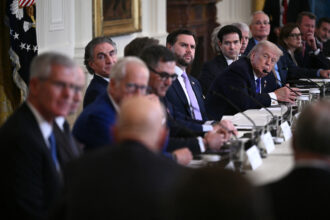
“We built Venezuela oil industry with American talent, drive and skill, and the socialist regime stole it from us,” President Donald Trump said when announcing the raid that seized Venezuelan President Nicolás Maduro. “America will never allow foreign powers to rob our people.”
American oil companies say they are owed billions of dollars by Venezuela, and the way they have pursued some of those claims offers a glimpse into a complex, arcane legal system that often avoids public scrutiny.
Known as investor-state dispute settlement, or ISDS, the system lets foreign investors sue governments before panels of arbitrators, usually corporate lawyers. These arbitrators can order governments to pay multi-billion-dollar awards without any ability to appeal to national or international courts.
Venezuela has faced more known ISDS claims than any other nation, more than 65, with about a third filed by oil and mining companies, according to the United Nations Trade and Development.
Most of the cases stem from nationalizations of oil and other industries in the 2000s and earlier, which defenders of ISDS say was why the system was created.
“This is exactly what classic ISDS is designed to protect investors from,” said Peter Griffin, a partner at Gaillard Banifatemi Shelbaya Disputes, an international law firm that specializes in arbitration.
The idea is that if a government takes control of a foreign-owned asset, investors have some recourse to get paid. However, multinational companies have also turned to the system to win hundreds of millions or even billions of dollars from developing nations that have enacted stricter environmental regulations or increased taxes on oil and mining.
Nikki Reisch, director of the climate and energy program at the Center for International Environmental Law, an advocacy group, said the Venezuela cases highlight how the ISDS system shields critical matters of public policy and finance from meaningful accountability. Details of some cases can remain secret for years or indefinitely. Arbitrators are generally not bound by precedent.
“ISDS is still a deeply problematic system that, even if it functions as designed, is an affront to national sovereignty, undermines democracy and puts private investors over the public interest,” Reisch said.
Now, the outstanding claims against Venezuela appear likely to play a role in what comes next and could help decide whether billions of dollars in oil-related profits flow to American companies or the South American nation.
Two of the largest claims were brought by ConocoPhillips and ExxonMobil in 2007. At the time, the Venezuelan government had enacted a law requiring the state to take majority ownership in oil projects. While some companies, including Chevron, struck deals and remained, others declined and exited. ConocoPhillips and ExxonMobil filed claims seeking $30.3 billion and $14.7 billion, respectively. The United States did not have a treaty with Venezuela that would have allowed them to file such claims, however, so the companies turned to subsidiaries in the Netherlands and filed through that country’s treaty, a phenomenon known as “treaty-shopping.”
ConocoPhillips eventually won an award of more than $8 billion. ExxonMobil was awarded $1.6 billion, a sum reduced in subsequent rulings. Neither has been paid, however, and both are now tied up in complex enforcement proceedings in U.S. courts.
In ExxonMobil’s case, Venezuela filed a motion in December arguing for more time to pay the $985 million it was deemed to owe. But to further complicate matters, because the U.S. government recognized an exiled government rather than the Maduro regime, the lawyers in that case were not actually representing the sitting government in Venezuela. Either way, last week ExxonMobil’s lawyers argued the seizure of Maduro and political turmoil were “irrelevant to the question before the Court.”
ExxonMobil did not respond to requests for comment.
A ConocoPhillips spokesperson declined to comment but pointed to a securities filing from September that said the company was still trying to collect $8.5 billion it was awarded, as well as money owed under two separate arbitration awards it had secured against the state-owned oil company worth a combined $2 billion plus interest.
Other claims are more recent. Halliburton, the U.S.-based oil field services companies, filed a claim in December, using a Barbados subsidiary to take advantage of that nation’s treaty with Venezuela. No filings have yet been made public and the company did not respond to a request for comment, but Halliburton was quoted by the news site Investment Arbitration Reporter that it was seeking payment for “past due amounts owed for services performed in-country and ongoing unlawful threats of seizure of Halliburton’s property in purported satisfaction of unjustified and inflated labor claims by Venezuelan labor courts that have not followed Venezuela’s own law and procedure.”
This story is funded by readers like you.
Our nonprofit newsroom provides award-winning climate coverage free of charge and advertising. We rely on donations from readers like you to keep going. Please donate now to support our work.
Donate NowHalliburton said in a 2022 securities filing that it no longer had any employees in Venezuela as of December 2020 but maintained facilities and equipment there.
A key question for everyone involved is whether a new Venezuelan government will be more likely to pay, whether it will even have the means to do so or whether the oil companies and governments involved might seek other resolutions.
On Friday, Trump signed an executive order that is intended to protect the proceeds of the sale of any Venezuelan crude oil by the U.S. government from other judicial orders, saying that such an event would “jeopardize major foreign policy objectives of the United States.” It is unclear how or whether the order would affect any of the outstanding ISDS awards.
The White House did not reply to a request for comment.
Some law firms have said they expect the political turmoil will shuffle who gets paid and when. One outcome could be that new investors—possibly hedge funds or boutique investment firms—effectively buy the awards from the companies that originally filed them.
Say a company has been waiting years to be paid by a government and no longer wants to hold the risk of never being made whole. The company can instead sell the award it is owed to a third party at a discount.
Griffin, the arbitration lawyer, said he expects a jump in such activity around claims against Venezuela, which he argued could help all parties involved. In some cases, the new owners of the awards could relieve some of Venezuela’s debt or give the country an extended opportunity to pay it back, he said.
Critics of the system have a dimmer view. Melinda St. Louis, director of Global Trade Watch at the advocacy group Public Citizen, raised the concern that oil companies would find new ways to shift risk off their balance sheets and onto taxpayers.
Already, the ISDS claims effectively transfer some risk to Venezuelan taxpayers, St. Louis said. If oil companies secure loan guarantees or other support from the U.S. government, she said, that’s “just another huge subsidy to fossil fuels at a time when we should not obviously be pushing for more extraction.”
Ladan Mehranvar, a senior legal researcher at the Columbia Center on Sustainable Investment, noted the irony that investor-state dispute settlement was meant to avoid the days of “gunboat diplomacy,” when governments used the threat of military force to pressure adversaries to pay debts.
“The idea was, with these treaties there was going to be no gunboats,” Mehranvar said. Generally the treaties used a World Bank convention as a framework for disputes. “We were going to let the rule of law decide.”
The week after the Trump administration sent the military to Venezuela, it withdrew from more than 60 international organizations and treaties. One not included in the mass withdrawal: The World Bank’s ISDS convention.
About This Story
Perhaps you noticed: This story, like all the news we publish, is free to read. That’s because Inside Climate News is a 501c3 nonprofit organization. We do not charge a subscription fee, lock our news behind a paywall, or clutter our website with ads. We make our news on climate and the environment freely available to you and anyone who wants it.
That’s not all. We also share our news for free with scores of other media organizations around the country. Many of them can’t afford to do environmental journalism of their own. We’ve built bureaus from coast to coast to report local stories, collaborate with local newsrooms and co-publish articles so that this vital work is shared as widely as possible.
Two of us launched ICN in 2007. Six years later we earned a Pulitzer Prize for National Reporting, and now we run the oldest and largest dedicated climate newsroom in the nation. We tell the story in all its complexity. We hold polluters accountable. We expose environmental injustice. We debunk misinformation. We scrutinize solutions and inspire action.
Donations from readers like you fund every aspect of what we do. If you don’t already, will you support our ongoing work, our reporting on the biggest crisis facing our planet, and help us reach even more readers in more places?
Please take a moment to make a tax-deductible donation. Every one of them makes a difference.
Thank you,