

An early-season heat wave is descending across the Western United States, likely to bring record-shattering temperatures to much of the region.
Temperatures already climbed into the 90s on Thursday in states such as Arizona and California and are expected to peak on Friday before the dome expands to the Mountain West and parts of Oregon next week. The abnormal weather is largely caused by a high-pressure system trapping heat from unusually warm Pacific Ocean waters.
These conditions follow the warmest winter on record and significant drought across much of the Western U.S. As a result, states in the region have seen staggeringly low levels of snowpack this year, leaving officials concerned about low water availability and high fire risk heading into spring and summer. The heat wave will only make this situation worse, experts say.
“It’s already dry in the West, from a snow perspective, and a lot of communities and agricultural [enterprises] depend on water from those natural reservoirs,” said Cornell University climate scientist Flavio Lehner, who has monitored water supply in the Southwest for about a decade. “By the time April 1 comes around, which is often sort of like a watershed moment where people start to really plan for allocations in the summer, it’s going to look pretty bad in a lot of places in the West.”
Though scientists have not yet parsed out the link between climate change and these particular extreme weather conditions, a growing body of research shows that human-caused warming is worsening droughts and decreasing snowpack across the West. That is having profound consequences for farming and daily access to consistent water supplies for people and businesses.
Sizzling Heat and Abysmal Snowpack Collide
Over the next two weeks, some areas in the Southwest will see temperatures around 25 degrees Fahrenheit higher than normal for this time of year.
“This is effectively a full-on summer heatwave in March,” climate scientist Daniel Swain, an expert on extreme weather at the University of California Agriculture and Natural Resources, wrote in a post Friday on X.
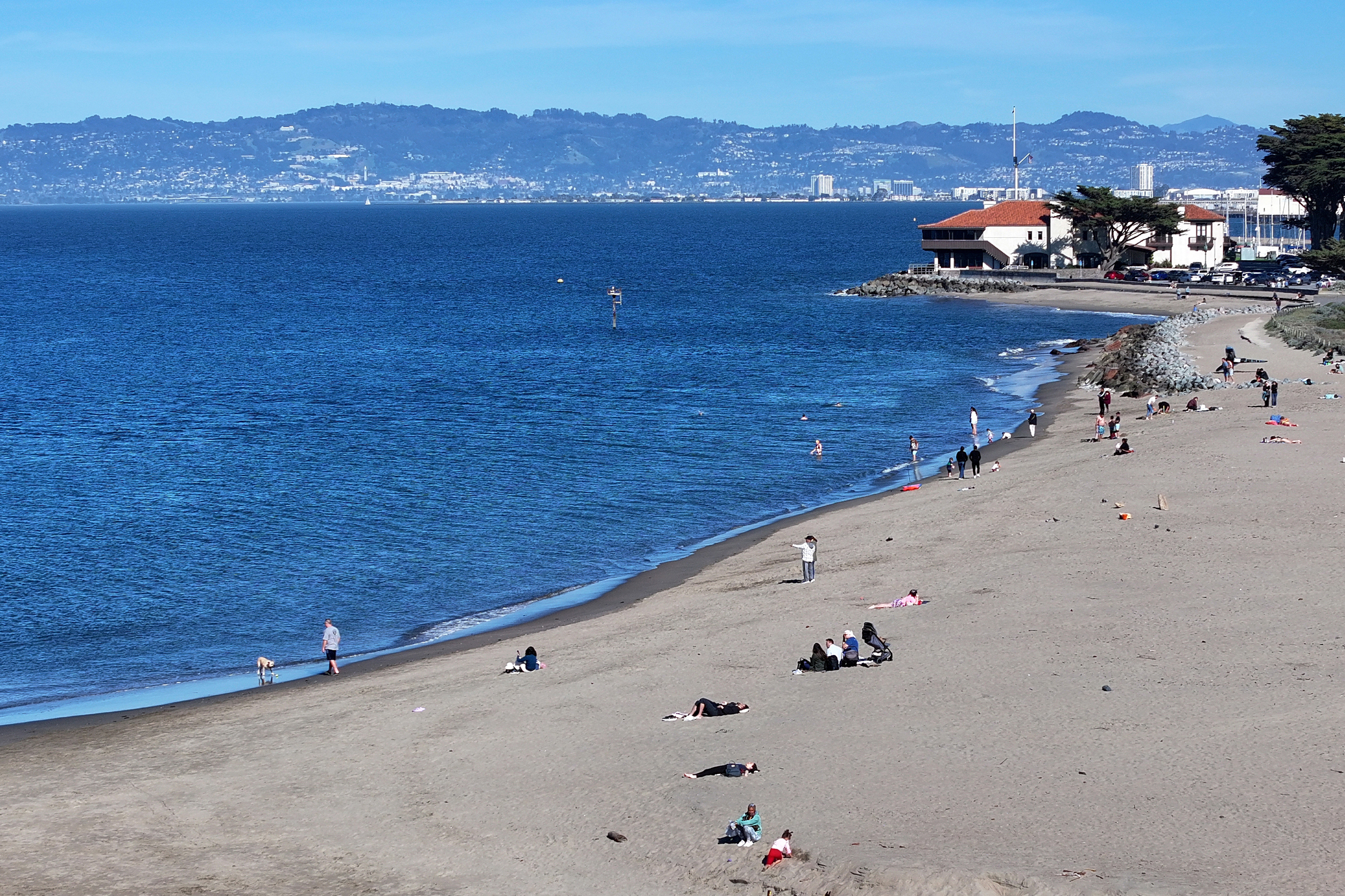
On Thursday afternoon, residents in downtown Los Angeles were thrown into this pseudo-summer when the city center reached a whopping 92 degrees Fahrenheit. Triple digits are expected early next week in southeastern California and southern Arizona, with Phoenix likely to see its first 100-degree day of the year earlier than ever recorded. Milder, mountainous states such as Colorado could reach the 80s in certain areas.
As many as 25 million people across the region are expected to be under moderate heat risk, according to the National Oceanic and Atmospheric Administration. This designation suggests increased threats of dehydration, heat stress and other health problems, particularly for vulnerable groups such as seniors or children.
Beyond this acute stressor, experts fear what could unfold as record-breaking heat coincides with record-low snowpack in parts of the West.
In the historically dry region, snowpack provides up to 75 percent of freshwater supplies annually as it slowly melts into reservoirs throughout the spring and summer. But Western states are in the midst of a monthslong “snow drought,” particularly in the snow-fed basin of the Colorado River. New Mexico, Utah and Colorado have reported some of the lowest snowpack levels in history.
This story is funded by readers like you.
Our nonprofit newsroom provides award-winning climate coverage free of charge and advertising. We rely on donations from readers like you to keep going. Please donate now to support our work.
Donate NowThe heat wave may cause this limited snowpack to melt and evaporate more quickly, reducing water availability in the spring, according to Rong Fu, an atmospheric scientist at the University of California, Los Angeles. That would make it more difficult for farmers to grow crops as the soil dries out and low water supplies constrain irrigation, she said.
At the same time, hotter temperatures and drought could dry out vegetation, which would increase fire risk in later months because it is more likely to burn, Swain warned.
Though some years are wetter than others, scientists have documented an overall decline in rain and snowpack across the U.S. Southwest over the past 25 years—what some have called a “megadrought.” A 2025 study co-authored by Lehner found that climate change, along with air pollution over East Asia, contributes to this trend by increasing the likelihood of weather conditions conducive to drought.
“The ingredients are there for the Southwest to continue to dry out from a water perspective,” he said. “How rapidly it’s going to happen, we don’t know.”
Water managers across the region are facing the fallout of these changes, with states, cities and towns often enacting mandatory water cuts when levels get too low. Denver Water, a public water utility in Colorado, recently asked customers to wait until mid- to late May to turn on sprinkler systems and plans to issue drought-response recommendations for the Denver Board of Water Commissioners in the next few weeks, utility spokesperson Todd Hartman said.
Water management often spans borders, particularly in the Colorado River Basin, where states have allocated more water than the river naturally provides. That’s stoked tension. State negotiators in the basin failed in February to reach an agreement on how and where to use less water to avoid a system collapse.
“This is going to be a big problem,” Fu said. “I really don’t know whether society is ready to address this problem.”
About This Story
Perhaps you noticed: This story, like all the news we publish, is free to read. That’s because Inside Climate News is a 501c3 nonprofit organization. We do not charge a subscription fee, lock our news behind a paywall, or clutter our website with ads. We make our news on climate and the environment freely available to you and anyone who wants it.
That’s not all. We also share our news for free with scores of other media organizations around the country. Many of them can’t afford to do environmental journalism of their own. We’ve built bureaus from coast to coast to report local stories, collaborate with local newsrooms and co-publish articles so that this vital work is shared as widely as possible.
Two of us launched ICN in 2007. Six years later we earned a Pulitzer Prize for National Reporting, and now we run the oldest and largest dedicated climate newsroom in the nation. We tell the story in all its complexity. We hold polluters accountable. We expose environmental injustice. We debunk misinformation. We scrutinize solutions and inspire action.
Donations from readers like you fund every aspect of what we do. If you don’t already, will you support our ongoing work, our reporting on the biggest crisis facing our planet, and help us reach even more readers in more places?
Please take a moment to make a tax-deductible donation. Every one of them makes a difference.
Thank you,

Kiley Price
Reporter
Kiley Price is a reporter at Inside Climate News, with a particular interest in wildlife, ocean health, food systems and climate change. She writes ICN’s “Today’s Climate” newsletter, which covers the most pressing environmental news each week.
She earned her master’s degree in science journalism at New York University, and her bachelor’s degree in biology at Wake Forest University. Her work has appeared in National Geographic, Time, Scientific American and more. She is a former Pulitzer Reporting Fellow, during which she spent a month in Thailand covering the intersection between Buddhism and the country’s environmental movement.