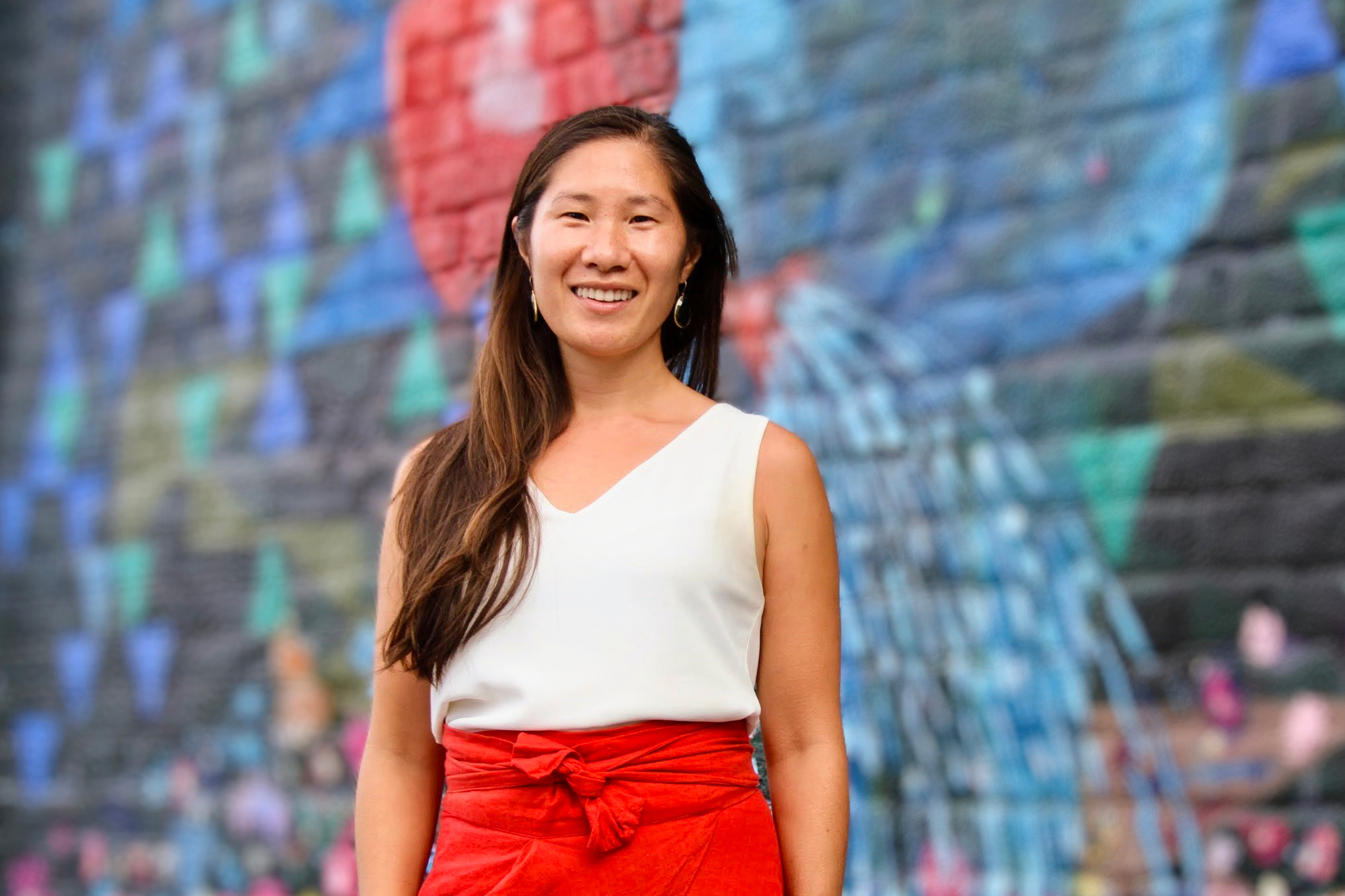


In Louise Yeung’s decade of work in New York City government, she has helped rebuild flood infrastructure after Hurricane Sandy, worked to make streets and tunnels more resilient to climate change and ensured that the city’s financial investments aligned with its climate goals.
In her new role as Mayor Zohran Mamdani’s chief climate officer, Yeung aims to help New Yorkers see how climate change impacts their daily lives.
“Climate change is such a cross-cutting issue,” Yeung said. “It really does have a daily impact on how people can feel safe, how people can feel healthy and how people can live a life with dignity.”
Climate change disproportionately affects environmental justice communities—residents who have historically faced ongoing environmental issues in their neighborhoods, such as flooding and air pollution. The ability to improve their lives now rests, in part, with Yeung.
Yeung heads the Mayor’s Office for Climate and Environmental Justice, leading teams that partner with other city agencies to address climate issues like making buildings more resilient and adding more renewable energy projects. Her office also manages the New York City Panel on Climate Change, which releases key climate projections.
Inside Climate News spoke with Yeung about her vision for the role. This interview has been edited for length and clarity.
LAUREN DALBAN: What in your personal life and career do you feel prepared you for the job?
LOUISE YEUNG: I have been a longtime partner of the Mayor’s Office of Climate and Environmental Justice in my 10 years in New York City government. That has really informed a lot of my understanding of what climate policy looks like to translate into practice.
At the New York City comptroller’s office, I was a partner in accountability and really thinking about the ways that the city can better meet its climate commitments, and how we can think strategically about climate finance and investments.
All of those things, I feel, have really prepared me to think very holistically about what climate policy should be, whether it’s about how we’re adapting to the new realities of heavier rainfalls and more extreme heat waves to how we’re actually reducing our greenhouse gas emissions and making sure we rely on clean, reliable and affordable energy to power our city. And I’m coming into an amazing team, many of whom I’ve worked with for years.
Some of us came up together in the New York City government. One of my earliest projects was on how we’re actually thinking about flood protection in lower Manhattan, from Battery Park all the way up to the Brooklyn Bridge.
It’s really amazing to see the designs actually going into construction; we can see that on the waterfront now. I’m just so excited to have been following and shaping that project through the arc of my career, as just one example.
DALBAN: Mayor Mamdani chose to separate the [Department of Environmental Protection] commissioner position from the climate officer position. I’m curious how that is going to change this role.
YEUNG: There’s a lot of opportunities to be working across all agencies. We just made an announcement with [the New York City Housing Authority] to expand a heat pump program to Beach 41st Street houses in Far Rockaway. That’s just one example of the many different touchpoints that our office has across the city.
From my role here at the mayor’s office, I’m really eager to strengthen the connections that we have between climate and labor, climate and economic justice, climate and housing and, of course, climate and transportation, in our built environment.
Deputy Mayor [for Economic Justice] Julie Su is bringing a vision around workers rights and economic justice, and I think there’s so much opportunity for that to be tied to our climate crisis and how we actually build a green economy, and how we protect workers against the threats of climate change.
DALBAN: I hear that there has been less consideration of environmental justice across departments in the city in the past. Is that something that you’re thinking more about?
YEUNG: A couple years ago, we developed an environmental justice report that really lays out all of the different impacts of our legacies of pollution and disinvestment, and the impacts that that’s had on particularly communities of color and frontline communities across the five boroughs.
We’re now building on that analysis to be developing an environmental justice plan. We have an Environmental Justice Advisory Board that we work with very closely to shape our recommendations. I’m really looking forward to making sure that environmental justice and racial justice and economic justice are deeply informing the ways that we’re shaping climate policy across the city, and working with all of our partner agencies for that.
DALBAN: Is there anything else you want me to understand about the handling of environmental justice? Is there anything specific you want to focus on that you feel has been lacking in the past?
YEUNG: I think that environmental justice and climate justice are so intertwined with the affordability crisis. These things cannot really be separated when we’re thinking about our housing crisis and where people are able to afford living.
It is no coincidence that there’s so many communities of color and lower-income communities that are in the floodplain or who are living in basement units that are at highest risk of flash flooding. In 2021, when we experienced Hurricane Ida, the vast majority of the deaths that we saw were people living in basement units. They were almost entirely immigrants.
So as we’re thinking about how to tackle the housing crisis, we have to also be thinking about what it looks like for building affordable housing that is not only accessible to more New Yorkers, but is that is also safe and resilient and clean, and that people can be choosing housing that does not put them in harm’s way and allows them to live a life of dignity.
As I’m thinking about what that work looks like from our office, I’m really thinking about how that ties to the affordability agenda that the mayor is prioritizing here, and that we’re trying to embed across all aspects of city policies and programs.
Zoning is one piece of it, and how we are allowing construction to be in the floodplain and what kind of standards there are. There’s also the building code, and we work really closely with the Department of Buildings to not only enforce and implement Local Law 97, the building emissions law, but also how we are designing and requiring buildings to have more ability to capture storm water, to have more renewable energy and more energy efficient construction and design.
DALBAN: Traffic is also a big health issue, especially in the Bronx and in Gowanus. What are your plans to address that?
YEUNG: We have already seen the benefits of congestion pricing coming into effect last year. It has significantly reduced congestion in the [Central Business District] zone. It has cleaned our air quality by a significant amount. It’s also reduced noise pollution, and has just allowed for a healthier and better quality of life for lower Manhattan residents.
As the mayor is advancing our work on getting fast and free buses, I think that [it’s an example of] things that we can do to reduce emissions from truck traffic and from vehicles in general. Transportation makes up about 25 percent of our city’s emissions. How we’re thinking about transportation-related emissions reduction needs to be part of our climate agenda going forward.
This story is funded by readers like you.
Our nonprofit newsroom provides award-winning climate coverage free of charge and advertising. We rely on donations from readers like you to keep going. Please donate now to support our work.
Donate NowIt’s looking at how we can mode-shift to cleaner ways of getting to and from places. It’s also looking at programs like marine highways that take trucks off the road, and allows for the goods that we get delivered to our coastal city to come via waterways.
We used to be a vibrant port city, and there has been so much investment in our ports over the last couple of years that we want to build upon to make sure that we’re getting as many trucks off the road as possible and onto more sustainable modes of transportation.
DALBAN: How are you thinking about all the different ways that flooding impacts New Yorkers across the city?
YEUNG: I think one of the things that can be challenging about climate work is that we tend to be very reactive to the last climate emergency that happened. After Hurricane Sandy, we saw billions of dollars going towards coastal flood protection projects which, of course, was so necessary, and the level of damage and destruction was really unprecedented.
And then when we had Hurricane Ida in 2021—it was a big wake-up call for the flood risks in not only waterfront communities, but inland communities and low-lying communities and basement apartments.
Then we also see in places like Old Howard Beach and Broad Channel and other areas across the coastline that people are already experiencing the impacts of sea-level rise today. This is not a thing that’s far into the future. It’s something that is causing chronic flooding for many New Yorkers and it’s kind of an existential question of how we are managing that risk.
Then you take it all together, because as New Yorkers, we’re experiencing these things, sometimes at once, and not necessarily as isolated weather events. I am really excited to have a more comprehensive, multi-hazard approach to how we’re thinking about climate.
When we are building new schools and designing new street projects and public spaces and parks and homes, we are thinking not only about one kind of climate threat, but all of the climate risks that that neighborhood or that community is going to be experiencing in the future.
It requires us to be very forward-looking. We need to understand what’s happening now, but also 20 years from now, 30 years from now, and even 50 years from now, so that the things that we’re building today can withstand the kind of climate conditions that we will see in the future, towards the middle or end of their useful life.
I really want to make sure that all of our decisions that we’re making can think more comprehensively about the range of climate risks.
There’s a lot of ways that we want to work with different agencies, particularly those who do construction and design, to embed climate design guidelines into building projects. Then, of course, once something is built, we need to make sure that we’re maintaining that infrastructure correctly, so that it performs well. So all of these things that I’m mentioning, these are things that are built to last. We want to build them to last.
DALBAN: Is there anything else you want people to understand about the city’s climate and environmental justice issues, or the work your office will do?
YEUNG: I want to help people understand the connections between climate change and other important priorities of the administration—whether it’s building new affordable housing or protecting tenant rights, to how we’re thinking about labor and workforce, to how we’re thinking about public health and safety.
Climate change is such a cross-cutting issue that really does have a daily impact on how people can feel safe, how people can feel healthy, and how people can live a life with dignity. As we’re thinking about the future, I really want to make sure that we are bringing in that climate lens and also the underlying data and strong policy expertise to help inform all of the ways that we’re trying to make New York a better place to live.
About This Story
Perhaps you noticed: This story, like all the news we publish, is free to read. That’s because Inside Climate News is a 501c3 nonprofit organization. We do not charge a subscription fee, lock our news behind a paywall, or clutter our website with ads. We make our news on climate and the environment freely available to you and anyone who wants it.
That’s not all. We also share our news for free with scores of other media organizations around the country. Many of them can’t afford to do environmental journalism of their own. We’ve built bureaus from coast to coast to report local stories, collaborate with local newsrooms and co-publish articles so that this vital work is shared as widely as possible.
Two of us launched ICN in 2007. Six years later we earned a Pulitzer Prize for National Reporting, and now we run the oldest and largest dedicated climate newsroom in the nation. We tell the story in all its complexity. We hold polluters accountable. We expose environmental injustice. We debunk misinformation. We scrutinize solutions and inspire action.
Donations from readers like you fund every aspect of what we do. If you don’t already, will you support our ongoing work, our reporting on the biggest crisis facing our planet, and help us reach even more readers in more places?
Please take a moment to make a tax-deductible donation. Every one of them makes a difference.
Thank you,

Lauren Dalban
Reporter, New York City
Lauren Dalban is a New York City-based reporter with a background in local journalism. A former ICN fellow, she now covers environmental issues in all five boroughs. Originally from London, she earned a B.A. in History and English from the University of Virginia, and an M.S. from Columbia Graduate School of Journalism.