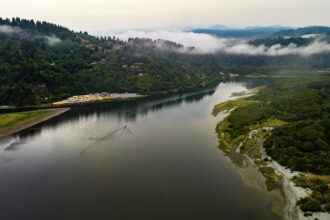
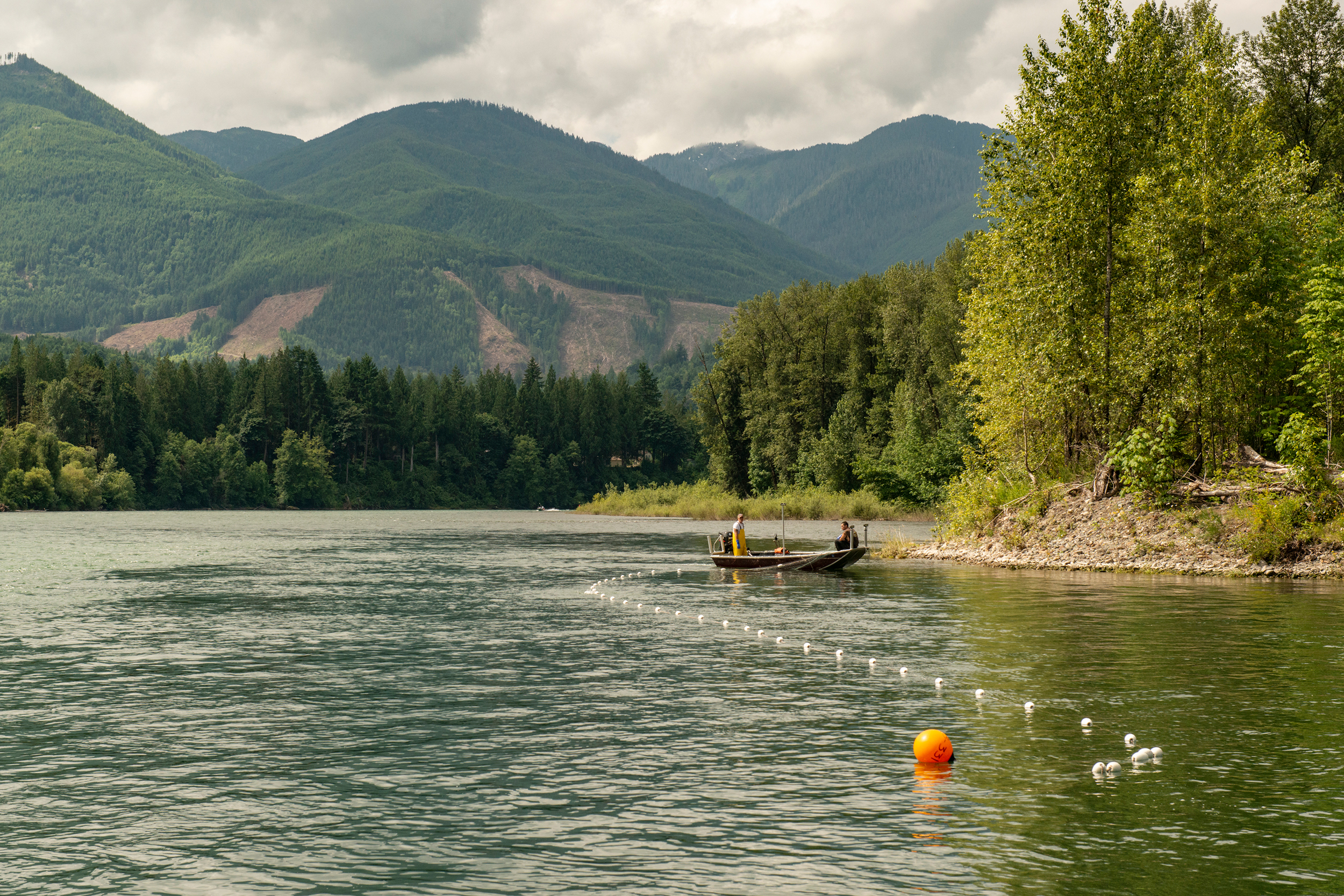


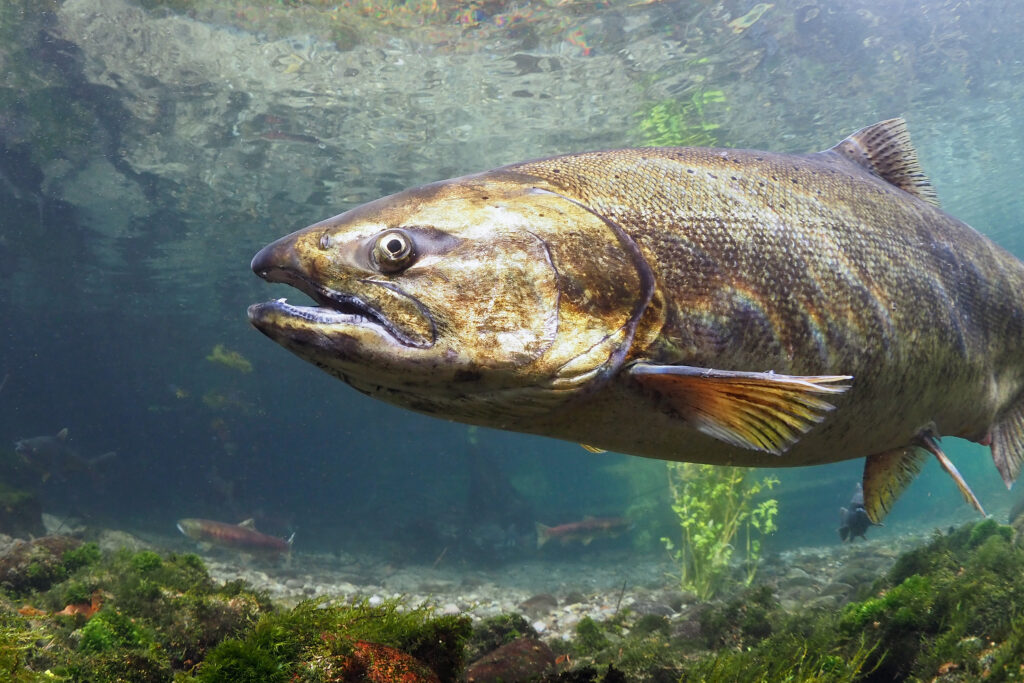
Spanning seven U.S. states and one Canadian province, the Columbia River Basin was once the largest salmon-producing river system in the world. Yet, with four of the 16 salmon and steelhead trout species now extinct and another seven endangered or threatened, its future remains imperilled.
Though a federal judge recently ordered water levels be reduced at dams along the Columbia and Snake rivers to aid salmon migration upstream, he described a “disappointing history of government avoidance and manipulation instead of sincere efforts at solving the problem” in his February ruling.
Such federal and state failures to protect salmon habitats are rendering Indigenous fishing rights in western Washington meaningless, warned a report released in February by the Northwest Indian Fisheries Commission (NWIFC). While tribal fishers have reduced their Chinook salmon harvest by at least 60 percent since the 1980s, salmon stocks continue to drop as habitats are destroyed faster than they can be restored.
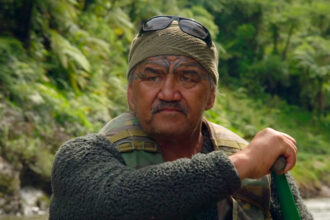
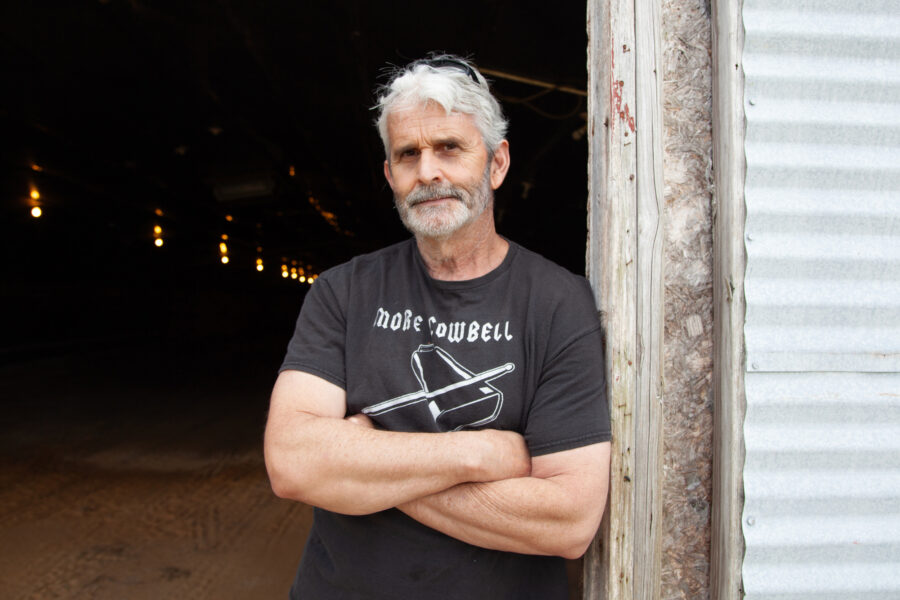
“Our current situation is not good; our waters, our lands, our resources are all suffering,” said Ed Johnstone, a Quinault Tribal member and chair of the NWIFC, who highlighted that none of the region’s salmon stocks have recovered since they were included on the Endangered Species Act in 1999. “This report’s findings remain grim.”
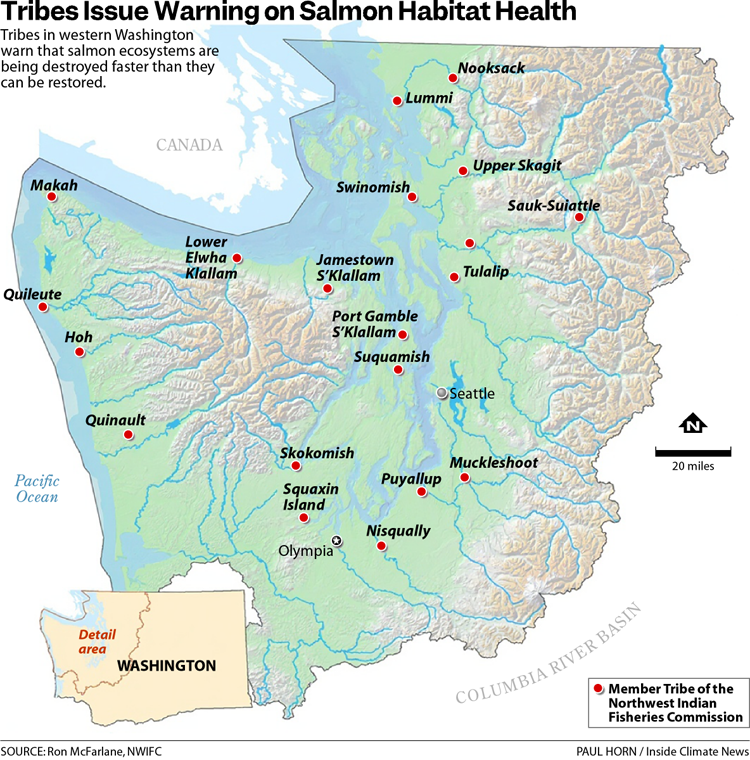
The report examines the health of waterways in the treaty-reserved fishing grounds of 20 tribes that lie between the Columbia River Basin and the Pacific Ocean. From the Canadian border down to the Chehalis River, protecting such habitats is crucial to reversing the decline of salmon populations.
From water shortages to logging, the report highlights the many forms that habitat degradation takes, chief of which are passage barriers preventing salmon returning up river to spawning grounds.
There are more than 15,500 private or government-owned culverts—channels that redirect water under roads or railways—restricting movement across the tribes’ fisheries, according to the report.
Melting glaciers, sea level rise and extreme weather patterns have also changed the quantity and annual timing of waterflow, collectively hindering salmon and steelhead trout navigating from coastal inlets to the upper basin.
“Without the fish, we don’t exist,” said Johnstone, highlighting the spiritual, communal and economic vitality tribes derive from healthy watersheds. Indian songs, prayers and native language are all tied to the wellbeing of nature, especially the First Salmon Ceremony that honors the species’ annual return.
“To lose salmon would set in motion the unraveling of our very cultural and ceremonial lifeways, threatening not only our cultural continuity, but our very existence,” said Johnstone.
Central to the problem is the pressure of increasing regional population, said Justin Parker, NWIFC executive director and a member of the Makah tribe. The state’s population has more than doubled in 50 years, adding three new congressional districts. With that comes impervious infrastructure—paved roads or concrete buildings—that result in stormwater runoff disrupting highly sensitive stream ecosystems.
Pre-spawn mortality rates as high as 40 percent have been recorded in high-traffic areas of the Puget Sound, for example, where tire fragments containing 6PPD—a chemical preservative fatal to salmon—have seeped into streams and rivers.
“You’re not going to stop that net increase, but you’ve got to manage things in a proper way,” said Parker, noting that Washington’s population grows by more than 100,000 people each year. “We need to make sure that we’re allowing the next generation to have that opportunity to harvest like we have in our lifetime.”
This story is funded by readers like you.
Our nonprofit newsroom provides award-winning climate coverage free of charge and advertising. We rely on donations from readers like you to keep going. Please donate now to support our work.
Donate NowDespite the known risks, state and local regulators approved over 200 projects for “gray” shoreline armor—human engineered seawalls more environmentally harmful than “green” solutions like wetlands or dunes—in the last five years along this stretch of the Pacific Coast. This infrastructure further interrupts the movement of sediment and robs beaches of appropriate salmon spawning grounds.
The arrival of invasive Japanese knotweed and European green crab has similarly negatively impacted the eelgrass beds that act as nurseries and foraging grounds for juvenile salmon.
The industrial logging of riverside habitats—such as the 1,900 acres felled in the lowlands of the Snohomish River Basin between 2011 and 2021—has led to increasing water temperatures. Without the natural shade of trees, at least half of the region’s waters have experienced warming harmful to salmon species—like Chinook and sockeye—that are vulnerable to temperature variation, according to the report.
While the NWIFC member tribes are habitat co-managers that work alongside the National Oceanic and Atmospheric Administration and state legislators, there has been a lack of adequate and sustained funding. Most of the boots-on-the-ground work has been left to tribal members to perform, said Johnstone, reaffirming the court’s verdict that a lack of political will and a preferential treatment of industry has come at the expense of natural resources.
“What the tribes are contributing with this accounting of their wealth—the habitat—is that they’re holding an anchor to what is true,” said NWIFC’s director of environmental protection Fran Wilshusen, emphasizing the importance of the report in future policy-making. “Harvest management doesn’t make fish. Habitat and hatcheries do that, and this report shows us where we need to work.”
However, leaders of the NWIFC are optimistic. “I remain hopeful because I believe in our tribes and the good work that we are doing together,” said Johnstone, adding that they have no option other than hope.
Indeed, ongoing clean-up efforts along the Skokomish watershed have shown vegetation and salmon returns, while improving water quality has seen shellfish growth in Portage Bay. Additionally, a new relationship with the Burlington Northern and Santa Fe Railway—America’s largest freight railroad network—appears to be offering hope for collaborative, private-sector restoration along the Puget Sound shoreline.
While February’s hydropower dam ruling was a victory in a decades-long campaign, its scale remains nonetheless small. “We must acknowledge that our salmon continue to decline because we are continuing to allow loss of their habitat faster than we are investing in restoring it,” said Johnstone, reiterating that tribal rights are place-based and have nowhere else to go.
“We must reverse that trend. We must protect what sustains them. We must protect what sustains us,” he said.
About This Story
Perhaps you noticed: This story, like all the news we publish, is free to read. That’s because Inside Climate News is a 501c3 nonprofit organization. We do not charge a subscription fee, lock our news behind a paywall, or clutter our website with ads. We make our news on climate and the environment freely available to you and anyone who wants it.
That’s not all. We also share our news for free with scores of other media organizations around the country. Many of them can’t afford to do environmental journalism of their own. We’ve built bureaus from coast to coast to report local stories, collaborate with local newsrooms and co-publish articles so that this vital work is shared as widely as possible.
Two of us launched ICN in 2007. Six years later we earned a Pulitzer Prize for National Reporting, and now we run the oldest and largest dedicated climate newsroom in the nation. We tell the story in all its complexity. We hold polluters accountable. We expose environmental injustice. We debunk misinformation. We scrutinize solutions and inspire action.
Donations from readers like you fund every aspect of what we do. If you don’t already, will you support our ongoing work, our reporting on the biggest crisis facing our planet, and help us reach even more readers in more places?
Please take a moment to make a tax-deductible donation. Every one of them makes a difference.
Thank you,
Johnny Sturgeon
Fisheries Reporter
Johnny Sturgeon is a London-based reporter covering fisheries and aquaculture. Joining us from the Outlaw Ocean Project, he has experience producing in-depth maritime investigations for nonprofit newsrooms. A former boatbuilder, he holds a B.A. in History & Politics from the University of Oxford, and an M.S. from Columbia Journalism School.