

As the Iran war nears its seventh week, two of the world’s leading finance and energy institutions are forecasting a bleak future for the global economy if the conflict continues much longer.
Reports released Tuesday by the International Monetary Fund and International Energy Agency come after a fragile ceasefire announced on April 8 between the U.S. and Iran largely disintegrated and the U.S. enacted a blockade of ships entering or exiting Iranian ports on Monday.
Before the war, the IMF projected growth in the global economy, spurred in part by the artificial intelligence boom and a slight easing in trade policy tensions.
“War in the Middle East will overwhelm these underlying forces,” Pierre-Olivier Gourinchas, the International Monetary Fund’s chief economist, wrote in the group’s World Economic Outlook released Tuesday.
Continued attacks on critical energy infrastructure and a prolonged shutdown of the Strait of Hormuz raise the possibility of a global recession and increased inflation, the report noted.
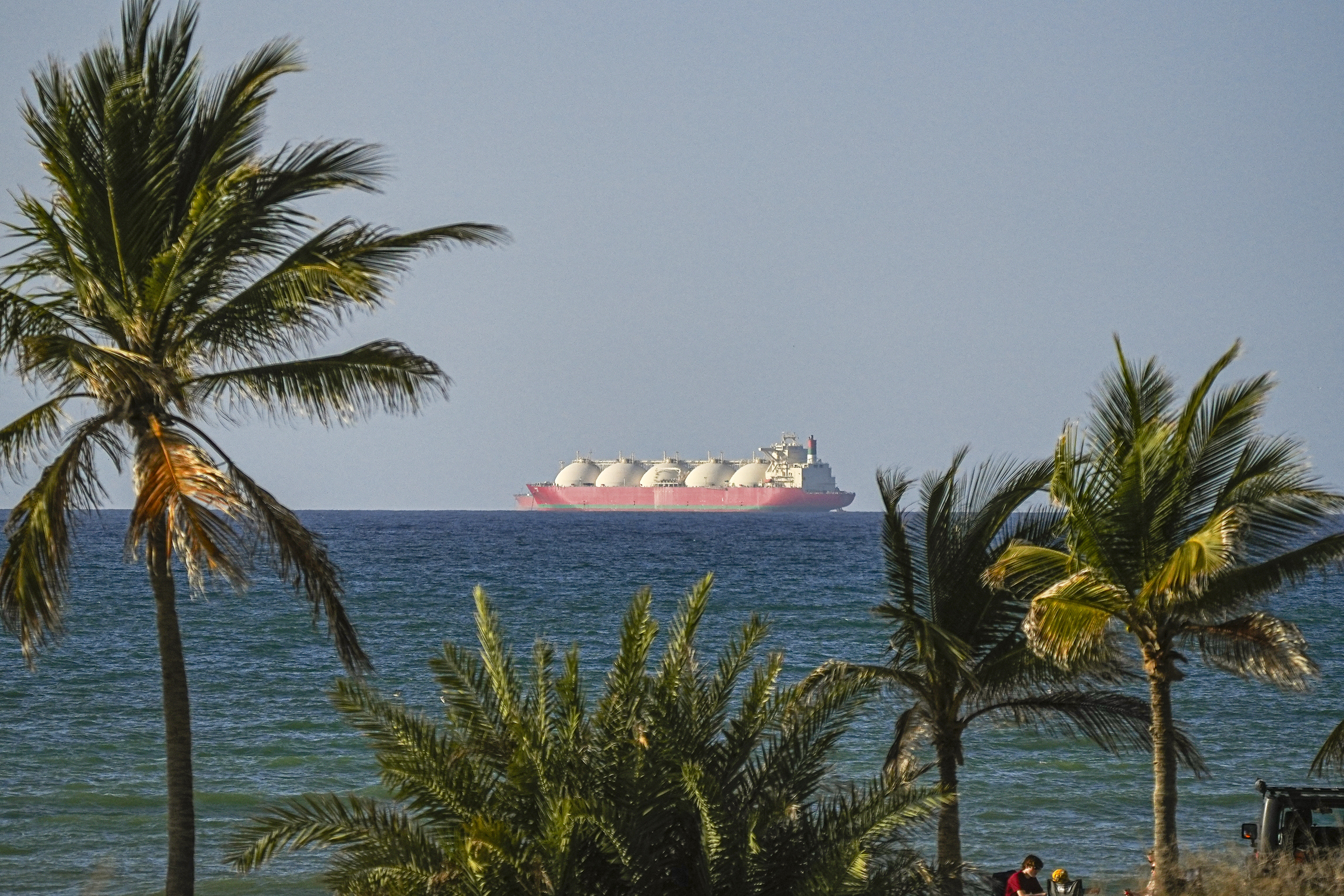
“The closure of the Strait of Hormuz and serious damage to critical production facilities in a region central to global hydrocarbon supply could cause an energy crisis on an unprecedented scale,” Gourinchas wrote.
The war resulted in a global oil supply decline of 10 million barrels per day, according to a report by the International Energy Agency, which was also released on Tuesday. Oil prices posted their largest-ever monthly gain in March, the report found.
“This is the greatest energy security threat in … history,” Fatih Birol, executive director of the International Energy Agency, said Monday at an event hosted by the Atlantic Council, an international affairs think tank based in Washington.
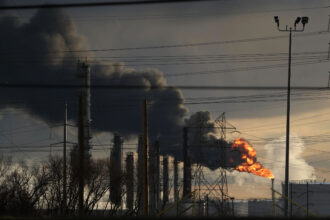
During the conflict between Iran and the U.S. and Israel, more than 80 hydrocarbon facilities, including oil fields, gas fields, refineries and terminals, have sustained damage in the Middle East, with more than one-third severely damaged, Birol said, adding that repairs could take up to two years.
Twin oil crises in the 1970s, sparked by conflict and revolution in the Middle East, led to a diversification of energy sources, including nuclear energy and the development of new gas fields in the North Sea—as well as more fuel-efficient automobiles, Birol said. The current war could usher in similar innovation with increased development of renewable energy, nuclear power and electric vehicles, he said, adding that coal-fired power generation could also get a boost.
The reports were released as the IMF and World Bank spring meetings began in Washington.
“The impact of the war is substantial, global, and highly asymmetric, disproportionately affecting energy importers, in particular low-income countries,” a joint statement by leaders of the IEA, IMF and World Bank said. “The shock has led to higher oil, gas and fertilizer prices, triggering concerns about food security and job losses as well.”
The three global institutions reiterated a pledge made earlier this month to work together to provide tailored policy advice and financial support to countries impacted by the war.
In a letter addressed to Birol this month,16 energy security experts, including former military chiefs, academics and geopolitical experts, urged the International Energy Agency to provide guidance to governments on reducing exposure to oil and gas markets as it did for the EU following Russia’s invasion of Ukraine in 2022.
“Accelerating the transition to resilient and diversified energy systems is a security imperative,” the group wrote.
Speaking Tuesday at an event hosted by the Institute of International Finance, a global financial services industry group based in Washington, U.S. Treasury Secretary Scott Bessent did not mention the Iran war. Bessent dismissed the idea that societies should move away from fossil fuels.
Bessent instead expressed support for what he sees at the World Bank and the IMF as a shift away from efforts to address climate change, which he described as an “elite belief.”
The Strait of Hormuz shutdown could quickly lead to supply shortages that extend far beyond oil and gas, said Robert Pape, a political science professor at the University of Chicago and director of the Chicago Project on Security and Threats, a research institute at the university.
Global supplies of fertilizer and helium, both closely tied to natural gas, have already been negatively affected.
About This Story
Perhaps you noticed: This story, like all the news we publish, is free to read. That’s because Inside Climate News is a 501c3 nonprofit organization. We do not charge a subscription fee, lock our news behind a paywall, or clutter our website with ads. We make our news on climate and the environment freely available to you and anyone who wants it.
That’s not all. We also share our news for free with scores of other media organizations around the country. Many of them can’t afford to do environmental journalism of their own. We’ve built bureaus from coast to coast to report local stories, collaborate with local newsrooms and co-publish articles so that this vital work is shared as widely as possible.
Two of us launched ICN in 2007. Six years later we earned a Pulitzer Prize for National Reporting, and now we run the oldest and largest dedicated climate newsroom in the nation. We tell the story in all its complexity. We hold polluters accountable. We expose environmental injustice. We debunk misinformation. We scrutinize solutions and inspire action.
Donations from readers like you fund every aspect of what we do. If you don’t already, will you support our ongoing work, our reporting on the biggest crisis facing our planet, and help us reach even more readers in more places?
Please take a moment to make a tax-deductible donation. Every one of them makes a difference.
Thank you,

Phil McKenna
Reporter, Boston
Phil McKenna is a Boston-based reporter for Inside Climate News. Before joining ICN in 2016, he was a freelance writer covering energy and the environment for publications including The New York Times, Smithsonian, Audubon and WIRED. Uprising, a story he wrote about gas leaks under U.S. cities, won the AAAS Kavli Science Journalism Award and the 2014 NASW Science in Society Award. Phil has a master’s degree in science writing from the Massachusetts Institute of Technology and was an Environmental Journalism Fellow at Middlebury College.