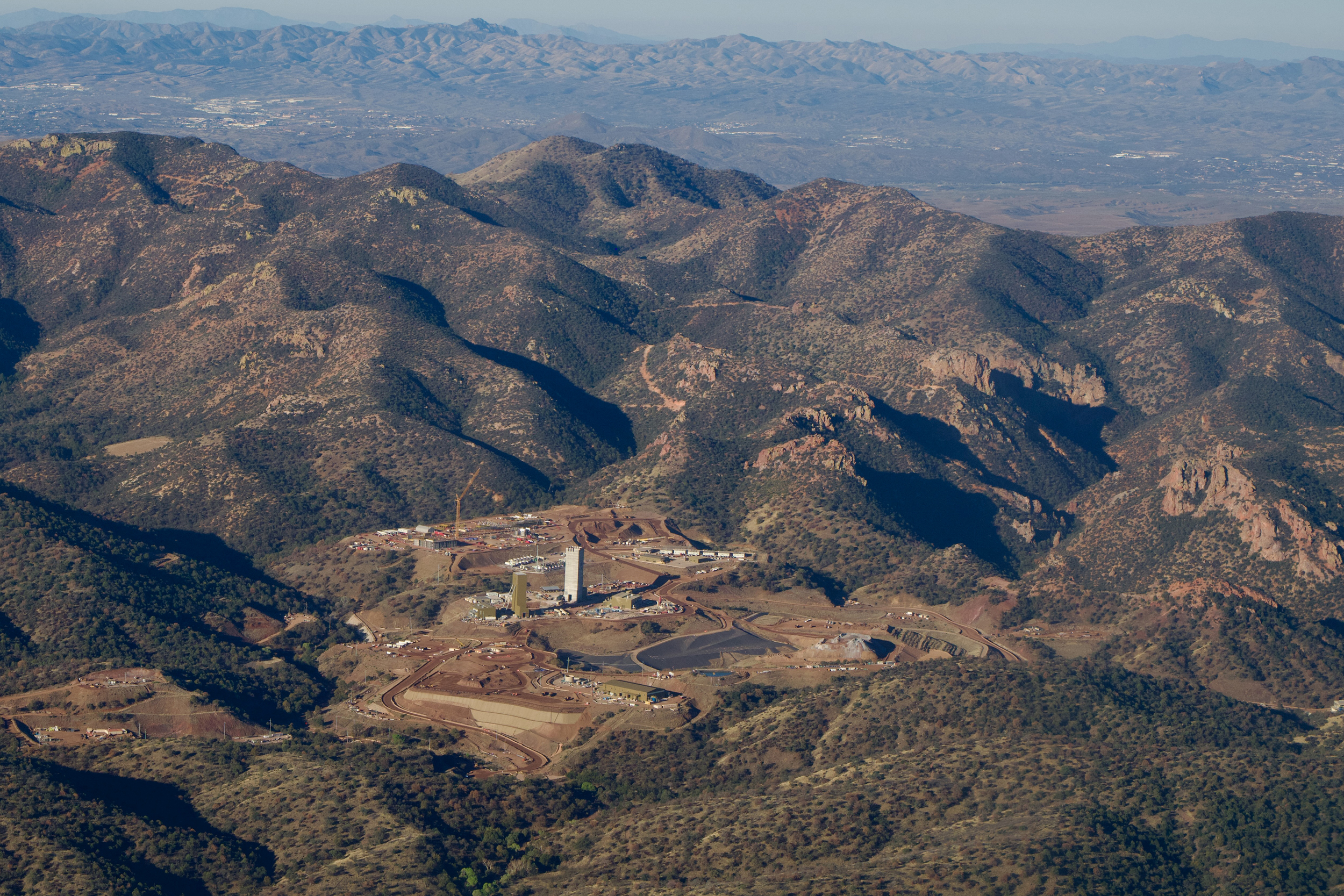


PATAGONIA, Ariz.—The U.S. Forest Service on March 5 announced it plans to soon approve the nation’s first critical minerals mine, South32’s Hermosa project, when it released the final environmental impact statement, which was permitted under a streamlined process. The federal government called it “a strategic investment in America’s energy future” that “directly supports U.S. energy and security needs.”
But in Patagonia, Arizona, residents and environmentalists are preparing for the impacts the project will bring to a world-renowned biodiversity hotspot, as the town, the nearby city of Nogales and Santa Cruz County inch closer to signing a community benefit agreement with the Australian mine company, South32, to mitigate and help address the impacts it is already bringing.
South32’s $2 billion Hermosa project would extract zinc, lead and silver, all deemed critical minerals by the administration of President Donald Trump. A second mineral deposit contains manganese, another critical mineral, though a decision to move forward with extracting it is pending. South32 is also evaluating a copper deposit found on site.
In 2023, under the Biden administration, the mine was the first to be added to the Fixing America’s Surface Transportation Act of 2015. The FAST-41 program is intended to improve the timeliness, predictability and transparency of federal permitting for selected projects, and could set the standard for others as the nation looks to expand its domestic mineral production. The project site contains one of the largest undeveloped zinc resources in the world and enough battery-grade manganese to supply all domestic demand.
Since its inception, the project has drawn pushback from locals and environmentalists. The Patagonia mountains are part of what are known as the Sky Islands, a series of mountains across the Sonoran Desert. They are famed for the biodiversity nurtured by their elevation, which provides isolated refuges from the hot desert floor, both inspiring their island moniker and serving as a bridge for wildlife connecting the Rocky Mountains and the Sierra Madre range in Mexico. The Forest Service’s environmental impact statement finds 12 species on the Endangered Species List may be adversely affected by the project, which could have direct impacts to critical habitat for jaguars and Mexican spotted owls. Approving the mine will require the federal government to issue 31 exemptions for the mine under its land-use plan for the Coronado National Forest.
“Buried in all those [thousands of pages of] documents is a pretty simple reality: the agency is greenlighting a 70-year industrial mining complex in what is arguably one of the most important biodiversity hotspots in North America,” said Russ McSpadden, the Southwest conservation advocate for the nonprofit Center for Biological Diversity.
Scores of other mines have been added to the FAST-41 list by the Trump administration under what it is calling its “transparency program.” But projects in that program don’t have any statutory requirements for cooperation or coordination with local governments as those fully covered by FAST-41 like the Hermosa mine, and some are being used as test cases for projects permitted with less public participation than currently required following the Trump administration’s rollback of environmental regulations requiring such input.
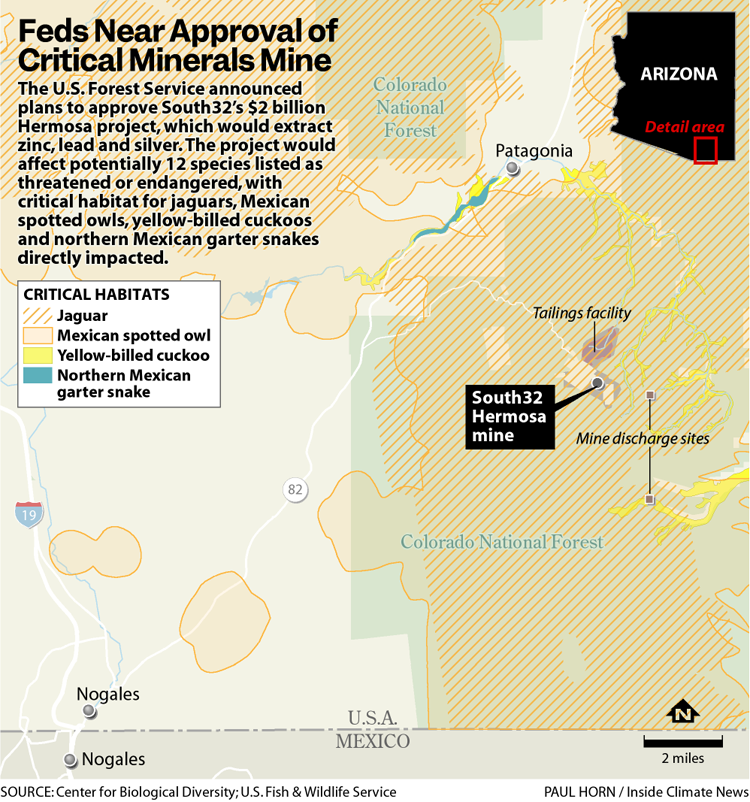
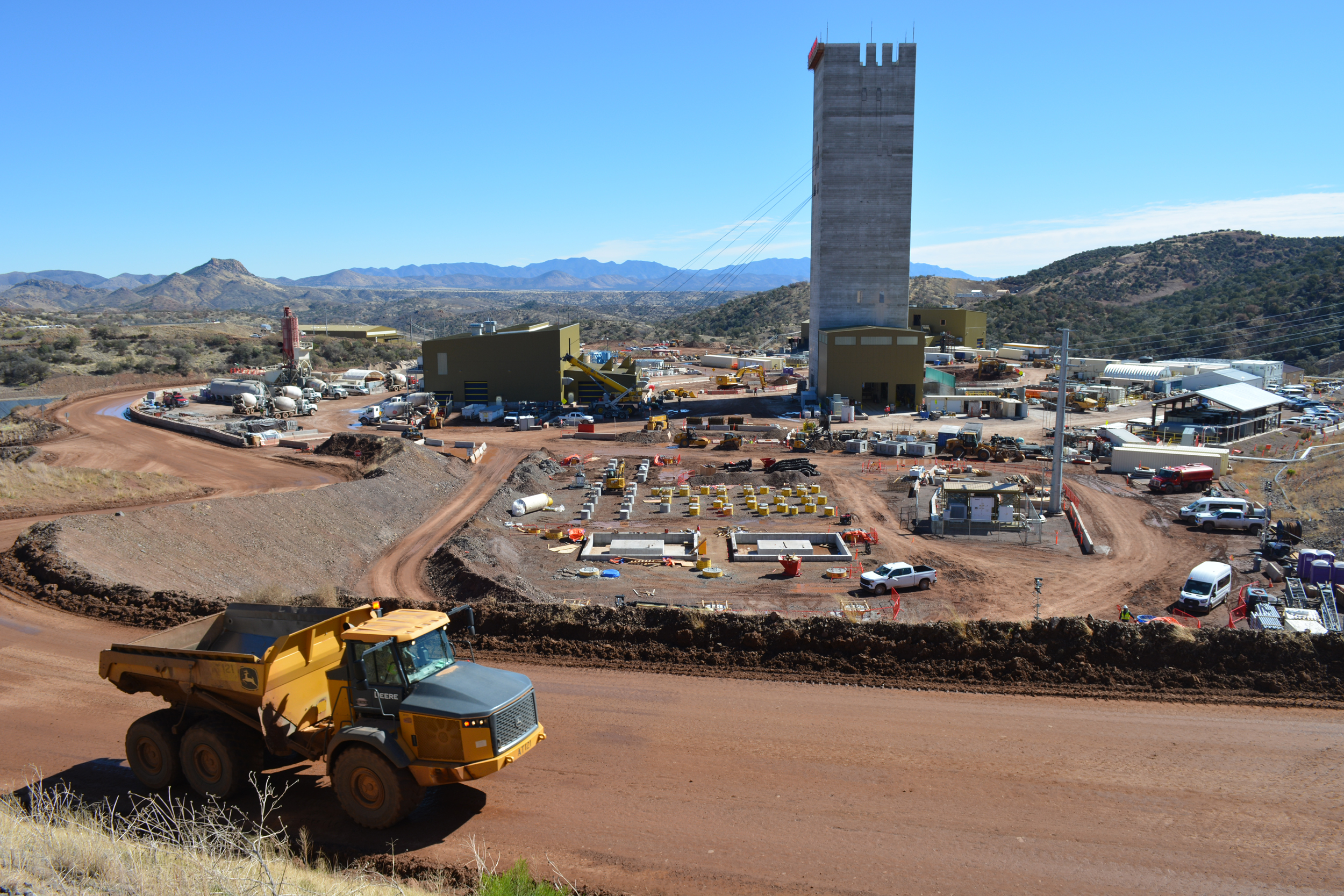
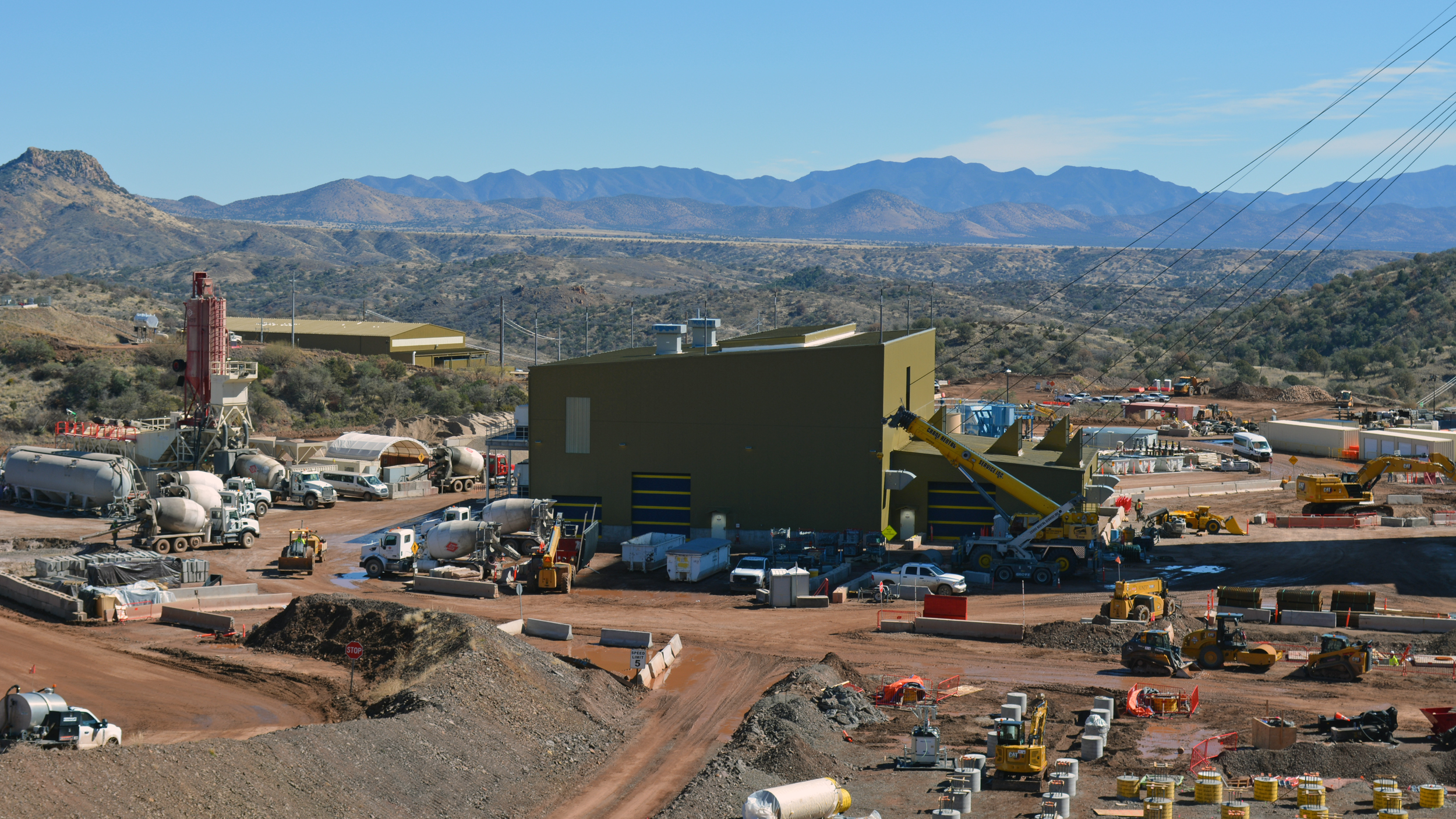
Construction at the mine site, which is located on private land, is already 50 percent complete. It only needs federal approval for work on public lands nearby, where the company plans to store a tailings pile of mine waste, install a transmission line to power the facilities and build a new access road.
Last year, South32 Hermosa spent $322,000 lobbying the federal government to secure permits, up from $152,000 the previous year, according to data from Open Secrets. The mine has a nearly $123 million loan from the Department of Energy, and additional funding from the Department of War.
“This Draft Record of Decision reflects years of listening, collaboration, and real changes shaped by community input,” said Pat Risner, Hermosa president, in a statement. “This draft decision affirms our design and development approach including mitigation measures as described in the Final Environmental Impact Statement that were informed through agency and public consultation.”
Last week, the town of Patagonia, the city of Nogales and Santa Cruz County each approved an early-action community funding agreement with South32, with the company agreeing to spend $4 million to expand critical services, infrastructure and more. The agreement is part of a larger process between the entities to enter a legally-binding Community Protection and Benefits Agreement, which will be crucial to securing further protections and funding for the community.
The release of the final EIS and draft record of decision starts the clock on a 45-day public objection period. A final decision for the project is expected in July.
Water Is Top Concern for Locals
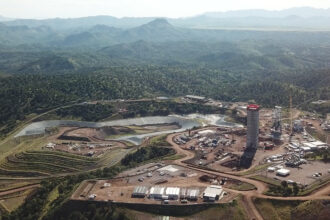
Prior to any mining, South32 has to remove the water from an aquifer that would get in the way of the extraction of the minerals. As two 20-story headframe towers—now the tallest structures in Santa Cruz County, with shafts that are already more than 1,200 feet into the earth—dig another seven feet deeper each day, millions of gallons of water are pumped out of the aquifer to eventually be released into the local Harshaw Creek. That water is filled with naturally occurring minerals, many of which are toxic to humans, like antimony. Long-term exposure to antimony can cause gastrointestinal and respiratory issues.
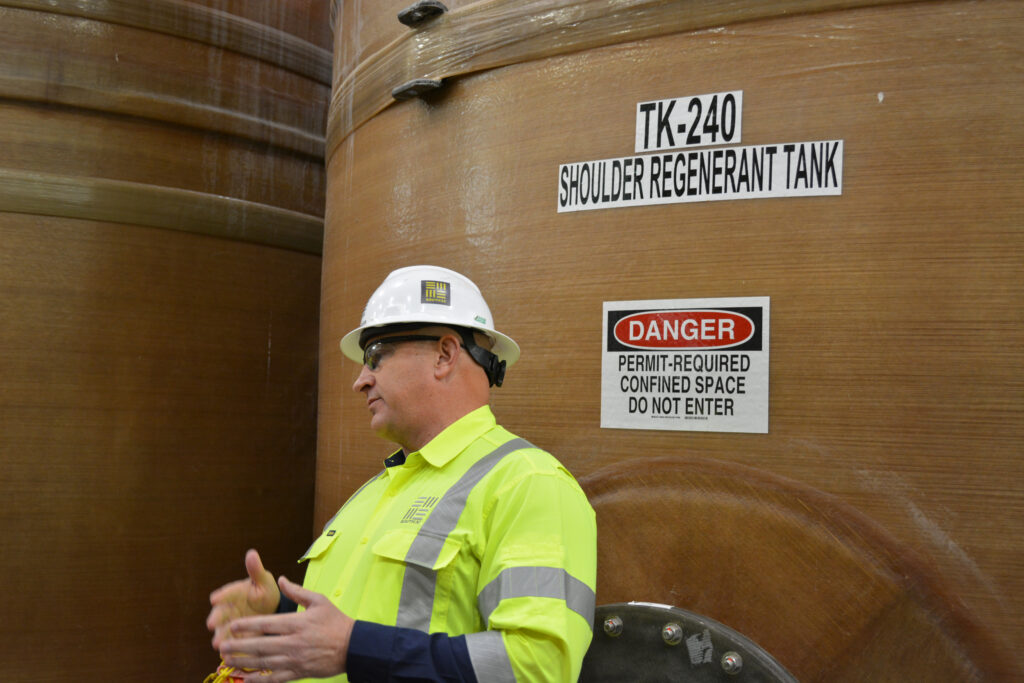
A wastewater treatment facility is designed to remove those, but higher-than-anticipated levels of antimony have led it to have compliance issues under the project’s Aquifer Protection Permit (APP), issued by the state Department of Environmental Quality to prevent the contamination of groundwater.
The mine’s water discharge into the local creek exceeded the state regulatory limit for antimony in October, leading the Arizona Department of Environmental Quality to launch an investigation.
Meanwhile, a separate federal program managed by the state to prevent pollutants from entering waterways, the Arizona Pollutant Discharge Elimination System (AZPDES), found the company’s discharge of selenium exceeded the level requiring notification of the ADEQ.
Mining companies are required by ADEQ to monitor their water discharges and report any exceedance under the APP to the agency within five days. They then must conduct a 30-day study to investigate the cause of the exceedance, how long it lasted, test additional samples and determine the corrective actions and mitigations needed. South32 did not send a five-day notice to ADEQ of the violation or submit the test results, instead reporting a “lab error” while they retested, according to Trevor Baggiore, ADEQ’s director of water quality division.
Prior to the Forest Service’s announcement, Risner, president of the Hermosa project, told Inside Climate News that the company did what it thought was correct, and that reporting the exceedance as a “lab error” was the only option it had, since there isn’t one for retesting, and that the company took immediate action to address the exceedance.
The company is using seven wells to dewater the mine, but one has had consistent antimony issues, and another has had issues with selenium.
In response, South32 has invested over $500,000 in upgrading the water treatment facility, Risner said, and when levels of antimony or selenium get high, the well with the issue is shut down.
“We’re not dealing with a municipal water source that’s consistent,” Risner said. “We’re dealing with Mother Nature [which is] highly variable. If we think we have an issue, we will shut the well off to make sure we can manage it, and then switch it back on when we can.”
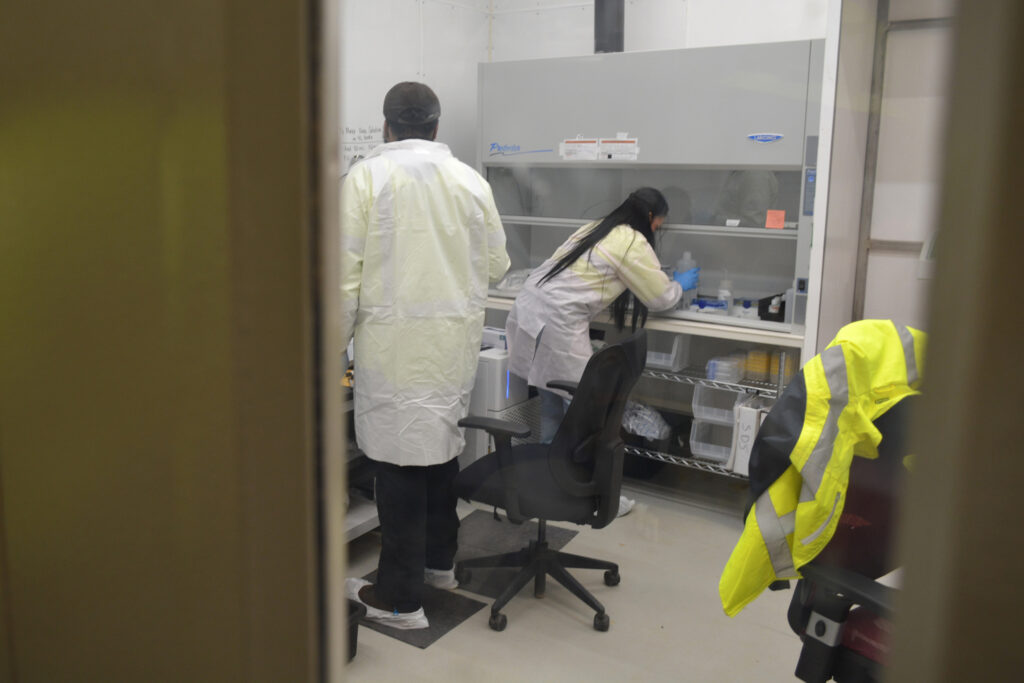
While antimony levels are currently below the APP’s limits, selenium has risen to the level requiring the company to alert ADEQ under the separate AZPDES permit.
“That triggers ADEQ to determine, if that trend continues, whether or not we need to do a permit modification, or whether additional monitoring requirements may be appropriate to ensure protection of surface water quality,” Baggiore said.
ADEQ can issue an actual limit for selenium levels in discharged waters that would be considered a major permit modification under the Clean Water Act, which would require public notice and a comment period.
“We’re already seeing some increases in heavy metals in the water in the region, likely from this mine and it’s not even fully up and running yet,” McSpadden said. “It says a lot about the future of this project.”
Residents across the region have received letters from South32 notifying them that their wells may be impacted by the mine’s dewatering.
Over the projected 70-year life of the mine, an estimated 195,000 acre-feet of water would be removed from the aquifer—about 2,790 acre-feet per year. One acre-foot is 325,851 gallons, enough water for two to three households a year.
The Forest Service’s proposed action includes developing two rapid infiltration basins to aid in the recharge of the aquifer, with roughly 88,000 acre-feet going back into the aquifer over the life of the mine, and another 73,000 acre-feet recharged via water sent down local Harshaw Creek. In total, a net volume of 34,000 acre-feet will be lost, though hydrologists note the dewatering of the aquifer will still change how it functions, even with the recharge plans.
This story is funded by readers like you.
Our nonprofit newsroom provides award-winning climate coverage free of charge and advertising. We rely on donations from readers like you to keep going. Please donate now to support our work.
Donate NowThat dewatering will lead to a cone of depression, with the water table drawn down by 250 feet, stretching across nearly 50 square miles and affecting wells within three miles of the mine, according to the environmental impact statement.
The Forest Service did not model how the mine will impact surface water quality, citing changing federal interpretations of what constitutes waters of the U.S., and stated that South32’s water treatment plants will suffice.
The environmental impact statement notes that an antimony plume will form in the aquifer below the mine and migrate downgradient, but will likely be too deep to affect any residential wells.
However, monitoring by Chris Gardner, a local hydrologist, has found higher levels of antimony in wells downstream of the mine along Harshaw Creek. That’s long been a top concern of Gardner, who has tracked the water discharge readings and first noticed the elevated antimony levels in publicly available data from the EPA.
Risner questioned the accuracy of those samples, and said South32’s monitoring wells have not detected an issue.
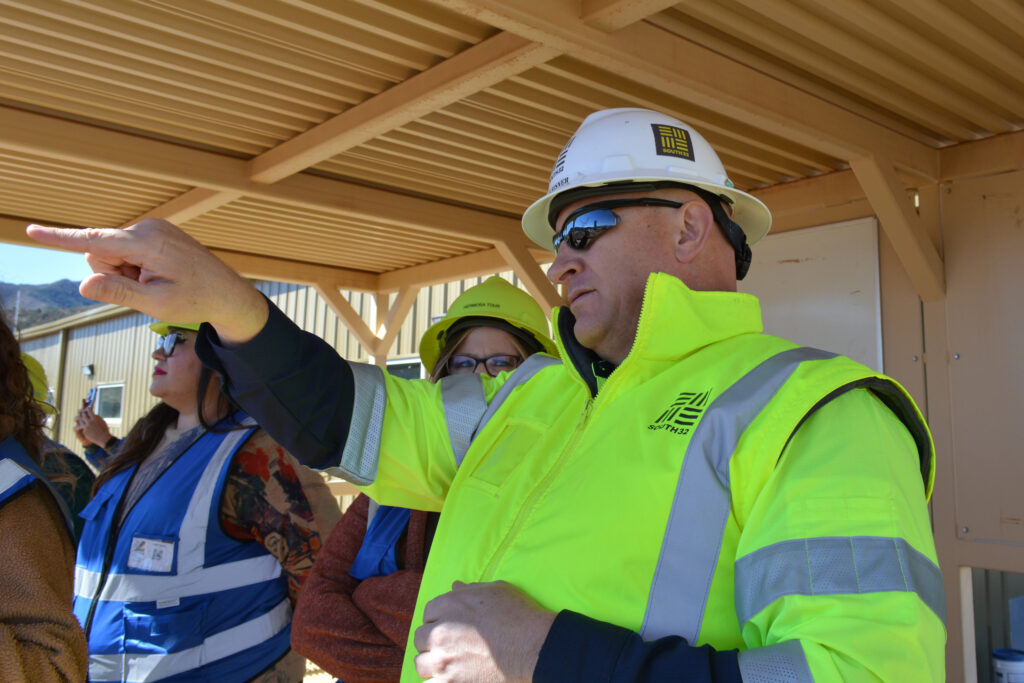
Gardner’s samples, however, are sent to the ADEQ, tested at its contracted laboratory and logged into both state and federal databases.
And while the treatment plant can clean some of the water pumped from the aquifer, it has the potential to activate and move contaminants already existing in local creeks and streams with the surge it releases.
“Harshaw Creek is largely ephemeral, flowing only in response to precipitation events,” the EIS states, but the increased discharge from the water treatment plant will change that, which “will infiltrate through the creek bed and could leach metals present in naturally occurring sediments and sediments that may have been impacted by historic mining and subsequently deposited in the channel.”
About This Story
Perhaps you noticed: This story, like all the news we publish, is free to read. That’s because Inside Climate News is a 501c3 nonprofit organization. We do not charge a subscription fee, lock our news behind a paywall, or clutter our website with ads. We make our news on climate and the environment freely available to you and anyone who wants it.
That’s not all. We also share our news for free with scores of other media organizations around the country. Many of them can’t afford to do environmental journalism of their own. We’ve built bureaus from coast to coast to report local stories, collaborate with local newsrooms and co-publish articles so that this vital work is shared as widely as possible.
Two of us launched ICN in 2007. Six years later we earned a Pulitzer Prize for National Reporting, and now we run the oldest and largest dedicated climate newsroom in the nation. We tell the story in all its complexity. We hold polluters accountable. We expose environmental injustice. We debunk misinformation. We scrutinize solutions and inspire action.
Donations from readers like you fund every aspect of what we do. If you don’t already, will you support our ongoing work, our reporting on the biggest crisis facing our planet, and help us reach even more readers in more places?
Please take a moment to make a tax-deductible donation. Every one of them makes a difference.
Thank you,

Wyatt Myskow
Reporter, Phoenix
Wyatt Myskow covers drought, biodiversity and the renewable energy transition throughout the Western U.S. Based in Phoenix, he previously reported for The Arizona Republic and The Chronicle of Higher Education. Wyatt has lived in the Southwest since birth and graduated from Arizona State University with his bachelor’s degree in journalism.