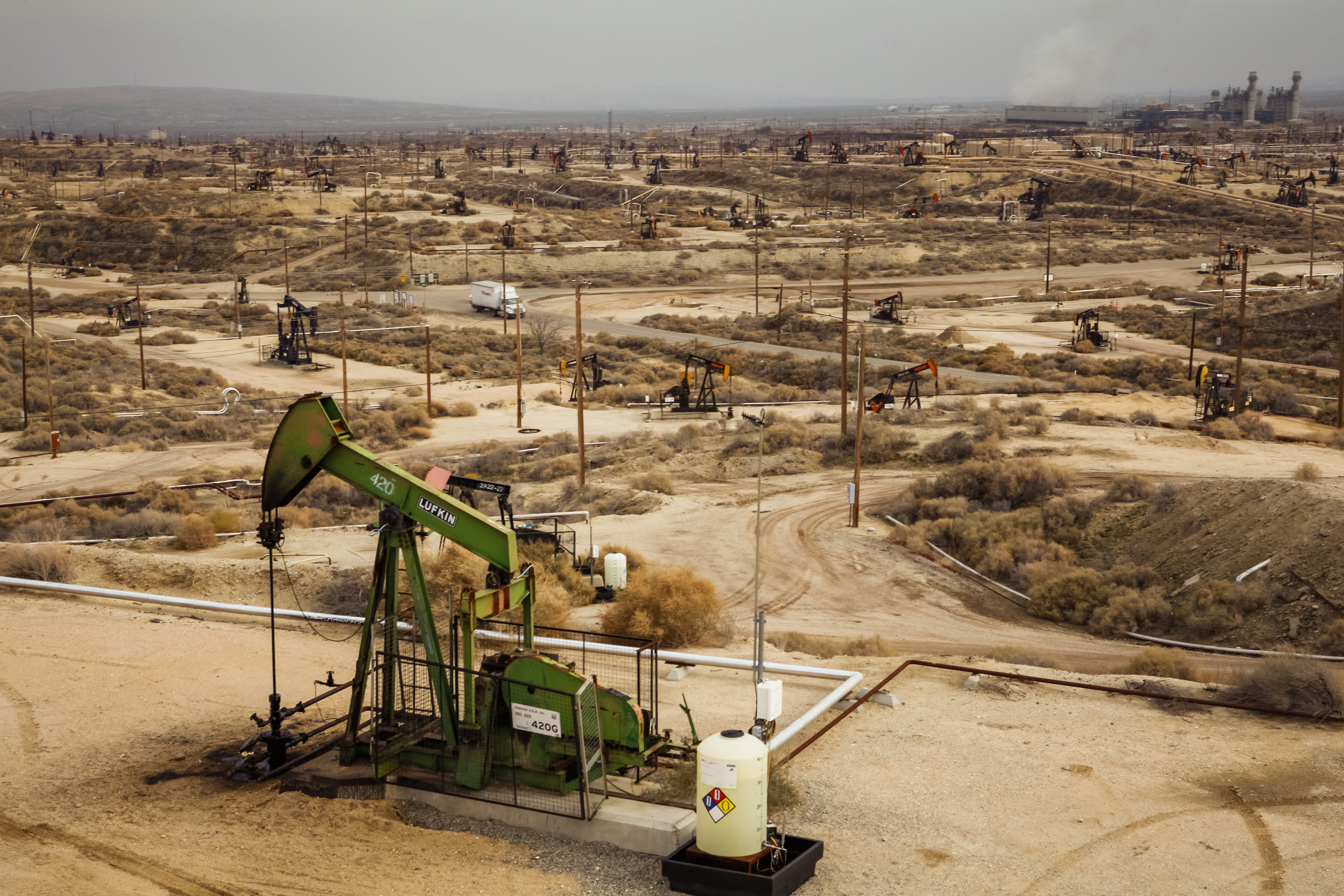


While President Donald Trump pursues Venezuelan oil reserves abroad, his administration continues to double down on efforts to expand drilling in the United States, most recently in California.
The Bureau of Land Management (BLM) on Monday proposed plans to open nearly 2 million acres of land from Santa Barbara to the Bay Area for oil drilling and fracking, including land adjacent to national and state parks, along coastlines and waterways, and areas near schools and homes.
The last time Trump was in office, his efforts to open these areas to fossil fuel development were thwarted by lawsuits from environmental groups and the state alleging that environmental reviews for the plans did not adequately account for the impacts of fracking. While some experts and observers are waiving off the renewed push as a symbolic act that is again unlikely to amount to much, others are concerned about the new effort.
“They think that they’ve assessed the fracking issue, and they should be free and clear to go now,” said Cooper Kass, an attorney with the Center for Biological Diversity (CBD), which sued over the previous environmental reviews. “They’re more encouraged, and that makes us more concerned about them going forward.”
The BLM did not respond to a request for comment.
Trump’s attempt to open up California public lands for drilling began in 2019, when the BLM released proposals to open about 1.2 million acres overseen by its Bakersfield office and about 800,000 acres overseen by its Central Coast office to drilling and fracking. The lands are a mix of BLM-owned and managed public lands and lands known as split estates, where other entities own the surface, but the federal government owns the mineral rights below.
Environmental groups including the Center for Biological Diversity, Los Padres ForestWatch and the Sierra Club, along with outdoor clothing company Patagonia, the state of California and local governments, sued over the environmental impact reviews of the plans. The lawsuits alleged that the reviews failed to adequately address environmental impacts, including by overlooking the impacts of fracking and habitat fragmentation, and underestimating potential air emissions and the amount of drilling likely to occur with new technologies.
In 2020, the administration put 4,000 acres in Kern County up for auction anyway, but development was blocked by additional lawsuits. Settlements reached in 2022 barred any new oil leases on the lands in question until the BLM produced new environmental analyses, which they released on Monday.
The new analyses propose moving ahead with the 2019 designs.
“They’re saying ‘Not much has changed, and we’re sticking with what we decided before,’” said Kass.
An analysis from the Central Coast field office would allow new drilling in Alameda, Contra Costa, Monterey, San Benito, San Mateo, Santa Clara, Santa Cruz, Fresno, Merced and San Joaquin counties. It found “minor” and “minimal” impacts to regional air quality and water resources, as well as to five newly listed endangered species in the area including the foothill yellow-legged frog, western spadefoot toad and northwestern pond turtle. The analysis concluded “there is not enough sufficient evidence; or significant new information; or changes in circumstance to recommend a new amendment to the 2019 RMPA [Resource Management Plan Amendment].”
An analysis from the Bakersfield office dealing with Fresno, Kern, Kings, Madera, San Luis Obispo, Santa Barbara, Tulare and Ventura counties, came to similar conclusions, and deemed no amendments were necessary to the BLM’s 2014 proposal to open up over 1 million acres for drilling, the basis for the Trump administration’s 2019 proposal for that area.
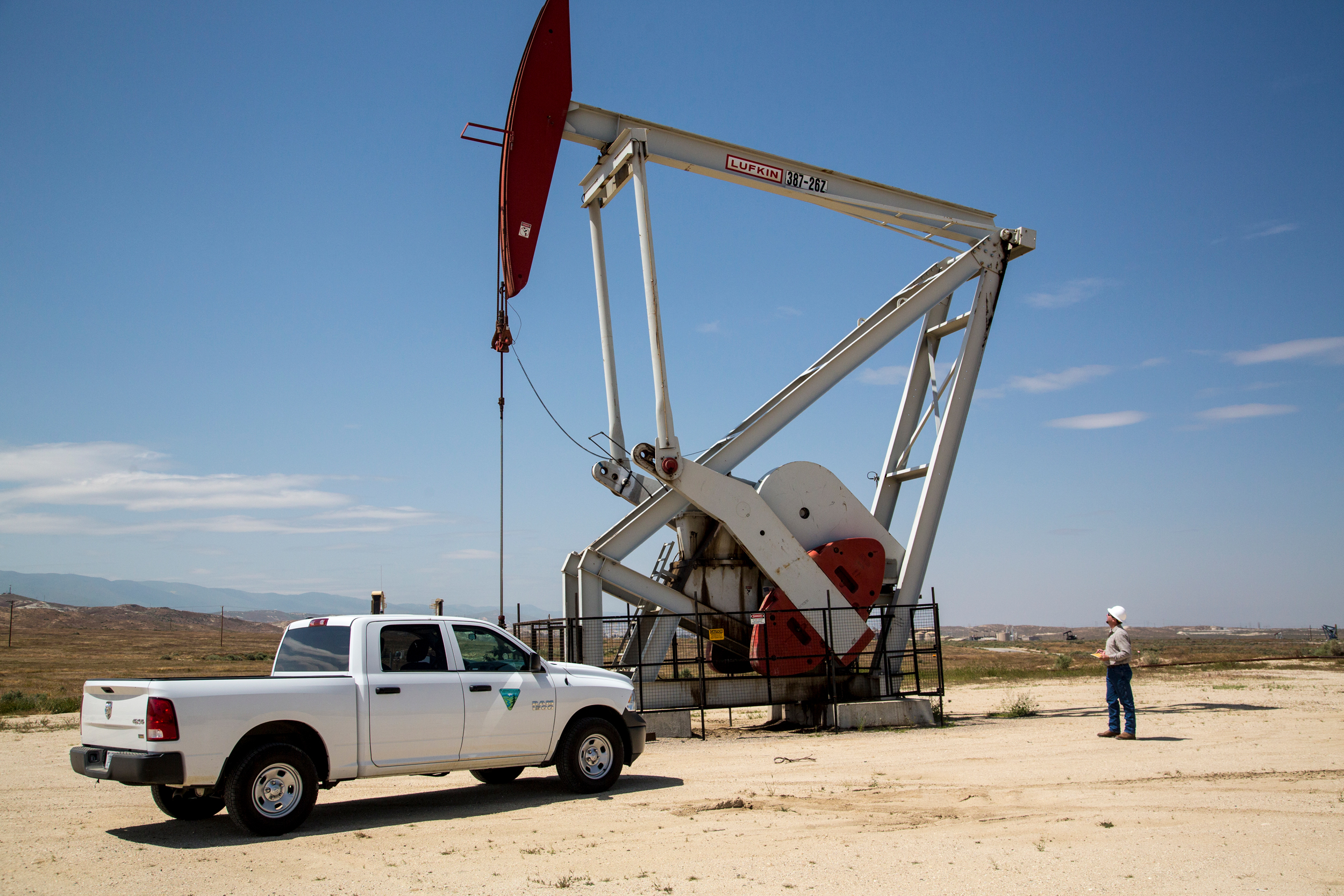
The plans could also allow for drilling near the Carrizo Plain National Monument and Pinnacles National Park, according to CBD. Los Padres ForestWatch, a group that has been mapping the potential impacts of the BLM’s proposal in the Bakersfield office areas, said the plan would allow leasing across parts of the Sierra Madre Mountains, areas next to Los Padres National Forest and of mineral rights under Montaña de Oro State Park and the Pacific Crest Trail.
“This proposal puts some of the Central Coast’s most cherished public lands, beaches and drinking water sources directly in the crosshairs of expanded fossil fuel development,” said Jeff Kuyper, executive director of Los Padres ForestWatch, in a statement.
But it remains to be seen if any of the fossil fuel development will wind up happening in the areas the BLM has proposed opening in California. The release of the proposals this week opened up a public comment period that will close on March 6, with the agency expecting to make a final decision by July 2026 on whether to open the lands to drilling and begin holding lease sales. Environmental groups are waiting in the wings.
“BLM still has a chance to do the right thing. They still have a chance to change their final decision after getting comments here,” said Victoria Bogdan Tejeda, another attorney with CBD. “We have sued in the past because we think that their decisions have violated the law, and right now they are choosing to adopt the same decisions that they made in the past. We’re going to look at it very closely.”
This story is funded by readers like you.
Our nonprofit newsroom provides award-winning climate coverage free of charge and advertising. We rely on donations from readers like you to keep going. Please donate now to support our work.
Donate NowOthers noted that the analysis failed to take into account new laws California has passed in recent years, including banning fracking and requiring that new oil wells be sited 3,200 feet away from schools and homes. The Trump administration filed a lawsuit against the new California laws on Wednesday.
New studies have also emerged about the public health impacts of oil and gas production.
“They didn’t look at any of that new information or change of circumstances and analyze how any of that could change the impact that they identified,” said Michelle Ghafar, an attorney with Earthjustice, which represented environmental groups in some of the 2020 lawsuits.
Then there’s the question of whether there would even be much interest among oil drillers, especially when oil prices are low, given the difficulty and high cost of extracting crude from California’s aging fields.
The Western States Petroleum Association trade group called the plan a “common-sense proposal to ensure American energy dominance, support local economies and provide the energy the West depends on,” in an emailed statement. But analysts say it’s unlikely there will be much excitement for new lease auctions.
“California is distinct from other U.S. oil producing regions in that most production comes from shallow, conventional and heavy oil fields rather than tight oil reservoirs,” Wood Mackenzie analyst Matt Woodson said in a statement. “The complexity and unique nature of the heavy oil fields here and the state’s regulatory environment make it a hard sell for new entrants.”
He noted that BLM lands located in Kern County would likely be the most attractive, given proximity to existing infrastructure. Last year, California Gov. Gavin Newsom signed a bill to streamline permitting of thousands of new wells in Kern County with the aim of bolstering and stabilizing supply for in-state refineries. But it remains to be seen how many companies will actually embark on new development projects there.
“It’s not unlike the issue in Venezuela, where it’s not really clear that companies will rush in to invest billions of dollars,” said Antoine Halff, chief analyst and co-founder of Kayrros, a climate and energy data analytics company.
“In California, it’s a different context. It’s not the same kind of political risk, but there’s still some risk. The infrastructure is aging, the fields are aging. I wouldn’t expect anybody to rush in and sink in billions of dollars to undertake projects that could take a long time to pay off.”
About This Story
Perhaps you noticed: This story, like all the news we publish, is free to read. That’s because Inside Climate News is a 501c3 nonprofit organization. We do not charge a subscription fee, lock our news behind a paywall, or clutter our website with ads. We make our news on climate and the environment freely available to you and anyone who wants it.
That’s not all. We also share our news for free with scores of other media organizations around the country. Many of them can’t afford to do environmental journalism of their own. We’ve built bureaus from coast to coast to report local stories, collaborate with local newsrooms and co-publish articles so that this vital work is shared as widely as possible.
Two of us launched ICN in 2007. Six years later we earned a Pulitzer Prize for National Reporting, and now we run the oldest and largest dedicated climate newsroom in the nation. We tell the story in all its complexity. We hold polluters accountable. We expose environmental injustice. We debunk misinformation. We scrutinize solutions and inspire action.
Donations from readers like you fund every aspect of what we do. If you don’t already, will you support our ongoing work, our reporting on the biggest crisis facing our planet, and help us reach even more readers in more places?
Please take a moment to make a tax-deductible donation. Every one of them makes a difference.
Thank you,

Blanca Begert
Reporter, California
Blanca Begert covers climate change and the environment in California. She previously reported on state climate policy and politics as the California climate and energy reporter at Politico. Before that, she was a fellow at Grist and an award-winning editor and video producer at PBS SoCal. She has a master’s degree in Environmental Science from the Yale School of the Environment, where she focused on forest management, conservation, and international climate policy. Her reporting has taken her across the United States, Latin America, and China. Blanca lives in Los Angeles and is originally from Miami, Florida.