

Halfway through her inaugural speech in front of thousands of New Jerseyans in late January, newly elected governor Mikie Sherrill paused to write her signature on two documents. They were her first two executive orders.
In the first “whereas” clause of the first order, Sherrill declared that “the top priority” of her administration was “to make New Jersey more affordable.” Two paragraphs down she named the problem: “the current cost of electricity has reached the point of crisis for many residents and families.”
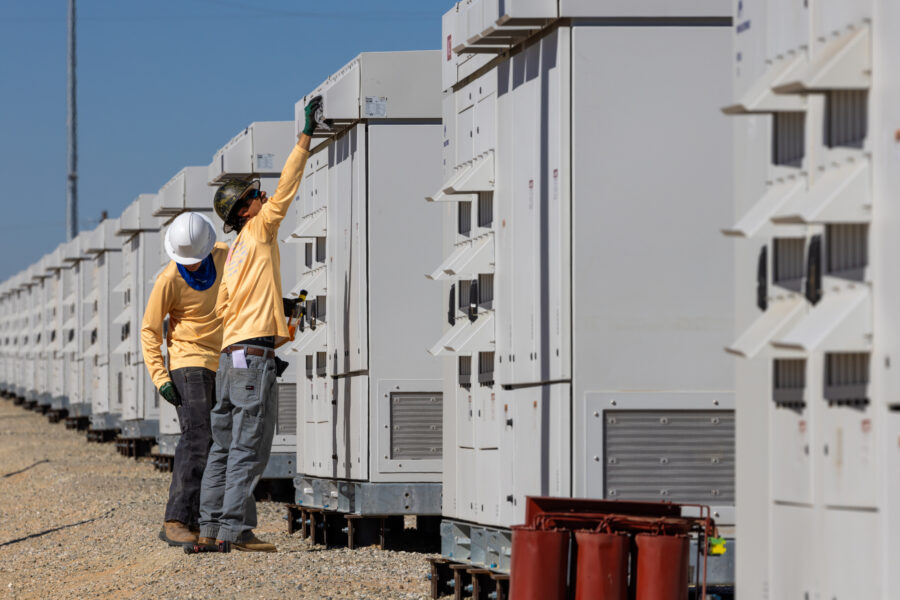
Through the orders, Sherrill declared a state of emergency on utility costs, ordered a pause on rate hikes, sought to give New Jerseyans bill relief and called for expediting new solar and storage as well as modernizing gas plants.
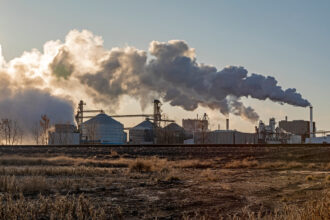
Sherrill took her oath as electricity costs were rising in New Jersey and the PJM regional grid came under new strain from a wave of data centers being built to power the AI boom.
New Jersey has it worse than many of the states PJM serves, according to Washington, D.C.-based think tank Third Way, because of its reliance on natural gas to generate electricity. In the summer of 2025, New Jerseyans saw a jump in their electricity bills of about 20 percent. Experts warn of steeper rises in the future if not enough energy comes to service the power-hungry facilities.
A Temporary Solution
Sherrill’s first order directs the New Jersey Board of Public Utilities to “pursue a pause, abeyance, or modification” of scheduled or ongoing processes in which utilities seek rate increases.
The pause has not come into effect yet as the BPU is still formulating its enforcement and duration.
New Jersey Rate Counsel Director Brian Lipman worries that a pause would be a “credit card” solution, where consumers may not pay increases immediately, but once the pause ends, the utilities will charge them for all the delayed increases.
“As much as it pains me to say it, we do have to take care of the economic health of our utilities,” Lipman said, recommending that the pause not drag on beyond a year.
Alex Ambrose, an analyst with the nonpartisan think tank New Jersey Policy Perspective, offered NJ Transit as a cautionary tale. Under former governor Phil Murphy, fare rates remained flat for almost a decade. Then in 2024, NJ Transit approved a 15 percent increase.
“So it’s clear that simply doing a pause on its own does not solve the problem. You need to make sure that we’re not sacrificing the long-term affordability for those short-term wins that can feel good,” Ambrose said.
Bill Relief From Green Funds
In the first executive order, Sherrill then directed the BPU to create bill credits to subtract from people’s energy bills and explore other forms of “relief” by no later than July of this year.
To fund this, the order points to two buckets that often sit at the center of New Jersey energy politics: First, money from the Societal Benefits Charge (SBC), which is a charge that appears on electricity bills intended to fund “public purpose” programs like clean energy. Second, proceeds from the state’s participation in the Regional Greenhouse Gas Initiative (RGGI), which is a multistate cap-and-trade program whose auction proceeds fund climate programs.
The two have built up sizable balances in recent years. The state’s Clean Energy Fund, financed through the SBC, held about $590 million in unspent money as of June 30, 2024. The Global Warming Solutions Fund, which receives proceeds from the RGGI, had a balance of roughly $535 million as of June 2025.
Relief, Ambrose said, is often about stopping the “bleeding” first, but it should not be the end of the policy conversation. Lipman also described the credits on electric bills as a form of triage, and not a cure.
Allison McLeod, the interim executive director of the New Jersey League of Conservation Voters, said her organization supported bill relief, but also called on the state not to abandon investments in clean energy.
“We acknowledge and understand that there are immediate concerns that families have, immediate problems. But those are going to be monthly problems until we find a long-term solution,” said McLeod.
Modernizing Gas Plants?
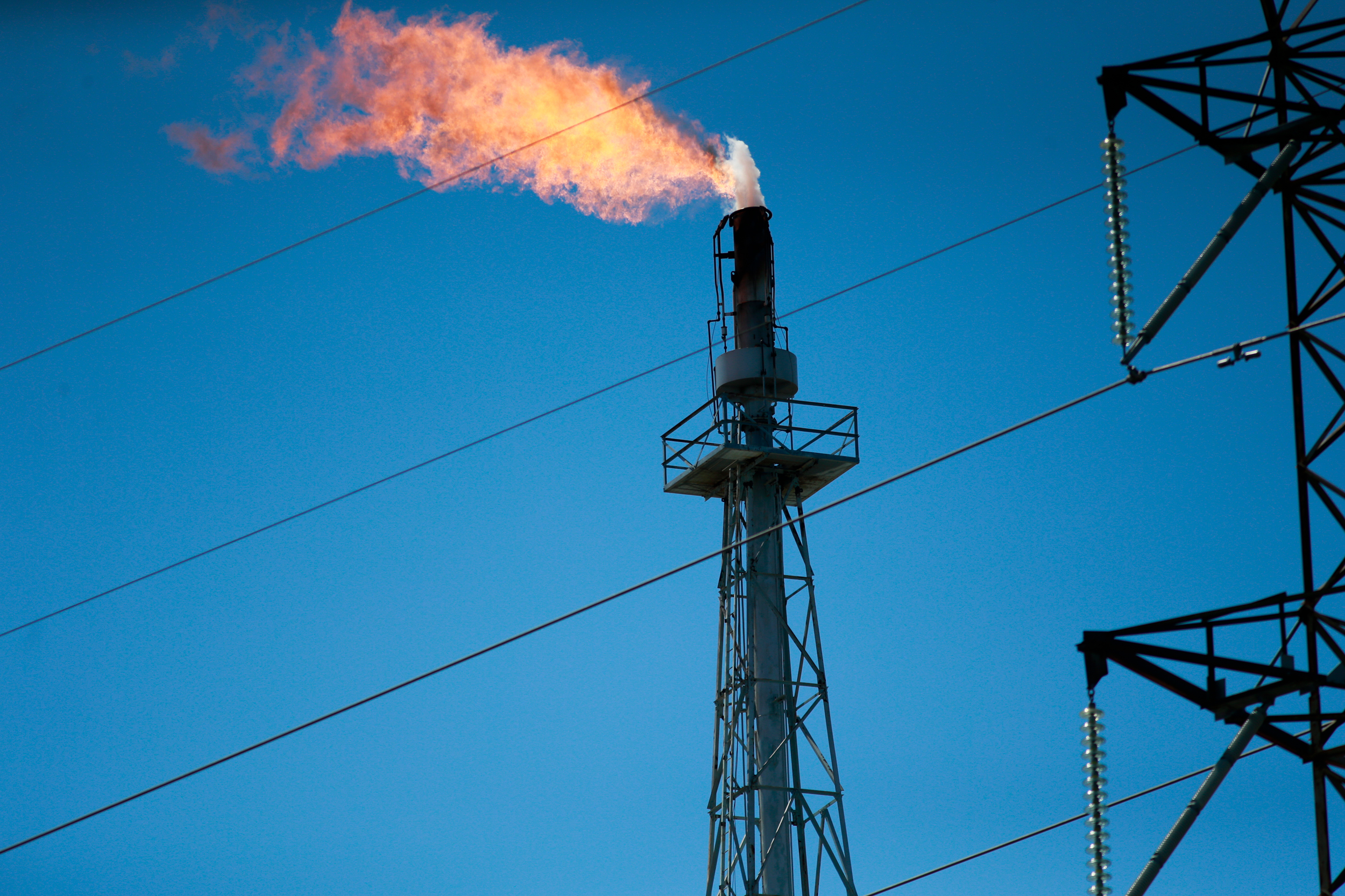
Pursuing this long-term solution is Sherrill’s second executive order. It declares a State of Emergency to accelerate building solar and battery projects and to “modernize” gas-fired power plants.
Natural gas provides about 46 percent of the fuel used to make electricity in New Jersey. Renewables provide under two percent. The rest comes from nuclear power.
Modernizing gas plants would mean making them more efficient and upgrading them to reduce their greenhouse gas emissions.
This story is funded by readers like you.
Our nonprofit newsroom provides award-winning climate coverage free of charge and advertising. We rely on donations from readers like you to keep going. Please donate now to support our work.
Donate NowRate Counsel Director Lipman said he would support modernizing gas plants if utilities wouldn’t later charge consumers for the upgrades.
For Ambrose and McLeod, the state would still need to comply with its goal of 100 percent clean energy by 2035, which means all the electricity sold in New Jersey would have to come from emissions-free sources by that year.
“Gas power plants will only increase in unreliability. They will continue to become more expensive, and they will continue to emit greenhouse gases at a time when we do not need any more greenhouse gases,” said Ambrose.
Even as Sherrill has pushed for more clean-energy development, projects nationwide have slowed as developers face uncertainty over federal tax credits and rising equipment costs from tariffs. Policy experts have said that states would have to fill in the vacuum.
Also outside the reach of Sherrill’s orders, regional grid operator PJM Interconnection continues to lag in connecting more energy projects and in formulating a policy that would address the data center problem.
Sherrill’s Toolkit
Sherrill capitalized on New Jersey policies that have given the state an advantage leaning into renewables.
While utility-scale solar projects are facing restrictions, the state continues to expand its community solar program and residential solar incentives. According to state data, the Garden State saw an increase of about 307 megawatts of capacity from solar installations in 2025. Over half of the increase, about 167 MW, came from residential solar.
In Sherrill’s second EO, she ordered the BPU to open registration of 3,000 MW for community solar projects. Those involve residents opting into having their households partially energized by solar power, which could lead to rebates that appear on their bills.
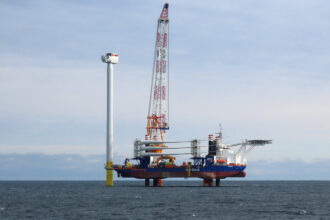
Meanwhile, offshore wind for New Jersey is “dead” for at least the next two and a half years, according to Lipman, as a 2025 White House memorandum temporarily withdrew offshore wind leasing areas from consideration, and the Interior Department later announced a pause on leases for large projects under construction.
Taking a chance on nuclear energy, Sherrill also established with her second EO a Nuclear Power Task Force to lead the state government in formulating a “strategy for the development of new nuclear generation.”
“It won’t be easy, and hard choices have to be made,” Sherrill said.
“But luckily, we don’t need ‘easy’ here in New Jersey. We have grit. We’re tough. And if you hurt our families, we’re going to fight,” she added.
About This Story
Perhaps you noticed: This story, like all the news we publish, is free to read. That’s because Inside Climate News is a 501c3 nonprofit organization. We do not charge a subscription fee, lock our news behind a paywall, or clutter our website with ads. We make our news on climate and the environment freely available to you and anyone who wants it.
That’s not all. We also share our news for free with scores of other media organizations around the country. Many of them can’t afford to do environmental journalism of their own. We’ve built bureaus from coast to coast to report local stories, collaborate with local newsrooms and co-publish articles so that this vital work is shared as widely as possible.
Two of us launched ICN in 2007. Six years later we earned a Pulitzer Prize for National Reporting, and now we run the oldest and largest dedicated climate newsroom in the nation. We tell the story in all its complexity. We hold polluters accountable. We expose environmental injustice. We debunk misinformation. We scrutinize solutions and inspire action.
Donations from readers like you fund every aspect of what we do. If you don’t already, will you support our ongoing work, our reporting on the biggest crisis facing our planet, and help us reach even more readers in more places?
Please take a moment to make a tax-deductible donation. Every one of them makes a difference.
Thank you,

Rambo Talabong
Contributor
Rambo Talabong is a multimedia climate reporter based in New York City. Before moving to the U.S., he led award-winning investigations into the Duterte drug war for Rappler, the Nobel Prize-winning newsroom in Manila. His reporting has been recognized by the Global Investigative Journalism Network, the Society of Publishers in Asia, and the Human Rights Press Awards. He studied data journalism at Columbia University and is currently pursuing a master’s in science journalism at New York University. He has faced—and won—two libel suits in the Philippines over his reporting.