

For years, David Waggonner designed courthouses and other public buildings at his architectural practice, Waggonner & Ball, in New Orleans. Then Hurricane Katrina struck in 2005, and Waggonner became convinced that New Orleans was getting something fundamentally wrong about its approach to flooding and water.
For help, Waggonner turned to the Netherlands, a country with centuries of flood experience and a different attitude toward handling it. The result was a series of workshops between Dutch and U.S. engineers and architects, and a design philosophy dubbed “Living With Water,” which treats water as an asset to integrate into the community rather than a threat to engineer away.
Inside Climate News talked to Waggonner about Living With Water, and its nature-friendly approach. This interview has been edited for length and clarity.
PHRED DVORAK: You’ve said part of the problem in New Orleans was that water tends to be engineered out of sight—behind canal walls, for instance.
DAVID WAGGONNER: People in New Orleans saw flood management as an engineered solution. People still have an aversion to visible water. A great part of the [area of] New Orleans is water. But it’s not visible. The water assets of New Orleans are not leveraged to this day.
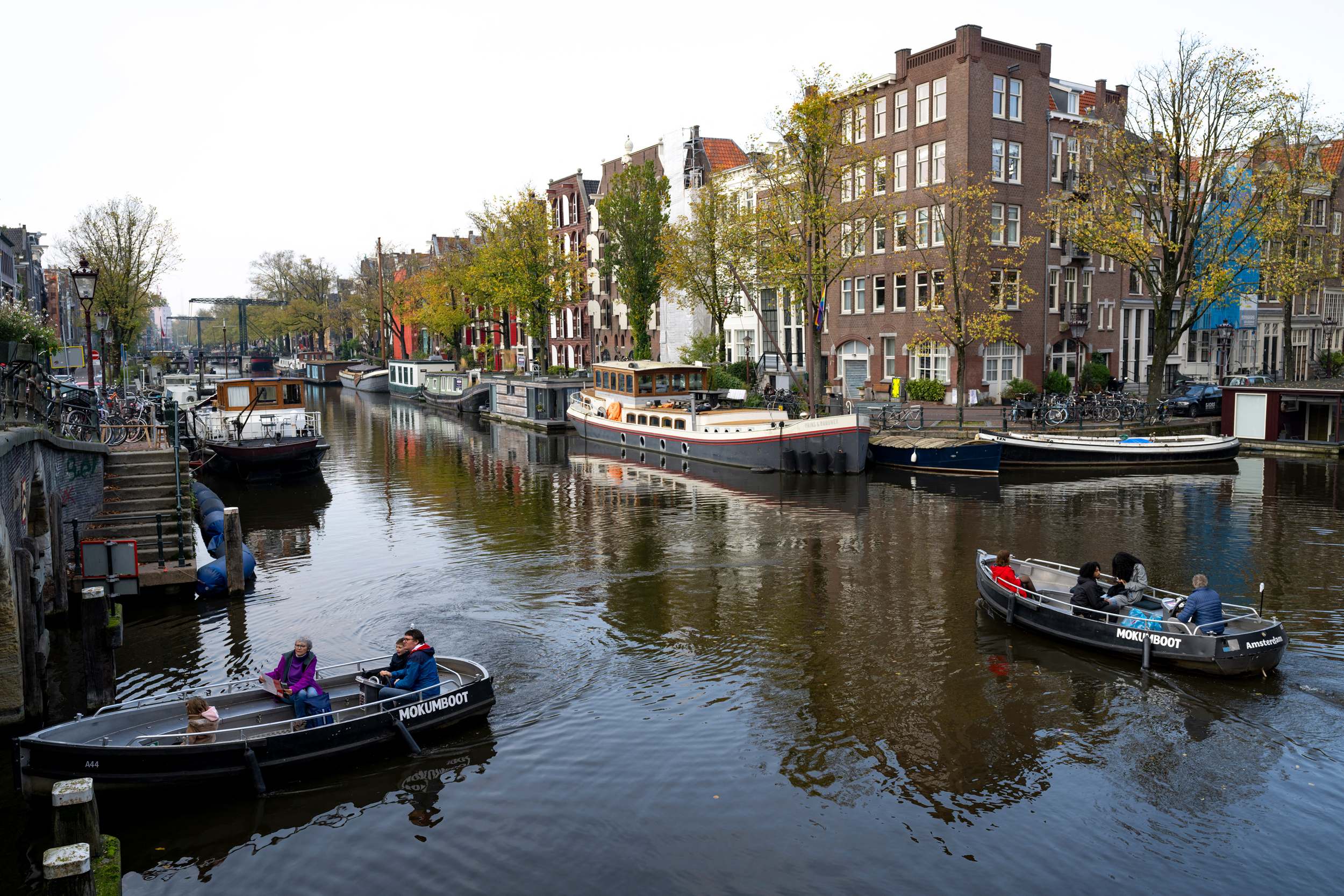
If you go to the Netherlands, water is everywhere—in the fields, in the city. When the Dutch came to New Orleans [in 2008], the first question they asked was: “You say you have a water problem—where’s the water?”
You can’t live with water if you can’t see water.
DVORAK: Does living with water mean living with flooding? Living with inconvenience?

WAGGONNER: The Dutch would convert that question to dry feet. You want dry feet.
If I’m wet up to my knees and it goes away, maybe I’m OK. If it comes into my house, it’s going to be a long-term problem. So living with water is: Where is it OK to get wet? It’s trying to get water to where it’s good to have water.
In Jefferson Parish, which is next to Orleans [Parish] in Louisiana, pretty soon after Katrina, they built a levee around a park. And they had a little bitty pump and they just pumped the neighborhood water into the park. That’s living with water. They’ll play in there, but the people weren’t living with water in their house or car.
DVORAK: What are the economics of gray infrastructure like seawalls and pumps, versus green infrastructure like bioswales and living coastlines?
WAGGONNER: The walls are very expensive. If you can use a dune, use a dune.
In Miami, the [Army] Corps of Engineers wanted us to build a wall on the city side. And we went down and said, “Well, why don’t you reinforce Miami Beach?” If you can stop the water and slow it down there, you will need a lot less wall over here.
Walls and levees are expensive. And if they’re done poorly, they also remove you from the real asset of living in these places, which is [being] next to water. That’s the challenge New Orleans faces because it’s so long been cut off by the port and other things from the water. It’s harder to get people to understand they’re a delta city or coastal city.
DVORAK: What are the perils of technological, engineered solutions? Where do they have a role?
WAGGONNER: I see us becoming wedded to harmful technologies. Because technology is part of systems that are economic, you’re not able to move away from them. It’s habit forming. Can we do without them? No.
People talk about mangroves in flood-defense systems. They only work for a certain thing. They’re insufficient to the big event. We’re fairly certain that you can’t build and maintain enough bioswales in New Orleans to fix the problem. You’ve got to get to scale. You’ve got to do the math.
So it’s not like it’s an either or. It’s the combination [of natural and engineered solutions]. And more awareness of what the technology will do and just what the downstream is. It’s horrific: We make things and we don’t know how to decommission them.
About This Story
Perhaps you noticed: This story, like all the news we publish, is free to read. That’s because Inside Climate News is a 501c3 nonprofit organization. We do not charge a subscription fee, lock our news behind a paywall, or clutter our website with ads. We make our news on climate and the environment freely available to you and anyone who wants it.
That’s not all. We also share our news for free with scores of other media organizations around the country. Many of them can’t afford to do environmental journalism of their own. We’ve built bureaus from coast to coast to report local stories, collaborate with local newsrooms and co-publish articles so that this vital work is shared as widely as possible.
Two of us launched ICN in 2007. Six years later we earned a Pulitzer Prize for National Reporting, and now we run the oldest and largest dedicated climate newsroom in the nation. We tell the story in all its complexity. We hold polluters accountable. We expose environmental injustice. We debunk misinformation. We scrutinize solutions and inspire action.
Donations from readers like you fund every aspect of what we do. If you don’t already, will you support our ongoing work, our reporting on the biggest crisis facing our planet, and help us reach even more readers in more places?
Please take a moment to make a tax-deductible donation. Every one of them makes a difference.
Thank you,