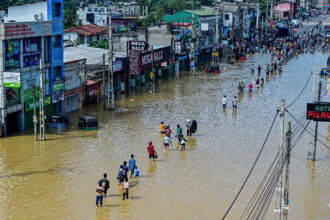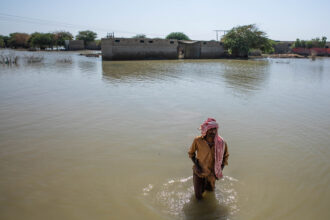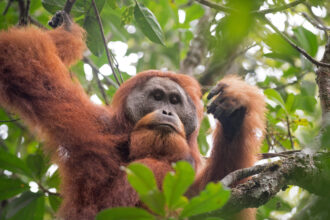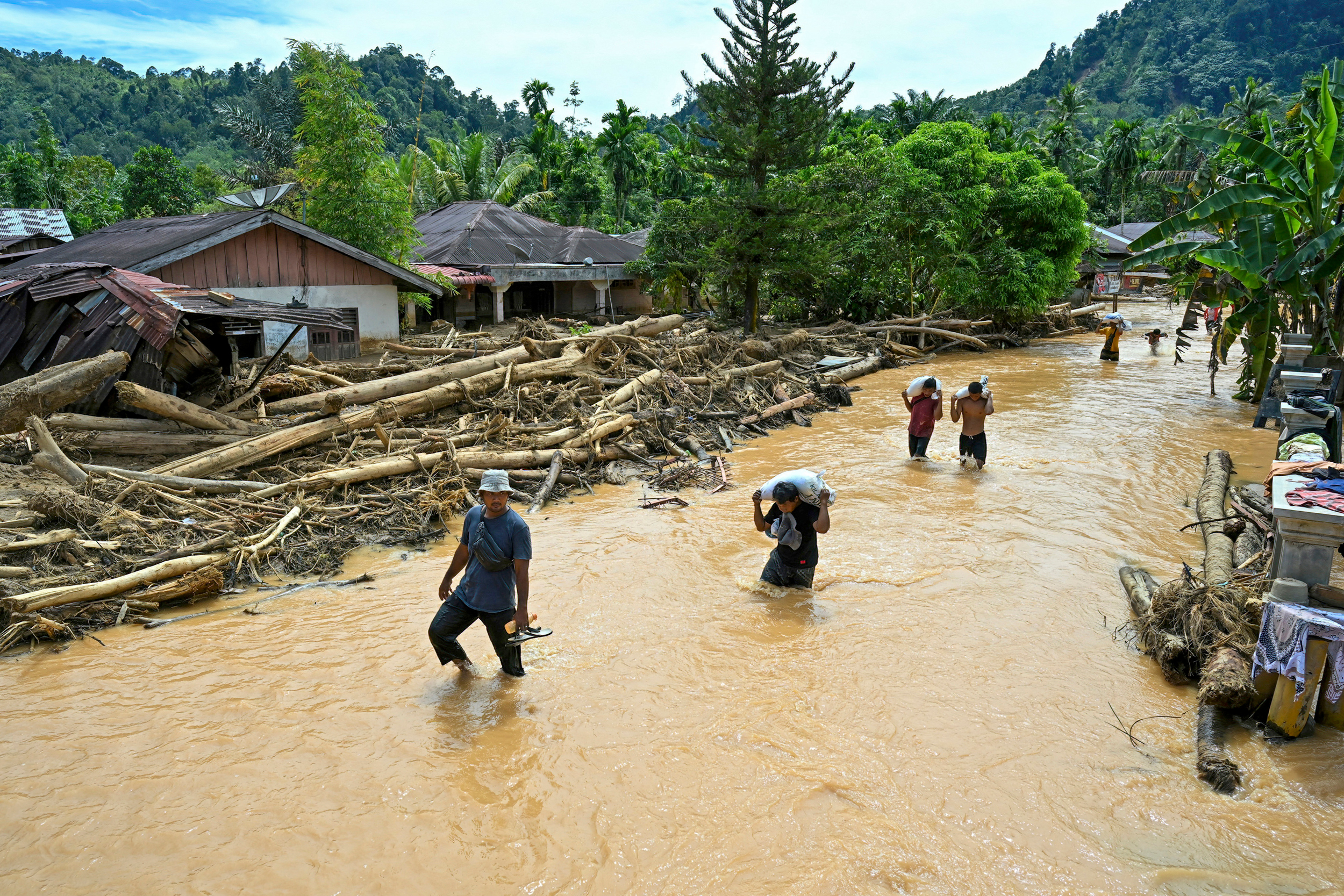


Nearly three weeks after a cyclone ripped through northern Sumatra, killing more than 1,000 people, the Indonesian region remains devastated. Towns are cut off and more than 100,000 people have been displaced. Now, a new analysis reveals that the damage extended into the habitat of a critically endangered orangutan species, too, likely killing a significant portion of the remaining population.
The Tapanuli orangutan is the world’s rarest great ape, with fewer than 800 thought to remain in the wild. It lives across three isolated patches of mountainous forest about the size of Los Angeles that are being eroded by construction of a hydroelectric dam, a gold mine, palm oil plantations and other encroachments.
An initial assessment of satellite imagery has revealed widespread flood damage and landslides across the forbidding terrain, meaning “that a single extreme weather event has likely pushed the Tapanuli orangutan closer towards population collapse,” the analysis said.

The preprint assessment was conducted by an international team of scientists and was published this week. It has not yet been peer reviewed. Based on the extent of damage within the forest, the scientists estimate at least 30 orangutans could have been killed and possibly many more, dealing a heavy blow to the species’ long-term chances of survival.
Cyclones rarely form along the equator, and a rapid attribution study said that climate change has been increasing extreme rainfall in the region. One weather station in Sumatra recorded nearly 40 inches of rain over six days, according to the orangutan study.
Yet scientists, activists and government officials say the devastation was likely exacerbated by widespread deforestation, which stripped the land of its capacity to absorb rainfall and retain soil. From 2001 to 2024, North Sumatra province lost 28 percent of its tree cover, some 6,200 square miles in all, according to Global Forest Watch. Images across the area show massive piles of logs jamming rivers after the floods, evidence of clearing upstream.
“It’s like a sea of logs,” said Panut Hadisiswoyo, a co-author on the analysis and founder of the Orangutan Information Centre, a conservation group in Sumatra.
The same deforestation and industrial activity that have driven the Tapanuli orangutan to the brink, then, seems to have contributed to the disaster now caused by a rare, climate-fueled cyclone.
Earlier this month, Indonesia’s environment ministry suspended operations at industrial activities in the area where the Tapanuli orangutan lives, among the hardest hit by the floods. A hydroelectric dam being built in the middle of the ape’s habitat is among the projects affected by the suspension. The ministry said forest clearing by the dam and two other operations had worsened flooding.
The analysis of satellite imagery shows the damage also extended deep into the forest, even in areas with little human activity.
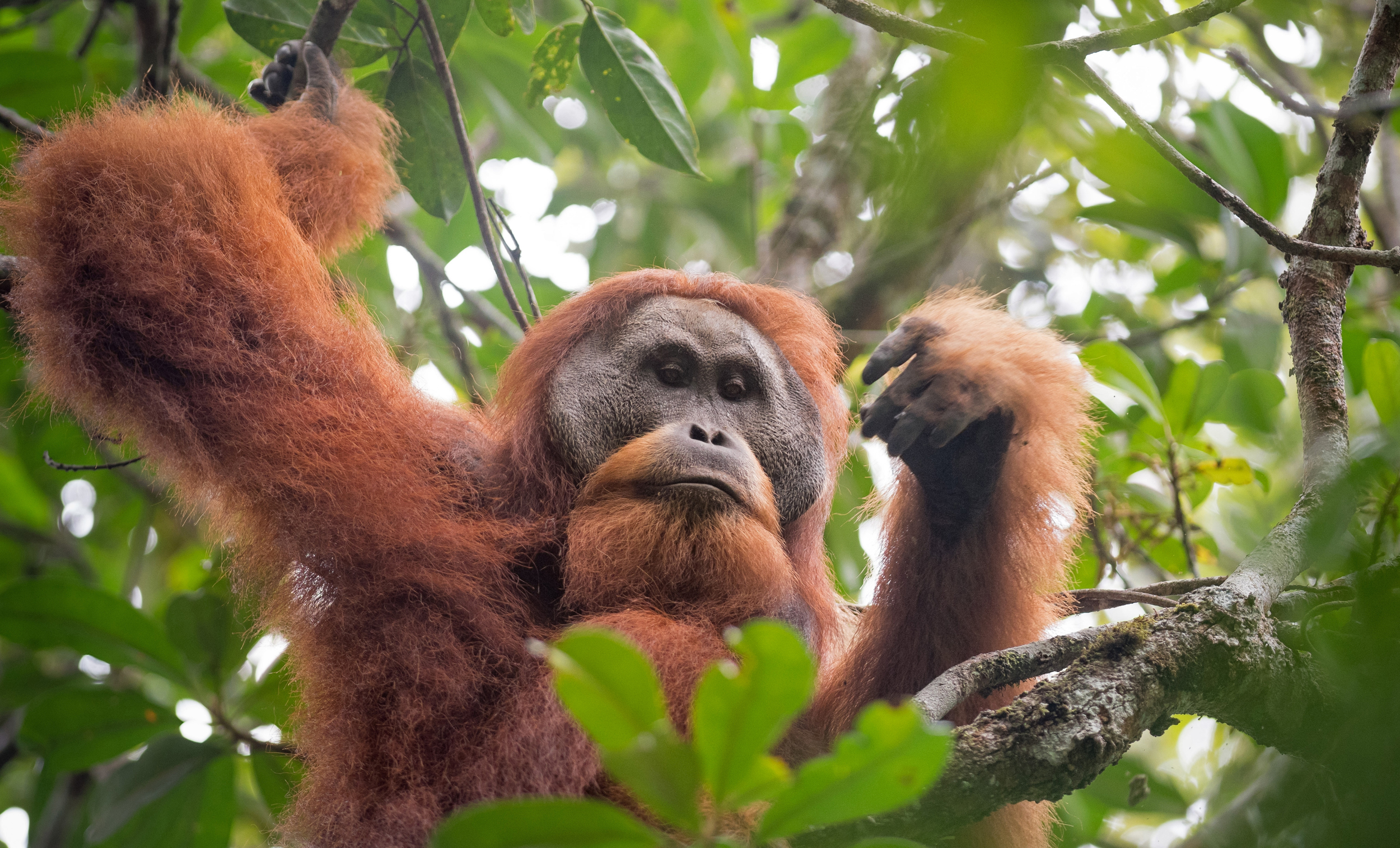
The team of scientists used images from before and after the storm to estimate the extent of forest loss within the largest block of the orangutan’s habitat, an area home to nearly 600 of the 800 Tapanulis. The pictures show once solid green landscapes, now gashed with brown streaks—soil exposed by landslides and riverbanks stripped bare. Clouds covered about a third of the area, but of the parts the scientists could see, nearly 6 percent of the forest appears to have been lost.
The scientists then compared the damage with data they collected on the population density of Tapanuli orangutans across their habitat to estimate how many individuals were likely affected. The team determined that an estimated 33 orangutans could have been killed in the areas they could see. If similar damage occurred in the cloud-covered regions, it would mean more than 50 orangutans could have perished. Already, one orangutan’s body has been recovered from debris downstream.
If the apes faced no other threats, their population could likely recover over a period of years, said study co-author Serge Wich, a professor of primate biology at Liverpool John Moores University in the United Kingdom. Yet the species was already under grave threat from habitat encroachment by industrial activity and conflict with humans, and “it’s the combination of all the threats that makes this more worrying,” said Wich, who was part of a team that helped identify the Tapanuli orangutans as a distinct species.
Already, scientists said, Tapanuli orangutans had been restricted to between 2 percent and 5 percent of their historical range. Now, an additional 5 percent to 10 percent of their current habitat has been stripped of the trees they depend on for food, shelter and movement.

Andine Fahira Lubis, advocacy officer with WALHI North Sumatra, an environmental group, said the government should use the pause it has ordered in industrial operations to reassess its management of the area. Yet she said her organization’s local contacts have reported that industrial operations continue despite the government orders.
“We think everything is just performative,” Lubis said of the government ministries’ announcements.
Neither the Indonesian Environment Ministry nor the Directorate General of Natural Resources and Ecosystem Conservation, which manages wildlife, replied to requests for comment.
Amanda Hurowitz, senior director at Mighty Earth, a global advocacy group, said the government could use the tragedy unleashed by the disaster to reassess its forest management in the region.
“It looks like a degraded landscape,” Hurowitz said of the satellite imagery. “The species is so much closer to extinction potentially that the whole thing needs to be rethought. And this pause that the government has enacted, it’s an opportunity to get things right.”
Hadisiswoyo, with the Orangutan Information Centre, said the damage is a reminder of how closely intertwined the fate of the orangutan is with the humans surrounding it.
“Humans live in the lowlands that depend on the healthy forest and healthy ecosystem,” Hadisiswoyo said. “When the ecosystem of the forest is not healthy, human lives are at risk.”
While storms have caused flooding before, Hadisiswoyo said, they have never caused so much devastation.
“Protecting the orangutan is a must,” he said. “Protecting orangutans actually protects the lives of humans.”
About This Story
Perhaps you noticed: This story, like all the news we publish, is free to read. That’s because Inside Climate News is a 501c3 nonprofit organization. We do not charge a subscription fee, lock our news behind a paywall, or clutter our website with ads. We make our news on climate and the environment freely available to you and anyone who wants it.
That’s not all. We also share our news for free with scores of other media organizations around the country. Many of them can’t afford to do environmental journalism of their own. We’ve built bureaus from coast to coast to report local stories, collaborate with local newsrooms and co-publish articles so that this vital work is shared as widely as possible.
Two of us launched ICN in 2007. Six years later we earned a Pulitzer Prize for National Reporting, and now we run the oldest and largest dedicated climate newsroom in the nation. We tell the story in all its complexity. We hold polluters accountable. We expose environmental injustice. We debunk misinformation. We scrutinize solutions and inspire action.
Donations from readers like you fund every aspect of what we do. If you don’t already, will you support our ongoing work, our reporting on the biggest crisis facing our planet, and help us reach even more readers in more places?
Please take a moment to make a tax-deductible donation. Every one of them makes a difference.
Thank you,