

Senate Democrats have launched an investigation into the U.S. Environmental Protection Agency’s decision in January to disregard human health impacts when calculating the costs and benefits of regulating the harmful air pollutants ozone and PM2.5.
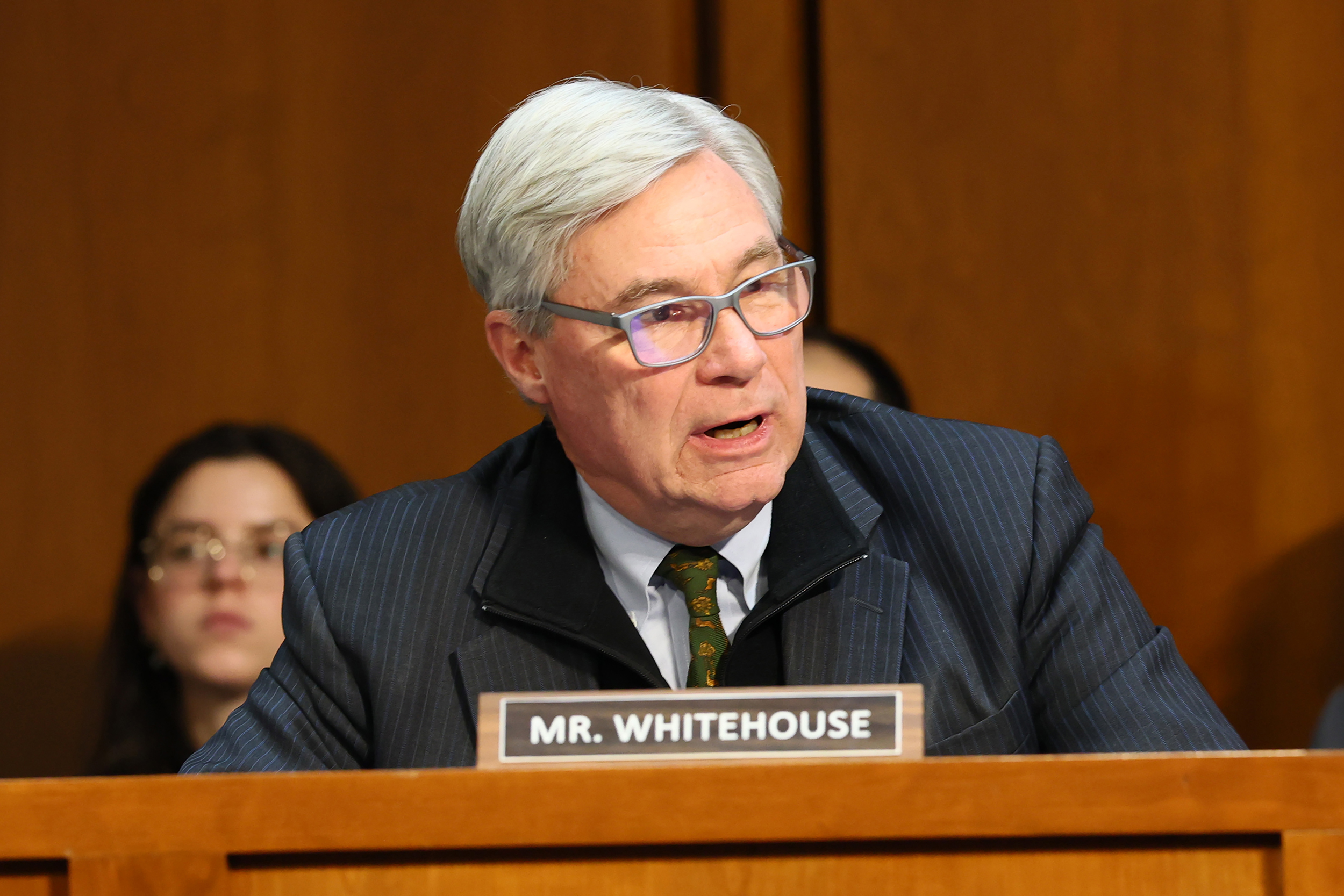
Led by Sen. Sheldon Whitehouse, D-R.I., the Democrats last week sent a letter to EPA Administrator Lee Zeldin requesting documents and other information that underpinned the agency’s decision to stop considering the costs of premature deaths, hospitalizations, cases of asthma or heart disease and other such factors when weighing the benefits of stricter air pollution regulations.
“That EPA may no longer monetize health benefits when setting new clean air standards does not mean that those health benefits don’t exist,” the letter reads. “It just means that you will ignore them and reject safer standards, in favor of protecting corporate interests.”
The EPA did not answer specific questions posed by Inside Climate News about how it will track the health effects of increased emissions, as well as the sources and documents it will consider when revisiting the modeling. Instead, an agency spokesperson issued a statement: “We have received the letter and will respond through the proper channels.”
The EPA buried the rollbacks in a larger economic impact analysis released in January concerning power plant regulations. In that document, the agency wrote that the EPA’s previous analysis lacked a full understanding of the monetized impacts of exposure to ozone and PM2.5, toxic particulate matter smaller than 2.5 microns—about one-thirtieth the diameter of a human hair—that damages cells and organs.
“Therefore to rectify this error, the EPA is no longer monetizing benefits from PM2.5 and ozone but will continue to quantify the emissions,” the agency wrote.
Senate Democrats disagree with the EPA’s claim that monetizing the benefits is too uncertain.
The agency has long compared health benefits and compliance costs in rulemaking, as set out in President Bill Clinton’s 1993 executive order.
“Both pollutants covered by the new rulemaking are well-documented drivers of serious health harms,” the senators wrote.
Dozens of scientific studies have found that exposure to PM2.5 can cause or worsen heart and lung disease, and increase the risk of both premature birth and birth defects.
Because PM2.5 can cross the blood-brain barrier, exposure can also increase the risk of stroke, as well as Alzheimer’s disease in older adults.
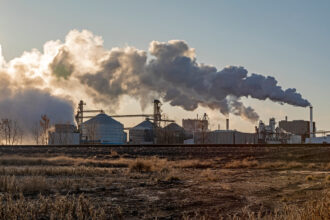
Fossil fuel plants, industrial facilities, wildfires and vehicle emissions are major sources of PM2.5.
Two scientists at the University of North Carolina at Chapel Hill told Inside Climate News their research shows ample evidence pointing to the health benefits of reduced air pollution.
Neil Alexis is a professor in the Department of Pediatrics and the director of the Center for Environmental Medicine, Asthma & Lung Biology. He has conducted studies of the health effects of ozone and particulate matter. Exposure to those pollutants resulted in marked increases in inflammation in the airways, altered immune responses in the lung and decreased lung function, Alexis said.
People with pre-existing lung disease, like asthma, were particularly susceptible to ozone and PM2.5 exposures. For ozone, some of the adverse effects occurred even at concentrations below federal ambient air quality standards.
“In my opinion, the research data and science do not support omitting ozone and PM2.5 from a cost/benefit analysis of air regulations,” Alexis said.
Sarav Arunachalam, deputy director of the UNC Institute for the Environment, said North Carolina’s Clean Smokestacks Act, which became law in 2002, led to significant reductions of nitrogen oxides and sulfur oxide emissions from power plants.
As a result, ozone levels also decreased, as did death rates from respiratory illnesses like asthma, emphysema and pneumonia, which “saved the citizens of North Carolina substantial savings in health costs,” Arunachalam said.
This story is funded by readers like you.
Our nonprofit newsroom provides award-winning climate coverage free of charge and advertising. We rely on donations from readers like you to keep going. Please donate now to support our work.
Donate NowArunachalam pointed to the EPA’s own retrospective study that quantified health benefits of the Clean Air Act from 1990 to 2020. The study found $2 trillion in benefits compared to costs of $65 billion. The benefits were primarily fewer health impacts due to reduction in levels of ozone and PM2.5.
Ground-level ozone is the result of a chemical reaction between pollutants—such as nitrogen oxides and volatile organic compounds, emitted by vehicles, power plants, refineries and other industrial sources—in the presence of sunlight.
In its 2025 State of the Air report, the American Lung Association found 46 percent of people living in the U.S.—156.1 million—reside in areas with unhealthy levels of ozone or particle pollution.
The Los Angeles area, Denver, Houston and Phoenix are among the places with the highest ozone levels. For PM2.5, Southern California; Eugene, Oregon; Houston; and several Rust Belt cities rank in the top 25.
By factoring in only the costs to industry—and not the costs to human life—the Trump EPA risks Americans’ health and could trigger billions in higher health care spending, Senate Democrats wrote to the EPA.
The EPA is reconsidering the current nationwide PM2.5 ambient air standards.The Biden administration had strengthened these standards, with all states required to comply beginning in 2032.
In their letter, Senate Democrats told the EPA that if the agency doesn’t factor in health impacts when revisiting ambient air regulations, it risks costing Americans as much as $46 billion in avoidable “morbidities and premature deaths in the year 2032,” the senators wrote. “The total compliance cost to industry, meanwhile, [would] be $590 million—between one and two one-hundredths of the estimated health benefit value.”
The Trump administration has consistently downplayed or dismissed the harm that pollution inflicts on human health. Last week the EPA announced a repeal of the 2009 endangerment finding, which determined greenhouse gas emissions threaten human health and established the basis for the agency’s regulation of them under the Clean Air Act. The rescission applies only to vehicles but could be extended to other greenhouse gas emitters, such as power plants.
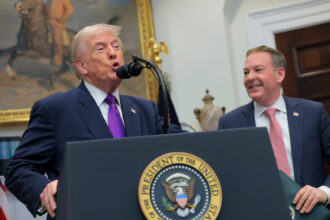
At a White House ceremony last week, President Donald Trump called the endangerment finding a “giant scam.” He said people should not worry about the health harms of greenhouse gases “because it has nothing to do with public health. This was a rip-off of the country by Obama and Biden.”
Two years ago, the Biden administration had calculated that strengthened pollution standards for passenger cars, light-duty trucks and medium-duty vehicles for model years 2027 through 2032 would yield $13 billion in health benefits.
About This Story
Perhaps you noticed: This story, like all the news we publish, is free to read. That’s because Inside Climate News is a 501c3 nonprofit organization. We do not charge a subscription fee, lock our news behind a paywall, or clutter our website with ads. We make our news on climate and the environment freely available to you and anyone who wants it.
That’s not all. We also share our news for free with scores of other media organizations around the country. Many of them can’t afford to do environmental journalism of their own. We’ve built bureaus from coast to coast to report local stories, collaborate with local newsrooms and co-publish articles so that this vital work is shared as widely as possible.
Two of us launched ICN in 2007. Six years later we earned a Pulitzer Prize for National Reporting, and now we run the oldest and largest dedicated climate newsroom in the nation. We tell the story in all its complexity. We hold polluters accountable. We expose environmental injustice. We debunk misinformation. We scrutinize solutions and inspire action.
Donations from readers like you fund every aspect of what we do. If you don’t already, will you support our ongoing work, our reporting on the biggest crisis facing our planet, and help us reach even more readers in more places?
Please take a moment to make a tax-deductible donation. Every one of them makes a difference.
Thank you,

Lisa Sorg
Reporter, North Carolina
Lisa Sorg is the North Carolina reporter for Inside Climate News. A journalist for 30 years, Sorg covers energy, climate environment and agriculture, as well as the social justice impacts of pollution and corporate malfeasance.
She has won dozens of awards for her news, public service and investigative reporting. In 2022, she received the Stokes Award from the National Press Foundation for her two-part story about the environmental damage from a former missile plant on a Black and Latinx neighborhood in Burlington. Sorg was previously an environmental investigative reporter at NC Newsline, a nonprofit media outlet based in Raleigh. She has also worked at alt-weeklies, dailies and magazines. Originally from rural Indiana, she lives in Durham, N.C.