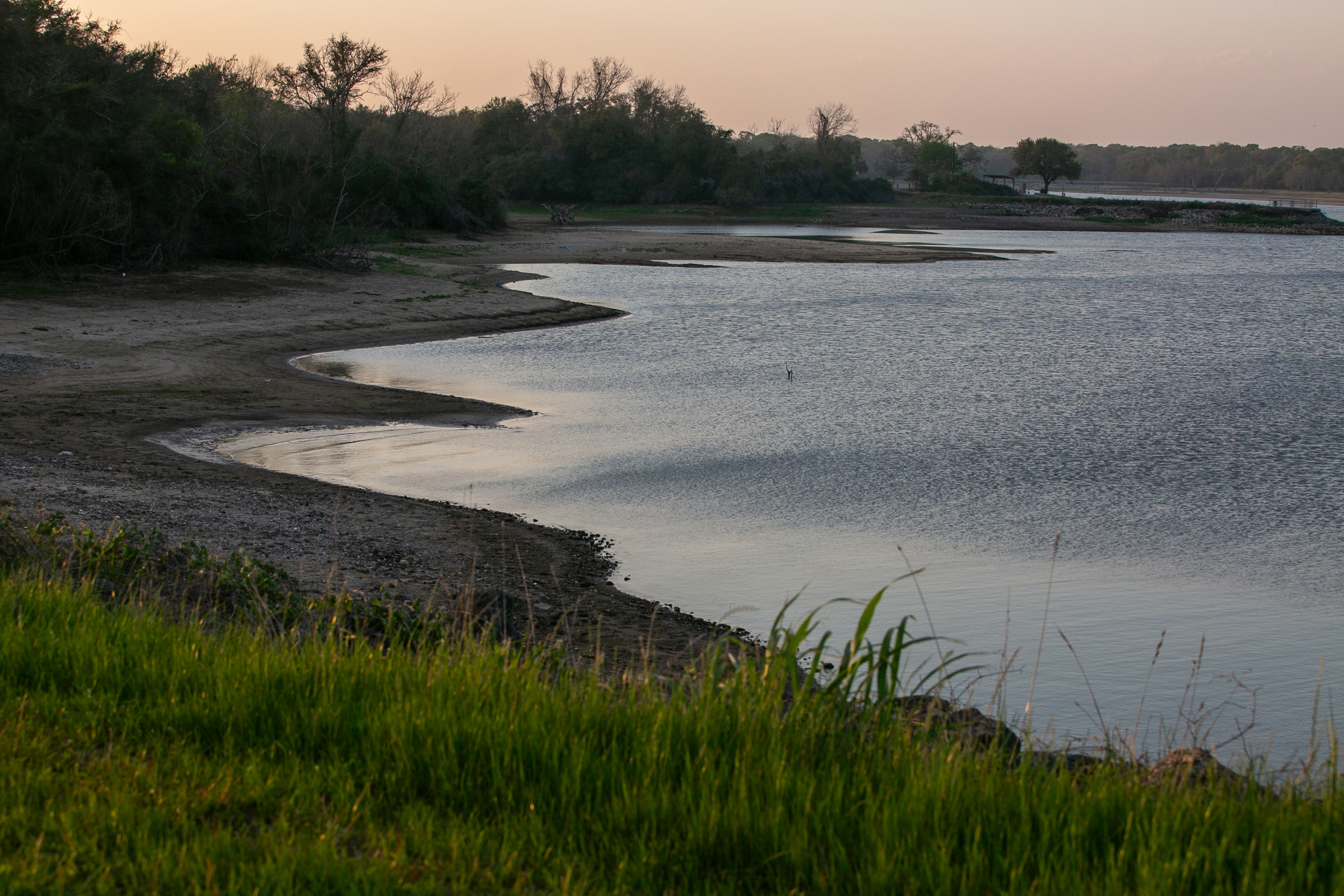


EDNA, Texas—Water shortages could hit Corpus Christi within weeks when contract terms mandate a 10 percent reduction in the city’s draw from its largest remaining reservoir, the equivalent of 7 million gallons a day, according to local officials. City leaders previously said water curtailment could begin in November.
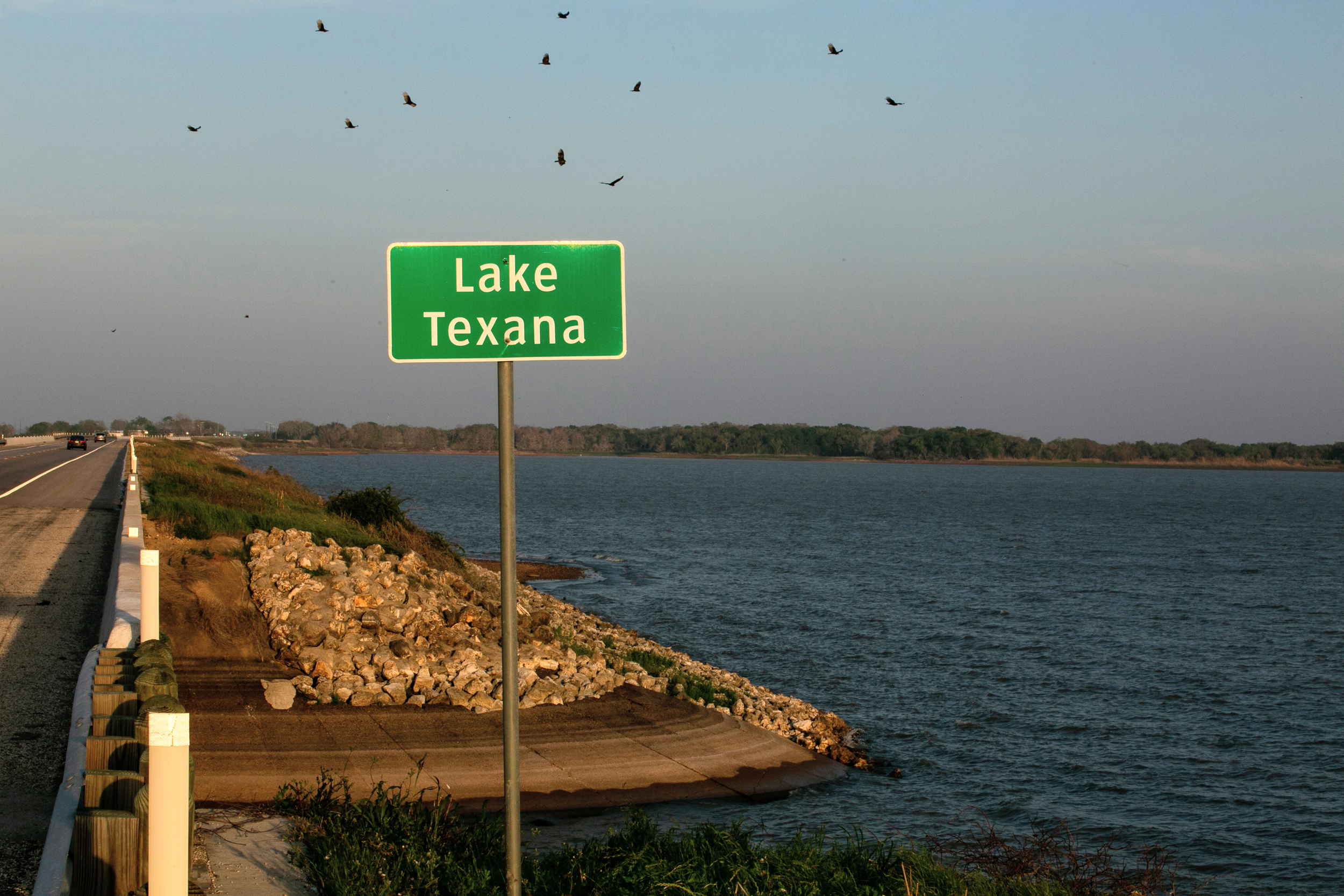
The reduction could begin when Lake Texana, which the city of Corpus Christi shares with Formosa Plastics’ Point Comfort complex, falls below 50 percent full. Under current conditions, that will happen in April, said Patrick Brzozowski, general manager of the Lavaca-Navidad River Authority, which administers the lake.
In an interview at the agency’s office Monday morning, Brzozowski said the agency’s drought plans didn’t envision that the pumps serving Corpus Christi, 100 miles to the southwest, “would be running at absolute full bore.” As the city’s two primary reservoirs approached depletion in the last year, Corpus Christi has shifted much of its water demand to Lake Texana.
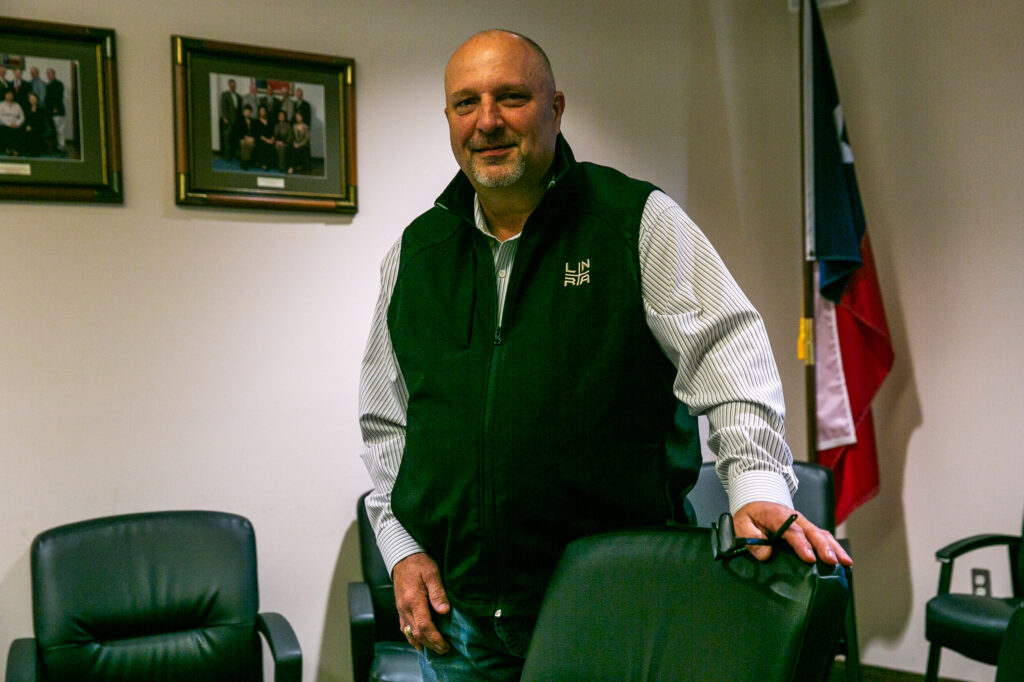
But because the pumphouse hardware at the lake doesn’t allow for the 10 percent reduction, Brzozowski said the river authority would most likely wait until the lake hits 40 percent, then reduce Corpus Christi’s draw by 20 percent, or about 14 million gallons per day. Without major rainfall, that could happen in May.
“It just means a larger reduction would happen sometime after,” said Brzozowski, a native of Edna who has worked his entire career at the LNRA. “We haven’t had any rain since July of last year.”
He was scheduled to speak with Corpus Christi leaders on Monday afternoon about how to approach the contractual water reductions, he said. When the time comes, he is responsible for dialing back the flow of water to Corpus Christi, whose water customers include 500,000 people, fuel refineries, petrochemical plants and one of the nation’s top commercial ports.
A spokesperson for the city of Corpus Christi indicated that additional measures would be implemented to extend the timeline to forced curtailment.
“The City is closely monitoring lake levels and is prepared to implement established operational adjustments,” said the spokesperson, Robert Gonzales. “While the Lake Texana contract includes specific curtailment triggers, the City’s water system is designed for flexibility. To offset potential reductions in the Texana supply, the City is prepared to leverage its additional water rights.”
Over coming weeks, Gonzales said, the city will hold briefings to “review current protocols and outline the strategic path forward under potential curtailment scenarios.”
Mike Pusley, a Nueces County commissioner serving his fifth term, said the region should be preparing to absorb a possible 10 percent cut from Texana within weeks.
“You cut off 7 million gallons per day, that would be a huge problem for the city—we don’t have anything to replace that,” said Pusley, a career oilman for Exxon and EOG Resources. “The projections I’ve heard” for when the reduction will begin is “going to be before summer.”
In Corpus Christi, the imminent depletion of water supplies has fueled a political firestorm, including calls for the mayor’s impeachment and a threat from Texas Gov. Greg Abbott to take over the city government.
Refineries in Corpus Christi produce jet fuel for Texas airports as well as gasoline for the state, and they consume large volumes of water in their cooling towers. A shutdown of Corpus Christi’s industrial sector due to water shortages could send economic shockwaves through Texas.
Even partial shutdowns of refineries and chemical plants raise confounding questions about fairness and financial compensation, experts said.
At a City Council meeting on Tuesday, city leaders say they will present potential scenarios for implementation of unprecedented water curtailments that would extend the region’s timeline to total depletion of its water resources, which had been forecast for later in 2027.
“They’re going to feel some pain, I just don’t know how much pain,” said Drew Molly, former chief operating officer of Corpus Christi’s water department, who left the city last year. Any amount of curtailment “will be a painful, temporary thing that ends up going away once they get rain.”
Drought conditions in the region now rival the worst on record, and forecasts for an acute heat wave in late March offer little promise of relief. The city of Corpus Christi is racing to develop emergency water wellfields before its supplies run short. It is also pursuing permits for a large groundwater import project and seeking to re-boot plans for a seawater desalination plant that it canceled in September. The city expects these projects to begin producing tens of millions of gallons per day over the next two years.
Molly, now chief water officer for the city of Houston, said Corpus Christi still has several water contracts it can call up to bridge small gaps in supply. But he didn’t expect them to make a significant difference in the timeline to curtailment.
Without rain or curtailment, Corpus Christi is on track to deplete its water resources entirely by next year. Molly considers it very unlikely that planners would allow that to happen. But, he said, three years ago he would have considered this present situation highly unlikely as well.
“It’s plausible but I don’t see it as likely yet,” Roland Barrera, a member of the Corpus Christi City Council since 2018, said about a possible situation where the city is unable to meet its water customers’ demands. “I would hope that the state of Texas wouldn’t let us get to that point.”
Political Agitation in Corpus Christi
In response to a query about the situation, a spokesperson for Abbott provided a link to comments the governor made on video last week when a KXAN reporter asked about reporting by Inside Climate News.
“We are fully committed to making sure that Corpus Christi residents are going to have the water they need to live their lives,” Abbott told TV cameras.
Abbott said leaders in Corpus Christi had “squandered” $750 million in low-interest infrastructure loans from the state while failing to head off a water crisis long in the making.
“We can only give them a little time more before the state of Texas has to take over and micromanage that city,” Abbott told TV cameras.
Following the governor’s remarks, Corpus Christi Mayor Paulette Guajardo, in a Facebook post, ordered an emergency meeting to re-authorize the city’s seawater desalination project and called on “residents, business leaders, and community stakeholders to attend the meeting and make their voices heard.” (That meeting is set for April 9.)
Shortly after, three members of the Corpus Christi City Council called for a vote to impeach Guajardo at the city’s regularly scheduled meeting on Tuesday.
At that meeting, city manager Peter Zanoni is expected to release potential plans for how Corpus Christi would implement unprecedented cuts in water demand.
“There’s gonna be some things in that plan that are not going to make people happy,” said Pusley, a former city council member. “That’s obvious.”
Citizen groups in Corpus Christi are circulating a petition that would amend city code to repeal the 2018 drought surcharge exemption fee for industrial users.
The amendment would drastically increase the prices large water users pay during times of water scarcity. For now, it’s the only plan on the table that would put significant pressure on industrial water users to decrease consumption.
“We need water policies that center the people’s needs before corporate greed,” said Isabel Araiza, a professor of social sciences at Del Mar College, who helped to author the amendment. “The only way we are going to get that is by doing it ourselves.”
Risks of Total Depletion Next Year
The city expects its two main reservoirs on the Nueces River to dry out completely next year. Its website predicts Choke Canyon and Lake Corpus Christi to hit empty in February and May of next year, respectively. Accordingly, it has sharply increased pumping from its third reservoir, Lake Texana, 100 miles away, which is currently 55 percent full.
The Lavaca-Navidad River Authority’s drought contingency plan requires all customers to reduce water consumption by 10 percent when the lake hits 50 percent full, by 20 percent when the lake hits 40 percent full and by 35 percent when the lake hits 30 percent full.
Without significant rainfall, Lake Texana should continue to hit subsequent trigger points for curtailment in May and June, respectively, according to estimates by Don Roach, a veteran local water administrator who previously built a water treatment plant at Formosa Plastics in conjunction with the LNRA. Brzozowski did not dispute Roach’s projections.
That means water sources for Corpus Christi could run entirely dry by early 2027 without drastic curtailment plans, additional water supplies or major rainfall.
Cutting water demand by 7 million gallons per day, enough to supply 23,000 average American households or several large refineries, is no trivial task. It requires cutting off customers.
“How is that going to work?” said Roach, who spent 23 years as assistant general manager for the San Patricio Municipal Water District, which supplies the large industrial customers of the Corpus Christi region. “I have no idea how that works.”
Neither does anyone else. Robert Mace, a former deputy executive administrator for the Texas Water Development Board, said he tried to study this question once. After Texas’ brutal drought of 2011-2015, Mace proposed a report on how cities would curtail water during emergencies.
“I was trying to get it done, but nobody wanted to do it because it was too politically touchy,” he said. “It’s still on my wish list if I could find somebody to provide the funding.”
Now, Mace said, drought conditions in the Corpus Christi region appear to be exceeding Texas’ record drought of the 1950s.
Few cities in the world have gotten to this point to offer useful examples, said Mace, now executive at The Meadows Center for Water and the Environment at Texas State University. In South Africa, Cape Town came close in 2018.
Mace said the city responded by publicly displaying a countdown to day zero that broadcast the severity of the situation. Officials also made every water user’s consumption data public, and installed devices that cut customers’ water supply when daily allocations were reached. Ultimately, he said, those measures helped Cape Town survive until a big rain filled its reservoirs.
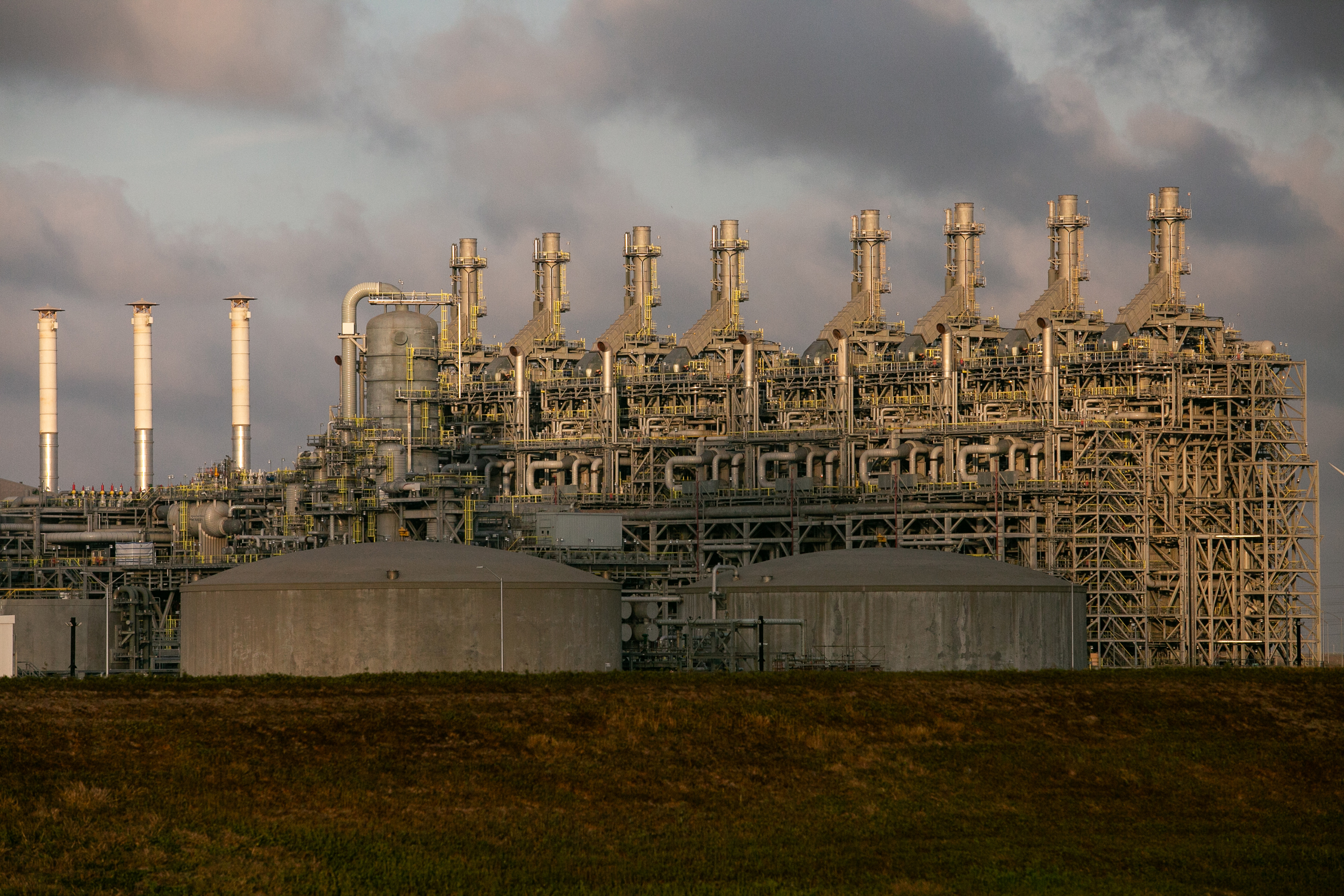
Corpus Christi is unique, however, in the towering water demands of its industrial sector, Mace said. These plants, unlike the residents of Cape Town, can’t just dial down their nonessential water use. The refineries are either on or off, and their cooling towers require a fixed flow amount of water.
“It’s kind of a too-big-to-fail thing, but it does reach a point where it’s like too late,” Mace said. “I do feel like there’s things that can be done. It may take some special governor decree.”
“Some Pretty Significant Planning”
Charles McConnell, a former assistant energy secretary in the Obama administration who now teaches at the University of Houston, said local leaders should be planning how to shut down refineries and chemical plants.
“You don’t design a refinery or a chemical plant to start squeezing off your water supply, so it’s going to be a rather awkward dance,” said McConnell, who worked three decades for the chemical company Praxair. “They’re going to have to do some pretty significant planning.”
Plumbing at these facilities doesn’t allow for easy partial shutdowns of some units but not others. Some units may be essential 24/7, he said, while others might only be needed at certain times of day.
This story is funded by readers like you.
Our nonprofit newsroom provides award-winning climate coverage free of charge and advertising. We rely on donations from readers like you to keep going. Please donate now to support our work.
Donate NowPlanners also need to consider fairness and transparency. One refinery won’t agree to shut down while its neighbor reaps the higher gas prices that result.
“Capitalism is great, most of the time. But in this situation, you’re gonna have a bunch of people competing in oil and gas and chemical markets,” said McConnell. “Every one of those companies is going to want to be compensated.”
However, he said, it remains unclear exactly who would have the authority to order industrial shutdowns. Local governments typically lack the technical savvy to draw up such plans confidently.
“If you’ve got government that operates like China, it’s probably easy to implement,” said McConnell, 74. “I would suggest that the Corpus situation isn’t going to be quite so cut and dry.”
It also remains unclear what a state takeover would look like. No such thing has ever happened in Texas, current and former state and local officials said. If Abbott were to assume state control of the Corpus Christi government, he might be able to appoint someone to make unilateral decisions, they said.
Leaders in Corpus Christi have signaled varied attitudes toward a potential state takeover. The mayor, in a Facebook post last week, said she welcomed assistance from the state and federal governments.
Pusley, the fifth-term county commissioner, called the prospect of a state takeover “an embarrassment.”
“They are going to put somebody in the city manager’s chair and they are going to make decisions about what happens and the council will just be the figurehead at that point,” Pusley said. “We don’t want to be the first city in the state of Texas that happens to.”
Amy Blanchett, a spokesperson for Formosa Plastics, which holds rights to a slight majority of the water in Lake Texana, said facilities at the Point Comfort complex are designed to maximize recycling and reuse of water, allowing the company to “significantly reduce the amount of freshwater required for operations.”
The company is committed to responsible water management, she said.
“Our operations continuously monitor water use and maintain systems that allow us to operate efficiently even during periods when conservation measures are implemented,” Blanchett said. “We will continue to work with the Lavaca-Navidad River Authority and follow the recommendations put forth to ensure seamless operations.”
About This Story
Perhaps you noticed: This story, like all the news we publish, is free to read. That’s because Inside Climate News is a 501c3 nonprofit organization. We do not charge a subscription fee, lock our news behind a paywall, or clutter our website with ads. We make our news on climate and the environment freely available to you and anyone who wants it.
That’s not all. We also share our news for free with scores of other media organizations around the country. Many of them can’t afford to do environmental journalism of their own. We’ve built bureaus from coast to coast to report local stories, collaborate with local newsrooms and co-publish articles so that this vital work is shared as widely as possible.
Two of us launched ICN in 2007. Six years later we earned a Pulitzer Prize for National Reporting, and now we run the oldest and largest dedicated climate newsroom in the nation. We tell the story in all its complexity. We hold polluters accountable. We expose environmental injustice. We debunk misinformation. We scrutinize solutions and inspire action.
Donations from readers like you fund every aspect of what we do. If you don’t already, will you support our ongoing work, our reporting on the biggest crisis facing our planet, and help us reach even more readers in more places?
Please take a moment to make a tax-deductible donation. Every one of them makes a difference.
Thank you,

Dylan Baddour
Reporter, Austin
Dylan Baddour covers the energy sector and environmental justice in Texas. Born in Houston, he’s worked the business desk at the Houston Chronicle, covered the U.S.-Mexico border for international outlets and reported for several years from Colombia for media like The Washington Post, BBC News and The Atlantic. He also spent two years investigating armed groups in Latin America for the global security department at Facebook before returning to Texas journalism. Baddour holds bachelor’s degrees in journalism and Latin American studies from the University of Texas at Austin. He has lived in Argentina, Kazakhstan and Colombia and speaks fluent Spanish.