

Florida’s fragile Everglades are not on track to meet a new water quality standard set to take effect next month, even after nearly 40 years of costly restoration work aimed at addressing pollution in the river of grass, according to a new report.
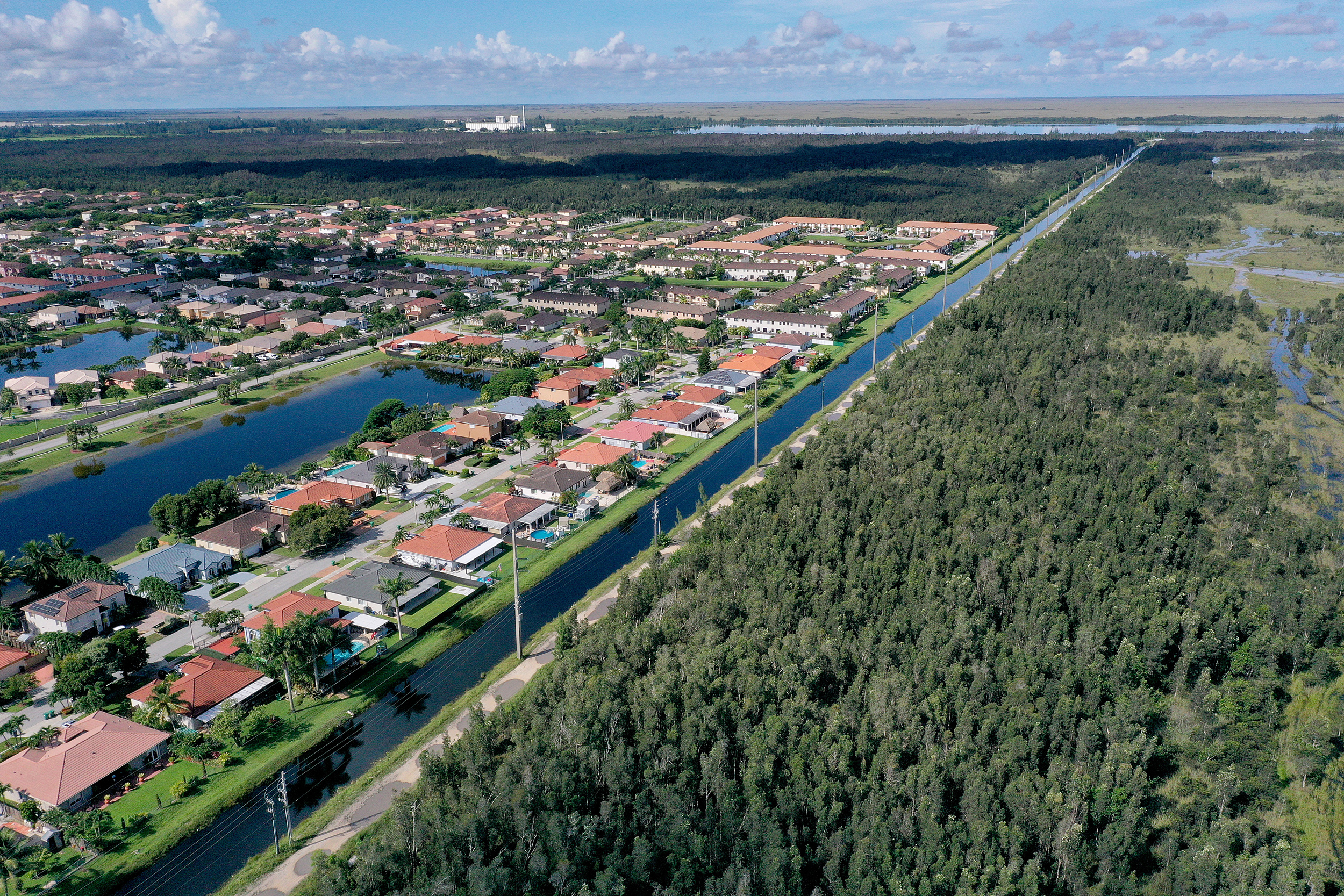
The Water Quality Based-Effluent Limitation (WQBEL) is designed to measure nutrient pollution in the Everglades associated with fertilizer use on the sprawling sugar farms south of Lake Okeechobee, in a region known as the Everglades Agricultural Area (EAA). Specifically, the standard will assess water flowing from some 60,000 acres of engineered wetlands scattered throughout the region, called stormwater treatment areas, constructed to serve as a buffer between the farms that make the region among the nation’s most bountiful and the river of grass, the primary drinking water source for millions of Floridians. Nowhere else on Earth have human-made wetlands such as these been implemented on such an expansive scale.
The stormwater treatment areas are one component of Everglades restoration, a $27 billion effort that is among the most ambitious of its kind in human history. The effort consists of dozens of landscape-scale projects spanning central and south Florida, including a reservoir in the Everglades Agricultural Area that Gov. Ron DeSantis has characterized as the “crown jewel” of the restoration effort. DeSantis, a Republican, has made the Everglades and water quality in general a priority since his 2018 gubernatorial campaign coincided with widespread outbreaks of toxic algae that sickened Floridians and left wildlife belly-up. Once complete, the reservoir will be the largest of its kind the U.S. Army Corps of Engineers has built anywhere in the country.
But before the reservoir can operate at full capacity, the stormwater treatment areas must demonstrate full compliance with the WQBEL for at least five years. None of the wetlands are on a trajectory toward meeting the standard when it takes effect May 1, the first day of water year 2027, according to the report prepared by Friends of the Everglades. The advocacy group provided the report in March to the Florida Department of Environmental Protection and the South Florida Water Management District, the state agency overseeing Everglades restoration.
“We don’t question how the district has built and managed these stormwater treatment areas,” said Eve Samples, executive director of Friends of the Everglades. “It’s actually one of the success stories of Everglades restoration. The state has learned how to build and operate man-made wetlands. We simply don’t have a large enough area of them to handle the 400,000 acres of sugarcane that are polluting water in the Everglades. Without additional land it is impossible to see how the state is going to treat this phosphorus pollution.”
The report shows that the nutrient pollution, specifically phosphorus, flowing from the $2 billion wetlands into protected areas of the river of grass rose between 2024 and 2025, in some cases dramatically. The findings echo concerns raised in 2022 and 2024 by the National Academies of Sciences, Engineering, and Medicine, which noted both years that only one stormwater treatment area was in compliance with the court-ordered standard. In 2022, the scientists concluded that meeting the WQBEL by 2026 would be a “significant challenge.” The National Academies, a private nonprofit organization, has issued biennial reports on the progress of Everglades restoration since 2004, under a congressional mandate.
The Friends of the Everglades report was based on five years of water management district data, ending in water year 2025. (Water years are measured from May 1 to April 30.)
Neither the Florida Department of Environmental Protection nor the South Florida Water Management District responded to multiple requests for comment. But the water management district presented new data from water year 2026 last week at its monthly board meeting that showed four stormwater treatment areas were within partial compliance of the WQBEL. The fifth wetlands was far out of bounds.
The WQBEL requires that phosphorus levels in the water flowing from the stormwater treatment areas remain at or below 13 parts per billion, a minuscule amount, three out of five water years. The standard also mandates that the levels do not exceed 19 parts per billion during any water year. The Friends of the Everglades report shows that between water years 2021 and 2025 only one stormwater treatment area achieved the 13 parts per billion goal, and that it benefitted from its location south of a flow-equalization basin that reduced the amount of phosphorus flowing into the wetlands. Two other stormwater treatment areas reached the annual 19 parts per billion limit, although none of the wetlands came within full compliance of the two-part standard.
The water management district, in its annual South Florida Environmental Report released in March, attributed higher phosphorus levels during water year 2025 to a significant rain event in June 2024. Despite the heavy rain, the report said the wetlands were responsible that year for an 81 percent reduction in phosphorus levels flowing into protected areas of the Everglades.
The report also said the water management district began work during water year 2020 on several refurbishment projects in the stormwater treatment areas aimed at improving their hydraulics, vegetation conditions and treatment performance. The water management district characterized the work as a “proactive measure” aimed at ensuring the wetlands would meet the WQBEL. During water year 2025 more than 98 percent of protected areas of the Everglades met a separate state water quality standard of 10 parts per billion, a percentage that was among the best on record, according to the water management district report.
Nearly 40 Years of Litigation and Restoration
The effort to rescue the Everglades from the sugar farms’ pollution traces back to the late 1980s, when the federal government sued the state over the nutrient pollution in protected areas of the watershed. The pollution led to a widespread proliferation of cattails that put the river of grass at risk of becoming a river of cattails.
The litigation led in 1994 to the state Everglades Forever Act, which initiated the massive effort to build the stormwater treatment areas. The law required farmers to address their own pollution by implementing so-called best-management practices, such as altering fertilizer techniques, controlling soil erosion and increasing onsite water retention. Farmers also had to pay an agricultural tax toward the construction and eventual operation of the wetlands.
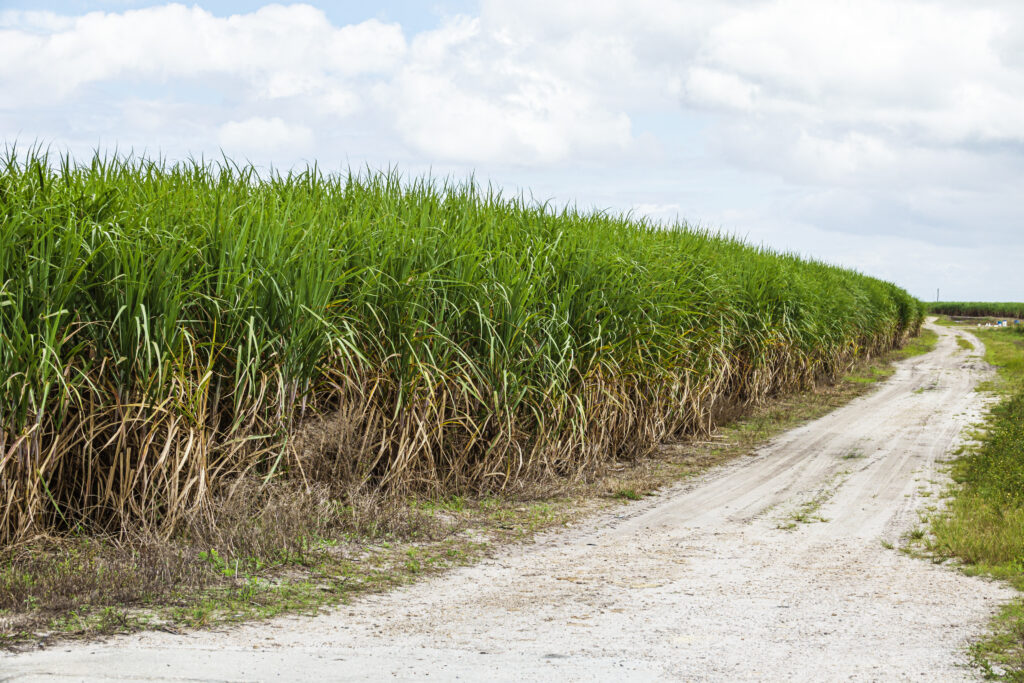
By 2003 it was clear the conditions laid out in the Everglades Forever Act would not be enough to eliminate the pollution. Subsequent litigation brought by Friends of the Everglades and the Miccosukee Tribe under the Clean Water Act led in 2013 to Restoration Strategies, a $880 million state program that involved expanding the stormwater treatment areas and adding two new flow-equalization basins. The WQBEL also was established as part of the program.
The stormwater treatment areas were designed to replicate the natural filtering ability of the river of grass. Composed of giant bulrush, alligator flag and American lotus, the vegetative tissues would absorb the nutrient pollution flowing from the farms. By now the wetlands have treated nearly 9.4 trillion gallons of water, reducing phosphorus levels by some 78 percent, according to the water management district. Construction on the wetlands was completed in 2025.
In 2022, when the National Academies raised its concerns about the stormwater treatment areas and WQBEL, the scientists made several recommendations, including that the state develop an adaptive management plan for meeting the standard. That has not happened.
This story is funded by readers like you.
Our nonprofit newsroom provides award-winning climate coverage free of charge and advertising. We rely on donations from readers like you to keep going. Please donate now to support our work.
Donate Now“The takeaway is it’s clear that the responsibility for clean water is on the state of Florida, and that they have been dragged kicking and screaming the whole way,” said Tom Van Lent, senior scientist at Friends of the Everglades, who helped prepare the report. “I don’t see how you can see it any other way. They have been compelled to clean up the water not of their own accord but by the courts.”
The centerpiece of DeSantis’ environmental policy over his two terms as governor has been Everglades restoration, particularly the EAA reservoir. Under his leadership the state has invested billions of dollars toward the restoration effort, even as his administration has faced widespread criticism and federal litigation over the environmental implications of Alligator Alcatraz, the migrant detention center opened last year in a delicate region of the river of grass.
The EAA reservoir is intended to help prevent future outbreaks of toxic algae, a prominent environmental problem in Florida for over a decade, by reconnecting Lake Okeechobee with the Everglades’ iconic sawgrass marshes to the south, restoring the river of grass’ historic course and stemming unnatural flows east and west from the state’s largest lake that can threaten delicate coastal estuaries with algae. DeSantis announced a deal last year with the Trump administration to expedite the $3.5 billion reservoir’s construction, with completion now scheduled for 2029.
Among the Florida communities hardest-hit by toxic algae has been Sewall’s Point, roughly 43 miles north of West Palm Beach. Jacqui Thurlow-Lippisch, the town’s former mayor and a former board member for the South Florida Water Management District, mused about what might happen if the stormwater treatment areas continue to fail at meeting the WQBEL, affecting the reservoir.
“It would make me sick to my stomach because every move I made from 2016 on was for that reservoir to be, the majority of that water to be coming from Lake Okeechobee, cleansed and sent south. That was the intent of that reservoir, and if it doesn’t end up being that, that’s a failure,” she said. “It’s a failure, and its manipulation over time by the powers at be.”
The Friends of the Everglades report also states that more water is needed in the Everglades to save the watershed. Setting aside additional conservation lands for water storage and treatment would help with meeting the WQBEL, along with restoring the river of grass’ historic flow south and slowing saltwater intrusion related to sea level rise, according to the report. Samples did not rule out the possibility of further litigation if the standard is not met.
“We’ve been tracking this,” she said. “For us, seeing all five of the stormwater treatment areas lose ground last year, is really disappointing. It’s frustrating.”
About This Story
Perhaps you noticed: This story, like all the news we publish, is free to read. That’s because Inside Climate News is a 501c3 nonprofit organization. We do not charge a subscription fee, lock our news behind a paywall, or clutter our website with ads. We make our news on climate and the environment freely available to you and anyone who wants it.
That’s not all. We also share our news for free with scores of other media organizations around the country. Many of them can’t afford to do environmental journalism of their own. We’ve built bureaus from coast to coast to report local stories, collaborate with local newsrooms and co-publish articles so that this vital work is shared as widely as possible.
Two of us launched ICN in 2007. Six years later we earned a Pulitzer Prize for National Reporting, and now we run the oldest and largest dedicated climate newsroom in the nation. We tell the story in all its complexity. We hold polluters accountable. We expose environmental injustice. We debunk misinformation. We scrutinize solutions and inspire action.
Donations from readers like you fund every aspect of what we do. If you don’t already, will you support our ongoing work, our reporting on the biggest crisis facing our planet, and help us reach even more readers in more places?
Please take a moment to make a tax-deductible donation. Every one of them makes a difference.
Thank you,

Amy Green
Reporter, Florida
Amy Green covers the environment and climate change from Orlando, Florida. She is a mid-career journalist and author whose extensive reporting on the Everglades is featured in the book MOVING WATER, published by Johns Hopkins University Press, and podcast DRAINED, available wherever you get your podcasts. Amy’s work has been recognized with many awards, including a prestigious Edward R. Murrow Award and Public Media Journalists Association award.