

In a setback to the Trump administration’s extraordinary legal campaign against state climate action, a federal judge threw out the Justice Department’s lawsuit seeking to prevent the state of Hawaii from suing oil companies for damages.
Trump administration lawyers had claimed that Hawaii, by trying to sue fossil fuel companies, was standing in the way of the national effort to secure reliable sources of domestic energy.
But Judge Helen Gillmor of the U.S. District Court for the District of Hawaii on Wednesday ruled that such a contention was too speculative to be the basis of a lawsuit.
“The United States’ alleged injury depends on multiple layers of unpredictable future events,” Gillmor wrote, noting the Trump administration filed the case without even seeing Hawaii’s lawsuit (the state filed it the following day). The nature of the lawsuit, whether Hawaii would win, what the fossil fuel industry would do in reaction and how that reaction would affect the United States all were unknown, the judge said.
“The allegations of such an unpredictable chain of events are ‘no more than conjecture’ at this time,” wrote Gillmor, dismissing the claim with prejudice. That means the Justice Department can appeal to a higher court, but it cannot amend and try to refile the case.
It was the second decision and the second defeat for the Trump administration in the seven lawsuits it has filed seeking to block state and local action on climate change. They add to the Trump administration’s losing record in the federal courts; Inside Climate News’ tracking of environmental lawsuits shows the Trump administration with 17 defeats and five wins in rulings so far involving its efforts to remake environmental policy. In 48 cases, there have been no rulings yet—that includes cases by the Trump administration challenging Vermont, New York and California climate laws and local ordinances in Petaluma and Morgan Hill, California.
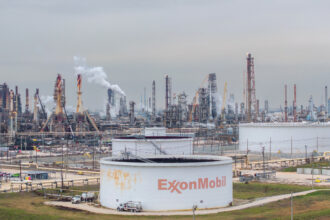
The decision means that Hawaii can go forward for now with its litigation in state court against BP, Exxon Mobil, Shell and other oil companies for negligence, nuisance, trespass and harm to “public trust resources.” The last claim was based on Hawaii’s constitution, which spells out that such resources are held by the state in trust for the benefit of its citizens.
“The climate crisis is here and Hawaiʻi taxpayers should not have to foot that bill when fossil fuel companies deceived and failed to warn consumers about the climate dangers lurking in their products,” Gov. Josh Green said in a statement after Gillmor’s ruling. “The climate-deception lawsuit is about holding those parties accountable and shifting the costs of surviving the climate crisis back where they belong.”
Principal Deputy Assistant Attorney General Adam Gustafson of the Justice Department’s Environment and Natural Resources Division did not have an immediate answer on whether the Trump administration would appeal.
“We disagree with the Hawaii District Court’s ruling, which ignored Supreme Court precedent regarding the United States’ interest in the supremacy of federal law,” he said in an emailed statement. “We are exploring all options.”
Tracking The Cases
Inside Climate News is watching the progress of federal court cases on Trump’s climate and environmental policy. Here’s a look at the lawsuits and the outcomes so far.
In January, U.S. District Judge Jane Beckering dismissed a similar Trump administration lawsuit seeking to block Michigan’s lawsuit against fossil fuel companies. In that ruling, Beckering described at length the history of litigation by state attorneys general, and its importance in addressing the harms of tobacco, asbestos, lead paint and opioids. She placed the climate change lawsuits in what she called “the decades-long history of public interest lawsuits filed by state attorneys general against national industry groups in areas heavily regulated by the federal government.”
The Hawaii and Michigan lawsuits against fossil fuel companies are among about 30 climate lawsuits currently being litigated against fossil fuel companies. Ironically, even while the Justice Department sought to block the Hawaii and Michigan suits, the rollback of climate policy by the Environmental Protection Agency during President Donald Trump’s current term could give such litigation a boost. In 2010, the Supreme Court unanimously ruled that fossil fuel companies were shielded against certain kinds of lawsuits by states because the federal government had a responsibility for regulating carbon emissions under the Clean Air Act, thus preempting state action. States now will likely argue the Trump administration has removed that shield by repealing the endangerment finding.
Fossil fuel companies may regain some protection when the Supreme Court later this year hears a case involving Boulder, Colorado’s climate claims against the fossil fuel industry. Republican lawmakers in a number of states and in Congress also are pushing legislation to shield fossil fuel companies from climate liability cases.
But the federal court decisions in Hawaii and Michigan make it unlikely that the Justice Department will be able to shield fossil fuel companies with the argument that state lawsuits are a risk to Trump’s energy dominance policy.
“The United States’ lawsuit was an example of gross federal overreach,” said Hawaii Attorney General Anne Lopez after the decision. “My department will continue to fight deceptive practices that erode Hawaiʻi’s public health, natural resources and economy.”
About This Story
Perhaps you noticed: This story, like all the news we publish, is free to read. That’s because Inside Climate News is a 501c3 nonprofit organization. We do not charge a subscription fee, lock our news behind a paywall, or clutter our website with ads. We make our news on climate and the environment freely available to you and anyone who wants it.
That’s not all. We also share our news for free with scores of other media organizations around the country. Many of them can’t afford to do environmental journalism of their own. We’ve built bureaus from coast to coast to report local stories, collaborate with local newsrooms and co-publish articles so that this vital work is shared as widely as possible.
Two of us launched ICN in 2007. Six years later we earned a Pulitzer Prize for National Reporting, and now we run the oldest and largest dedicated climate newsroom in the nation. We tell the story in all its complexity. We hold polluters accountable. We expose environmental injustice. We debunk misinformation. We scrutinize solutions and inspire action.
Donations from readers like you fund every aspect of what we do. If you don’t already, will you support our ongoing work, our reporting on the biggest crisis facing our planet, and help us reach even more readers in more places?
Please take a moment to make a tax-deductible donation. Every one of them makes a difference.
Thank you,

Marianne Lavelle
Bureau Chief, Washington, D.C.
Marianne Lavelle is the Washington, D.C. bureau chief for Inside Climate News. She has covered environment, science, law, and business in Washington, D.C. for more than two decades. She has won the Polk Award, the Investigative Editors and Reporters Award, and numerous other honors. Lavelle spent four years as online energy news editor and writer at National Geographic. She spearheaded a project on climate lobbying for the nonprofit journalism organization, the Center for Public Integrity. She also has worked at U.S. News and World Report magazine and The National Law Journal. While there, she led the award-winning 1992 investigation, “Unequal Protection,” on the disparity in environmental law enforcement against polluters in minority and white communities. Lavelle received her master’s degree from Columbia University Graduate School of Journalism, and is a graduate of Villanova University.