

Planet China: Twelfth in a series about how Beijing’s trillion-dollar development plan is reshaping the globe—and the natural world.
HAJDÚSZOBOSZLÓ, Hungary—The audience sat patiently through the presentations about the cluster of battery factories going up nearby. They listened to descriptions of the hazardous chemicals the plants will use, their huge water withdrawals and energy demands.
When it came time for questions, people began shifting in their chairs and standing up, making the cramped room feel even smaller.
What if the chemicals leak, one woman asked. What’s in it for the politicians in their “velvet chairs,” another demanded. A third warned it would be just like the Soviet era, when iron and steel plants left a polluted legacy.
Then a woman began to tear up as she told the 50 or so people who had gathered in a community center on a cold, dark evening that the factories’ smokestacks and hazardous materials were about a mile from her daughter’s kindergarten.
“Please stand up for yourselves,” she said, urging the audience to spread the word.
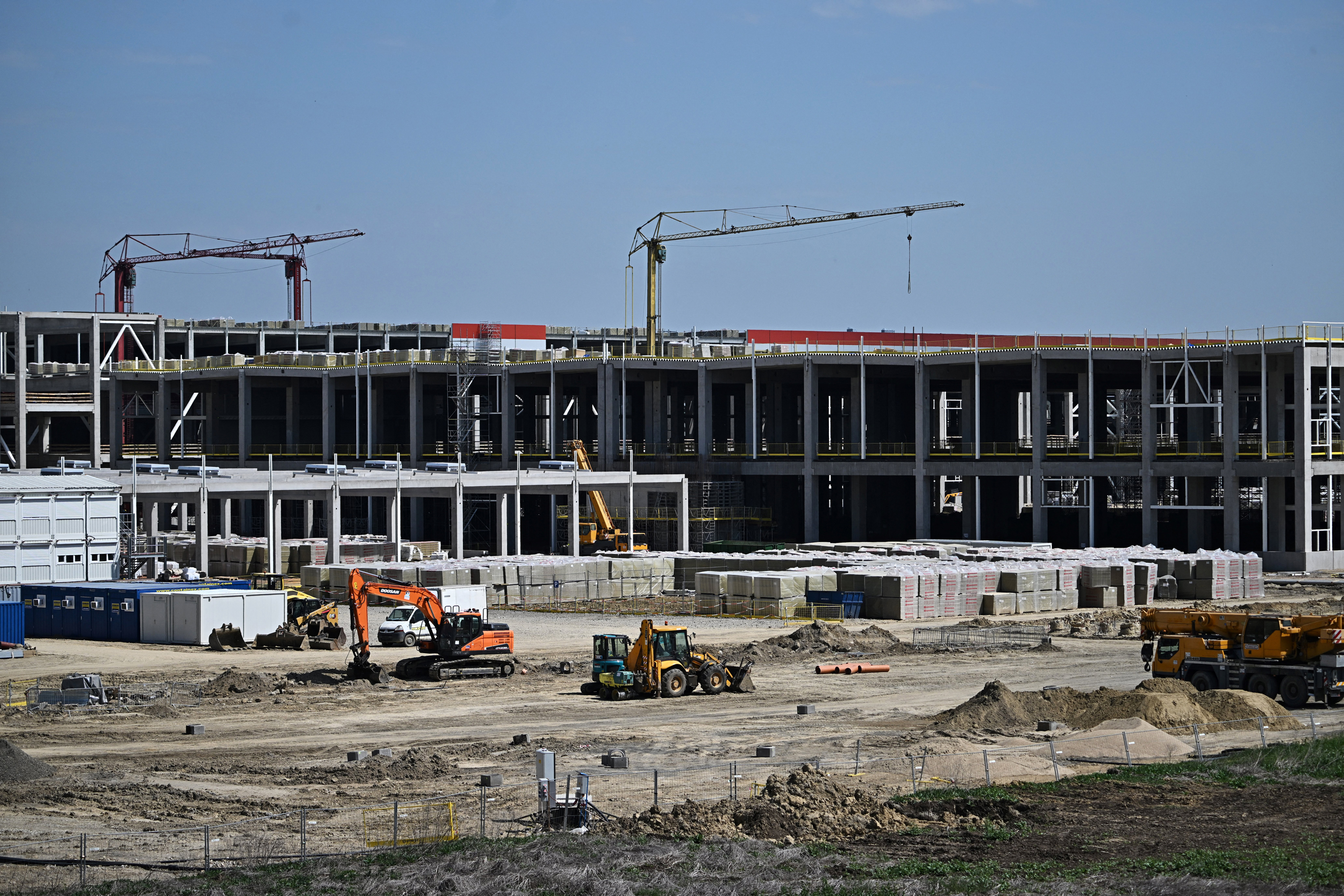
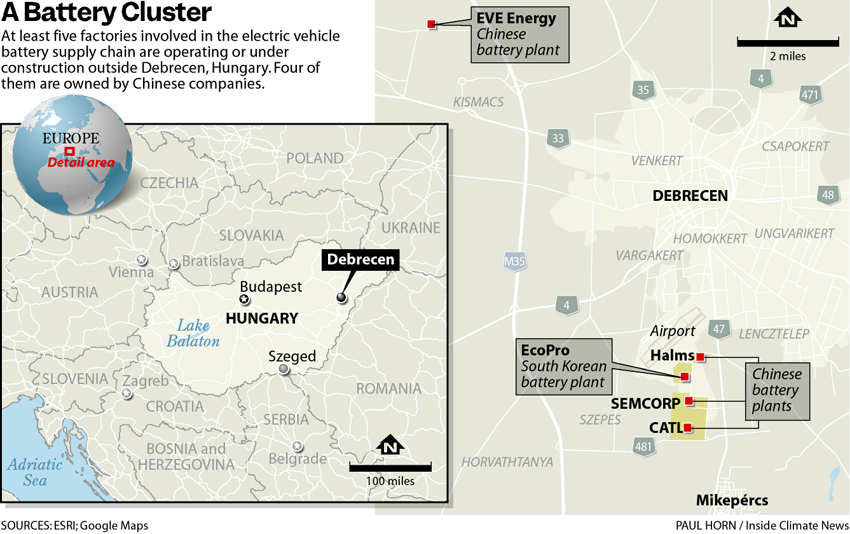
The Chinese battery giant Contemporary Amperex Technology Co., or CATL, is nearing completion on what could be one of Europe’s largest electric vehicle battery factories. The industrial park where it is located, outside Debrecen, Hungary’s second-largest city, also hosts several other manufacturers of battery parts and supplies. At least two of those are owned by Chinese companies, one by a South Korean firm. Another Chinese-owned battery factory is being built on the other side of the city.
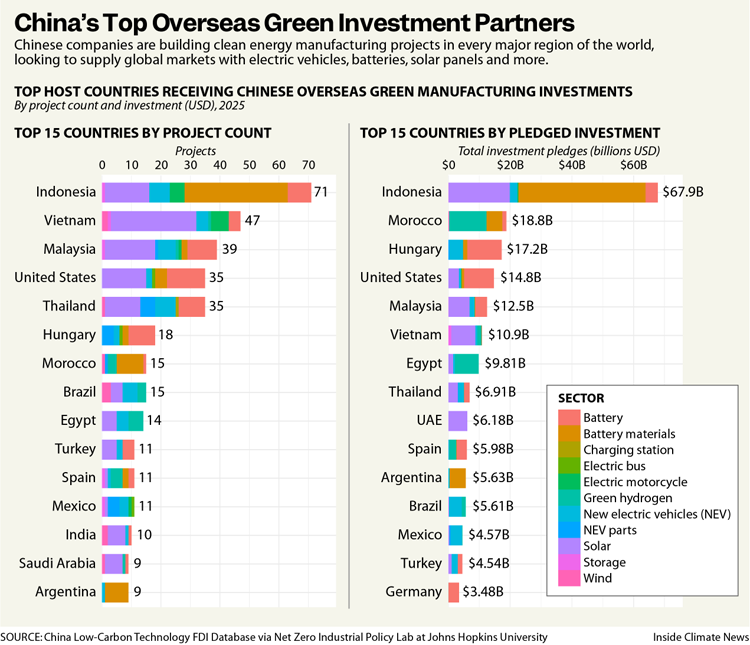
The surge of construction is part of a nationwide frenzy, prompted by Prime Minister Viktor Orbán’s goal to make Hungary a leading battery manufacturer. To reach this target, Orbán has looked primarily to Beijing. Chinese companies have announced or built at least 18 EV and battery-related projects in Hungary so far, $17 billion in pledged investments, according to data compiled by the Net Zero Industrial Policy Lab at Johns Hopkins University.
While the factories could position Hungary in the center of Europe’s transition off fossil fuels, they have prompted a backlash from residents worried about their impacts on public health and the environment.
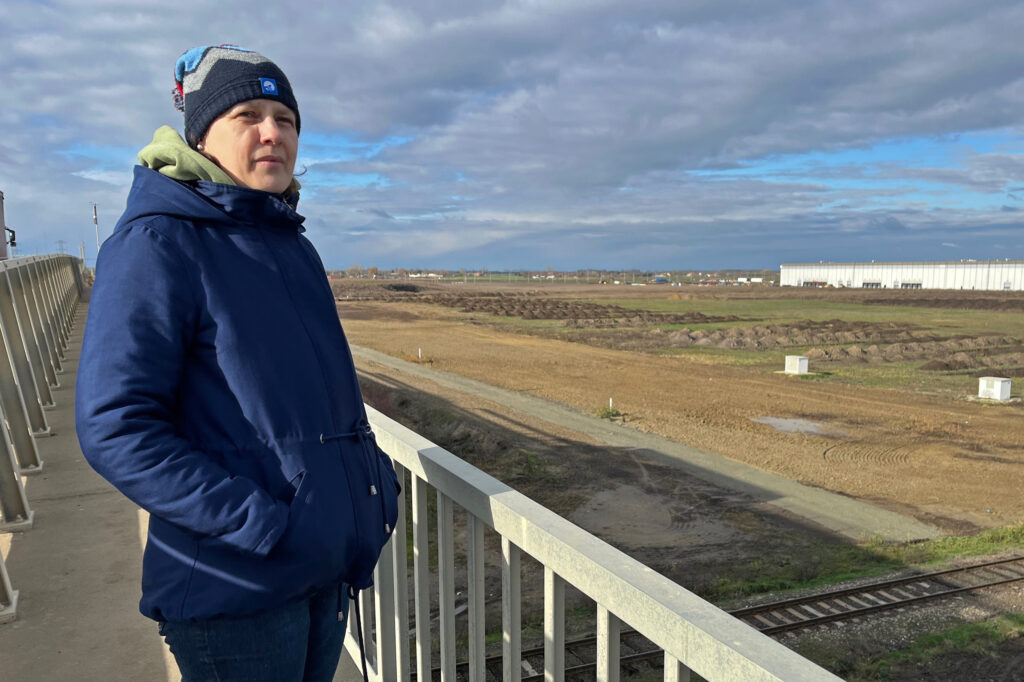
“Everyone will get their fair share of this stew,” said Éva Kozma, who leads the Mikepércs Mothers for the Environment Association, a citizen activist group that hosted the event. Kozma helped form the group after CATL announced its plans in 2022 and has since been highlighting the risks posed by battery development, identifying pollution events and scrutinizing the factories’ permits.
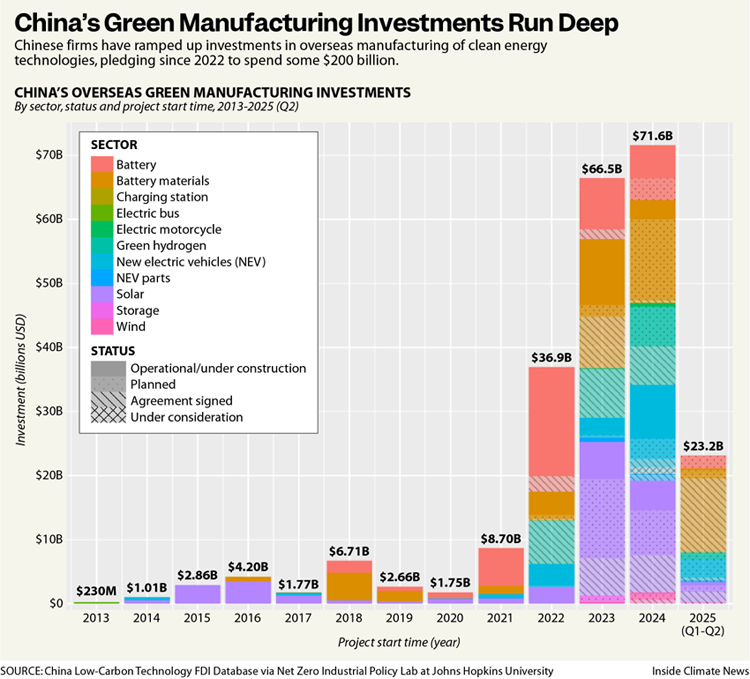
Across the globe, Chinese firms are embarking on an unprecedented effort to build the factories, mines and refineries needed to make EVs, batteries, solar panels and other clean energy technologies. Since 2022, Chinese companies have pledged some $200 billion in clean energy manufacturing investments overseas, spread across every continent but Antarctica, according to the Net Zero Industrial Policy Lab. Hungary has attracted more investment than any country except Indonesia and Morocco.
The spending is beginning to narrow the gap in funding needed to slash the world’s climate pollution. Chinese exports cut global emissions outside China by 1 percent in 2024, according to one analysis.
But many of the projects are proceeding despite local opposition and evidence of significant environmental, social and human rights impacts. Chinese-built mines, dams and factories have threatened endangered species, polluted waterways and been accused of violating labor laws. In some cases, activists and journalists examining projects have faced surveillance and intimidation.
Liu Pengyu, a spokesperson for China’s U.S. embassy, rejected the notion that Chinese investments were violating people’s rights. In an email, Liu said the country’s Belt and Road Initiative, the umbrella for its overseas infrastructure investments, aims to support green economic growth.

“The founding purpose of the BRI is to advance China’s cooperation with partner countries following the principle of mutual respect, equality and mutual benefit, to help them develop the economy and shake off poverty, which is a human right they need more than any other,” Liu said.
In Hungary, academics and environmentalists say, the investments have been accelerated by lax oversight and fast-tracked permitting. Orbán’s government eliminated the country’s environment ministry after coming to power in 2010 and has cracked down on protests and dissent more broadly.
After Kozma began speaking out about the battery factories, she became the target of smear campaigns on social media and state-backed news sites that said she was acting on behalf of foreign agents and against the interest of citizens.
She has not backed down, however. As the meeting in the community center last month came to a close, dance music booming through the door from a room down the hall, Kozma struck a defiant tone, looking to draw more people into her cause.
“What the authorities want is to make people believe that they are small, that you cannot do anything,” she said. “If you do care about it, you are an agent, a traitor. You want to defend yourself? You are just a little piece of dust,” Kozma added. “I will defend you.”
The Battery Giant Next Door
The next morning, Kozma drove her red Fiat down a dirt path that dead-ended at railroad tracks. She was joined by Tibor Nemes, the Mikepércs group’s vice president, and they described how the tracks had carried a regional line until the authorities shuttered service because it cut through CATL’s 546-acre lot.
The factory stretches across a series of giant, windowless warehouse-style buildings that already span half a mile. Next to those are muddy lots where more buildings are planned. The site is surrounded by other factories that make cathodes, aluminum cases, battery separator films, gases, all for the EV industry. Just a few years ago, this was farmland.
Kozma was bundled against the cold with a patterned hat and a hoodie peeking out of the collar of her blue parka. A thin layer of clouds cast a flat light across the landscape.
In the car, the pair agreed that the previous night had gone well.
“We filled the room,” Nemes said in Hungarian, speaking through a translator.
“People were interested, they asked questions,” Kozma added.
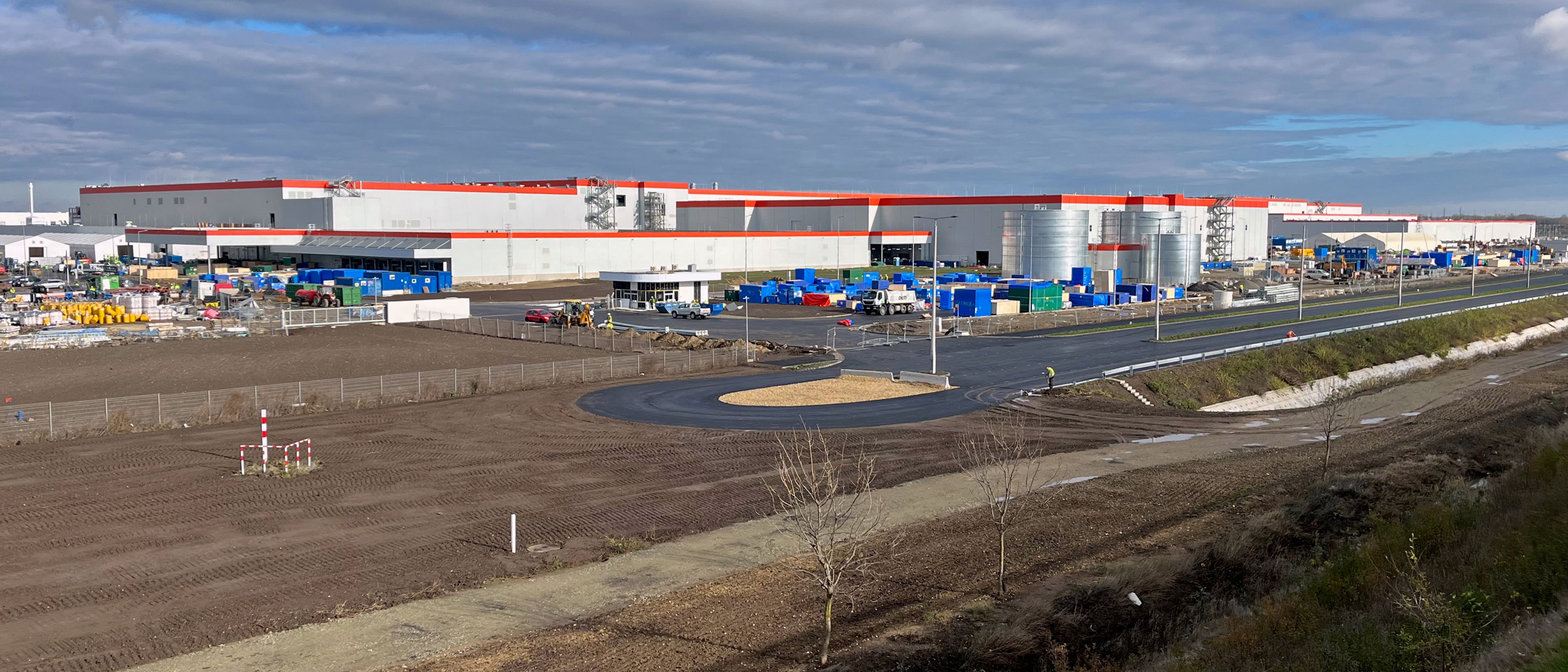
Their group had received EU funding to hold meetings in surrounding villages about the battery factories and their impacts. While the industrial park is within Debrecen’s city limits, it borders Kozma’s village of Mikepércs.
The group helped file a lawsuit that is still pending against CATL’s initial permit. Nemes said they’d already scored a victory after CATL revised its permit to use less water and lower its expected emissions of a hazardous chemical.
Meanwhile, the activists have been placing air monitors around the area to measure baselines before CATL begins production. Already, they have registered spikes in fine-particle pollution that they said have coincided with events at some of the other plants already operating.
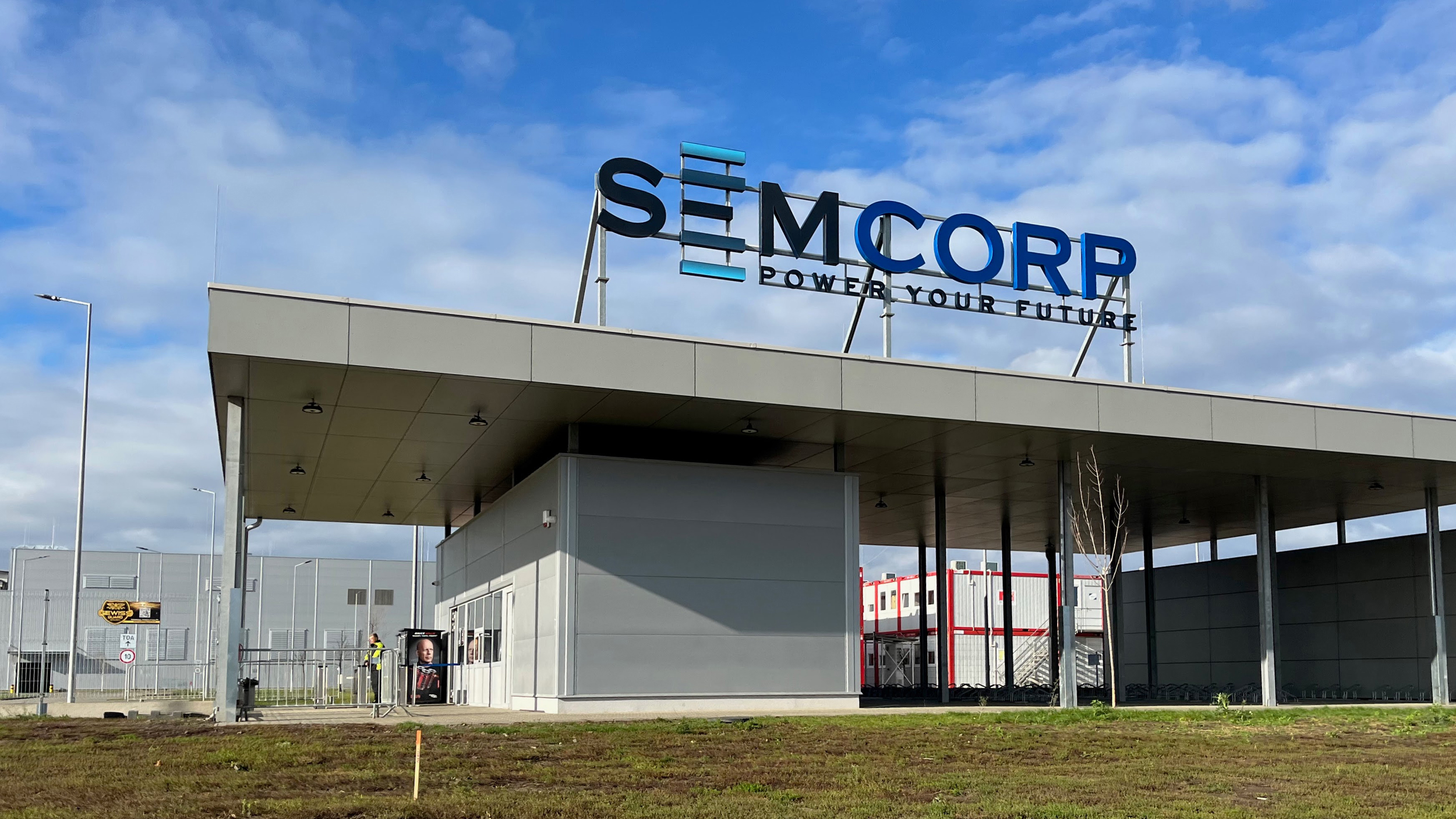
In August, local authorities sanctioned SEMCORP, a Chinese-owned company that makes separator films for batteries, after the plant exceeded its permitted air emissions for nitrogen oxides, total volatile organic compounds and dichloromethane, a possible carcinogen, according to a county government order. The fine totaled 1.5 million forints, equal to about $4,500. The order said a forensic expert determined the concentrations of the chemicals did not exceed health limit values.
SEMCORP did not reply to requests for comment.
Kozma stopped by a drainage ditch into which a different Chinese-owned factory had spilled wastewater, according to an inspection by county authorities last year.
Battery production requires significant amounts of energy and water. CATL’s most recent permit says it would use about 523,000 gallons per day on average, two-thirds of which would be drinking water with the rest coming from processed wastewater. In the summer, however, the plant’s peak water use could triple, the company said, with additional demand met “mainly” with processed wastewater.
Debrecen, meanwhile, has struggled with drought conditions in recent years.
In 2023, after CATL had announced its plans, the local water authority issued an expert opinion warning that given the city’s growth and industrial expansions, groundwater sources could reach their limits within a couple of years.
Equally alarming for nearby residents are the hazardous chemicals used in the factories, including heavy metals and a compound called N-methyl-2-pyrrolidone, or NMP, which the EU has determined may harm fetal development.
Last year, Greenpeace Hungary found high levels of NMP in municipal wastewater that had pooled in a field outside Budapest near a battery plant owned by a South Korean company. Investigative reporting has also discovered spills and releases of NMP into the air by the plant.
“It shouldn’t be in the wastewater at all,” said Gergely Simon, a toxics expert with Greenpeace Hungary.
Simon said that because Hungary does not have abundant water or energy, the only advantage it offers battery manufacturers over other countries is lax regulation and speedy permitting. Under these conditions, he said, the system is set up for frequent accidents and harmful releases.
“My experience is that when a facility relies heavily on hazardous chemicals, some of them will inevitably escape,” Simon said. “They reach the workers, and they are very likely to affect people living nearby as well.”
CATL had initially filed a permit that would allow it to release high levels of NMP into the air, but has since revised its plans to reduce its expected emissions significantly. Instead of processing the chemical on site, the company’s latest permit application says, it will send it to a supplier elsewhere in the country.
Noémi Sidló, public relations and communications manager for CATL in Hungary, said the company has adopted a technology at the plant called adiabatic cooling to reduce water use. The factory, she said, would contribute to Europe’s “green transition.”
The company also said it was government authorities, not CATL, that decided to close the regional rail line.
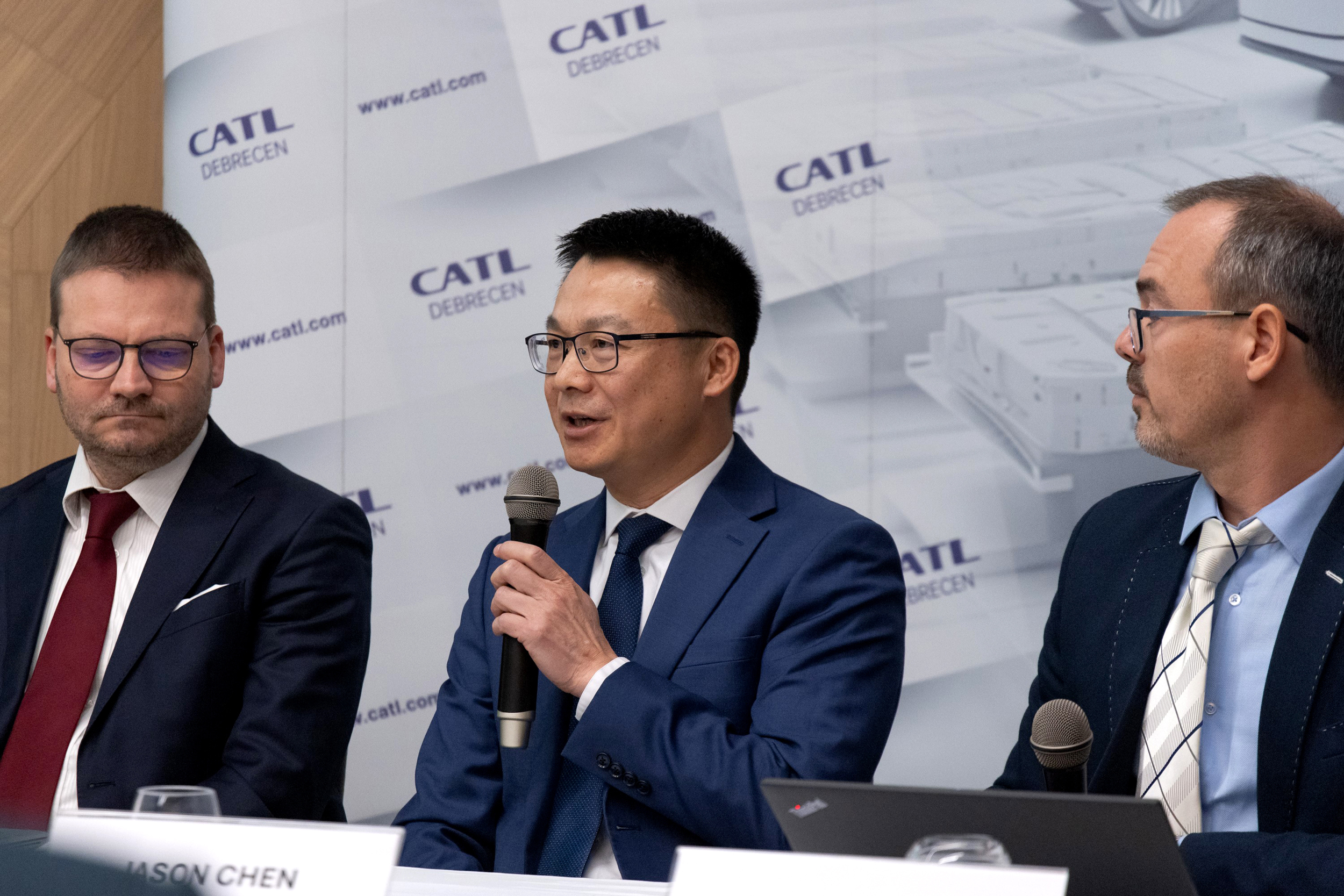
Balázs Szilágyi, a public affairs manager for the company, said the plant would have little to zero emissions of NMP. He said CATL is following the regulations set by the local government, which he noted was elected by residents.
“This debate should primarily be done between the governmental authorities and the public,” Szilágyi said.
The county Department of Environmental and Nature Protection and Waste Management, which issued CATL’s permit, did not respond to requests for comment by email, phone or in person at its office. A spokesperson for Debrecen’s mayor, László Papp, declined a request for an interview and did not reply to written questions.

Most people in Debrecen first learned a giant battery plant was coming from an announcement by the central government in 2022. Even members of the City Council were not informed before the decision was made, said László Mándi, a council member from the opposition Momentum party.
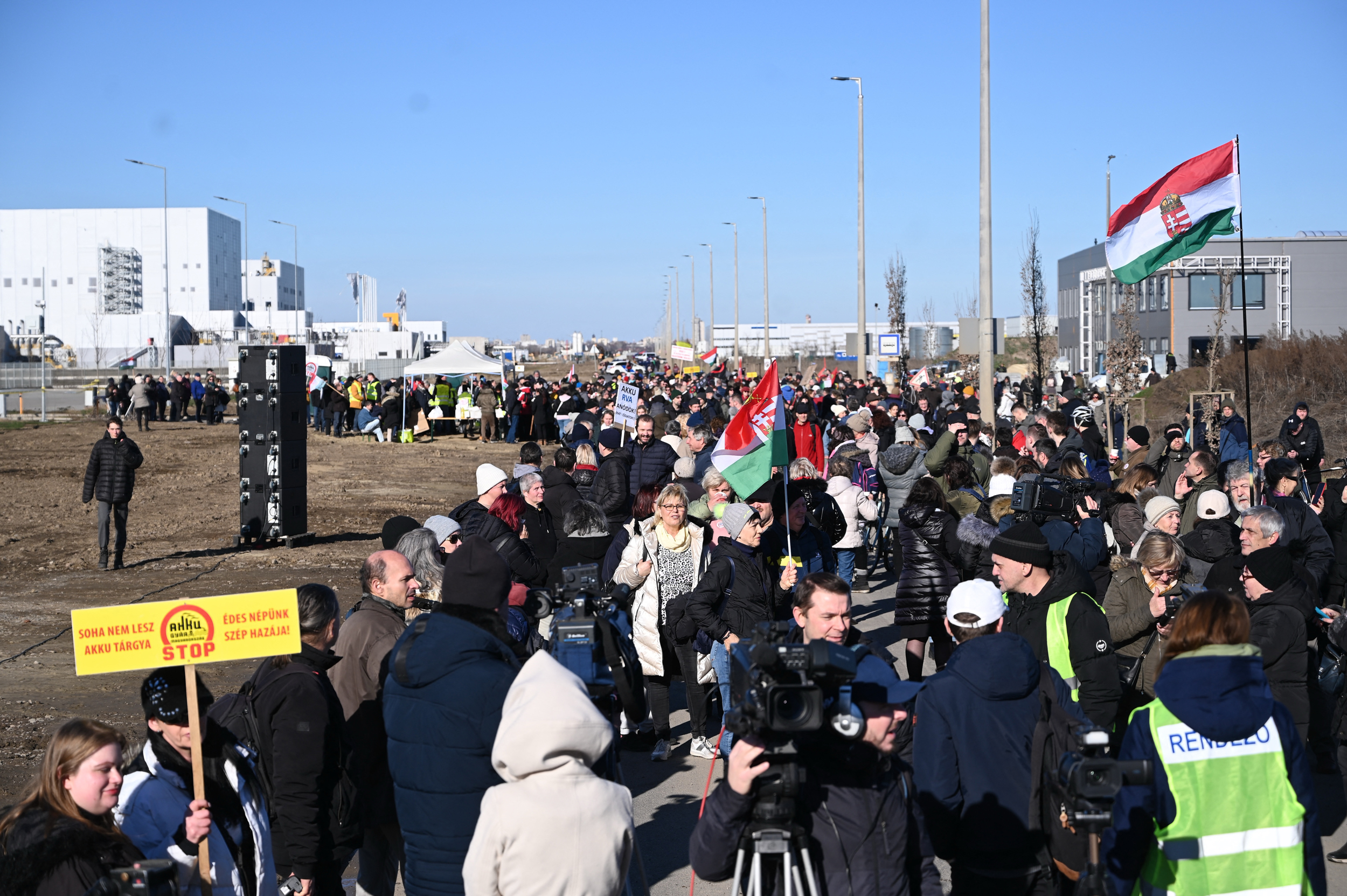
Kozma and other residents had no meaningful opportunity to weigh in on the plan, but they did vent their anger and frustration at a series of public meetings and protests. In response, state-backed media and members of the ruling Fidesz party said they were fake residents who were being funded by foreign provocateurs.
One Facebook post superimposed an image of Kozma onto a bed, with a disembodied hand holding a $20 bill and images of Hungarian-born philanthropist George Soros, the logo of Amnesty International and others. Below it was an obscene suggestion that Kozma’s group was being paid. Another post features an image of her holding a stack of bills in one hand and a brain in the other, asking which she would choose and saying she wants to destroy the future of Debrecen.
Posts like these get picked up in state-backed media, Kozma said, “and that is what my parents see on the evening news.”
One scientist at the University of Debrecen was forbidden from giving a talk on campus about the chemical risks posed by the plants. He spoke instead at a local branch of the Hungarian Academy of Sciences.
The author of the water authority report that warned of shortages with the construction of the plants was reassigned. He declined to be interviewed for this article.
Some polls have shown that opposition to battery plants is widespread in Hungary. Yet the construction has shown no signs of slowing.
Shaping the Global Transition
Chinese exports have long flooded the world’s consumer markets. In recent years those goods included solar panels, EVs and batteries. Increasingly, however, Chinese firms are building overseas manufacturing capacity, too.
The $200 billion in announced investments since 2022 in clean energy manufacturing would go toward 387 projects to make EVs, batteries, solar panels and other technologies in every major region of the world, according to the Net Zero Industrial Policy Lab.
“It is, in scale, staggering,” said Tim Sahay, the lab’s co-director.
The exports are so large they’re moving the needle on global emissions, some experts say. China’s exports of clean energy goods—mostly solar panels but also batteries and other technology—cut out 220 million metric tons of climate pollution last year, roughly equal to Spain’s emissions, according to an analysis by Lauri Myllyvirta, a senior fellow at the Asia Society Policy Institute. If all the overseas clean energy manufacturing investments announced in 2023 and 2024 come to pass, that would mean an additional 130 million metric tons in annual emissions reductions, the analysis found.
With the help of these exports, some emerging economies, including Brazil, Chile, El Salvador, Kenya, Morocco and Namibia, now generate a higher proportion of their electricity from wind and solar energy than the United States, according to Ember. Others, including Vietnam, Malaysia and Mexico, have electrified more of their final energy use. In some countries, the capacity of Chinese solar panel imports outstrips the centralized electricity system.
“It is a very good story,” said Mathias Larsen, a senior policy fellow at the Grantham Research Institute on Climate Change and the Environment at the London School of Economics, who co-wrote the Net Zero Industrial Policy Lab report.
For countries looking to wean themselves from fossil fuels, Larsen and other experts say, there is little doubt that Chinese companies are the best partners, especially at a time when the U.S. government is focused on producing and exporting oil and gas.
But many civil society groups and human rights advocates say this expansion is having an enormous and often underreported impact on local communities, workers and the environment. In Indonesia, Chinese-controlled nickel smelters that refine the metal for use in steel and batteries have spewed pollutants into the air and been accused of violating labor rights. In Zambia, a Chinese mining company spilled toxic tailings into waterways. Dam projects across Southeast Asia and Africa are threatening endangered species. And some journalists who have tried to highlight these problems have faced intimidation, surveillance and pressure from police.
Many Chinese companies’ exports and overseas manufacturing, especially for solar panels, also remain tied to domestic supply chains linked to forced labor campaigns in the country’s Xinjiang Uyghur Autonomous Region.
“It’s a little bit like reading about manufacturing in China in the 1990s,” said Sophie Richardson, a senior China advisor at Climate Rights International. “Everybody was just so excited about the development of manufacturing and wasn’t it great to get inexpensive goods. And very few people stopped to say, ‘Is this stuff cheap because there are no independent unions in China?’ I feel like we’re sort of doing that all over again but now it’s everyone sort of waxing rhapsodic about the percentage of wind and solar power that’s used without asking any of these questions that make for a much more complicated story.”
Liu, the Chinese embassy spokesperson, called the allegations of forced labor in Xinjiang “an outright lie” spread by people in the West to “suppress Chinese companies and industries.” He also rejected the notion that the Chinese government had played a role in pressuring journalists overseas, saying, “China protects the legitimate rights of journalists in accordance with the law and welcomes all journalists, including foreign journalists, to conduct reporting on China-related matters in accordance with laws and regulations.”
Belt and Road projects were bringing prosperity to developing nations and solar development across Africa, Liu said. “The Belt and Road Initiative is pro-development, but more specifically it is pro-green development. Under the principle of extensive consultation, joint contribution and shared benefits, China pursues open, green and clean energy cooperation with relevant countries, and works towards high-standard, people-centered and sustainable development.”
Myllyvirta, Larsen and others argue that China’s clean energy exports are cheap because of its unique state-run economy and the massive investments Beijing made in the technologies, and that forced labor plays little role in lowering costs.
This story is funded by readers like you.
Our nonprofit newsroom provides award-winning climate coverage free of charge and advertising. We rely on donations from readers like you to keep going. Please donate now to support our work.
Donate NowSahay, of the Net Zero Industrial Policy Lab, said countries that are hosting Chinese-backed manufacturing now have an opportunity to steer the developments in a way that will benefit their citizens.
“Whether or not these industrial mega-projects lead to any positive development outcomes depends upon domestic policy choices,” Sahay said. Host countries, he added, “must bargain hard with Chinese firms to actually achieve their own goals of sustainable development.”
Sahay pointed to Brazil as an example where a host government responded to alleged labor violations by a Chinese company to not only demand better practices but also secure deals to develop local supply chains and train workers. In other countries, however, host governments appear to have little interest in pressing Chinese firms to be more responsive to local concerns.
An Autocratic Tilt
Soon after Orbán began his current reign in 2010, he announced his “Opening to the East.” Hungary was too dependent on Western countries, he argued, and needed to expand partnerships with illiberal powers like Russia and China.
Orbán began courting Chinese investment and seeking to strengthen diplomatic ties. Little came of this initially, beyond a high-speed rail project to Serbia that has faced delays and allegations of corruption. Then the battery investments started rolling in.
Last year Hungary was the top European destination for Chinese investment, according to a report by Rhodium Group and Mercator Institute for China Studies. Because it is an EU member, Hungary offered Chinese battery firms direct access to the European market. The EU had set a target to phase out sales of new gasoline and diesel cars by 2035. Orbán wanted Hungary, with China’s help, to meet the demand for new EVs.
The central European country is about the size of Indiana with fewer than 10 million people, but already it is one of the world’s top battery manufacturers, though China produces the vast majority.
Orbán has positioned Hungary as China’s chief defender within the EU. His government has blocked efforts to condemn Chinese authorities for their crackdown on democracy activists in Hong Kong. Last year, Hungary’s foreign minister opposed efforts that he said would make NATO an “anti-China bloc.”
Meanwhile, the government has struck deals with Huawei, the Chinese telecom giant, to develop 5G technology despite opposition from other European nations and the United States, who warn of security risks. Last year, the two countries signed a security agreement that allows Chinese police to patrol within Hungary, which many academics say could be used to pressure Chinese nationals living or working in the central European nation. In October, the Chinese embassy in Hungary said the countries had signed an extradition treaty that “will provide a solid legal basis for the two countries to jointly combat crime and is a milestone for deepening China-Hungary judicial and law enforcement cooperation.”
All this has come as Orbán has tightened his more than 15-year grip on power through means that many analysts say have turned the country into a quasi-democratic autocracy. Orbán has changed electoral laws and used state control of media to demonize opponents and suppress and split opposition.
“If you were at a protest then you will get a fine.”
— Anna Vindics, Momentum party policy director
This year Hungary’s parliament passed laws prohibiting events by LGBTQ+ groups and allowing authorities to use facial recognition software to identify and fine participants of any gatherings. Orbán’s opponents within Hungary worry it is a prelude to cracking down on an increasingly strong opposition before nationwide elections expected in April 2026.
“They don’t need policemen,” said Anna Vindics, policy director for the opposition Momentum party. “They can just put cameras and recognize your face, and if you were at a protest then you will get a fine.”
Momentum’s members have been targeted with criminal sanctions. Vindics took part in protests against the facial recognition and anti-LGBTQ+ laws, joining with colleagues to blockade a bridge and the entry to Parliament, for which she received multiple fines, she said.
Some academics say the government’s authoritarian tactics have informed its regulation of battery factories, too. Andrea Éltető, a senior research fellow at the ELTE CERS Institute of World Economics in Budapest, has written that the government failed to conduct the strategic environmental assessment required for such large-scale investments. And unlike in other European democracies, “they designated the town or the village to where the given company should come,” Éltető said, “and then the local municipality could not have any say.” It is “the usual autocratic way of decisionmaking,” she said. “They make a decision and that’s it.”
Éltető and other Hungarian academics argue that the battery investments, despite their size, will bring limited benefits to the nation compared to the problems they create.
At least initially, CATL says about one-third of its employees will come from China. The jobs that battery factories do create are relatively low-skill and low-paid, said Tamás Matura, an associate professor at Corvinus University of Budapest and an expert in China-Europe relations.
The Hungarian Investment Promotion Agency declined to comment, saying in an email that “after careful consideration,” it would “not be able to grant an interview on this topic.”
A spokesperson for Orbán did not respond to repeated inquiries by Inside Climate News.
Matura said the government has failed to articulate a clear rationale for why it would try to build such a large battery manufacturing industry.
With limited energy supplies and water and near-full employment levels, “we have practically nothing that would substantiate the idea that this is a good investment,” Matura said.
Back in Mikepércs, Kozma and others hope that elections in April will finally bring a new government. The leading opposition candidate has aligned himself with battery factory opponents.

Despite being only a 15 minute drive from central Debrecen, Mikepércs feels like a small farm town. Its tiny central square, set off from a church, has a pair of benches and a folding bulletin board pasted with flyers. A decorative stand fashioned from a lacquered section of a tree trunk was bare in mid-November, soon to be covered in Christmas ornaments.
Kozma owns a small business that makes body scrubs and bath salts but has had no time for that work since she began devoting herself to the Mikepércs Mothers group. She has three children, ranging in age from 17 to 23, with the older two attending university in Debrecen. All three still live at home.
“Usually young people want to go abroad,” Kozma said, “but they love it here.”
Sitting in her car by the town square, Kozma said she would rather be living like she was before the battery factories came, and that she sometimes has disputes with her husband about all the time she has devoted to resisting them. Her children support her, though, she said.
“I’m doing it for them,” Kozma said, twisted sideways in the Fiat’s driver’s seat. “If we can’t bring about change and we have to move from here, at least I can look them in the eye and say, ‘I tried to do everything I could.’”
About This Story
Perhaps you noticed: This story, like all the news we publish, is free to read. That’s because Inside Climate News is a 501c3 nonprofit organization. We do not charge a subscription fee, lock our news behind a paywall, or clutter our website with ads. We make our news on climate and the environment freely available to you and anyone who wants it.
That’s not all. We also share our news for free with scores of other media organizations around the country. Many of them can’t afford to do environmental journalism of their own. We’ve built bureaus from coast to coast to report local stories, collaborate with local newsrooms and co-publish articles so that this vital work is shared as widely as possible.
Two of us launched ICN in 2007. Six years later we earned a Pulitzer Prize for National Reporting, and now we run the oldest and largest dedicated climate newsroom in the nation. We tell the story in all its complexity. We hold polluters accountable. We expose environmental injustice. We debunk misinformation. We scrutinize solutions and inspire action.
Donations from readers like you fund every aspect of what we do. If you don’t already, will you support our ongoing work, our reporting on the biggest crisis facing our planet, and help us reach even more readers in more places?
Please take a moment to make a tax-deductible donation. Every one of them makes a difference.
Thank you,