

From our collaborating partner Living on Earth, public radio’s environmental news magazine, a conversation between producer Jenni Doering and Inside Climate News Washington, D.C., bureau chief Marianne Lavelle.
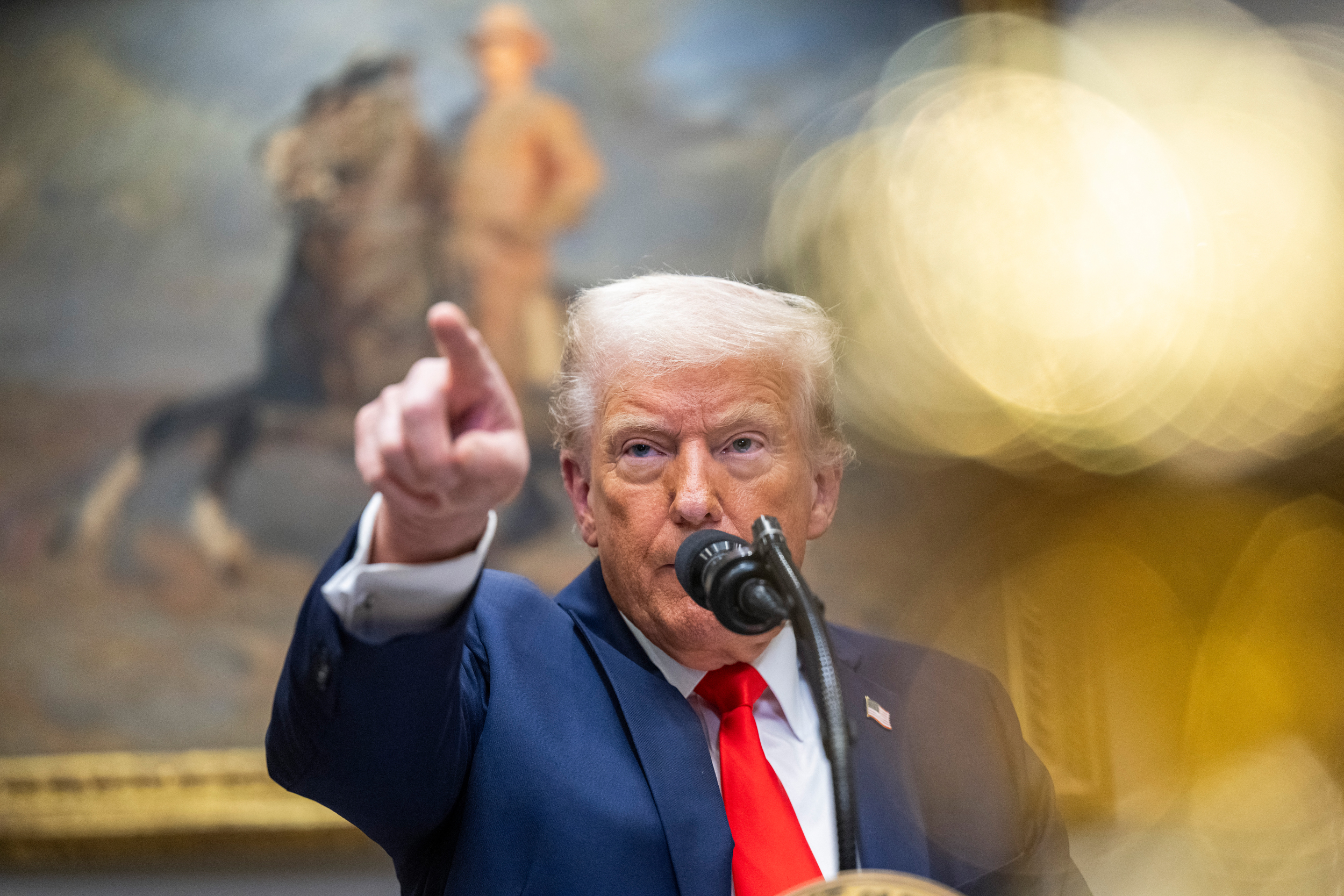
The Trump Administration recently announced plans to withdraw the United States from over 60 international treaties and organizations, many of which concern climate change.
One of them is the United Nations Framework Convention on Climate Change or UNFCCC, a treaty ratified by the U.S. Senate in 1992 and the key international forum for addressing the climate crisis. The U.S. will also bow out of UN Water, UN Oceans, the International Energy Forum and the Intergovernmental Panel on Climate Change, or IPCC, which provides vital reports on the state of climate science every few years.
Marianne Lavelle is the Washington, D.C., bureau chief for Inside Climate News. This interview has been edited for length and clarity.
JENNI DOERING: What rationale is the Trump administration providing for withdrawing from all of these different organizations and treaties?
MARIANNE LAVELLE: The announcement simply said they are no longer in the U.S. interest. And what that means is the Trump administration has decided it’s really not in our interest, not only to have any concern about climate change, but to cooperate and dialogue with other nations.
It seems very significant that this happened in the same week as the invasion into Venezuela, which was just a very unilateral move. All of the ground rules that we have, these agreements have been the way we function, that we get to influence the direction of policy worldwide. The idea that we walk away from that table is really quite dramatic, since we are the country that took the lead in establishing the world order after the devastation of World War II, deciding that cooperation is better than war.
On climate change, it’s a recognition that this is a global problem that one country cannot solve alone, and often the U.S. role has been to slow down action more than other nations have wanted to move and it’s just striking that even that amount of leverage the president has decided is no longer needed.
DOERING: This latest action certainly seems far beyond the withdrawal of the U.S. from the Paris Climate Agreement, which President Trump has done twice now. So what’s the impact of the U.S. exiting virtually all international cooperation on climate?
LAVELLE: Most analysts believe that another country, likely China, will go into that leadership vacuum and really be the country that steers the future direction—and that’s not necessarily great for addressing climate change. China still is a very big emitter of fossil fuels. However, it also is a huge, huge investor in alternatives to fossil fuels, and world leader in electric vehicles, in solar and wind energy, and just the fact that it will have a stronger hand in leading the way the rest of the world goes will affect us, but we won’t really have a say in the negotiations on how fast we decarbonize.
DOERING: What do you think are some potential economic consequences of eliminating the U.S. from these kinds of international conversations about climate?
LAVELLE: Any company that is doing business globally with other countries that do have climate goals in place are going to be at a disadvantage because they won’t have their government at the negotiating table making the case for them.
One really clear example of that is that the European countries are planning to put into place these carbon border adjustments, and that could be an area where negotiation would be needed to be able to export their goods into Europe. That’s just one example of how this really could affect U.S. companies. Most of these multinational companies would like to be selling across all markets, not just in the U.S.
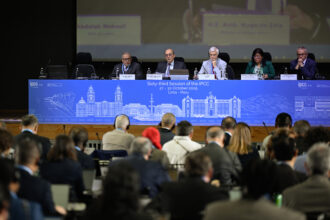
DOERING: What’s the practical impact of the U.S. withdrawing from the world’s main climate science body, the Intergovernmental Panel on Climate Change, or IPCC?
LAVELLE: That’s a really interesting question, because right now, there are about 50 U.S. scientists who are participating in the latest assessment. I think they actually had their first meeting in December, and all of the U.S. scientists—and this is the first time I believe that this has happened—the U.S. scientists are not government scientists. They’re all with other universities or institutions. They’re private citizens who are participating. It’s kind of a volunteer thing, but this is what they’re doing on their own.
Does the U.S. have any way of stopping them? I don’t think so. But does the Trump administration have leverage over their institutions? Obviously, the Trump administration has done that. We’ve seen what it did to Harvard and Columbia over the last year, so I think we have to see what’s really going to happen.
The U.S. scientists have so much to contribute to that assessment. They, in many cases, are leaders in these realms of science. And there’s so many realms of science involved, from energy technologies to marine science to weather and atmospheric science. It’s not clear that these U.S. scientists can be stopped from participating, but pressure can be put on them, and it can just kind of change the whole cooperative flavor of the IPCC.
DOERING: This is a huge question, but what do you think withdrawing from these organizations and treaties means for the climate?
LAVELLE: It definitely remains to be seen. It is clear that the Trump administration’s wager is that without the United States, all of the world action on climate can’t really go anywhere. He made that clear when he spoke at the UN last fall. He called climate change a con job. He wants other countries to stop their action on climate, and he wants them to buy us natural gas, for instance, and U.S. oil. So that’s one possible scenario, that it all falls apart, and we don’t have a world that worries about climate change.
I think that that’s a pretty unlikely scenario. Despite everything the U.S. has done to drag its feet over the last few years, Europe and Asia have really moved forward into clean energy technologies and decarbonization. I think that that is the future, and it makes the U.S. have less of a hand in shaping the global future.
DOERING: When the first Trump administration pulled the U.S. out of the Paris Agreement, a bunch of cities, mayors, businesses, organizations, they said, we are still in and they sort of formed a coalition around that. Similarly, as we see the U.S. pulling out of the underlying UN Framework Convention on Climate Change that dates all the way back to 1992, to what extent do you think local organizations and local governments within the U.S. will try to step up and keep participating in these international forums on climate?
LAVELLE: The biggest response that we heard when this happened was state and local governments saying, we’re still in, and we’re setting our goals and we’re taking action to reduce greenhouse gas emissions, and I know that they will continue with that work. However, what’s different this time than last is that the Trump administration is actually aggressively going after the states and local governments to argue in court that they do not have the legal authority to act.
For example, there are some ordinances in California that new buildings need to be electric, not using natural gas. The Trump administration sued two of those communities last week. At the same time, the Trump administration is suing New York and Vermont and Hawaii, which are all trying to have climate change laws.
DOERING: These are the “Climate Superfund” laws you’re referring to?
LAVELLE: Right … New York and Vermont have “Climate Superfund” laws. The Trump administration is saying those laws are illegal. This is a really multi-pronged effort. The Trump administration is not just saying, hey, we’re not going to do anything about climate change at the federal government. They’re trying to stop states from acting. And in a real sense, through this withdrawal from the international treaties and organizations, the Trump administration is trying to stop the rest of the world from acting on climate change.
DOERING: What’s the legal basis for the president of the United States to do this alone, to pull out of all of these organizations and treaties by himself? The UNFCCC was ratified by the U.S. Senate in 1992, so for example, does the Senate need to give its consent for withdrawal?
This story is funded by readers like you.
Our nonprofit newsroom provides award-winning climate coverage free of charge and advertising. We rely on donations from readers like you to keep going. Please donate now to support our work.
Donate NowLAVELLE: These are all questions that are yet to be answered, and the fact that the Trump administration is taking this action means that it wants to test the legality or the meaning of the constitutional requirement that the Senate ratify international treaties.
Under the Constitution, the U.S. cannot enter into a treaty without ratification by the Senate, a vote by more than two-thirds of the Senate, but it never has been tested whether the president can exit a treaty that the Senate has already approved and ratified just on his own. If he can, it really dilutes the meaning of ratification.
The Trump administration most certainly will face a legal challenge over this, and it could very well be an issue that goes all the way up to the Supreme Court. Depending on how it rules, that could really change the landscape on international treaties in the future.
DOERING: What are the stakes of the U.S., a major economic power, still a superpower, when it comes to us walking away from climate and international cooperation?
LAVELLE: Well, it’s very harmful to the credibility of the whole process. If the largest historic contributor to world greenhouse gases isn’t doing anything about its greenhouse gases, how do you urge other countries to act when it’s not going to have any impact compared to the impact if the U.S. reduced its emissions? Also just finance for those countries that did almost nothing to cause the climate crisis but are feeling the worst effects.
One of the most hotly negotiated things over the last 10 years has been to get some relief and funding for those countries, if for no other reason than to stop the climate migration crisis that is ahead of us if we don’t do anything. There are lots of good, self-interested reasons for the United States to be involved in doing something about climate change, and I’m not sure that just asserting it’s not a problem is going to prevail when, obviously, the impacts are already happening all over the world.
About This Story
Perhaps you noticed: This story, like all the news we publish, is free to read. That’s because Inside Climate News is a 501c3 nonprofit organization. We do not charge a subscription fee, lock our news behind a paywall, or clutter our website with ads. We make our news on climate and the environment freely available to you and anyone who wants it.
That’s not all. We also share our news for free with scores of other media organizations around the country. Many of them can’t afford to do environmental journalism of their own. We’ve built bureaus from coast to coast to report local stories, collaborate with local newsrooms and co-publish articles so that this vital work is shared as widely as possible.
Two of us launched ICN in 2007. Six years later we earned a Pulitzer Prize for National Reporting, and now we run the oldest and largest dedicated climate newsroom in the nation. We tell the story in all its complexity. We hold polluters accountable. We expose environmental injustice. We debunk misinformation. We scrutinize solutions and inspire action.
Donations from readers like you fund every aspect of what we do. If you don’t already, will you support our ongoing work, our reporting on the biggest crisis facing our planet, and help us reach even more readers in more places?
Please take a moment to make a tax-deductible donation. Every one of them makes a difference.
Thank you,