

Reporting for this story was supported by a grant from the Fund for Investigative Journalism.
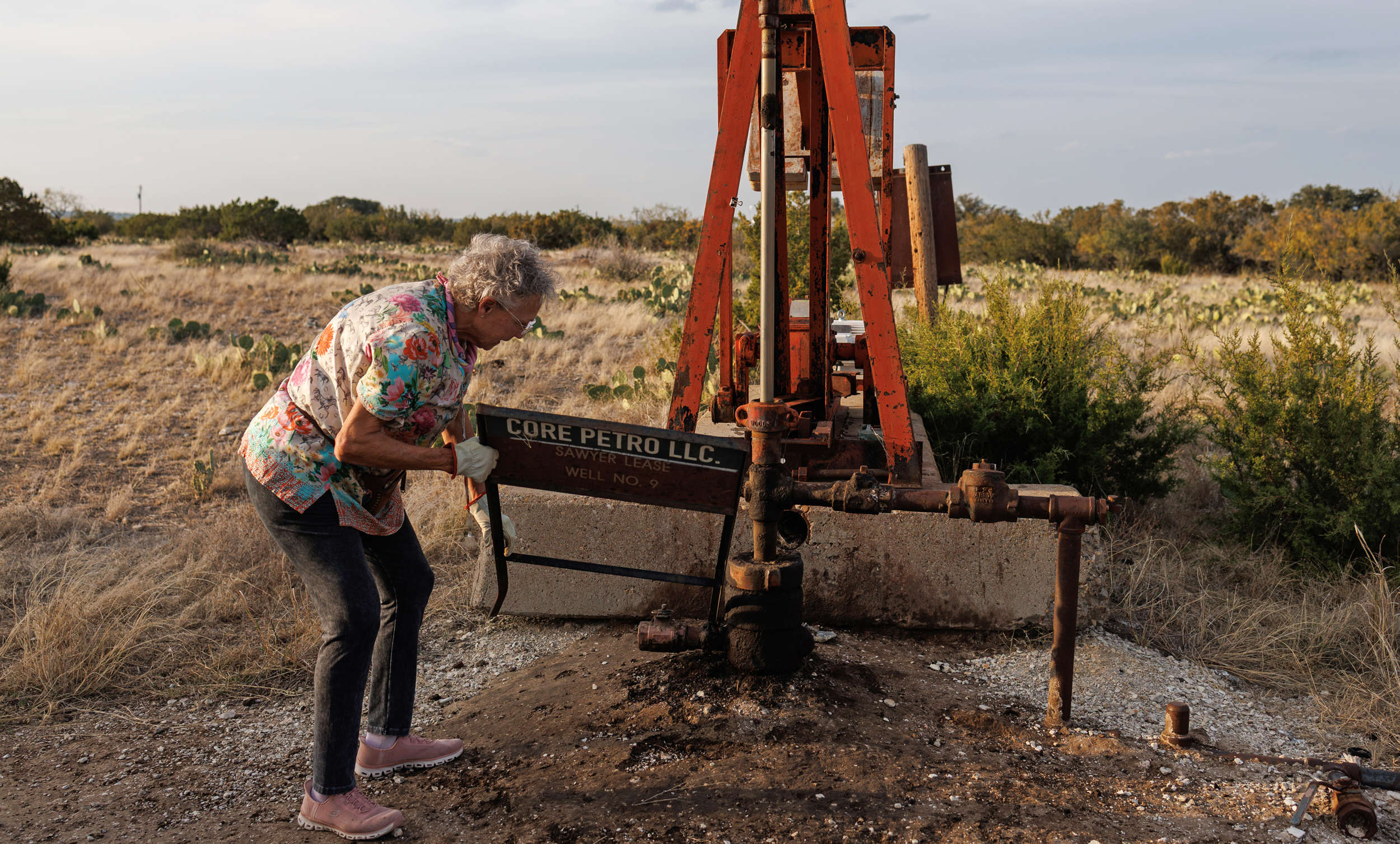
TOM GREEN COUNTY, Texas—Some Texas oil wells gush hundreds of barrels of oil a day. But many are like the wells on Jackie Chesnutt’s ranch in West Texas that only trickle out a couple barrels a month.
Chesnutt, a retired engineer, claims the five wells operating on her ranch are out of compliance with state rules and should be shut down. The company, CORE Petro, says that it’s struggling to break even, let alone pay to plug the wells. But it says that all its wells are in compliance.
There are thousands of oil and gas wells around Texas like these: low-producing wells leased by companies operating on a shoestring. About two-thirds of the active oil wells in Texas, or 99,000 wells, produce less than 10 barrels of oil a day, according to the state regulator. To remain active, oil wells in Texas must produce at least five barrels for three consecutive months or at least one barrel for 12 consecutive months.
Companies will often maintain a minimal amount of oil production instead of plugging a well, which can cost tens of thousands of dollars. Landowners like Chesnutt argue that this pattern can lead to pollution and burdensome equipment on their land.
Oil industry analysts and environmental advocates say they have heard claims that companies report the bare minimum of oil production to avoid plugging wells.
“The wells on the lease are all producing,” said Railroad Commission spokesperson Bryce Dubee.
Advocates of reforming the oil and gas industry say that stricter rules are needed to ensure companies plug wells in a timely manner and assume the costs so that it does not fall to the state.
In a 2022 report on Texas’ orphan well problem, the nonprofit organization Commission Shift wrote companies should not be able to “indefinitely ‘produce’ a teaspoon of crude or a cubic foot of gas simply to avoid paying for decommissioning.”
Texas has more than 159,000 inactive wells. If the operator of an inactive well goes out of business, the unplugged well eventually becomes an orphan. Texas is facing a record-high backlog of more than 11,000 orphan wells.
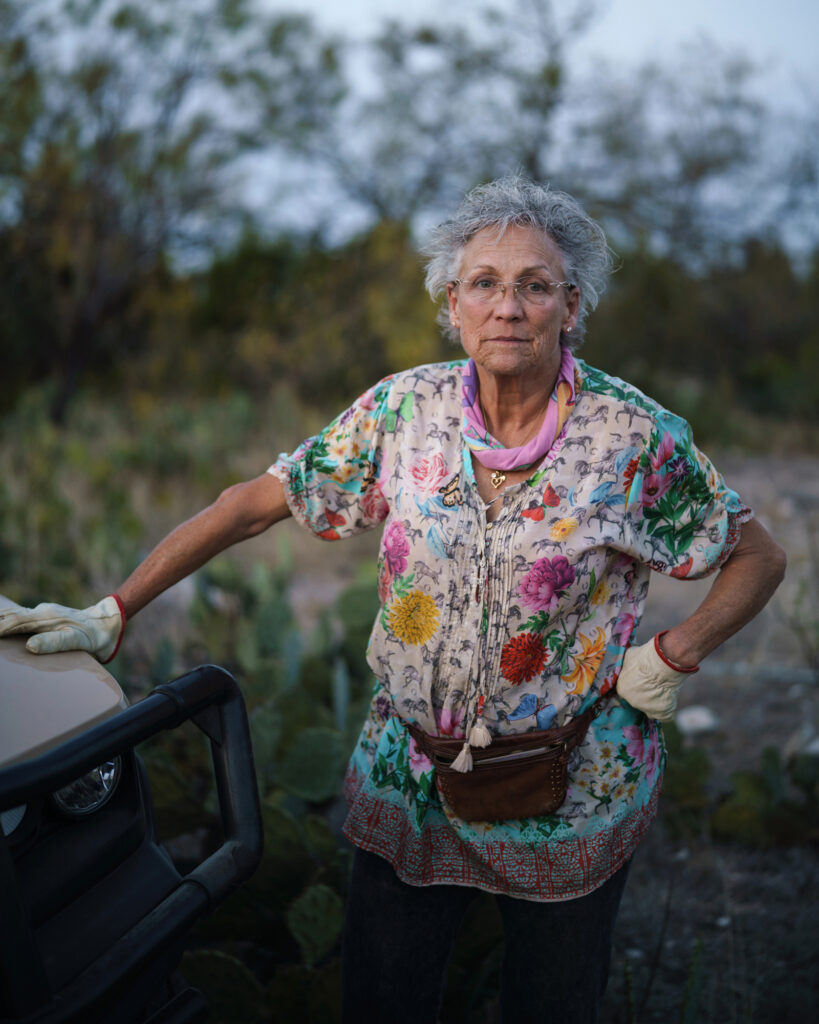
Chesnutt is the rare landowner who is fighting back against this broken system. The 69-year-old and her now-deceased husband bought the 375-acre property outside San Angelo in 1998. After retiring from a career working at a pharmaceutical company in San Angelo, she now tends goats and sheep on the ranch.
Her complaints to the Railroad Commission, which regulates oil and gas, have gone nowhere, she said. She has resorted to shutting off power to CORE Petro’s wells because she says they are out of compliance with state production rules. CORE Petro responds that it’s Chesnutt who is breaking the law by shutting off power and, without electricity, they have no way to produce oil at the wells.
“We’re between a rock and hard place,” said Cassie Ohlhausen, who runs CORE Petro with her husband, Kent. “We’re not financially able to plug a bunch of oil wells. That’s not why we’re in this business. We’re in this business to produce oil wells.”
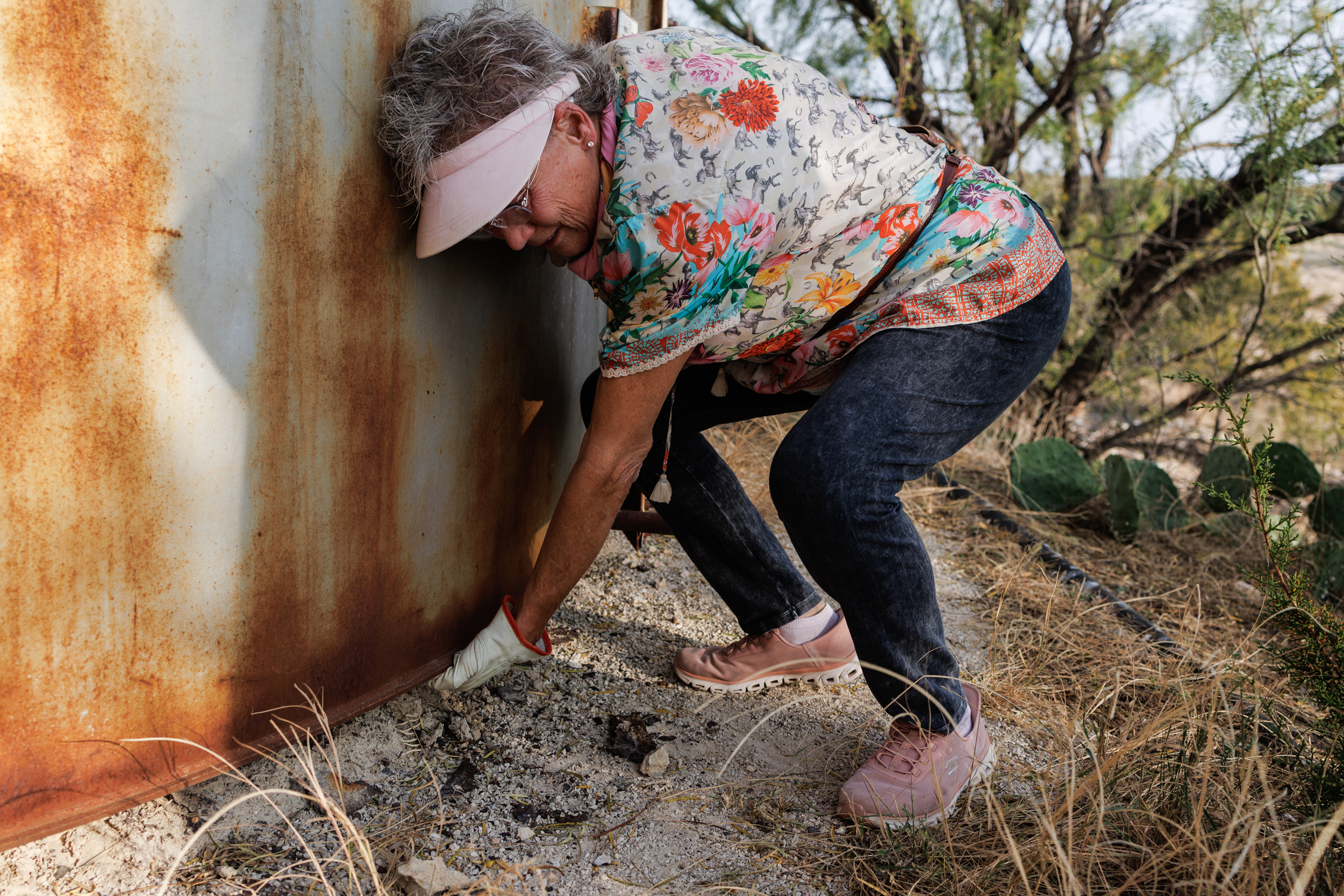
Chesnutt’s growing frustration has spilled over into confrontations with CORE Petro and commission staff. The Railroad Commission alleges that Chesnutt physically assaulted staff members and endangered them with aggressive driving. The agency has instructed her to put all communications in writing to avoid future incidents. The owners of CORE Petro say she has threatened them with a gun. Chesnutt disputes these claims.
The Railroad Commission declined to answer numerous questions about the oil lease on Chesnutt’s ranch. Instead, commission staff provided a letter sent to Chesnutt that described altercations with staff members. The Railroad Commission has not issued any fines to CORE Petro.
Jackie’s Ranch
Chesnutt’s ranch is one small window into the vast problem of Texas’ aging oil assets. Existing financial mechanisms are not enough to retire the thousands of low-producing oil wells littered across the Texas countryside. The problem eventually falls to the state or becomes a thorn in the side of landowners like Chesnutt.
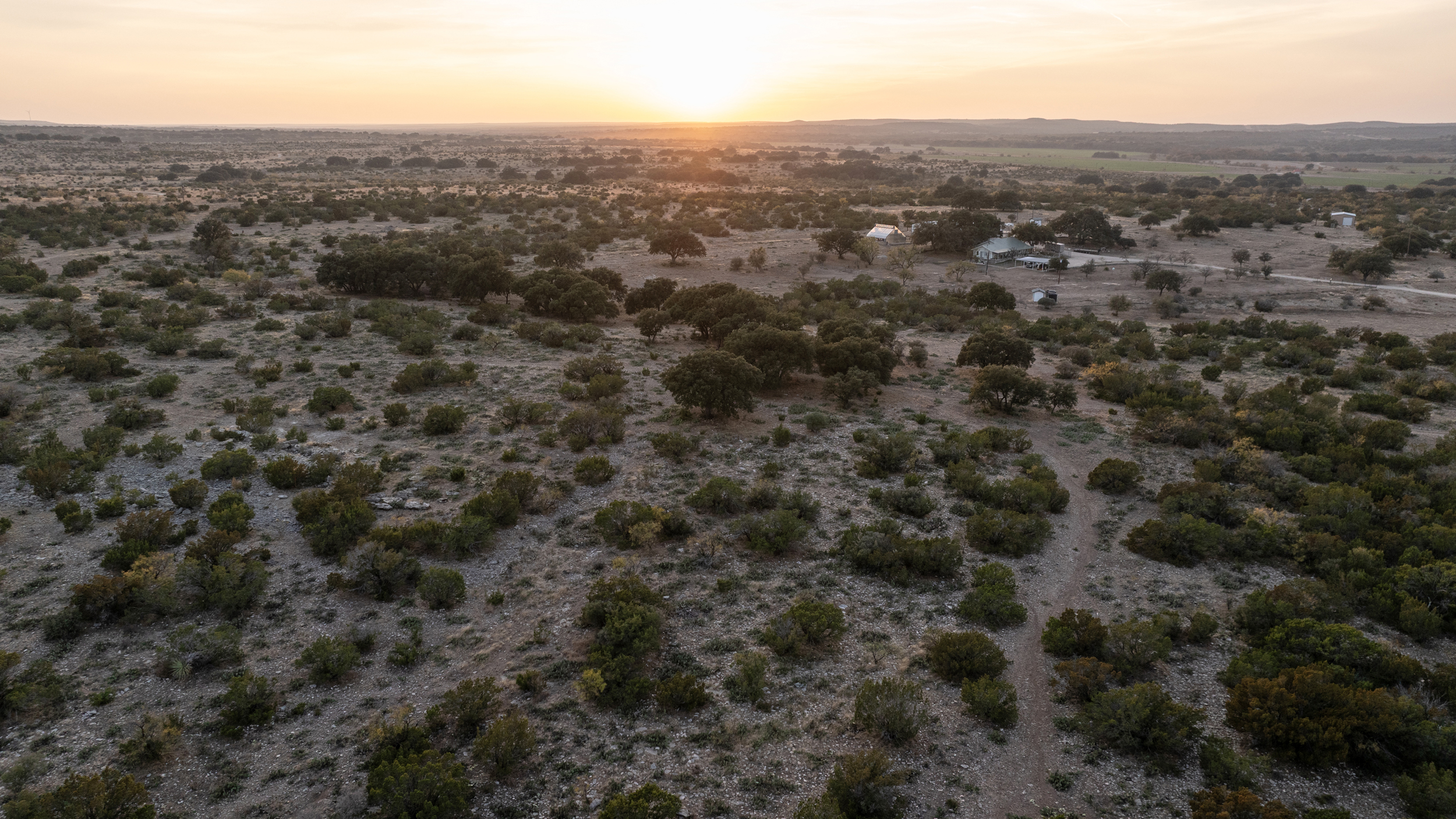
Persimmon Creek Ranch lays where the desert scrubland of the Trans Pecos region meets the rocky woodlands of the Texas Hill Country. The ranch, about 200 miles northwest of Austin, gets its name from the native persimmons she collects to make preserves.
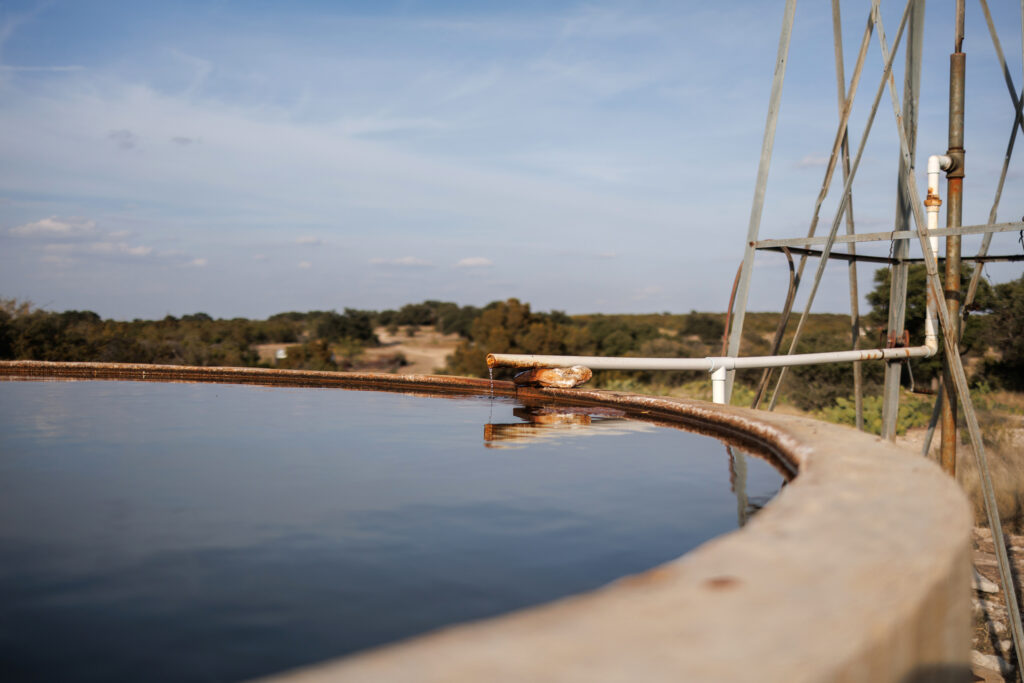
“One of the biggest things we have focused on out here since we’ve bought the place is water, water, water,” she said. Chesnutt, now widowed, relies on a windmill-operated well to provide water for her residence and animals.
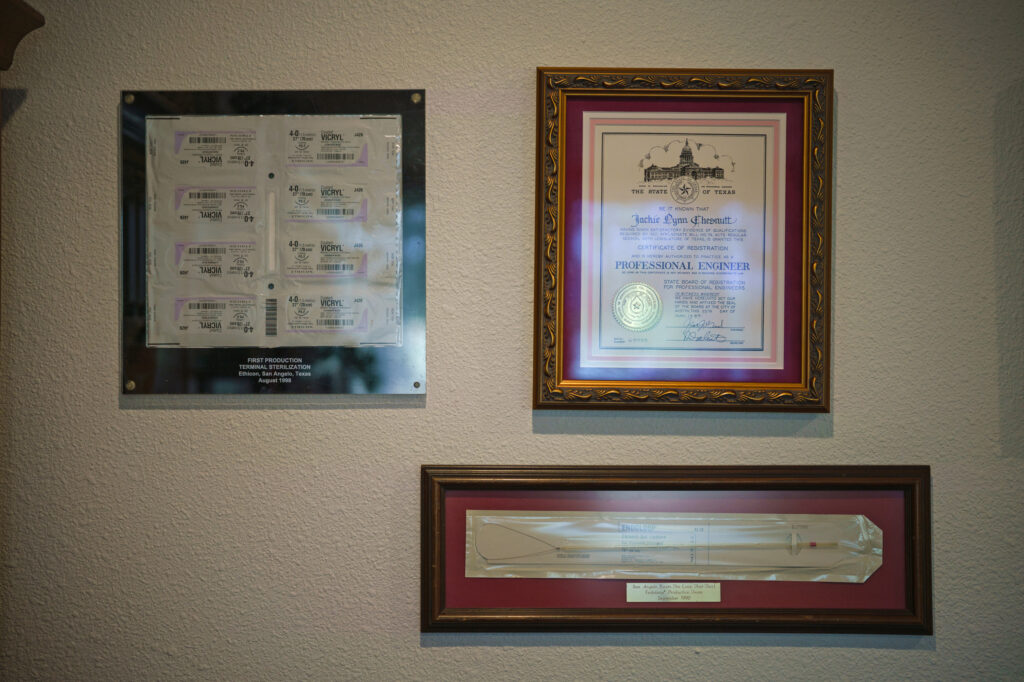
Chesnutt’s home office displays professional mementos, including her diploma from the University of Texas, Austin, where she was an early female graduate of the engineering program. She now applies an engineer’s attention to detail to investigating the drilling operations on her property.
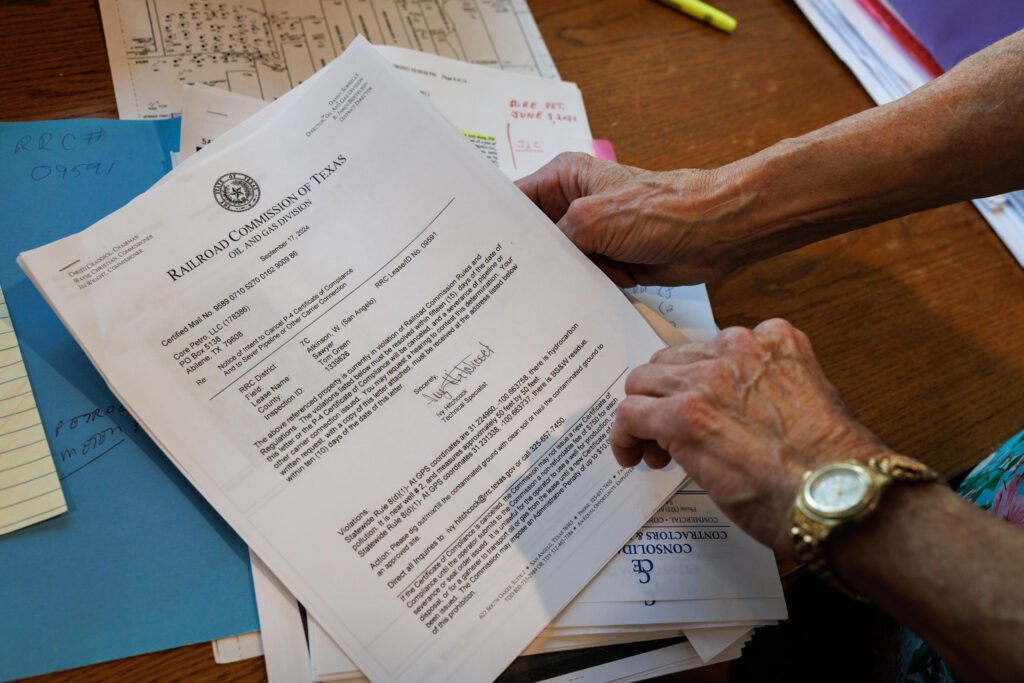
Chesnutt holds 50 percent of the mineral rights on the property, meaning she receives a share of profits from the wells. This has amounted to only a few hundred dollars in royalties every couple months in recent years. This money is hardly worth the trouble the wells have caused, she said. She riffled through documents on a sunny fall afternoon, her dog Einstein asleep at her side.

While the lease was operated by a previous company, Amor Petroleum, Well #10 had been shut down for lack of production. That left only four producing wells.
Then CORE Petro took over the lease in 2021. Chesnutt says that is when the problems started.
Once a well is inactive, the operator has 12 months to plug it or obtain an extension. The clock started ticking for CORE Petrol to get Well #10 producing again. CORE Petro reported a small amount of production at the well to bring it back to active status.
Chesnutt said that the company caused numerous spills in their attempts to get oil flowing.
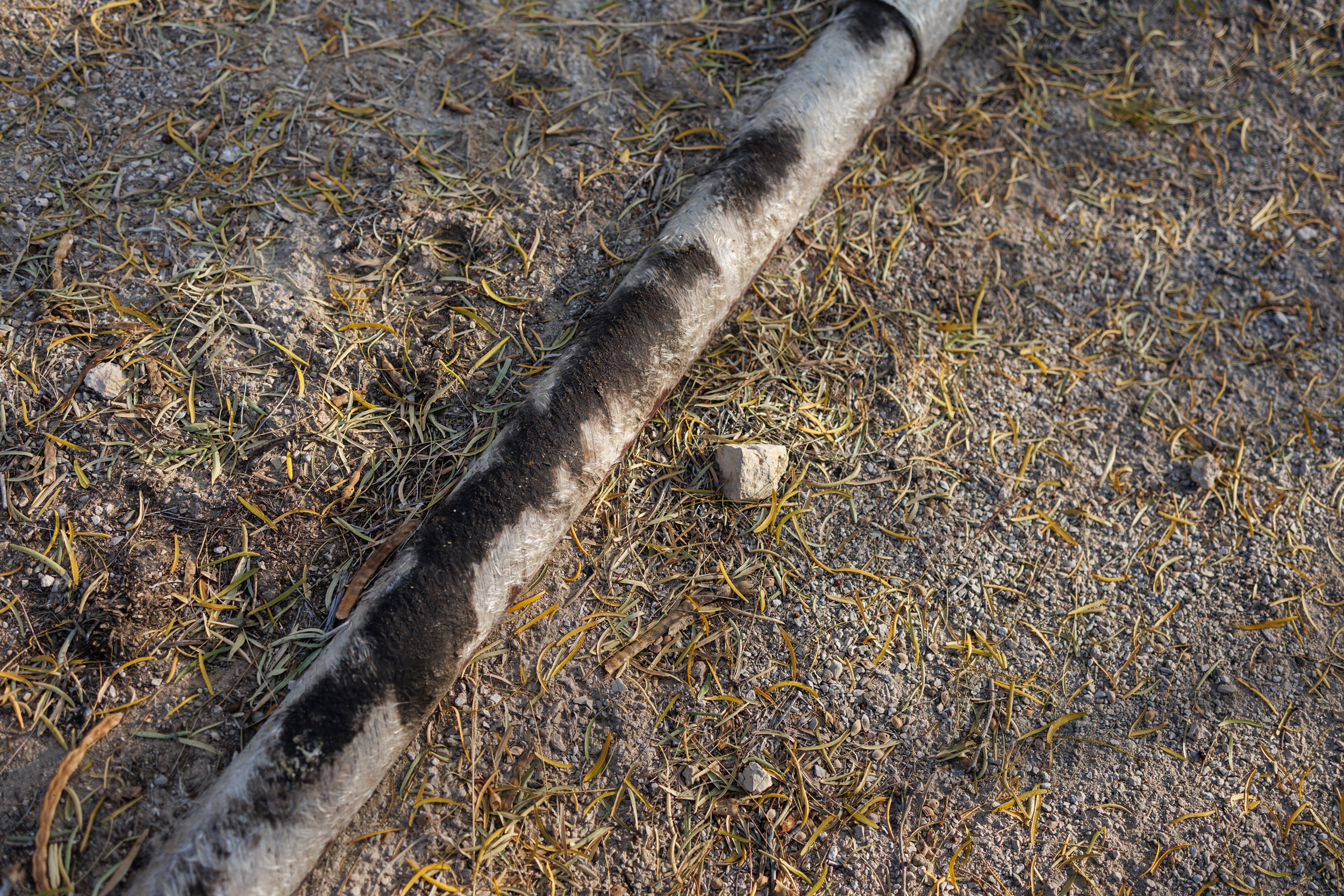
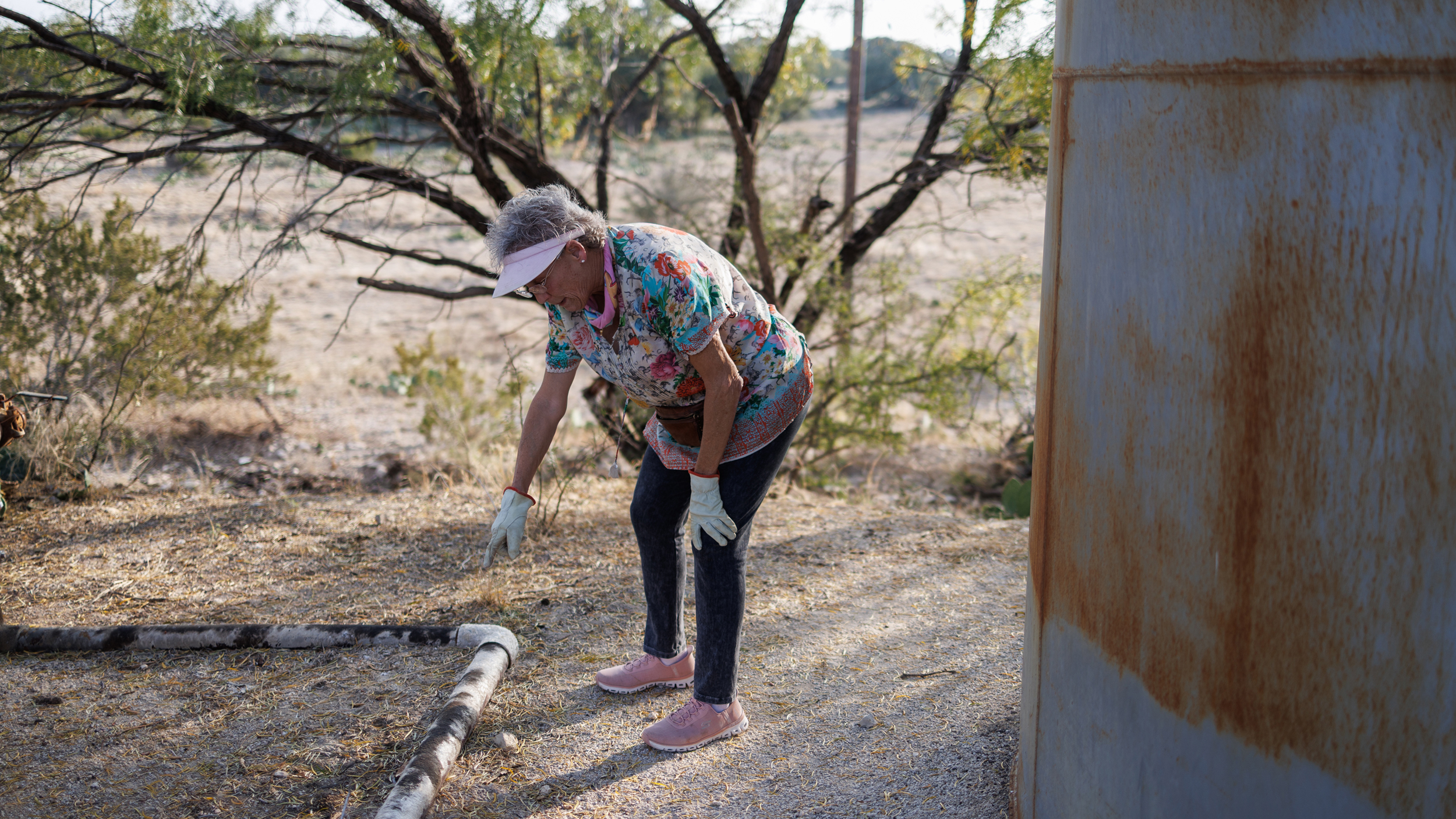
“They made a big mess of it,” she said, showing photos of spills of oil and produced water, a hazardous byproduct of drilling. Chesnutt fears the spills could contaminate her groundwater and has paid to get her water tested multiple times.
“We have worked our asses off to make this place wonderful and beautiful,” she said. “I refuse to accept that the next person is going to have this happen to them.”
The Railroad Commission issued CORE Petro multiple violations for unpermitted disposal of oil and gas waste, or spills, at the lease. But each time, the violation was later resolved without the company paying fines.
“RRC records indicate four pollution violations for this lease,” Railroad Commission spokesperson Dubee said. “In each instance the operator was notified and upon reinspection all violations have been fixed on the lease indicating compliance.”
CORE’s Ohlhausen said that some amount of spillage is to be expected and that the company always cleaned up the spills.
But Chesnutt’s frustrations only grew.
“What has really blown my mind about this is that we have to follow one set of rules in industry,” Chesnutt told Inside Climate News. ”But the oil companies, they allow them to just come out here and do whatever the hell they want.”
By her account, only one of the wells on her property has produced oil in years. But CORE Petro reports ongoing production at all the active wells. The Railroad Commission requires well testing to prove wells are producing oil. CORE Petro’s most recent well testing, in 2025, shows each well producing less than one barrel a day.
Chesnutt claimed the company is falsifying production numbers to keep the wells operating. The company denies this claim.
“The operators can fill in any information they want and nobody checks them,” she said. “It’s unacceptable. I’m really sad that the Permian Basin and all these areas are like this.”
Operators submit monthly reports to the Railroad Commission of how much oil is produced and how much is stored at each lease. While the state rules require every well to be actively producing oil, production reports are only required for the entire lease, not individual wells. Inside Climate News found inconsistencies between public records of oil production and inspections at the lease.
On July 2, 2025, a truck picked up oil from the ranch and recorded the level of oil in the tank afterward, according to a commission inspection report. A Railroad Commission inspector visited the site on Sept. 16. He noted that the amount of oil in the tank hadn’t changed since July 2.
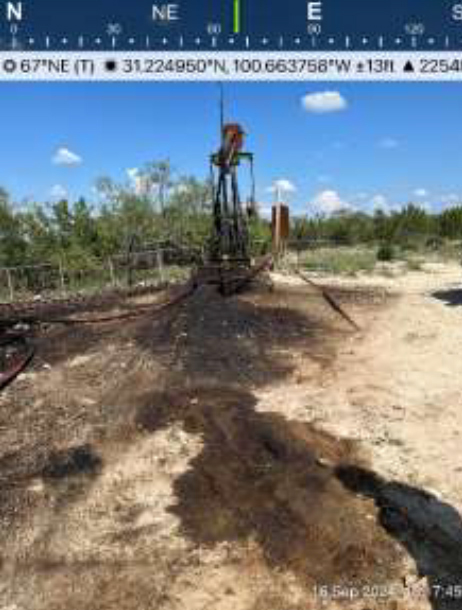
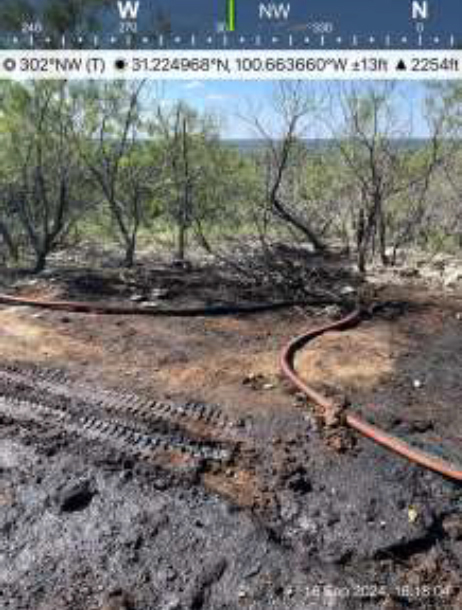
On Sep. 16, 2024, Railroad Commission inspectors documented extensive hydrocarbon pollution at Well #2 on Chesnutt’s ranch. The commission never issued any fines. Credit: Courtesy of the Railroad Commission of Texas
But in the intervening months, CORE reported producing 10 barrels in July and another 15 barrels in August. The company was reporting production on paper but the volume of the tank did not rise, according to the RRC inspection.
The Railroad Commission declined to answer questions about this and it does not appear the agency has investigated the discrepancy. Cassie Ohlhausen said that the company uses an auxiliary tank to collect the oil. Once it is full, the oil is transported to the tank battery, a large metal tank that stores oil. She said this could explain why the tank battery did not rise even though oil was being produced.
“The reporting of production is accurate and is done by a third party who tracks our oil sales and inputs those numbers into the RRC system,” Ohlhausen said.
Inside Climate News observed an auxiliary tank at only one well. Any oil produced at the other wells would have to flow directly into the tank battery.
Commission documents reveal other inconsistencies. On February 7, 2025, the Railroad Commission issued a violation to CORE Petro that said Well #9 was an “inactive unplugged well.” However, the next time the inspector visited the site, the well was determined to be compliant. The Railroad Commission declined to respond to questions about this.

Property owners have little recourse other than reporting the problems to the Railroad Commission. Chesnutt feels the Railroad Commission is ignoring her complaints about CORE Petro.
“Not one single acknowledgement that [the wells] should be plugged,” she said of her interactions with the state agency. “I’ve had resistance on even cleaning up the spills.”
Meanwhile, Chesnutt’s behavior has alarmed Railroad Commission staff. An attorney for the agency sent a letter to Chesnutt on Oct. 31, 2024. The letter states that she “verbally threatened and physically assaulted Commission staff” and “engaged in reckless and aggressive driving,” threatening the safety of commission staff. The letter also says that she told commission staff of her “intent to commit several violent crimes” against CORE Petro’s employees.
Chesnutt disputes the commission’s characterizations. “I don’t know, because I’ve never assaulted anyone,” she said.
The Tom Green County Sheriff’s Office has responded to calls from Chesnutt, Kent Ohlhausen and the Railroad Commission about incidents at the ranch, according to call sheets. The Railroad Commission requested the sheriff’s office be on “standby” when visiting Chesnutt’s property.
Commission inspectors have also noted in inspection reports that Chesnutt is turning off power to wells on her property. Chesnutt maintains that the wells pose a fire hazard and she is within her rights to turn them off. State rules require electricity be disconnected at inactive wells. Electrical lines for oil wells were blamed for starting devastating wildfires in the Texas Panhandle in 2024.
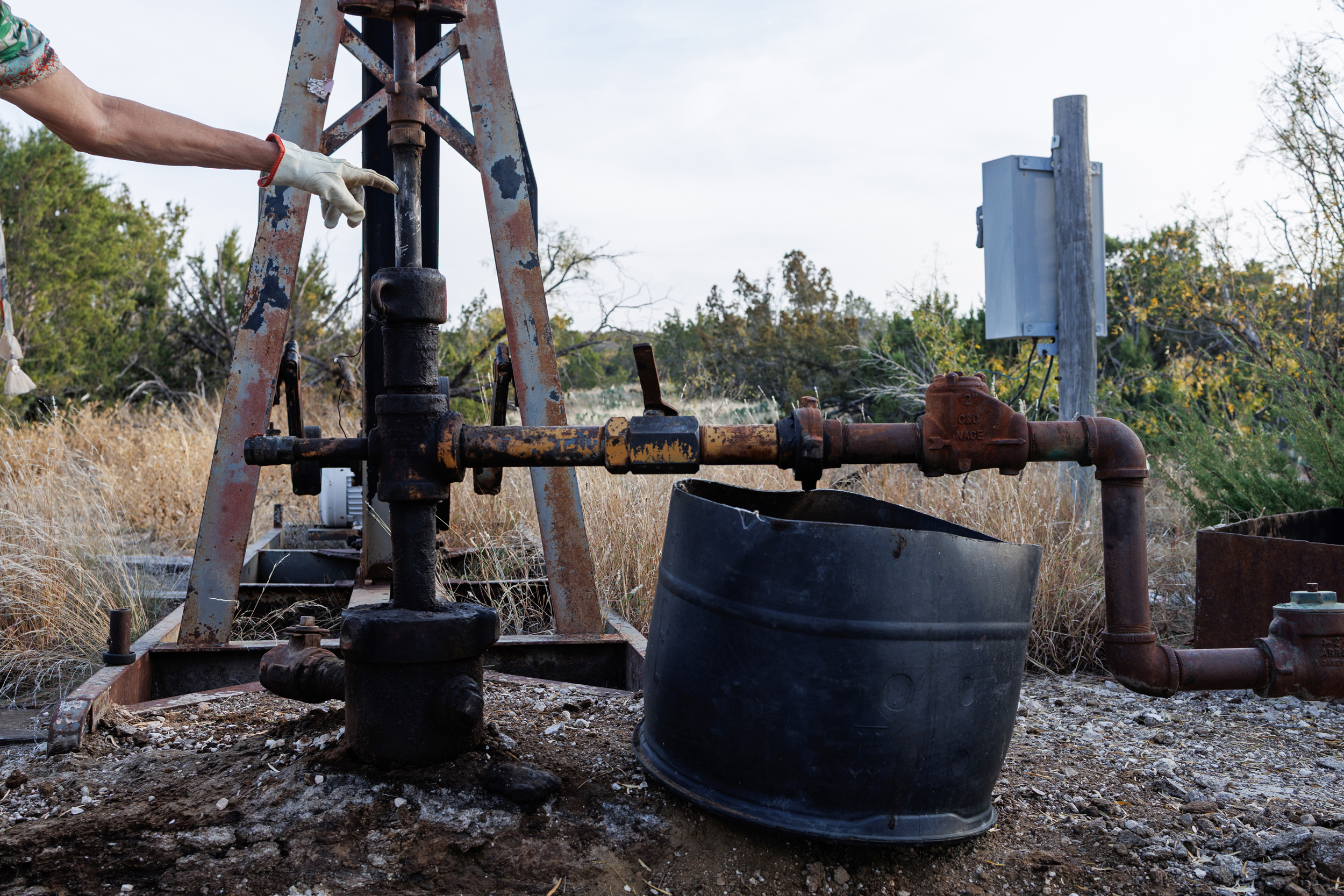
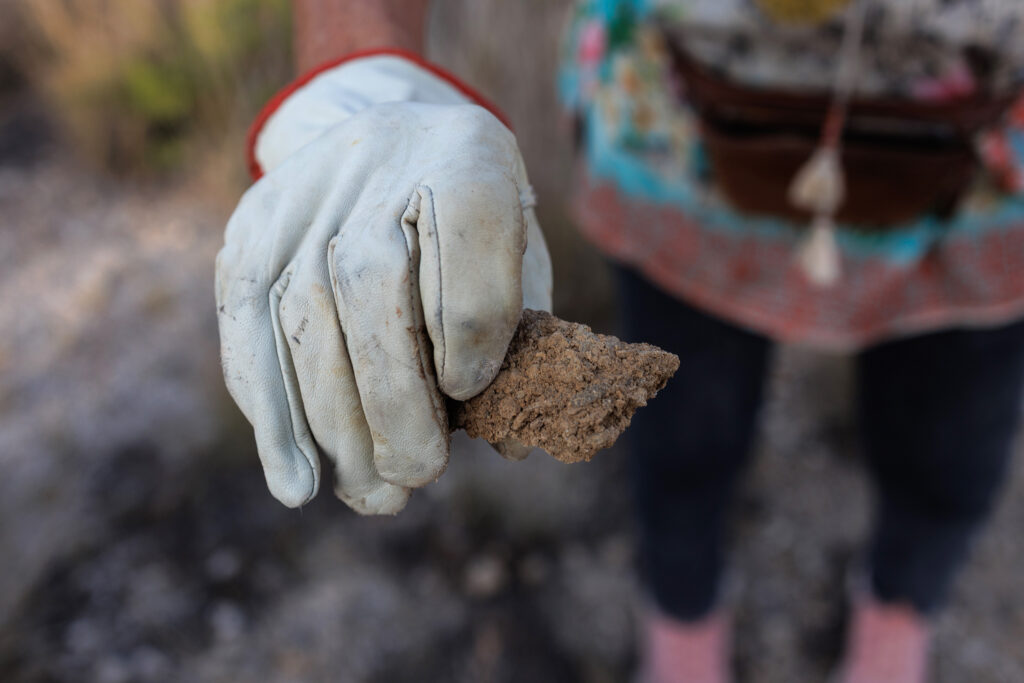
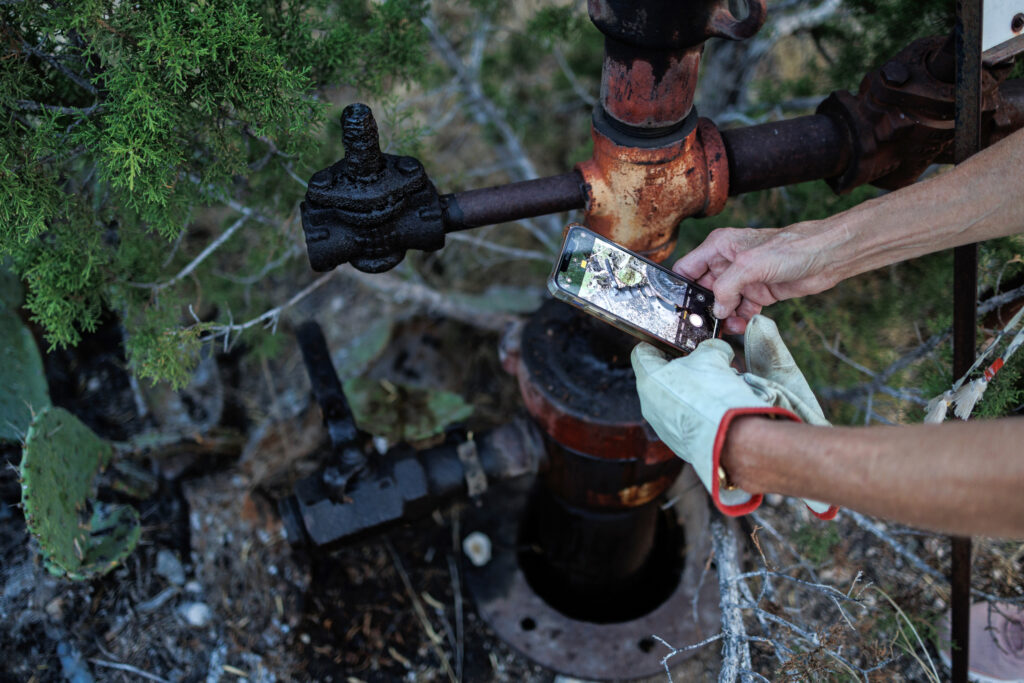
In response to the regulator’s claims of her “reckless driving,” Chesnutt said that last October she saw a Railroad Commission truck on the road leading to her ranch. She was driving in the opposite direction, so she did a U-turn and flashed her headlights to get the driver’s attention. She asked him to pull over and asked if he was headed to her property, because she was waiting for an inspector.
CORE’s Ohlhausen said that Chesnutt has threatened their staff multiple times.
“All the wells produce at some point or another until she goes and turns them off,” she said.
“We can’t afford a lawsuit, but we have every right to call the sheriff and the justice of the peace and have her stand down on turning our oil wells off,” she said.
“The Oil Well Undertaker”
CORE Petro specializes in operating aging, low-producing wells, Ohlhauser explains, noting that her husband Kent is called “the Oil Well Undertaker” because he works with “end of life wells.”
“We’re the ones that end up with what they call the stripper wells that have already been stripped of all their oil,” she said. “They’re just producing a bit of oil every day to keep somebody alive.”
Kent Ohlhausen owns several other oil companies. Many of the leases he operates meet the bare minimum requirement of one barrel of oil production a month for 12 consecutive months. For example, the Olhausen Oil Company’s Ohlhausen, W.T. lease reported one barrel of oil production for each month between April 2023 to April 2024. The same company’s Barker C.P. lease reported one barrel of oil production every month December 2023 to January 2025.
This story is funded by readers like you.
Our nonprofit newsroom provides award-winning climate coverage free of charge and advertising. We rely on donations from readers like you to keep going. Please donate now to support our work.
Donate Now“We literally work seven days a week, producing stripper oils,” his wife said. “We just eke out a little bit of money and that’s just fine with us.”
The company paid a $50,000 bond to the state of Texas to cover plugging costs if they went out of business. But Ohlhausen said that, even if they wanted to, they wouldn’t be able to plug all their wells.
“Sometimes the money is not there,” she said. “We don’t take investors. We are just Kent and Cassie.”
Complaints Reflect Broader Problems
Texas is dedicating more money than ever to plugging orphan wells. But the number of orphan wells continues to climb. Many of the marginal wells that continue producing when their owners do not have the means to plug them eventually become orphan wells.
“Operators will often produce a de minimis amount of hydrocarbons to stay out of inactive status,” said Adam Peltz, a senior attorney at the Environmental Defense Fund. ”This is widely abused.”
Peltz said that properly identifying inactive wells is important because it creates an “early warning system” for regulators.
“Every marginal well eventually becomes an inactive well. And many inactive wells become orphan wells,” he said. “There’s no reason why the public should bear the risk.”
New Mexico is in the process of reforming its bonding system for oil and gas wells. The proposed rule changes would classify wells that produce less than 90 barrels of oil a year as of “no beneficial use” and require them to be plugged.
Peltz said these changes would reduce the likelihood that the state would end up paying to plug the wells.
The Railroad Commission is also developing new rules for inactive wells following the passage of Senate Bill 1150 in 2025. The law requires plugging wells that are more than 25 years old and have been inactive for at least 15 years, unless they qualify for certain exemptions.
The Inflation Reduction Act created a $350 million fund for plugging marginal conventional wells to reduce methane emissions. The Texas Commission on Environmental Quality (TCEQ) received the largest grant from the program, of $134 million. The methane reduction program falls under the TCEQ, as the state agency that regulates air emissions from industry. The program is “currently in development” and staff are preparing to issue a request for grant applications to prioritize and select wells for plugging, according to a TCEQ spokesperson.
The program will rely on operators volunteering to plug their wells.
The program could help companies like CORE Petro plug wells that otherwise might end up orphaned.
“If there was a grant for us to plug wells, we’d be plugging wells all day,” Cassie Ohlhausen said. “Because we know that we own holes that are not gonna ever be viable.”
About This Story
Perhaps you noticed: This story, like all the news we publish, is free to read. That’s because Inside Climate News is a 501c3 nonprofit organization. We do not charge a subscription fee, lock our news behind a paywall, or clutter our website with ads. We make our news on climate and the environment freely available to you and anyone who wants it.
That’s not all. We also share our news for free with scores of other media organizations around the country. Many of them can’t afford to do environmental journalism of their own. We’ve built bureaus from coast to coast to report local stories, collaborate with local newsrooms and co-publish articles so that this vital work is shared as widely as possible.
Two of us launched ICN in 2007. Six years later we earned a Pulitzer Prize for National Reporting, and now we run the oldest and largest dedicated climate newsroom in the nation. We tell the story in all its complexity. We hold polluters accountable. We expose environmental injustice. We debunk misinformation. We scrutinize solutions and inspire action.
Donations from readers like you fund every aspect of what we do. If you don’t already, will you support our ongoing work, our reporting on the biggest crisis facing our planet, and help us reach even more readers in more places?
Please take a moment to make a tax-deductible donation. Every one of them makes a difference.
Thank you,

Martha Pskowski
Reporter, El Paso, Texas
Martha Pskowski covers climate change and the environment in Texas from her base in El Paso. She was previously an environmental reporter at the El Paso Times. She began her career as a freelance journalist in Mexico, reporting for outlets including The Guardian and Yale E360. Martha has a B.A. in Environmental Studies from Hampshire College and a master’s degree in Journalism and Latin American Studies from New York University. She is a former Fulbright research fellow in Mexico. Martha can be reached on Signal at psskow.33.