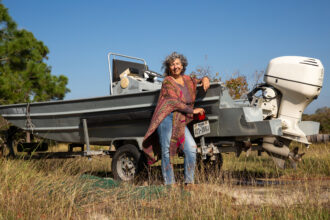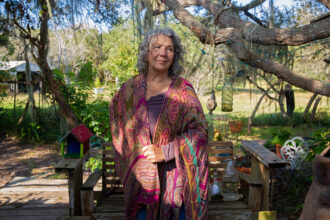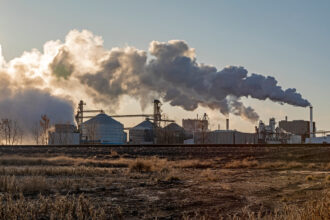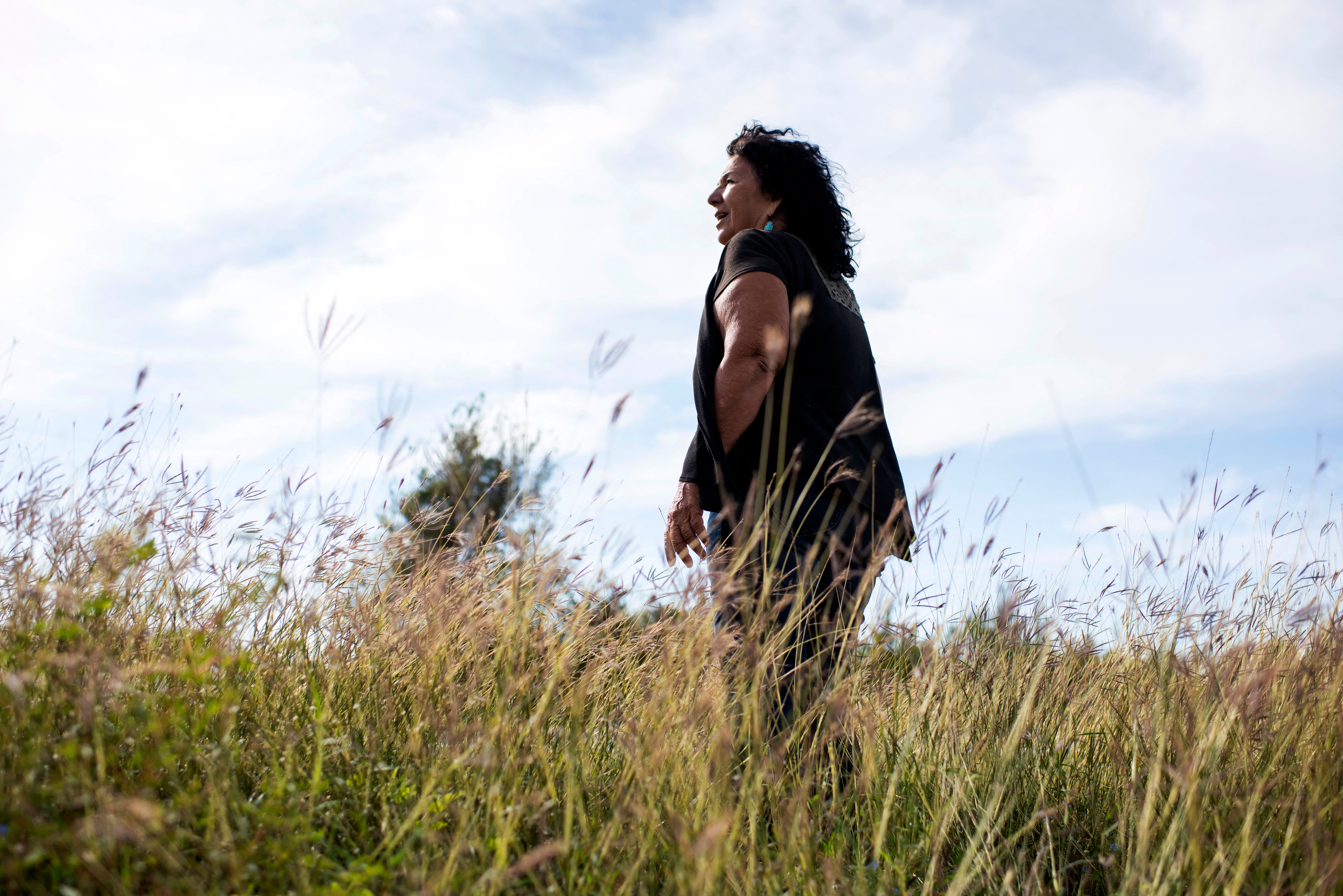


Diane Wilson, the prominent Gulf Coast environmentalist, filed a legal notice of intent on Wednesday to sue Dow for alleged large-scale discharges of plastic pellets from its 4,700-acre petrochemical complex outside Seadrift, Texas.
Wilson, a 77-year-old former shrimper from Seadrift, sued another Gulf Coast petrochemical giant, Formosa Plastics, and ultimately won a landmark settlement in 2019. Boatmen for her nonprofit, San Antonio Bay Estuarine Waterkeeper, spent the past several years steering skiffs up an industrial canal to gather evidence of chronic plastic pollution from Dow, according to her legal notice.
“Untold quantities of plastic nurdles and other pollutants are being discharged to receiving waters and lands surrounding the Facility,” said the 25-page document, written by nonprofit environmental attorneys with Earthjustice and the Environmental Integrity Project. “The danger to the environment and human health posed by this pollution will persist until these nurdles and other pollutants are remediated and the Facility implements sufficient control measures.”
A mother of five who has fought against local petrochemical companies since the 1980s, Wilson won international acclaim after 2019 when her rag-tag campaign to collect evidence of illegal plastic pollution from Formosa Plastics’ nearby Point Comfort complex yielded a historic settlement agreement, worth well over $100 million in penalty payments, facility upgrades and cleanup projects. The Clean Water Act allows citizens to sue when federal or state regulators fail to enforce environmental law and requires a 60-day notice of intent.
A spokesperson for Dow, Glynna Mayers, said the company was reviewing Wilson’s notice and “works closely with state and federal regulators to ensure compliance with all existing laws.” Dow and Union Carbide run a program called Operation Clean Sweep to reduce the release of plastic materials from facilities into the environment, Mayers said.
The Seadrift plant produces various plastics as well as chemicals for antifreeze, paints, detergents, shampoo and other beauty products. Wilson once served three months in jail for scaling a smokestack at the facility in 2002 to protest chemical releases.
Wilson’s notice of intent also alleged chronic violations of reporting and maintenance requirements at the facility. But, like with Formosa, the core of her case comes down to the massive amount of visible plastic, which is not authorized for discharge under any permit, in surrounding water bodies.
“That’s their product, they make nurdles,” said Lauren Godshall, a senior attorney with Earthjustice representing Wilson. “For them to be losing this much of it into the drainage system is kind of ridiculous.”
Collecting the Evidence
In Wilson’s case against Formosa, her triumph leaned heavily on the unprecedented volunteer effort to amass legal evidence of systemic, unpermitted plastic pollution. Wilson’s team spent over a year scouring the bay by land and water, cataloging what they found. When they showed up at the federal courthouse in Victoria with entire truckloads of plastic samples, it convinced the judge that Formosa had willfully violated its pollution permits over years.
Now Wilson hopes to do it again.
“Formosa isn’t the only plastics manufacturer discharging these plastic pellets,” said Jace Tunnell, founder of a group called Nurdle Patrol at Texas A&M University’s Harte Research Institute in Corpus Christi. “It’s happening up and down the coast.”
Tunnell said he turned up the first hint of large-scale plastics discharge from Dow in Seadrift in 2020 when he was a director at the University of Texas Marine Science Institute. He was conducting routine sampling for his organization when he pulled off a state highway where it crossed the Victoria Barge Canal, an industrial ship channel off San Antonio Bay, and scrambled down its steep, muddy banks to the water’s edge.
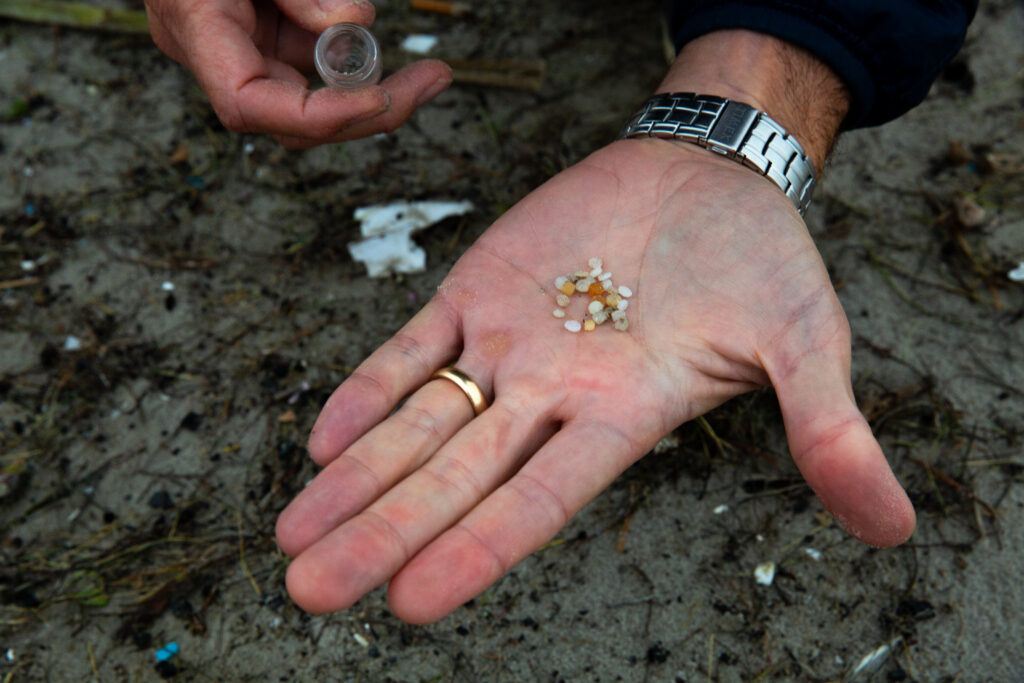
“You could see the pellets floating by,” Tunnell said. “They were embedded in the bank.”
These pellets are common along the industrial coast, but not in such concentrations as Tunnell observed. He reported his finding to Wilson, who also visited the spot.
Wilson saw all the pellets, too, and she wondered where they were coming from. She wished she had a boat to go up the canal, but the motor on hers was broken.She didn’t personally receive any money from her settlement with Formosa. But when she won the Goldman Environmental Prize in 2023, it came with a $200,000 check, which she put into her organization. So, in 2024, she had funds to hire a boatman—a friendly former shrimper named Richard Williamson, who used to ride the school bus with her son.
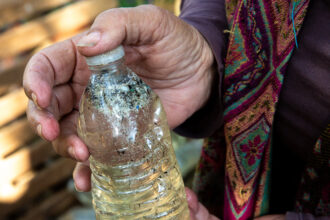
It took them a few tries to find the chemical plant’s wastewater outfalls. Some were two-foot-wide metal pipes, submerged during high tide, that gurgled out plastic waste. Another was a six-inch wide hole in concrete docks that washed plastic pellets into the water after rainstorms.
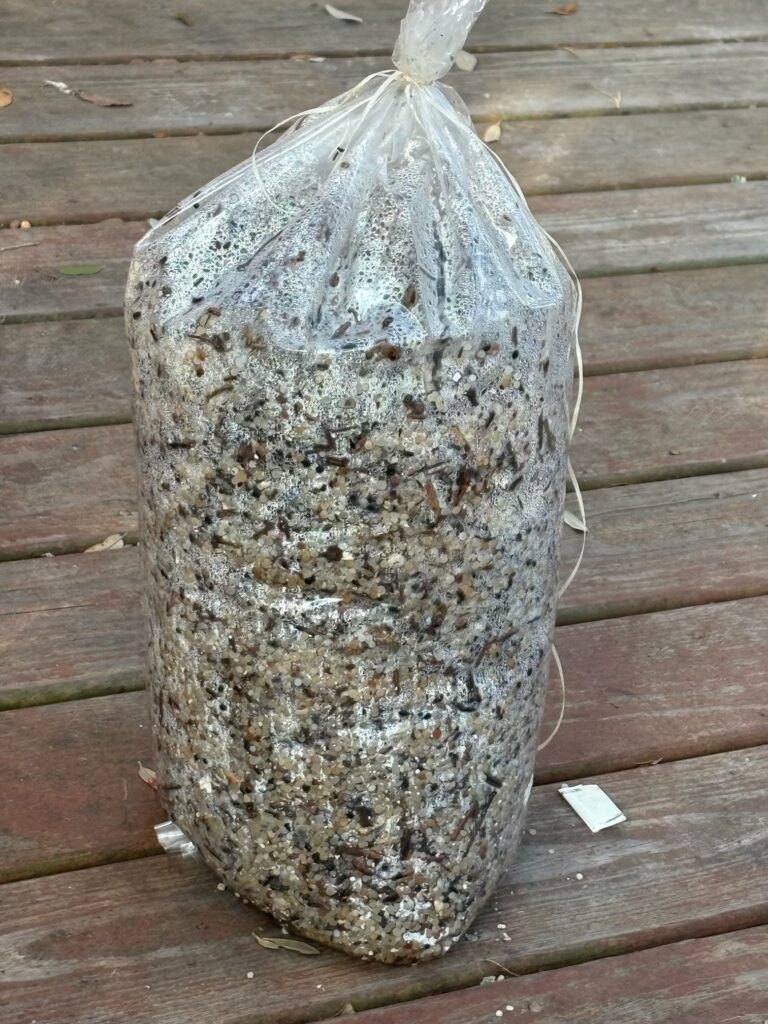
Near that outfall, she said, she saw plastic cover the water surface from one bank of the canal to the other. During two 10-minute sampling periods, she said, she recovered 13 and 10 pounds of pellets.
“There were probably billions,” Wilson said. “That’s when I started realizing how many pellets were out there on the barge canal.”

Wilson returned repeatedly to the canal to collect pellets with Williamson and his five-year-old granddaughter. When they spotted deposits of plastic on the soft, soggy banks, the girl loved leaping to collect them from the mud.
“If you’re a fully grown woman you’re liable to sink up to your knees,” said Wilson, who worked as a child on her father’s shrimp boat. “But she was a little girl and she could hop like a frog.”
This story is funded by readers like you.
Our nonprofit newsroom provides award-winning climate coverage free of charge and advertising. We rely on donations from readers like you to keep going. Please donate now to support our work.
Donate NowOnce they boated seven miles upstream from Dow then seven miles downstream and found plastic the whole way, Wilson said.
Later Wilson’s boatman left for work in Louisiana. But she knew she needed to keep collecting evidence if she would build a robust case. So she tapped a local teenager who she’d seen grow up. She knew he loved fishing and hunting on the water and knew how to handle a boat on an industrial canal.
She took him out once to instruct him. Since then he’s gone to collect plastic pellets four to five times per week.
“It takes going out all the time,” she said. “We’re still collecting. And we will be collecting. And every time we go out there there are pellets. Every time.”
The 60-day notice of intent gives Dow time to correct pollution problems or settle directly. After that Wilson said she will file her lawsuit in federal court.
About This Story
Perhaps you noticed: This story, like all the news we publish, is free to read. That’s because Inside Climate News is a 501c3 nonprofit organization. We do not charge a subscription fee, lock our news behind a paywall, or clutter our website with ads. We make our news on climate and the environment freely available to you and anyone who wants it.
That’s not all. We also share our news for free with scores of other media organizations around the country. Many of them can’t afford to do environmental journalism of their own. We’ve built bureaus from coast to coast to report local stories, collaborate with local newsrooms and co-publish articles so that this vital work is shared as widely as possible.
Two of us launched ICN in 2007. Six years later we earned a Pulitzer Prize for National Reporting, and now we run the oldest and largest dedicated climate newsroom in the nation. We tell the story in all its complexity. We hold polluters accountable. We expose environmental injustice. We debunk misinformation. We scrutinize solutions and inspire action.
Donations from readers like you fund every aspect of what we do. If you don’t already, will you support our ongoing work, our reporting on the biggest crisis facing our planet, and help us reach even more readers in more places?
Please take a moment to make a tax-deductible donation. Every one of them makes a difference.
Thank you,

Dylan Baddour
Reporter, Austin
Dylan Baddour covers the energy sector and environmental justice in Texas. Born in Houston, he’s worked the business desk at the Houston Chronicle, covered the U.S.-Mexico border for international outlets and reported for several years from Colombia for media like The Washington Post, BBC News and The Atlantic. He also spent two years investigating armed groups in Latin America for the global security department at Facebook before returning to Texas journalism. Baddour holds bachelor’s degrees in journalism and Latin American studies from the University of Texas at Austin. He has lived in Argentina, Kazakhstan and Colombia and speaks fluent Spanish.