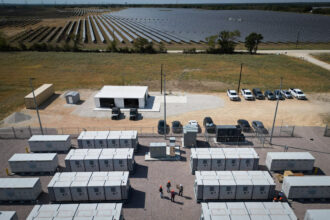
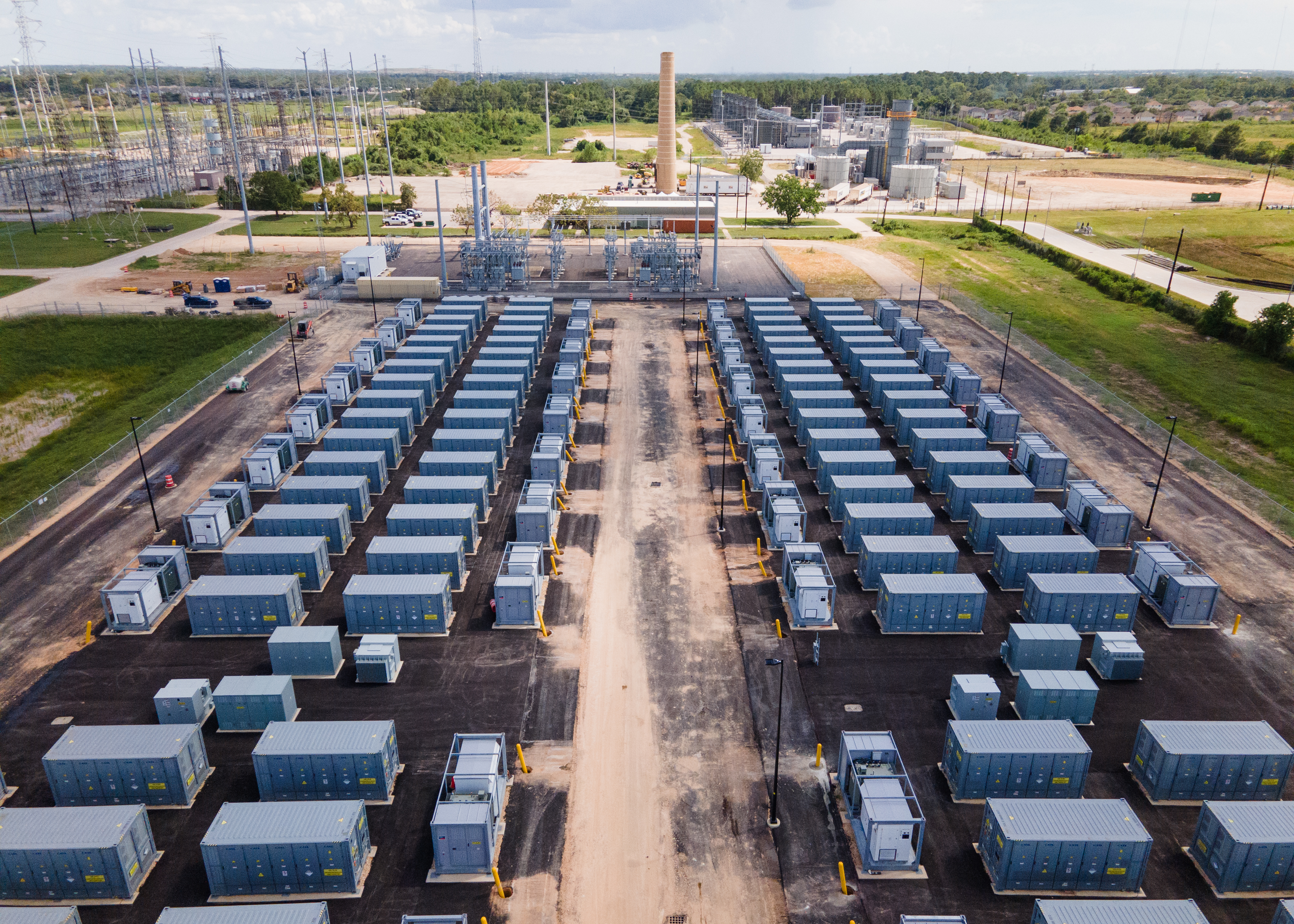


Even with less available electric power capacity during cold weather in Texas, battery storage systems are reducing the risk of power outages this winter, the Electric Reliability Council of Texas (ERCOT) reported at its December board of directors meeting.
In its most recent resource adequacy report, ERCOT modeled battery availability in December 2024, when operating reserves were low, and also during Winter Storms Cora, Enzo and Kingston in 2025.
What it found was that an energy emergency is less likely in January 2026 than in December 2025 because more storage projects will be connected to the grid. The battery systems allow for more availability in the early morning, when it’s harder to meet electricity demand, ERCOT reported.
Like gas turbines, battery systems have operational issues in cold weather. Left untreated when temperatures plunge, batteries become less effective as winter’s cold slows down internal chemical reactions and reduces their ability to discharge electricity.
ERCOT models its winter risk projections accounting for batteries’ lower state of charge but still found that the sheer influx of new energy storage facilities guards the grid against winter emergencies.
Since Winter Storm Uri in February 2021, ERCOT and other regulators have implemented a number of reforms, including requirements for power plants to weatherize for winter. Similar requirements for winter weatherization also now exist for battery systems.
Like all other energy resources, storage systems are subject to ERCOT inspections at least once every three years. The grid operator completed its fourth winter season inspection in April, evaluating more than 3,300 power plants and transmission facilities since the program began in response to Winter Storm Uri.
Some of the critical components within energy storage sites ERCOT identifies as at risk of failing in extreme weather emergencies include thermal management systems, inverters, fire suppression technology exposed to the cold, and heating and air conditioning equipment. If any of these systems fail, it could cause a trip, reduce capacity or prevent batteries from starting up.
The operators are required to show preparation records, or how they’ve implemented and maintained weather emergency measures. They also must conduct walkthroughs during which they show inspectors how they’ve implemented physical protections to the batteries, including waterproofing, wind-proofing and freeze-proofing. These weatherization efforts can assist in mitigating battery degradation or downtime altogether.
Keeping batteries within temperature ranges that minimize deterioration leads to less capacity loss or availability, said Adam Nygaard, vice president of business development at FlexGen, an energy storage integrator. Nygaard said FlexGen’s software tracks the ideal performance of the storage systems by creating a digital twin at each storage site. It allows the company to compare actual outcomes to what’s anticipated. “When we see variations, then we’re able to take action,” Nygaard said.
During Winter Storm Uri, FlexGen users had a 99.3 percent uptime, he said.
Unlike other grids across the country, ERCOT doesn’t pay companies just for being ready to provide energy when needed. Rather, ERCOT pays operators only when energy is actually used.
The cold weather makes it harder for developers to maximize electricity discharge during winter peak periods and means they could miss out on these payments for providing energy in emergencies, said John Murray, principal analyst on renewables at S&P Global Energy. That could significantly impact their revenue.
This story is funded by readers like you.
Our nonprofit newsroom provides award-winning climate coverage free of charge and advertising. We rely on donations from readers like you to keep going. Please donate now to support our work.
Donate NowOften winter events in Texas last multiple days, Murray said. There’s no guarantee that batteries within ERCOT can quickly recharge during winter storms as solar underperforms and ice could lead to wind projects going offline.
“Winter price spikes in ERCOT are shorter, more chaotic and often tied to sudden generator outages,” Murray said.
The volatility of wind resources in winter, paired with the greater chance of thermal outages, are the difficult parts of wintertime within ERCOT, Nygaard said.
And given that ERCOT is isolated from the rest of the U.S. grid, there often aren’t any power imports during winter weather emergencies to recharge Texas’ batteries. Additionally, it’s harder to predict during these months what extra types of energy support may be needed, according to Murray, which complicates revenue modeling and presents business risk for the developers.
Even so, developers are still racing to connect battery projects to ERCOT. Of the 1,999 new generation interconnection requests totaling 432 gigawatts, nearly 41 percent are from energy storage projects.
About This Story
Perhaps you noticed: This story, like all the news we publish, is free to read. That’s because Inside Climate News is a 501c3 nonprofit organization. We do not charge a subscription fee, lock our news behind a paywall, or clutter our website with ads. We make our news on climate and the environment freely available to you and anyone who wants it.
That’s not all. We also share our news for free with scores of other media organizations around the country. Many of them can’t afford to do environmental journalism of their own. We’ve built bureaus from coast to coast to report local stories, collaborate with local newsrooms and co-publish articles so that this vital work is shared as widely as possible.
Two of us launched ICN in 2007. Six years later we earned a Pulitzer Prize for National Reporting, and now we run the oldest and largest dedicated climate newsroom in the nation. We tell the story in all its complexity. We hold polluters accountable. We expose environmental injustice. We debunk misinformation. We scrutinize solutions and inspire action.
Donations from readers like you fund every aspect of what we do. If you don’t already, will you support our ongoing work, our reporting on the biggest crisis facing our planet, and help us reach even more readers in more places?
Please take a moment to make a tax-deductible donation. Every one of them makes a difference.
Thank you,

Arcelia Martin
Reporter, Texas Renewables
Arcelia Martin is an award-winning journalist at Inside Climate News. She covers renewable energy in Texas from her base in Dallas. Before joining ICN in 2025, Arcelia was a staff writer at The Dallas Morning News and at The Tennessean. Originally from San Diego, California, she’s a graduate of Gonzaga University and Columbia University Graduate School of Journalism.