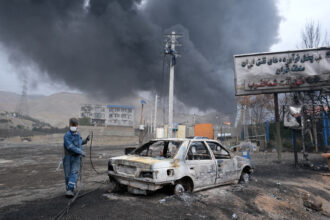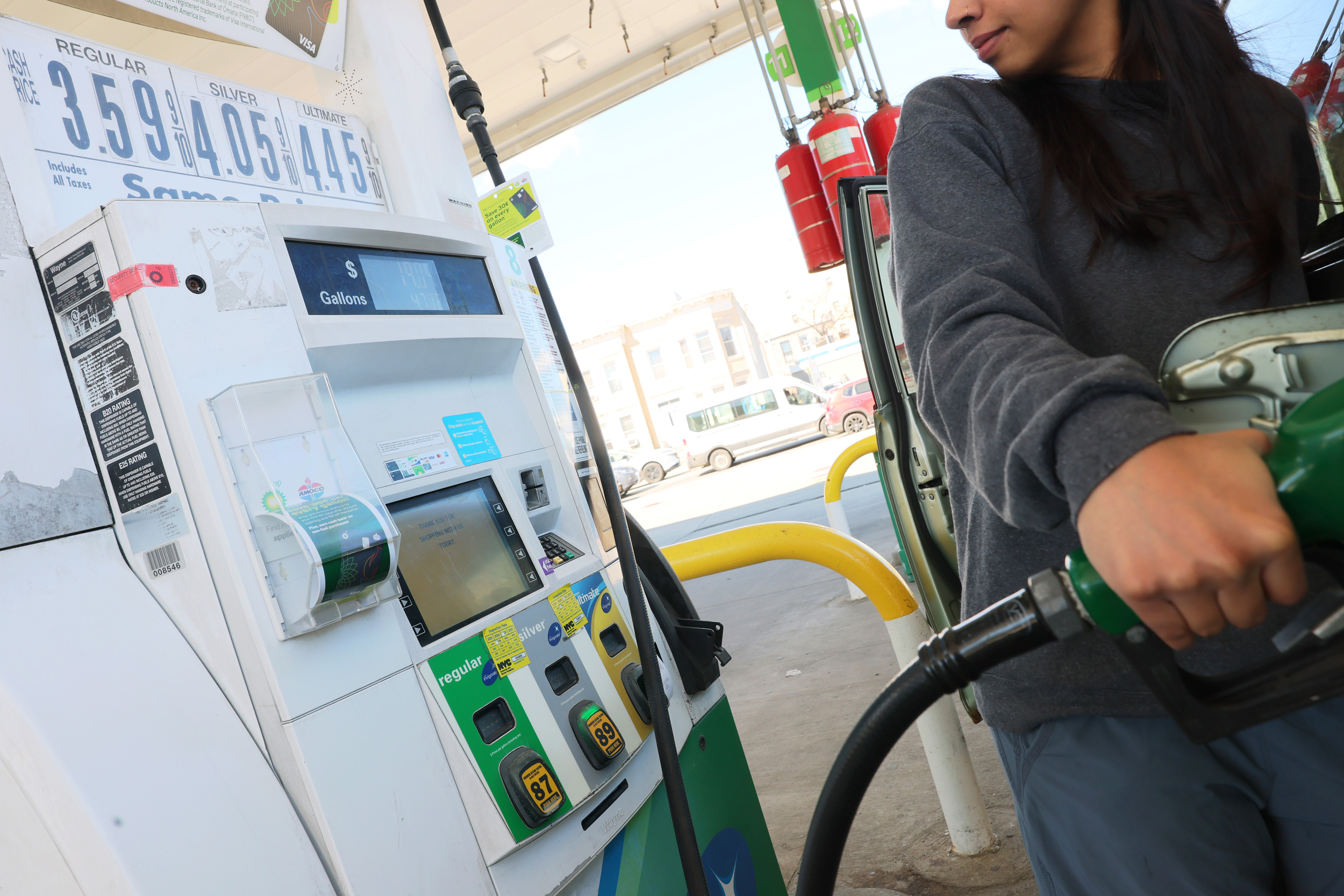


As oil prices continue to rise in the shadow of the war with Iran, Americans can expect the cost of all kinds of products to slowly increase, according to experts. By Friday, crude oil prices were approaching and for Brent crude exceeding $100 a barrel, with gas prices averaging around $3.91 nationwide, according to AAA.
Those increases will have an impact across the economy, according to Heather Boushey, a professor of practice at the Kleinman Center for Energy Policy at the University of Pennsylvania, but they’ll impact those with low incomes the hardest.
“Oil shocks have historically had an outsized economic impact—one that Americans are already starting to see,” she said.
Boushey emphasized that no sector of the economy is completely immune to oil price increases caused by the effective closure of the Strait of Hormuz off the coast of Iran. From the price of nitrogen fertilizer that impacts corn prices to the price of shipping that influences costs for all consumer goods, the longer the crisis continues, the greater impact consumers will feel in their pocketbooks, she said.
In the past, fuel price shocks have often led consumers, businesses and governments alike to think more deeply about investments in renewable energy.
“This tends to be a trend when gas prices are going up, that tends to drive more interest in purchasing or leasing electric,” said Alex Jacquez, chief of policy and advocacy at Groundwork Collaborative, a progressive think tank.
Signs of that dynamic are beginning to emerge internationally, Jacquez said, with storefront visits to electric vehicle dealers already increasing in Asia, where price shocks from the Iran war are more pronounced.
So what is holding back a renewable and EV surge across the U.S.? Fossil fuel misinformation may be partly to blame, said Sen. Sheldon Whitehouse (D-R.I.), the ranking member of the Senate Environment and Public Works Committee.
“There is a massive and very concerted campaign in which the Trump administration is a major participant to falsely convince the public that electric vehicles, clean energy are all more expensive,” Whitehouse told Inside Climate News on Friday.
Whitehouse said the suggestion that fossil fuels are cheaper than renewable energy is part of a propaganda strategy to prevent the adoption of energy sources that would diminish the bottom line of Trump’s major donors.
In a statement, a spokesperson for the White House claimed without evidence that green energy sources are “too unreliable and unaffordable” to support America’s energy infrastructure.
“President Trump’s energy dominance agenda is focused on unleashing reliable, affordable, and secure energy sources so that we do not have to rely on a chokehold like the Strait of Hormuz for our oil and gas supply,” the statement said. “Thanks to President Trump, the United States is producing record-high levels of oil and natural gas, which strengthens our energy independence and ensures we do not experience supply shortages.”
Trump’s policies have aimed to financially prop up fossil fuel companies. A subsidy for metallurgical coal in Trump’s One Big Big Beautiful Bill Act was one major win for fossil energy producers, providing a 2.5 percent tax credit for the cost of producing metallurgical coal “regardless of whether such production occurs inside or outside of the United States.” An Inside Climate News analysis of data from the U.S. Energy Information Administration suggested that provision could amount to an annual tax benefit of between $200 million to $300 million across the met coal industry.
One way to stem the type of misinformation that deters consumers and businesses from investing in renewables and electric vehicles is to ensure the federal government is in the business of providing scientifically accurate information about energy costs and the environmental impact of various energy sources, according to Whitehouse.
This story is funded by readers like you.
Our nonprofit newsroom provides award-winning climate coverage free of charge and advertising. We rely on donations from readers like you to keep going. Please donate now to support our work.
Donate NowA Democratic sweep in the November elections, Whitehouse said, would mean that “we don’t have a United States government controlled … by the worst elements of the fossil fuel industry through their massive corruption.”
From administration to administration, the federal government has varied widely in its messaging around renewables and electric vehicles. Despite the Trump administration’s doubling down on fossil fuels, for example, as of March 20, the Environmental Protection Agency’s website still contained a page explaining “myths” about EV usage posted during the Biden Administration.
“Myth #5: There is nowhere to charge,” the EPA website said. “FACT: Electric vehicles can be plugged into the same type of outlet as your toaster! When you need to charge while on the road, you’ll find over 77,000 stations and 219,000 EV charging ports in the U.S. available to the public.”
And while messaging is important, experts have said, policies around renewables and EV use are ultimately where the rubber hits the road when it comes to consumer adoption. The end of EV tax credits, the promotion of fossil fuel subsidies and other Trump administration policies are also a barrier to moving the U.S. public toward a more efficient, less costly grid.
“What the Trump administration has done with regard to the Inflation Reduction Act—and it’s both a policy and rhetorical war on electric vehicles in particular, have done tremendous damage to consumers,” Jacquez said.
It’ll take more than just talk to encourage consumers to adopt EVs and renewables like solar in their homes and businesses, he explained. But doing so isn’t simply a way to cushion consumers from oil price shocks. It’s also a way to ensure American companies like car manufacturers have a solid foundation to compete against foreign corporations like BYD, a Chinese EV producer.
“Because right now, they’re eating our lunch,” Jacquez said.
Increased gas prices from the Iran war should serve as a wake up call for Americans, Michael Staley, president of the Alabama Clean Fuels Coalition, wrote in an op-ed published yesterday.
“America cannot control global oil shocks, but can reduce its exposure to them,” he wrote. “EVs give families a way to escape the volatility of the pump while saving money over time.”
About This Story
Perhaps you noticed: This story, like all the news we publish, is free to read. That’s because Inside Climate News is a 501c3 nonprofit organization. We do not charge a subscription fee, lock our news behind a paywall, or clutter our website with ads. We make our news on climate and the environment freely available to you and anyone who wants it.
That’s not all. We also share our news for free with scores of other media organizations around the country. Many of them can’t afford to do environmental journalism of their own. We’ve built bureaus from coast to coast to report local stories, collaborate with local newsrooms and co-publish articles so that this vital work is shared as widely as possible.
Two of us launched ICN in 2007. Six years later we earned a Pulitzer Prize for National Reporting, and now we run the oldest and largest dedicated climate newsroom in the nation. We tell the story in all its complexity. We hold polluters accountable. We expose environmental injustice. We debunk misinformation. We scrutinize solutions and inspire action.
Donations from readers like you fund every aspect of what we do. If you don’t already, will you support our ongoing work, our reporting on the biggest crisis facing our planet, and help us reach even more readers in more places?
Please take a moment to make a tax-deductible donation. Every one of them makes a difference.
Thank you,

Lee Hedgepeth
Reporter, Alabama
Lee Hedgepeth is Inside Climate News’ Alabama reporter. Raised in Grand Bay, Alabama, a small town on the Gulf Coast, Lee holds master’s degrees in community journalism and political development from the University of Alabama and Tulane University. Lee is the founder of Tread, a newsletter of Southern journalism, and has also worked for news outlets across Alabama, including CBS 42, Alabama Political Reporter and the Anniston Star. His reporting has focused on issues impacting members of marginalized groups, including homelessness, poverty, and the death penalty. His award-winning journalism has appeared in publications across the country and has been cited by the New York Times, the Wall Street Journal and the Washington Post, among others.