

PALMYRA, Va.—In rural Fluvanna County, between Monticello and Richmond in the middle of Virginia, there’s a clear divide over a natural gas power plant.
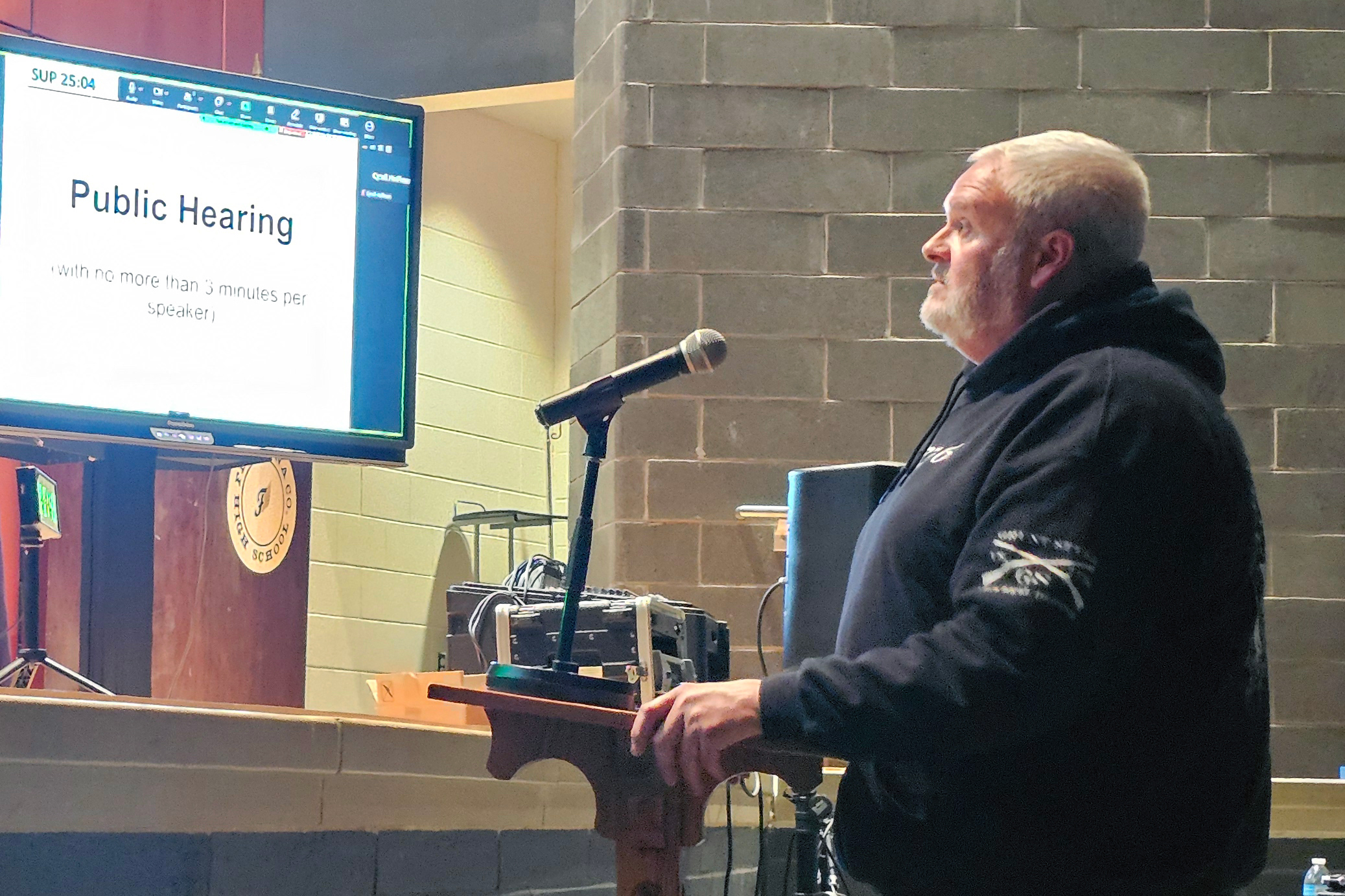
Brian Faulknier, 54, a grandfather, speaks for many supporters when he said in an interview that he wants the tax revenues and isn’t worried about fracking gas to power the plant or consuming freshwater to cool the facility.
“I’m a believer that God was smart enough when he made this earth,” said Faulkner, explaining how the lord, in his wisdom, provided all the energy we’ll ever need. “It’s getting renewed in the earth,” he said. ”Are we going to run out of water? No, absolutely not.”
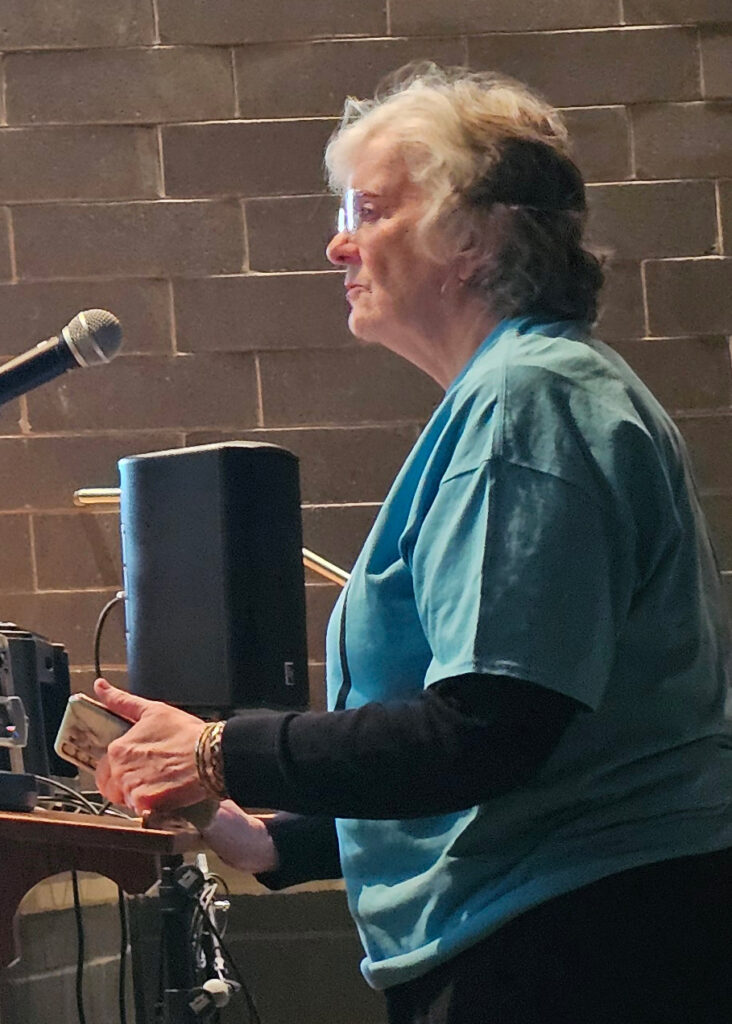
If Faulknier is a true believer, Barbara O’Brien, 75, is more of a penitent. She spent her career designing fossil fuel power plants around the country and now sees the wisdom and economy in renewables, like wind and solar. “That’s what we want to go after. Maybe they don’t provide the tax base that Tenaska is going to provide,” she said, referring to the company proposing to build a 1.5 gigawatt gas plant here in Fluvanna. “But they’re not going to kill us either.”
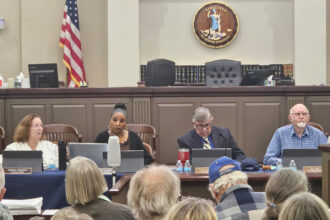
Given the politics in rural America, it came as no surprise Wednesday night that the Fluvanna County Board of Supervisors voted 4-1 to find the plant in substantial accord with the county’s comprehensive plan, approve a special use permit and allow for higher smoke stack heights at the plant after a seven-hour long meeting. One of the kickers to get the project across the finish line: a suite of side deals the county and the company agreed to under restrictive covenants because they weren’t sufficiently related to the actual project.
“There’s a lot of things that we’ve all worked with, from the county’s perspective, to try to make sure that we are getting the best deal for Fluvanna,” said Tony O’Brien, chairman of the board. “When you look at the totality of the $250 million in tax revenue … that’s a very significant improvement that will make a difference in the taxpayers life in Fluvanna County, and help fund and make the changes that are available to us in the future to help our county remain competitive.”
Supervisor Chris Fairchild, who owns a winery near an existing Tenaska gas plant across Branch Road from the site proposed for the new plant, was the lone opponent of the project. He voted against it because he said the project did not meet a required legal threshold for being in “substantial accord” with the county’s comprehensive plan. The plan calls for preserving the county’s rural character, and encouraging decentralized renewable energy.
“‘Substantial accord’ should be a notable percentage,” Fairchild said. “I have concerns on whether it meets ‘substantial accord.’”
The new plant, called the Expedition Generating Station, is part of a fast-tracked process developed by PJM Interconnection, the regional grid operator for Virginia, portions of 12 other states and the District of Columbia, to add new electric generating sources to meet rising demand from data centers. Critics say it favors polluting sources over clean ones.
The project would be built directly across Branch Road from the existing 1 GW plant Tenaska has operated since 2004. It’s expected to come online in 2031. Unveiled in Fluvanna over the summer, Expedition has faced opposition from many in the community who were concerned over noise from the gas turbines, substantial air and climate pollution, the project’s strain on the James River and pollution of wastewater discharged into the Rivanna River.
The land use approval means the project is on to state processes to obtain its air and water permits from the Virginia Department of Environmental Quality. The project also needs a Certificate of Public Convenience and Necessity from the State Corporation Commission, which regulates Virginia’s grid.
“The Tenaska team has worked hard over the past 9 months to mitigate impacts and maximize local benefits associated with the proposed Expedition Generating Station,” said Tenaska in a statement, thanking their supporters as it moves to the state process. “We are pleased that the Board recognizes our desire to develop a project that not only benefits Tenaska but also benefits Fluvanna County, while at the same time delivering on the goal of reliable power for the region.”
Community Pushback
The Fluvanna County Planning Commission in October delayed a vote on the required land use approvals to gather more information. It ultimately recommended rejection in February by a 5-0 vote.
“I have some major concerns,” said Barry Bibb, the planning commission’s chairman, after reading research on the harms of noise and pollution effects.
More than 1,300 people signed a petition against the project. Residents cited issues with another Tenaska plant in Pennsylvania. A health study from Harvard University commissioned by the Southern Environmental Law Center found that particulate matter (PM2.5), nitrogen oxides and volatile organic compounds from the plant could lead to 1.7 to 3.3 premature deaths per year.
But employees and their family members came out to support the project, speaking in favor of the economic impact and saying problems in Pennsylvania had been settled. The company is also agreeing to put about 390 acres in conservation as one of the side deals.
Benjamin Roberts, a risk management scientist with Benchmark Risk Group owned by Trinity Consultants whom Tenaska hired, told the board, “without any doubt in my mind, that any potential emissions from this plant will not increase the risk of health effects in this community.”
This story is funded by readers like you.
Our nonprofit newsroom provides award-winning climate coverage free of charge and advertising. We rely on donations from readers like you to keep going. Please donate now to support our work.
Donate NowJosephus Allmond, a staff attorney with the Southern Environmental Law Center who lives in Fluvanna, noted later in the meeting that Roberts’ group is one that doesn’t find harms with asbestos or Roundup, the pesticide. Allmond also said that there are sections of the land Tenaska is conserving that won’t be protected, and that a data center developer could offer millions of dollars to owners of those sections to buy the land.
Allmond questioned if those landowners would be able to say no to the developers.
The Separate Deals
In the face of pushback to the project, Tenaska’s president of development, Joel Link, committed at the meeting to pay for a traffic circle aimed at mitigating harms of construction trucks, no matter the cost. The project is expected to have an estimated 800 work trucks per day around the 30-month mark of construction. Supervisor Mike Goad had asked for stronger language to guarantee payment for the circle if costs rose above a proposed $6.5 million cap, leading to the concession from Link.
But rather than as conditions of the special use permit, the supervisors approved restrictive covenants on the land. The covenants were used, County Attorney Dan Whitten said, because the conditions weren’t related enough to the project to be attached to the special use permit. Restrictive covenants were placed on parts of the land the new plant would go on as part of approval of the first plant. Those were also amended at this week’s meeting as part of approving the new plant.
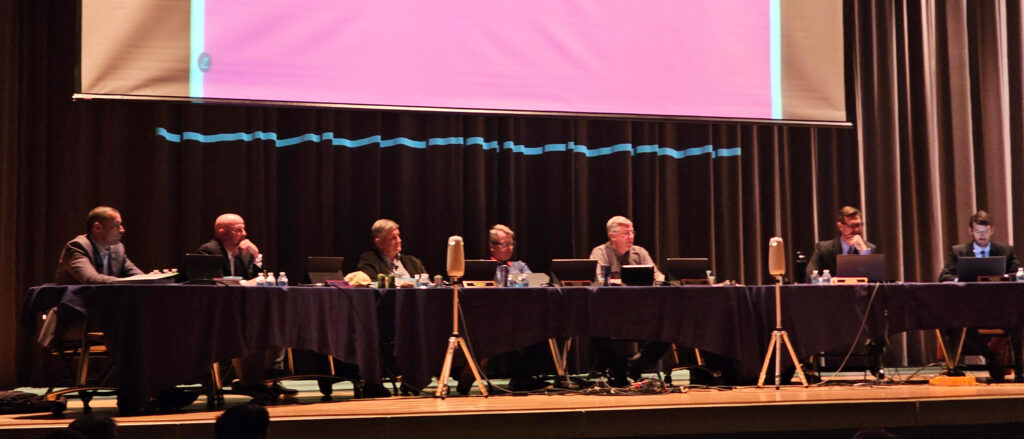
The new covenants include a $5 million Good Neighbor Fund that will pay for noise mitigation efforts for homes within a two-mile radius of the new plant. Tony O’Brien, the board’s chairman,who had been negotiating the arrangements with Tenaska, disclosed at the Wednesday meeting that he had a property eligible for the fund, which had become public as early as December, and said that it had been removed from eligibility. Community members wanted him to disqualify himself from the vote because of a conflict of interest in violation of state law and the county’s bylaws. But the county attorney and O’Brien said because he wasn’t receiving payment there was no need to disclose the connection until the day of the vote.
A separate program O’Brien had proposed to spur residential solar to meet Fluvana’s renewable energy goals would have had the county put up $2 million, matched by Tenaska for a total of $4 million, for eligible homeowners. But that program got canceled in the final deal with Tenaska, with the board deciding to transfer the $2 million to a $5 million payment from Tenaska for a new firehouse in the county.
Tenaska also agreed to let the county tap into its water discharge, which representatives previously explained can include small minerals, as a line for a water splash park or other needs.
Preston Lloyd, Jr., an attorney with Richmond-based Williams Mullin hired by Tenaska, told the board the covenants were “not meant to induce approval of the (special use permit),” which was approved just prior to the covenants being discussed. But Fairchild, who opposed the project, pressed him, asking, “Were they discussed as part of the negotiations” with the special use permit?
“In so far as they may have been a part of discussions about the impact of the project, certainly, I can imagine that they were a part of the conversation,” Lloyd responded. “But they were not made specific to the special use permit that was being proposed by the applicant.”
Fairchild kept pressing, later asking where the water usage agreement came from and if it had ever been discussed publicly. O’Brien said, “It’s something that I asked for, just as the firehouse was asked for, just as the roundabout was asked for … the special use conditions have been put out there and the restrictive covenants in some form or another for a number of weeks now.”
“OK,” Fairchild responded, later adding “I’ve got notable legal concerns with these.”
Sharon Harris, a founding member of Fluvanna Horizon’s Alliance, a local group that opposes the plant, took issue with the covenants and the fire house deal, saying increased staffing levels at the fire department would be more helpful. An additional water line and any wastewater treatment plant needed to treat and use Tenaska’s discharge would also raise costs for taxpayers, she added.
“These are capital outlays that don’t make a lot of sense,” Harris said.
About This Story
Perhaps you noticed: This story, like all the news we publish, is free to read. That’s because Inside Climate News is a 501c3 nonprofit organization. We do not charge a subscription fee, lock our news behind a paywall, or clutter our website with ads. We make our news on climate and the environment freely available to you and anyone who wants it.
That’s not all. We also share our news for free with scores of other media organizations around the country. Many of them can’t afford to do environmental journalism of their own. We’ve built bureaus from coast to coast to report local stories, collaborate with local newsrooms and co-publish articles so that this vital work is shared as widely as possible.
Two of us launched ICN in 2007. Six years later we earned a Pulitzer Prize for National Reporting, and now we run the oldest and largest dedicated climate newsroom in the nation. We tell the story in all its complexity. We hold polluters accountable. We expose environmental injustice. We debunk misinformation. We scrutinize solutions and inspire action.
Donations from readers like you fund every aspect of what we do. If you don’t already, will you support our ongoing work, our reporting on the biggest crisis facing our planet, and help us reach even more readers in more places?
Please take a moment to make a tax-deductible donation. Every one of them makes a difference.
Thank you,

Charles Paullin
Virginia Correspondent
Charles Paullin is a Richmond, Virginia-based reporter focusing on energy and environment issues. He’s won several awards for his previous work covering state policy with the Virginia Mercury and local news with the Northern Virginia Daily in the Northern Shenandoah Valley. His first reporting gig was with the New Britain Herald in Connecticut, a couple years after attending the University of Hartford, where he first studied sports journalism.