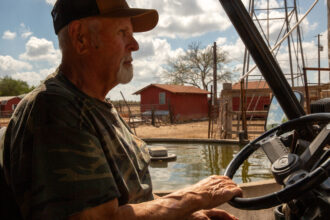


Without a shift in weather patterns, the City of Corpus Christi expects to enact emergency restrictions on water use in September, according to draft documents slated for release at a City Council meeting on Tuesday morning.
The 43-page draft presentation, provided to Inside Climate News by a source close to Corpus Christi’s water department, describes plans to mandate 25 percent cuts for all of its water customers, including nearly 500,000 people in the Coastal Bend region of Texas, as well as one of the state’s leading petrochemical and refinery hubs.
The order to curtail water would be an unprecedented conservation measure, meant to draw out the timeline to depletion of the region’s reservoirs, which could occur within the next year.
“We’re running out of water,” said U.S. Rep. Michael Cloud, a Republican who represents the region, in comments to Energy Secretary Chris Wright during a budget hearing last week in Washington, D.C. “I want to just remind you of that.”
In response, Wright promised federal permitting reform to speed up construction projects but didn’t address the impending emergency, which could lead to shutdowns in the industrial sector, business closures and evacuations of some areas in a worst-case scenario. Cloud did not follow up.
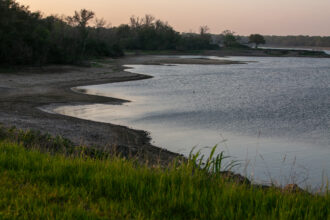
If historic drought conditions persist, some officials have warned that the region’s three reservoirs could dry up entirely this year. The city’s latest draft projections take a more optimistic view, showing water service available through at least next spring.
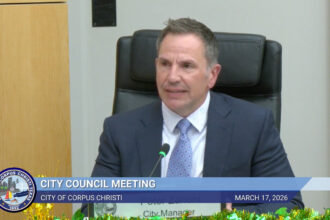
“There is some hope, I think,” said Corpus Christi City Manager Peter Zanoni in an interview last week. “We’re doing everything we can do given what we inherited.”
City leaders previously said emergency water curtailment could begin as soon as May, then pushed that date to October after Gov. Greg Abbott issued orders that waived pumping limitations and expedited permits for Corpus Christi’s newly planned wellfields. Those wells, however, are producing less than expected, Zanoni said.
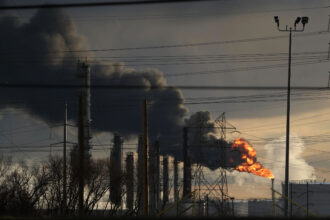
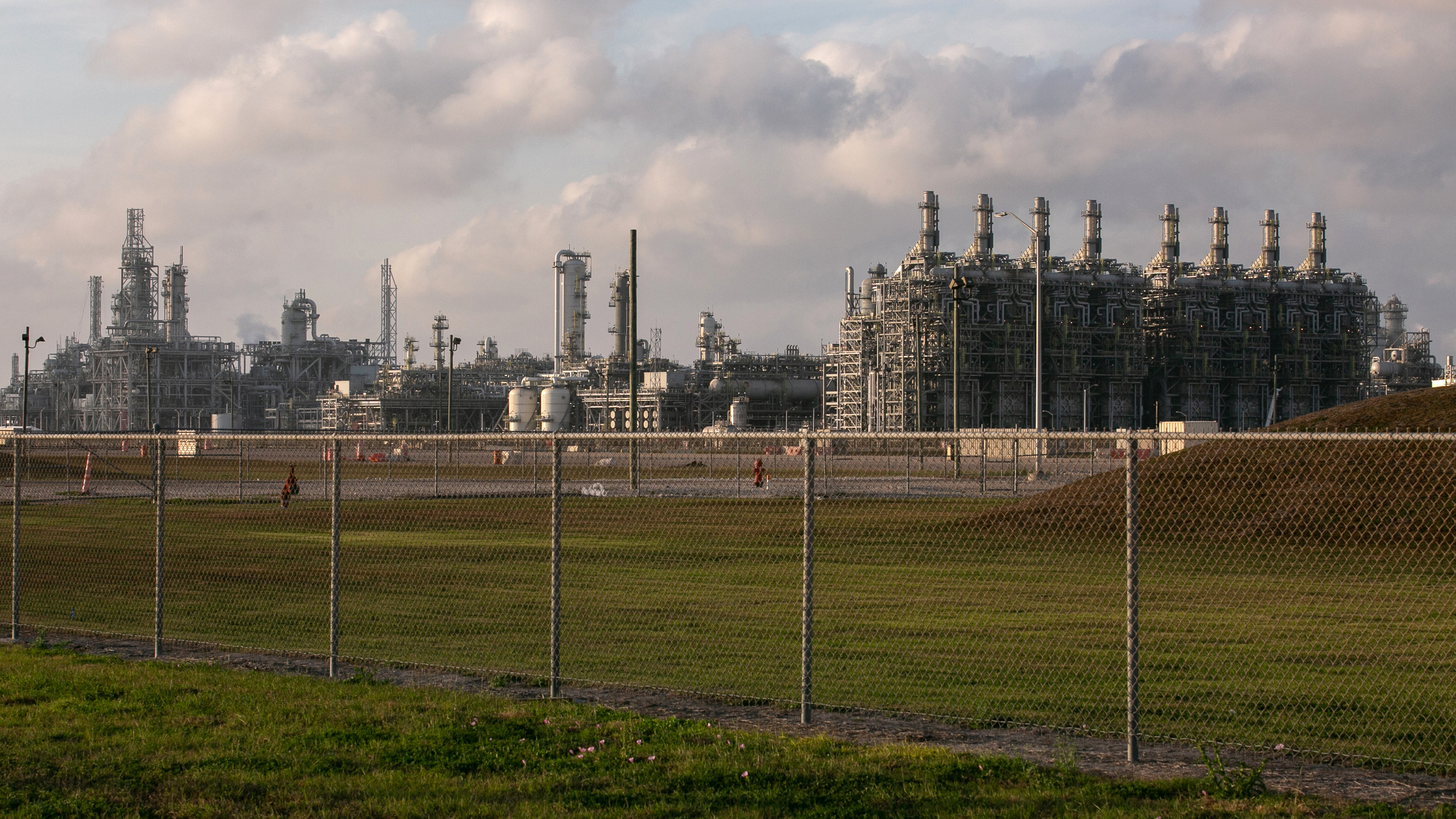
If reservoirs dry up, Corpus Christi’s wells might be able to keep water flowing to most toilets, sinks and showers, but not to the multi-billion-dollar complexes operated by energy giants like ExxonMobil, Valero, Occidental Chemical, Citgo and Flint Hills Resources, which collectively account for more than half of the region’s water consumption.
“Corpus Christi is running out of water,” said Brooke Paup, chair of the Texas Commission on Environmental Quality, during a speaking event at the University of Texas on Monday. “That’s huge.”
The problem goes far beyond Corpus Christi, she said. Huge swaths of Texas are staring down incoming deficits.
“This is a shit show. We need to right this ship,” said Paup, a former chair of the Texas Water Development Board. “It’s a water crisis.”
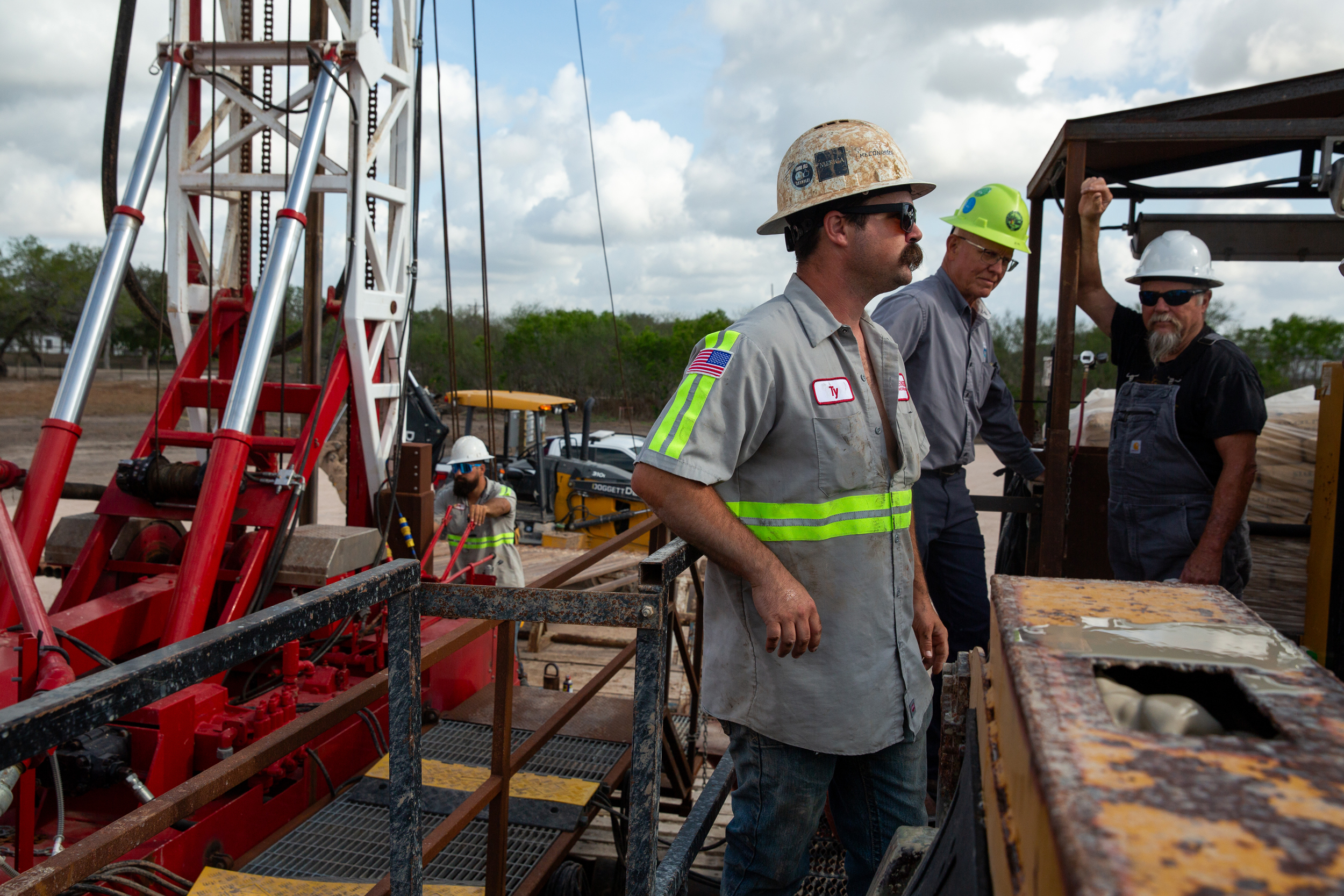
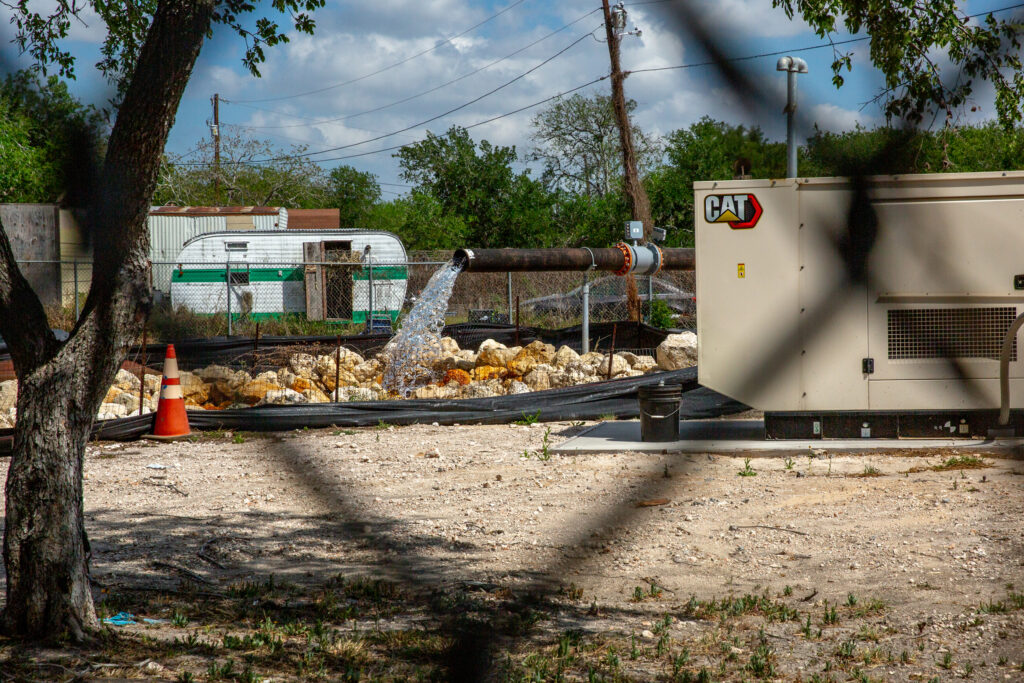
Without a long term solution to this crisis in sight, cities, towns, refineries and chemical plants around Corpus Christi are urgently drilling their own wells. Even the region’s two main hospital districts are pursuing plans to drill wells, according to Roland Barrera, a member of the Corpus Christi City Council since 2019.
“Isn’t that crazy?” said Barrera, 59, the owner of an employee benefits and life insurance company. “They’re trying to figure it out.”
“Great News for Corpus Christi”
Officials acknowledge that local aquifers only offer a temporary solution. Emergency projects propose to pump up to 14 times what state water plans consider a sustainable rate in Nueces County, where Corpus Christi is located, and no entity exists to regulate groundwater.
The region’s largest water consumer, a five-year-old plastics plant operated by Exxon and the Saudi Basic Industries Corp., also drilled test wells recently but struck salty water, Inside Climate News reported on April 7.
The next day, Fitch Ratings Inc. downgraded its outlook for Corpus Christi from “stable” to “negative,” citing “the city’s elevated water supply risk and the potential effects on its economy.”
City leadership responded with an April 8 statement that said, “resolving the water shortage is the City’s top priority.”
Fitch’s revision followed a similar downgrade by the rating service in October, and a downgrade by Moody’s in December.
“It’s an alarm bell, but not a five-alarm fire,” said Bill King, a fellow in public finance at Rice University’s Baker Institute and former mayor of the Gulf Coast city of Kemah. “Looking at the future, (Fitch analysts) don’t see things getting better.”
Exxon, the world’s largest private oil company, launched a Facebook ad campaign on April 10 touting imminent federal assistance with the region’s water crisis.
“Great news for Corpus Christi’s future!” the Exxon ad said. “President Trump recently offered his full support for a desalination project.”
For almost a decade, the region has tried and failed to build a seawater desalination plant. Exxon’s ad cited a comment Trump made about the project during his February visit to Corpus Christi: “I’m going to get that thing approved for you.”
The ad gave no other indications of plans for a federal response. Neither ExxonMobil nor the White House responded to repeated requests for comment. On Saturday, White House social media accounts posted a video montage from Corpus Christi with a hard rock soundtrack that promised more oil drilling but didn’t mention water.
A spokesperson for the Department of Energy, Emery Washington, said the agency is actively working to help bring treated oilfield wastewater, also called produced water, into Texas water supplies.
“We encourage municipalities, water districts, and industry in the Corpus Christi region to explore how treated produced water could become part of a diversified, drought-resilient water portfolio,” Washington said in a statement to Inside Climate News. “Our office stands ready to collaborate with local stakeholders, the State of Texas, and industry partners to accelerate practical solutions.”
City Councilmember Barrera hasn’t heard of any progress. Desalination facilities of the size proposed by the city and other entities around Corpus Christi Bay require electrical infrastructure and power purchase agreements that typically take years to procure, he said. If those arrangements were underway, he would hear about it.
“I’m hearing a bunch of cynicism,” said Barrera, a grandfather who traces his roots to Spanish settlers of the Coastal Bend. “I haven’t gotten the impression that there’s anything moving.”
“Absolutely Unbelievable”
Plans to build desalination plants can’t help this region avoid the immediate onset of emergency water restrictions, according to Drew Molly, a former chief operating officer for Corpus Christi Water who now serves as chief water officer for the City of Houston. But they could determine when the emergency ends.
If the region implements curtailment, Molly said, only a major change in weather patterns or the addition of a large, new water supply will pull it out.
“Now, unfortunately, we’re headed towards curtailment for who-knows-how-long,” Molly said during a 90-minute interview in downtown Houston in March. “Because we don’t have a desal plant lined up.”
Molly spent 25 years in Houston as an engineer and then municipal water manager before he went to Corpus Christi in 2022.
“Water is a contact sport in South Texas, you better be ready,” Molly said. He put in the hardest work of his life, enjoyed the challenge and respected his colleagues. But three years of efforts left him feeling like a hamster on a wheel when the city council cancelled its desalination project in September 2025. He resigned and took the top water job in Houston.
Molly, who also serves as chair of the American Water Works Association, said operators of the region’s industrial complexes had already begun planning for water curtailment before he left.
“The industry will never reveal their cards, because it’s highly competitive,” he said. “You’ll see it behind closed doors.”
Molly doesn’t think the economic consequences of water curtailment will be as disastrous as predictions he’s heard. He expects industries to work with regulators and the governor’s office for emergency waivers of air and wastewater permits. So, a 25 percent cut in water use might not mean a 25 percent loss of production.
This story is funded by readers like you.
Our nonprofit newsroom provides award-winning climate coverage free of charge and advertising. We rely on donations from readers like you to keep going. Please donate now to support our work.
Donate NowBut, if extreme drought persists and the water shortage deepens, Corpus Christi will face big legal challenges in forcing through further cuts, Molly said.
“Given the same set of cards that Corpus has, no other city would be able to figure out how to get out of this,” he said. “By God, we need to get some rain! This is absolutely unbelievable.”
Greg Waller, an operational hydrologist with the National Oceanic and Atmospheric Administration in Fort Worth, said colleagues in Corpus Christi recently asked what he thought it would take to refill their lakes.
Waller said he didn’t know. He doubted it would be the tropical, summer storm that the city was counting on. Soils are so dry that one big rain might just soak in where it falls. Tropical Storm Harold rained across the entire Nueces River watershed in 2023, he said, but produced virtually no runoff into the lakes.
“That’s how dry it was,” Waller said. And it’s gotten drier since.
“Dead Canaries Everywhere”
Only a “large-scale pattern change that stalls over the area for a while to give us repeated rounds of rain” will break this drought, he said. That isn’t likely to happen until fall, he said.
“We don’t always deliver the best news,” he said. “But we have to provide the best science.”
Abbott’s office said in March that Corpus Christi’s two main reservoirs on the Nueces River system could be depleted as soon as May. Its third reservoir, Lake Texana, could be dry by November, San Patricio County Judge David Krebs told an April 6 town hall meeting about water.

The city’s emergency groundwater projects may provide enough water to meet the most critical needs, like drinking and flushing toilets. They won’t be enough to supply the industrial complexes, according to Don Roach, who spent 14 years as assistant general manager of the San Patricio Municipal Water District, which buys water from Corpus Christi and provides it to industrial users.
“Without lots and lots of rain, industry will be forced to shut down,” said Roach, who produced a two-page analysis to support his conclusion. “This is an unprecedented disaster.”
City leaders have drawn heavy criticism for their apparent lack of plans to confront this situation. But Robert Mace, executive director of the Meadows Center for Water and the Environment at Texas State University, doesn’t blame local leaders.
“No city in Texas has a plan for if its lakes go dry,” he said in an interview at his office in San Marcos on Friday.
About a decade ago, when he was deputy director of the Texas Water Development Board, Mace proposed developing guidelines for cities to curtail water use during an emergency. But the topic was too touchy. No one wanted to talk about it. So he never produced state guidelines, and there are none today.
Mace, a leading authority on water management in Texas, wore a shirt that said, “DEAD CANARIES EVERYWHERE”—a jestful reference to the canaries in coal mines whose death warned all present to flee for their lives.
In Corpus Christi, everybody is talking about water, said Isabel Araiza, a local college professor and founder of a nonprofit focused on city policy. Seven years ago, when she started posting, virtually no one here knew anything about seawater desalination or industrial water demand.
Now she hears about it everywhere: in grocery stores, at restaurants and on TV.
“People are anxious,” said Araiza, a Corpus Christi native with a Ph.D. from Boston College.
Strangers have started to approach her at the gym she’s attended for years. They say they’ve seen her on TikTok, or on a March 25 broadcast of CNN.
“They want to talk about what’s going on with the water,” she said. “I tell them that, yea, I think we’re gonna run out.”
Neena Satija of the Texas Newsroom contributed to this report.
About This Story
Perhaps you noticed: This story, like all the news we publish, is free to read. That’s because Inside Climate News is a 501c3 nonprofit organization. We do not charge a subscription fee, lock our news behind a paywall, or clutter our website with ads. We make our news on climate and the environment freely available to you and anyone who wants it.
That’s not all. We also share our news for free with scores of other media organizations around the country. Many of them can’t afford to do environmental journalism of their own. We’ve built bureaus from coast to coast to report local stories, collaborate with local newsrooms and co-publish articles so that this vital work is shared as widely as possible.
Two of us launched ICN in 2007. Six years later we earned a Pulitzer Prize for National Reporting, and now we run the oldest and largest dedicated climate newsroom in the nation. We tell the story in all its complexity. We hold polluters accountable. We expose environmental injustice. We debunk misinformation. We scrutinize solutions and inspire action.
Donations from readers like you fund every aspect of what we do. If you don’t already, will you support our ongoing work, our reporting on the biggest crisis facing our planet, and help us reach even more readers in more places?
Please take a moment to make a tax-deductible donation. Every one of them makes a difference.
Thank you,

Dylan Baddour
Reporter, Austin
Dylan Baddour covers the energy sector and environmental justice in Texas. Born in Houston, he’s worked the business desk at the Houston Chronicle, covered the U.S.-Mexico border for international outlets and reported for several years from Colombia for media like The Washington Post, BBC News and The Atlantic. He also spent two years investigating armed groups in Latin America for the global security department at Facebook before returning to Texas journalism. Baddour holds bachelor’s degrees in journalism and Latin American studies from the University of Texas at Austin. He has lived in Argentina, Kazakhstan and Colombia and speaks fluent Spanish.