

A niche rule established by the U.S. Forest Service to justify the clearing of tens of thousands of acres of forest in the name of reducing wildfire risk was unlawfully created and applied, the U.S. District Court for the District of Oregon found last week, invalidating its future use across the United States.
Federal agencies have long used a range of “categorical exclusions” for projects deemed to have an insignificant environmental impact, allowing them to forgo the environmental assessments and impact statements required under the National Environmental Policy Act (NEPA). Federal agencies claim this helps reduce paperwork and save time on activities that have a negligible negative environmental impact.
In 1992, the U.S. Forest Service created Categorical Exclusion 6, or CE-6, focused on timber stand and wildlife habitat improvement—including forest thinning to reduce wildfire hazard. Over the years, the Forest Service has used CE-6 to expedite vegetation management projects, quickly cutting through red tape.
Given the intent of categorical exclusions, environmental groups argued that CE-6 should have been used for small-scale projects. But the exclusion contained no acreage cap, volume limit or project-size constraint. By the early 2000s, the Forest Service was routinely using CE-6 to authorize large-scale commercial logging projects with marketable timber sales under the auspices of wildfire management on public lands.
“Most of these categorical exclusions used for logging have been framed as wildfire emergency prevention schemes,” said Timothy Ingalsbee, executive director of Firefighters United for Safety, Ethics, and Ecology, who was not involved in the lawsuit. “The agency screams ‘Fire!’ and thinks they can induce panic in the public and in the courts, and especially in the politicians who are naturally inclined to favor industry, and they can get away with it.”
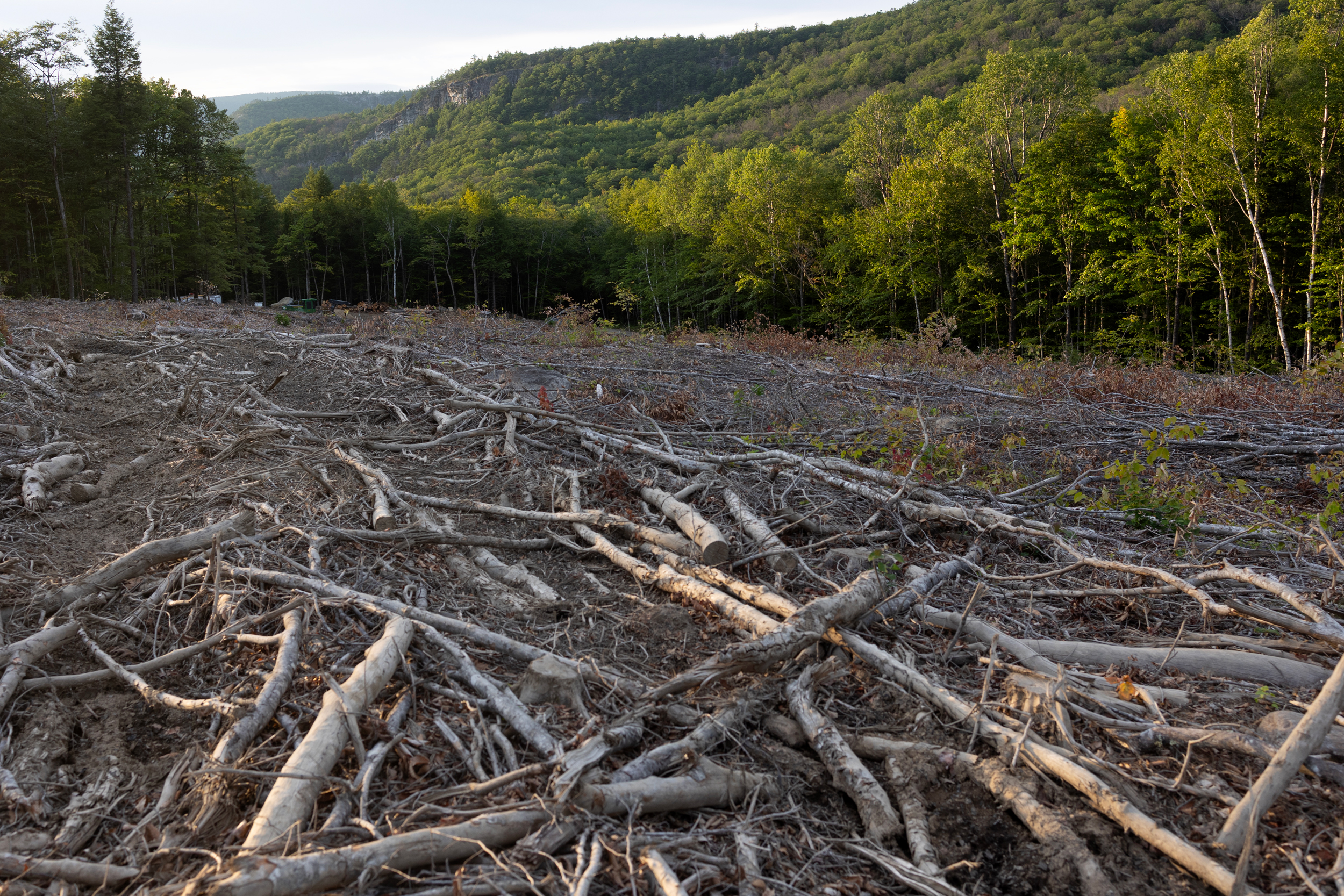
The issue reached a head when, in December 2021 and May 2022, the Forest Service authorized three commercial tree thinning projects covering 29,000 acres in southern Oregon’s Fremont-Winema National Forest under CE-6. No environmental impact assessment was carried out for these vast timber harvests.
Conservation nonprofits Oregon Wild, WildEarth Guardians and Green Oregon Alliance sued the U.S. Forest Service in 2022 over the creation and application of CE-6. On January 13, the federal judge presiding over the case ruled in their favour.
Judge Michael McShane wrote in his decision that the Forest Service’s decision to allow unlimited commercial thinning under CE-6 was arbitrary and capricious. “Because the record before the Court does not show the Forest Service considered the impact of thinning at any scale, commercial or otherwise, the Court cannot conclude the Forest Service engaged in a ‘reasoned decision’ regarding environmental impacts of the actions authorized by CE-6,” he wrote.
The federal ruling, environmental groups said, is a massive victory beyond just Oregon. Over the past two decades, CE-6 has been applied in dozens of forests across the western and eastern United States, from the Pacific Northwest to the Rocky Mountains. One WildEarth Guardians review of 175 Forest Service projects found that CE-6 was the most commonly used categorical exclusion, applied to more than three million acres.
“This case demonstrates that … calling out fire is not enough to get you a get-out-of-jail free card,” said Ralph Bloemers, executive director of Green Oregon Alliance. “You have to back it up with some actual truth.”
President Donald Trump enthusiastically supported the expanded use of categorical exclusions to bolster forestry under his March 2025 Executive Order 14225, Immediate Expansion of American Timber Production. In a July 2025 declaration to the court on the Oregon case, a U.S. Forest Service official in Washington, D.C., noted that CE-6 was key to attaining the objectives outlined in Trump’s executive order.
Now that the court has ruled that CE-6 must be vacated, there can be no future application of CE-6 in the United States. Projects that have already been fully approved with ongoing contracts will not be impacted. The court, however, also set aside the approvals for the three Oregon projects—South Warner, Baby Bear and Bear Wallow.
The U.S. Forest Service declined to comment on the case, noting the matter remained in litigation.
The outcome of the case may also influence the bipartisan Fix Our Forests Act, which is currently awaiting full Senate approval. The act would combat catastrophic wildfires by streamlining forest management, accelerating restoration projects and improving wildfire resilience under expedited environmental reviews. Yet the act aims only to increase the acreage that could be thinned under a categorical exclusion from 3,000 to 10,000 acres.
“That’s nothing compared to the scope of CE-6,” said Erin Hogan-Freemole, a staff attorney with WildEarth Guardians on the case, noting that CE-6 has been applied to parcels much larger than that.
A Heated Debate
While the court’s decision noted that the Forest Service had not provided proof that thinning projects with no acreage cap would have an insignificant environmental impact, it did not weigh in on whether such thinning was an effective or justifiable way to reduce wildfire risk to communities.
But Bloemers, who has made repeated trips to the South Warner project area to document the impacts of wildfire suppression efforts, took the court ruling as a larger condemnation of large-scale forest thinning practices as an effective countermeasure to wildfire.
“The most destructive fires in modern history—the Camp Fire, Marshall Fire, Lahaina, Talent and Phoenix, Paradise—were not stopped by thinning, fuel breaks, highways, or previously treated forests. They were wind-driven ember storms that ignited homes, then turned neighborhoods into fuel,” he said. “This challenges a rule that was used to support a legacy approach that clearly isn’t working.”
This story is funded by readers like you.
Our nonprofit newsroom provides award-winning climate coverage free of charge and advertising. We rely on donations from readers like you to keep going. Please donate now to support our work.
Donate NowFire scientists and environmental groups have long clashed over forest thinning. Many forests in the western U.S. are overly dense due to decades of fire suppression, which has allowed fuels to build up. By removing some trees and vegetation, land managers can reduce wildfire intensity. But some argue that thinning can harm ecosystems and may not meaningfully stop extreme wildfires intensified by climate change.
Forest thinning is most effective when combined with prescribed burning and targeting excessively dense shrubs, saplings and younger trees—the fuel closer to the forest floor, Ingalsbee said. “They burn fast, they burn hot,” he said. But large logging projects target the big crown trees, which are often more resilient to wildfires, and can remove too many trees, leaving sparse forests that can take decades to recover.
The other issue with CE-6, environmental groups said, is that it was often used on public lands nowhere near human communities that need protection from wildfires—as was the case with the three projects in Oregon’s Fremont-Winema National Forest.
“They aren’t even near many small settlements,” said Hogan-Freemole. “These projects were going to be pretty much in the middle of nowhere. But the Forest Service has never been required to explain how projects in these remote forest areas are going to protect homes.”
Environmental groups said timber companies were undoubtedly the largest beneficiaries of CE-6. U.S. Forest Service timber sales frequently operate at a loss, costing taxpayers money due to high administrative expenses, road work, environmental reviews and monitoring, according to reports from the Government Accountability Office.
Nick Smith, a spokesperson for the American Forest Resource Council, said they were disappointed with the decision to vacate the Baby Bear, Bear Wallow and South Warner projects in Oregon.
“Litigation like this does not make forests or communities safer. What it does is take proven management tools out of the hands of public lands managers who are trying to reduce fuel loads, improve forest resilience and protect nearby communities from devastating fire,” he said. “The suggestion that these treatments are somehow illegitimate because some of the removed material is commercial misses the point entirely.”
The judge’s ruling, however, stressed that the Forest Service would still have plenty of alternatives to address wildfire risk—relying on other methods approved through different categorical exclusions, or simply by preparing an environment assessment or environmental impact statement to approve the same kind of commercial thinning.
“The court’s ruling doesn’t stop wildfire mitigation. It stops wishful thinking,” Bloemers said. “It forces agencies to prove what they claim, analyze what they authorize and stop treating communities as collateral damage in a logging strategy that was never designed to save them.”
About This Story
Perhaps you noticed: This story, like all the news we publish, is free to read. That’s because Inside Climate News is a 501c3 nonprofit organization. We do not charge a subscription fee, lock our news behind a paywall, or clutter our website with ads. We make our news on climate and the environment freely available to you and anyone who wants it.
That’s not all. We also share our news for free with scores of other media organizations around the country. Many of them can’t afford to do environmental journalism of their own. We’ve built bureaus from coast to coast to report local stories, collaborate with local newsrooms and co-publish articles so that this vital work is shared as widely as possible.
Two of us launched ICN in 2007. Six years later we earned a Pulitzer Prize for National Reporting, and now we run the oldest and largest dedicated climate newsroom in the nation. We tell the story in all its complexity. We hold polluters accountable. We expose environmental injustice. We debunk misinformation. We scrutinize solutions and inspire action.
Donations from readers like you fund every aspect of what we do. If you don’t already, will you support our ongoing work, our reporting on the biggest crisis facing our planet, and help us reach even more readers in more places?
Please take a moment to make a tax-deductible donation. Every one of them makes a difference.
Thank you,