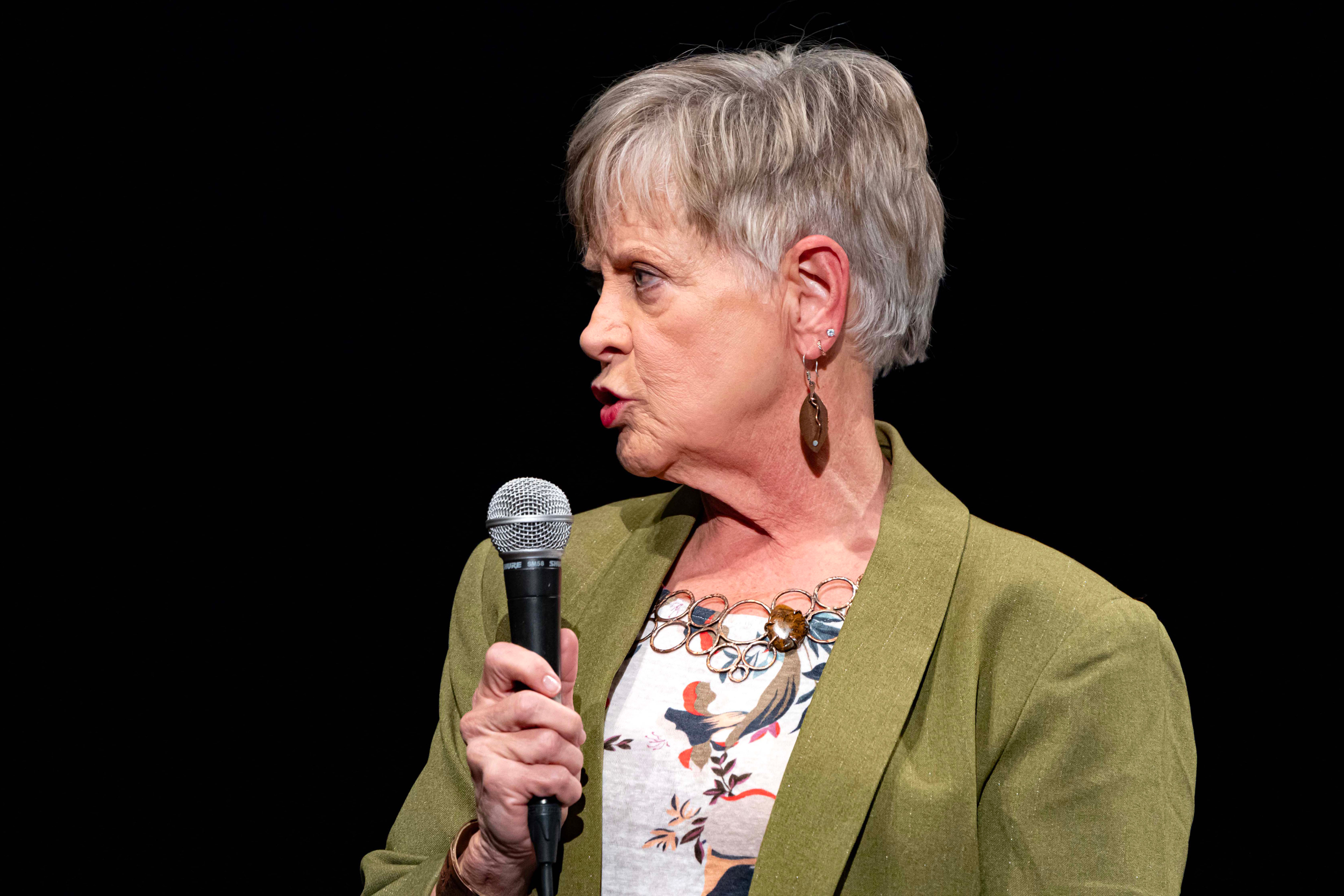


OAK GROVE, Ala.—It’s been a long two years for Lisa Lindsay.
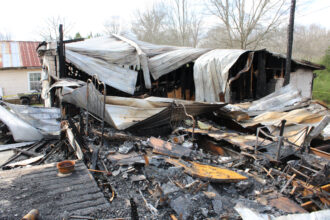
And every day since her neighbor’s home exploded above an expanding coal mine in March 2024, she’s been reminded of how far her community still has to go.
February’s meeting of the Alabama Surface Mining Commission, the entity charged with regulating the surface impacts of underground mining, was one of those reminders. During the meeting, Lindsay listened as the agency’s director, Kathy Love, informed commissioners that Washington had agreed to provide some relief. Her agency’s federal counterpart, the Office of Surface Mining Reclamation and Enforcement (OSMRE), she explained, had agreed to allow the state agency to roll back its commitment to requiring all underground coal mines across the state to submit plans outlining efforts to monitor the escape of potentially explosive methane gas from their operations.
OSMRE staffers under the Biden administration had forced the hand of Alabama regulators following months of inaction by officials at all levels to act in the wake of the explosion in Oak Grove, a rural community located about 20 miles southwest of Birmingham.
Now, following a six-month deadline extension, Love has announced that only Oak Grove mine, not all operations across the state, will be required to submit updates to their subsidence control plans outlining methane monitoring efforts. Requirements for other mine operations in the state to produce methane monitoring plans have been “nullified,” Love told commissioners.
“Everybody is different, and we could not put everybody into that one subsidence control plan,” Love said.
Love explained that she’d recently come to an agreement with federal regulators who’d previously said that all underground coal mines in Alabama should be required to comply with new methane monitoring requirements.
It’s unnecessary to require other mining operations to submit such plans because they’ll do so voluntarily, Love claimed. Mines across the state are “already recognizing this as a risk and doing their own implementations and procedures,” Love said. “We don’t have to force them to.”
Love penned a letter to then acting director of OSMRE, Thomas Shope, pushing back against federal oversight related to the March 2024 explosion. Love wrote that the agency’s regulatory order aimed at Alabama “may have been motivated by media pressure and a citizen’s knowledgeable complaint.” She wrote that issuance of the regulatory order “was not warranted or adequately supported.”
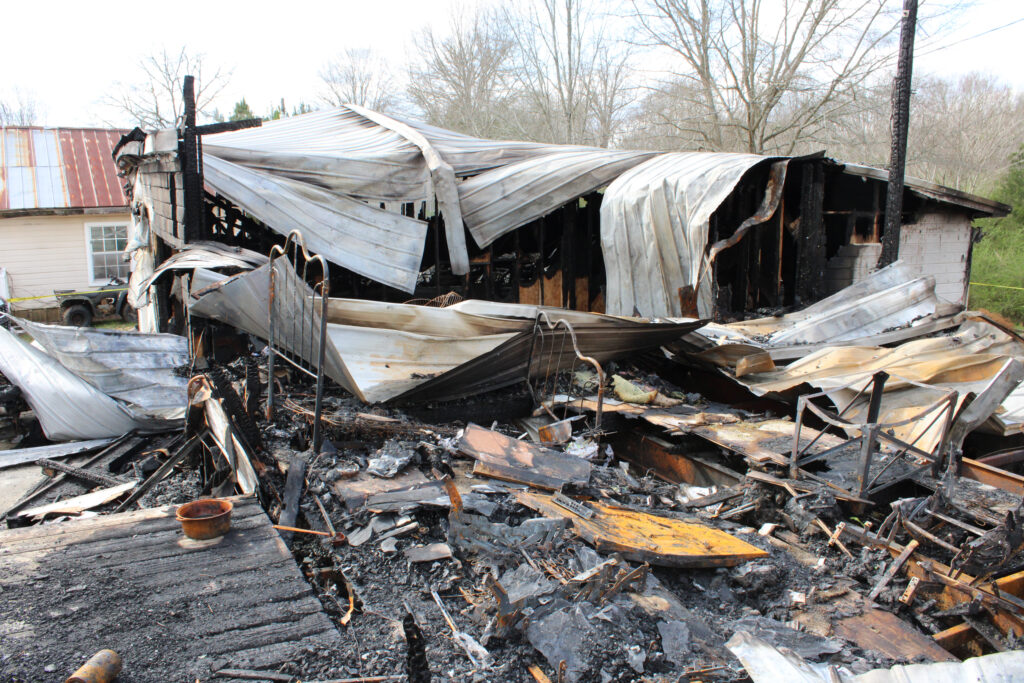
Joe Pizarchik, who headed OSMRE for nearly a decade, has said that federal action was undoubtedly necessary in the wake of the fatal explosion above Oak Grove mine. Lifting or delaying methane monitoring requirements, he said, amounts to the “Trump regime putting the interests of big corporations and wealthy people ahead of American citizens and the environment.”
Love told commissioners that federal regulators have now come around to her view.
In response to questions from Inside Climate News, a spokesperson for OSMRE said that the agency “has not approved any changes to the health or safety requirements of the Alabama regulatory program.”
The agency would not say whether it believes that all mining operations in Alabama should be required to implement methane monitoring requirements—a mandate ASMC’s Love had said she’d previously received from the agency. Because the ASMC has at least required Oak Grove to produce new plans, though, the agency has “closed out” a related regulatory order, called a Ten-Day Notice, the spokesperson said.
Oak Grove mine, which will still be required to submit a new plan, will be allowed to choose its own method of monitoring and compliance, she said. ASMC officials, including Love, recently visited with Oak Grove’s new owners, the director explained, and will do so again after the company finalizes its revised plans.
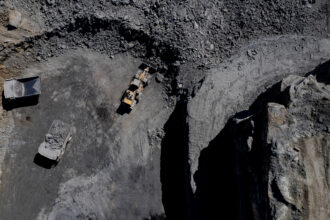
Mines are required under federal and state law to produce subsidence plans—plans that outline how the mining company will mitigate the surface impacts of subsidence, the sinking of land, due to underground operations. Longwall mining, which involves shearing long sections of earth underground to obtain coal, leaves vast expanses of empty space in its wake, causing the sinking of the ground and any structures above it. This subsidence can have many unintended consequences, including the destruction of homes and businesses, the dewatering of rivers, streams, wells and ponds. Subsidence can also cause fracturing of the ground, allowing methane gas, a natural byproduct of coal mining, to reach the surface.
Methane is a climate “super pollutant,” contributing to worsening floods, heat waves and other disasters. But it can also trigger explosions when it builds up in enclosed places, like homes.
“We’ll be back down there to see what they’ve come up with and what their manuals say,” Love said.
This story is funded by readers like you.
Our nonprofit newsroom provides award-winning climate coverage free of charge and advertising. We rely on donations from readers like you to keep going. Please donate now to support our work.
Donate NowLove had previously delayed implementation of the methane monitoring requirements by six months at the request of the state’s mining lobby. Federal regulators pushed back against that decision, e-mail messages obtained by Inside Climate News show, but as time has passed and President Donald Trump’s influence in the regulatory agency has grown, the desire for more stringent regulation of methane emissions appears to have waned. Methane is a climate super-polluter, 80 times more warming than carbon dioxide over a 20-year period.
Love would not provide commission members with copies of Oak Grove’s draft plan, but she said that it would include emergency plans and a process for temporarily installing methane monitoring equipment in houses atop expanding mines. Love also declined a request for comment.
“This is not a finalized document, so I cannot give it out right now,” Love told commissioners.
Lisa Lindsay was given three minutes to speak to Love and ASMC commissioners at the meeting.
“We’re coming up on the second anniversary of the explosion. I don’t want anybody else to go through what W.M. did,” she said, referring to W.M. Griffice, an 86-year-old injured in the house explosion who later died of his injuries.

Lindsay told Inside Climate News after the meeting that while she hopes the agreement with Oak Grove improves safety for residents, she believes regulators, not Oak Grove, should be producing and overseeing the implementation of safety plans. Otherwise, Oak Grove will, in effect, be its own regulator.
“It’s like letting the fox guard the henhouse,” Lindsay said.
In her view, all Alabama mines—particularly those with homes and businesses above them—should be required to monitor for potentially explosive methane gas.
In a lawsuit, Griffice’s family has contended that methane leaks from Oak Grove mine caused the explosion that led to Griffice’s death and the serious injury of his grandson. In court documents, the company has denied responsibility.
Alabama has long neglected residents put at risk due to the leak of methane gas from underground mining operations. An Inside Climate News investigation found that Alabama officials have been on notice about such risks for decades and declined to mitigate them.
Even in the immediate wake of the 2024 explosion, public officials were slow to act. Only after an Inside Climate News report did federal regulators require state action to ensure resident safety.
Love’s announcement is a rollback of that federal action, limiting the scope of mandatory methane monitoring in the state.
“We’re certainly not safer for it,” Lindsay said.
About This Story
Perhaps you noticed: This story, like all the news we publish, is free to read. That’s because Inside Climate News is a 501c3 nonprofit organization. We do not charge a subscription fee, lock our news behind a paywall, or clutter our website with ads. We make our news on climate and the environment freely available to you and anyone who wants it.
That’s not all. We also share our news for free with scores of other media organizations around the country. Many of them can’t afford to do environmental journalism of their own. We’ve built bureaus from coast to coast to report local stories, collaborate with local newsrooms and co-publish articles so that this vital work is shared as widely as possible.
Two of us launched ICN in 2007. Six years later we earned a Pulitzer Prize for National Reporting, and now we run the oldest and largest dedicated climate newsroom in the nation. We tell the story in all its complexity. We hold polluters accountable. We expose environmental injustice. We debunk misinformation. We scrutinize solutions and inspire action.
Donations from readers like you fund every aspect of what we do. If you don’t already, will you support our ongoing work, our reporting on the biggest crisis facing our planet, and help us reach even more readers in more places?
Please take a moment to make a tax-deductible donation. Every one of them makes a difference.
Thank you,

Lee Hedgepeth
Reporter, Alabama
Lee Hedgepeth is Inside Climate News’ Alabama reporter. Raised in Grand Bay, Alabama, a small town on the Gulf Coast, Lee holds master’s degrees in community journalism and political development from the University of Alabama and Tulane University. Lee is the founder of Tread, a newsletter of Southern journalism, and has also worked for news outlets across Alabama, including CBS 42, Alabama Political Reporter and the Anniston Star. His reporting has focused on issues impacting members of marginalized groups, including homelessness, poverty, and the death penalty. His award-winning journalism has appeared in publications across the country and has been cited by the New York Times, the Wall Street Journal and the Washington Post, among others.