

When Canadian Prime Minister Mark Carney delivered a pointed rebuke this week of Donald Trump and the global economic system Washington helped shape, he urged other nations to help build a new world order—one that, he said, “embodies our values, like respect for human rights, sustainable development, solidarity, sovereignty and the territorial integrity of states.”
The speech at the World Economic Forum drew a standing ovation in Davos and praise from diplomats and foreign policy analysts, who described it as a rare display of democratic leadership at a moment when the United States is retreating from multilateral institutions and norms it once championed.
But for a number of environmental advocates, trade critics and Indigenous leaders in the Global South, Carney’s critique ignores Canada’s own role in sustaining the structures he criticized. Chief among them are economic treaties that grant formidable rights to Canada’s influential mining sector and other multinational corporations.
“It’s important to underscore the hypocrisy of Canadian foreign policy,” said Jen Moore, a Canadian citizen and associate fellow at the Institute for Policy Studies. Despite frequent appeals to human rights, she added, Ottawa has “always been about maximizing the profits of Canadian domiciled corporations, particularly in the mining sector.”
Canada is home to more than half of the world’s publicly listed mining companies, many of which operate in Latin America, Africa and Asia. Its fossil fuel industry, meanwhile, has long been one of the world’s giants, ranking fourth among oil producers and fifth among natural gas producers.
Asked for comment, officials at Global Affairs Canada, which manages Canada’s diplomatic relations, said they had nothing to add to the prime minister’s speech.
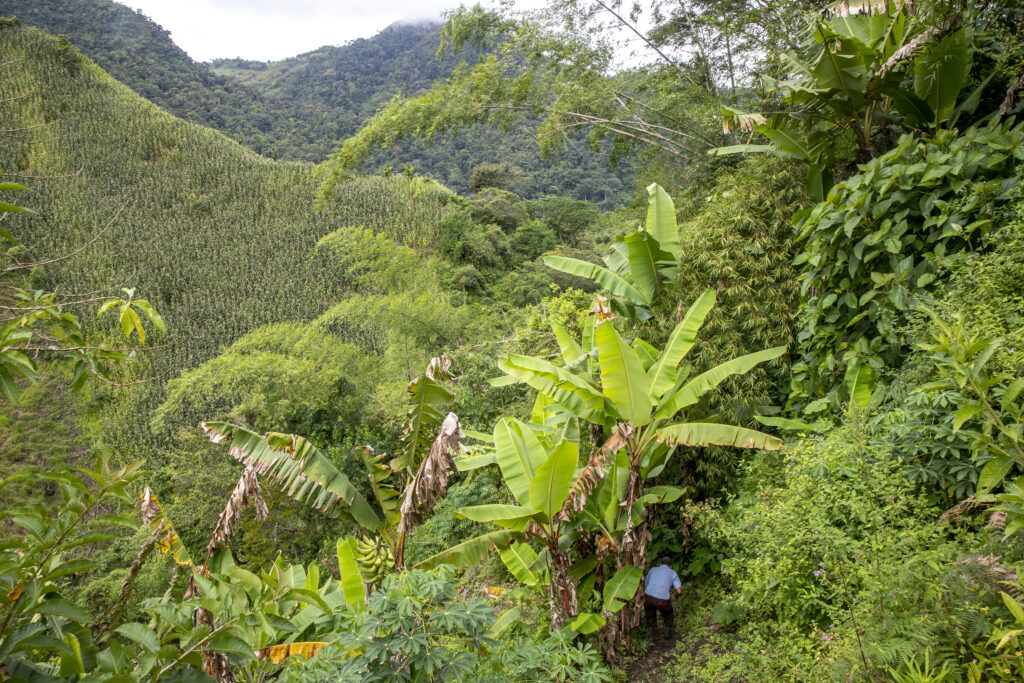
Canada has also been negotiating a flurry of trade and investment deals that would unlock new protections for its companies to operate abroad. But in several mining-dependent regions of the world, Canadian firms have earned an unflattering reputation, captured in a widely shared meme with two contrasting images. The first shows a lush, mountainous landscape, overlaid with the words, “When you visit Canada.” The second depicts a barren open-pit mine: “When Canada visits you.”
Critics say that reputation is not accidental, but the predictable outcome of legal and trade rules that Canada has spent decades promoting, including a constellation of trade and investment treaties.
Embedded in those agreements is investor-state dispute settlement, or ISDS—a mechanism allowing foreign investors to sue governments over policies that threaten profits, even if the policies are aimed at protecting the environment, public health and human rights.
The system allows only foreign investors to initiate arbitrations, while governments can, at best, play defense. The arbitrators overseeing the disputes are often corporate lawyers and are not prohibited from also representing the corporations before the system or acting as paid expert witnesses.
Fossil fuel and mining companies have used ISDS to win billions of dollars from mostly low-income governments whose taxpayers ultimately foot the bill. The newest wave of cases has come from companies targeting climate action, such as a suit filed against the U.S. by TC Energy, the Canadian developer of the Keystone XL pipeline.

Canadian mining firms, meanwhile, are responsible for more than one-third of ISDS cases related to critical minerals and are among the most active users of the system.
“Canadian companies are behind some of the more outrageous mining-related ISDS claims internationally,” said Stuart Trew, a trade researcher with the Canadian Centre for Policy Alternatives.
Trew pointed to a $6 billion arbitration award won by Tethyan Copper, co-owned by a Canadian firm, against Pakistan over a controversial gold project, and a long-running case brought by Canadian miner Eco Oro against Colombia after the government restricted mining in a high-altitude wetland ecosystem.
None of the companies mentioned in this article responded to requests for comment.
In another case, the Canadian mining firm Copper Mesa sued Ecuador over the revocation of its concessions following years of local opposition and human rights concerns. To suppress this opposition, the company had hired private security that turned to paramilitary-style groups who used tear gas, machetes, dogs and firearms against local villagers, according to arbitration documents. The arbitrators in that case acknowledged the company’s “reckless escalation of violence.” Nonetheless, they awarded Copper Mesa $24 million.
Such awards are enforceable in most courts around the globe, making ISDS one of the most powerful legal systems worldwide. Recognizing this, some of the system’s original champions have begun to limit their own exposure to it. The United States and Canada, for instance, dropped ISDS between themselves from their updated North American trade agreement.
Canada’s then foreign minister, Chrystia Freeland, explained the move: “ISDS elevates the rights of corporations over those of sovereign governments. In removing it, we have strengthened our government’s right to regulate in the public interest, to protect public health and the environment.”
Both Canada and the United States, however, have preserved the system in treaties with developing nations, where investment largely flows in rather than out. That means ISDS benefits accrue primarily to corporations in the Global North and the risks fall on the public in poorer nations.
“The Worst Part of the Rules-Based Order”
In his Davos speech, Carney framed the unraveling of the postwar order as a crisis of legitimacy. He argued that the system long exploited a double standard, one in which powerful countries routinely bent or ignored the rules while weaker nations bore the costs.
“We knew the story of the international rules-based order was partially false,” Carney said.
Many leaders, activists and scholars across the Global South say that diagnosis is not new. For decades, they have argued that the global economic system was built to favor wealthy countries and multinational corporations, while exposing poorer nations to debt, extraction and environmental harm.
What troubles those critics is not Carney’s description of the problem, but his position within it—specifically the continued backing of international economic systems that protect Canadian companies at local communities’ expense.

Before his political career, Carney was an executive at the Canadian investment firm Brookfield Corp. The company filed an ISDS claim against Peru, and a subsidiary filed one against Honduras. The firm also threatened to do so against Colombia.
Canada under Carney’s administration has promoted new trade and investment agreements and plans to link existing deals—including the Canada-Europe agreement and the Asia-Pacific Comprehensive and Progressive Agreement for Trans-Pacific Partnership, or CPTPP—into a larger trade bloc. Both of those agreements included ISDS provisions.
“We have seen this story before,” Trew said, comparing the moment to Trump’s first term, when Canadian leaders spoke of defending multilateralism as Washington retreated, only to later align with U.S. priorities to protect multinational corporations under both Trump and President Joe Biden.
“Signing more free trade and investment treaties and deregulating oil, gas and mining approvals will not get us there,” Trew added. “It’s more of the same.”
Canada recently signed a bilateral investment treaty with the United Arab Emirates that includes ISDS and is fast-tracking a similar deal with Qatar. ISDS provisions are also included in a new trade agreement with Indonesia and could be expanded through negotiations with Southeast Asian nations and Britain’s accession to the CPTPP.
“The expansion of ISDS in all of these places perpetuates the worst part of the rules-based order that Prime Minister Carney says we’re moving away from—the part enshrining corporate rule,” Trew said.
Ottawa also recently concluded negotiations on a trade agreement with Ecuador that includes investment protections. That agreement came together despite the 2008 Ecuadorian constitution banning ISDS, and Ecuadorians reaffirming their rejection of the system in a 2024 referendum. To date, neither Canada nor Ecuador has publicly released the terms of the deal’s ISDS section.
“Canada is well aware of the tremendous outcry about this from Indigenous leadership and environmental organizations” in Ecuador, said Moore of the Institute for Policy Studies.

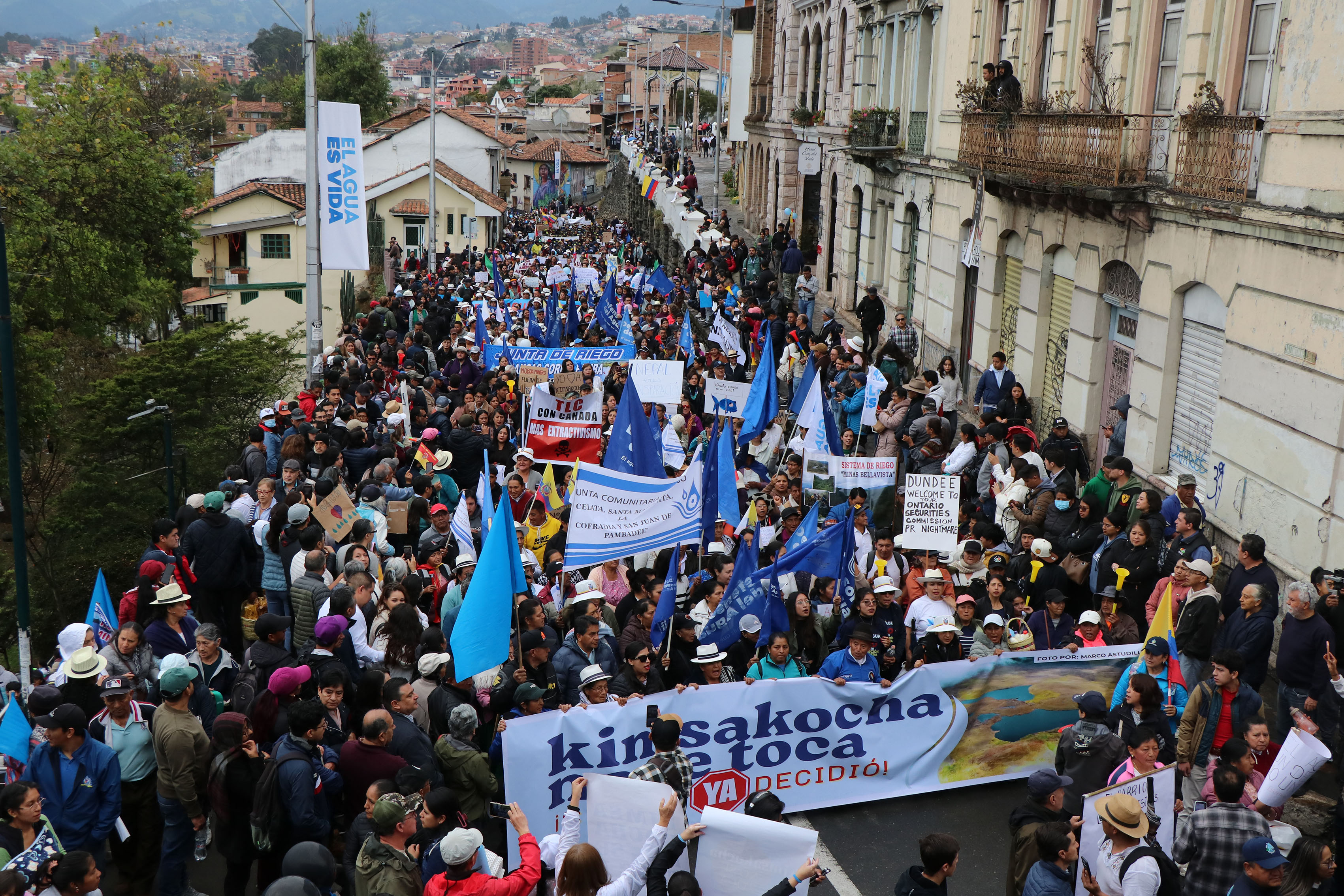
About 15 Canadian mining companies are active in Ecuador, many of which have clashed with Indigenous and other communities. Last fall, tens of thousands of Ecuadorians poured into the streets of Cuenca to rally against a Canadian gold mine that they say threatens their drinking water.
On the sidelines of a major mining conference in Toronto last year, Hortencia Zhagüi, a representative of a local water board near Cuenca, said communities in Ecuador’s high-altitude wetlands have repeatedly opposed mining projects. When residents peacefully protested, she said, security forces were deployed to suppress them.
“We’re peaceful people, we’re hardworking people and we won’t bend the knee to companies that have come to break our families and communities apart,” Zhagüi said while testifying at a peoples’ tribunal focused on mining.
Soledad Calle, an Ecuadorian lawyer based in Cuenca who has defended communities opposing Canadian mining projects, said Ecuadorian courts have repeatedly ruled in favor of local communities and the rights of nature; Ecuador is the only country in the world whose constitution recognizes that nature has rights. In response, she said, foreign companies have turned to ISDS, pushing Ecuador into costly international arbitration.
“What Ecuador has experienced is that ISDS shields Northern capital from Southern democracy, even when the country acts in line with its own constitutional commitments to the rights of nature and human rights,” Calle said.
Ecuador’s strong protections for nature and local communities were won through decades of advocacy by Indigenous groups and other social movements, Calle said. But in ISDS, locals affected by foreign companies can’t participate in arbitrations; only the company and government can.
The arbitration system, she added, “doesn’t have a balance between economic loss and life—quite literally life. It’s not a humane system.”
This story is funded by readers like you.
Our nonprofit newsroom provides award-winning climate coverage free of charge and advertising. We rely on donations from readers like you to keep going. Please donate now to support our work.
Donate NowMerely having an ISDS agreement in place can deter governments from regulating in the public interest, for fear of facing costly arbitration claims. Jamie Kneen, national program co-lead with MiningWatch Canada, pointed to instances in Costa Rica and Panama where Canadian mining companies have been documented threatening ISDS claims as their projects stalled.
“Even without direct threats, governments are aware that they can be sued for following their own laws,” Kneen said.
For Edson Krenak, an Indigenous advocate from Brazil, Carney’s speech reflected a familiar gap between rhetoric and reality for Indigenous peoples.
“There has never been a real transition for us,” Krenak said, adding that Indigenous and traditional communities have long borne the costs of mining and strategic minerals development through the loss of land, livelihoods and security.
Krenak’s own people, located in the Brazilian state of Minas Gerais, have been ravaged by Canadian and British mining companies for decades, with catastrophic toxic waste spills devastating waterways and other ecosystems.
The erosion of diplomatic “soft power” and the rise of more openly coercive economic policies under the current U.S. administration mirrors what many Indigenous communities have experienced for decades, he said. Countries often praised for progressive values, he added, are among the largest beneficiaries of extractive industries linked to environmental damage and violence against Indigenous land defenders.
“Indigenous peoples are the least powerful, but we act with honesty and integrity,” Krenak said. “Our message has always been the same—protect our common home, protect Mother Earth.”
About This Story
Perhaps you noticed: This story, like all the news we publish, is free to read. That’s because Inside Climate News is a 501c3 nonprofit organization. We do not charge a subscription fee, lock our news behind a paywall, or clutter our website with ads. We make our news on climate and the environment freely available to you and anyone who wants it.
That’s not all. We also share our news for free with scores of other media organizations around the country. Many of them can’t afford to do environmental journalism of their own. We’ve built bureaus from coast to coast to report local stories, collaborate with local newsrooms and co-publish articles so that this vital work is shared as widely as possible.
Two of us launched ICN in 2007. Six years later we earned a Pulitzer Prize for National Reporting, and now we run the oldest and largest dedicated climate newsroom in the nation. We tell the story in all its complexity. We hold polluters accountable. We expose environmental injustice. We debunk misinformation. We scrutinize solutions and inspire action.
Donations from readers like you fund every aspect of what we do. If you don’t already, will you support our ongoing work, our reporting on the biggest crisis facing our planet, and help us reach even more readers in more places?
Please take a moment to make a tax-deductible donation. Every one of them makes a difference.
Thank you,