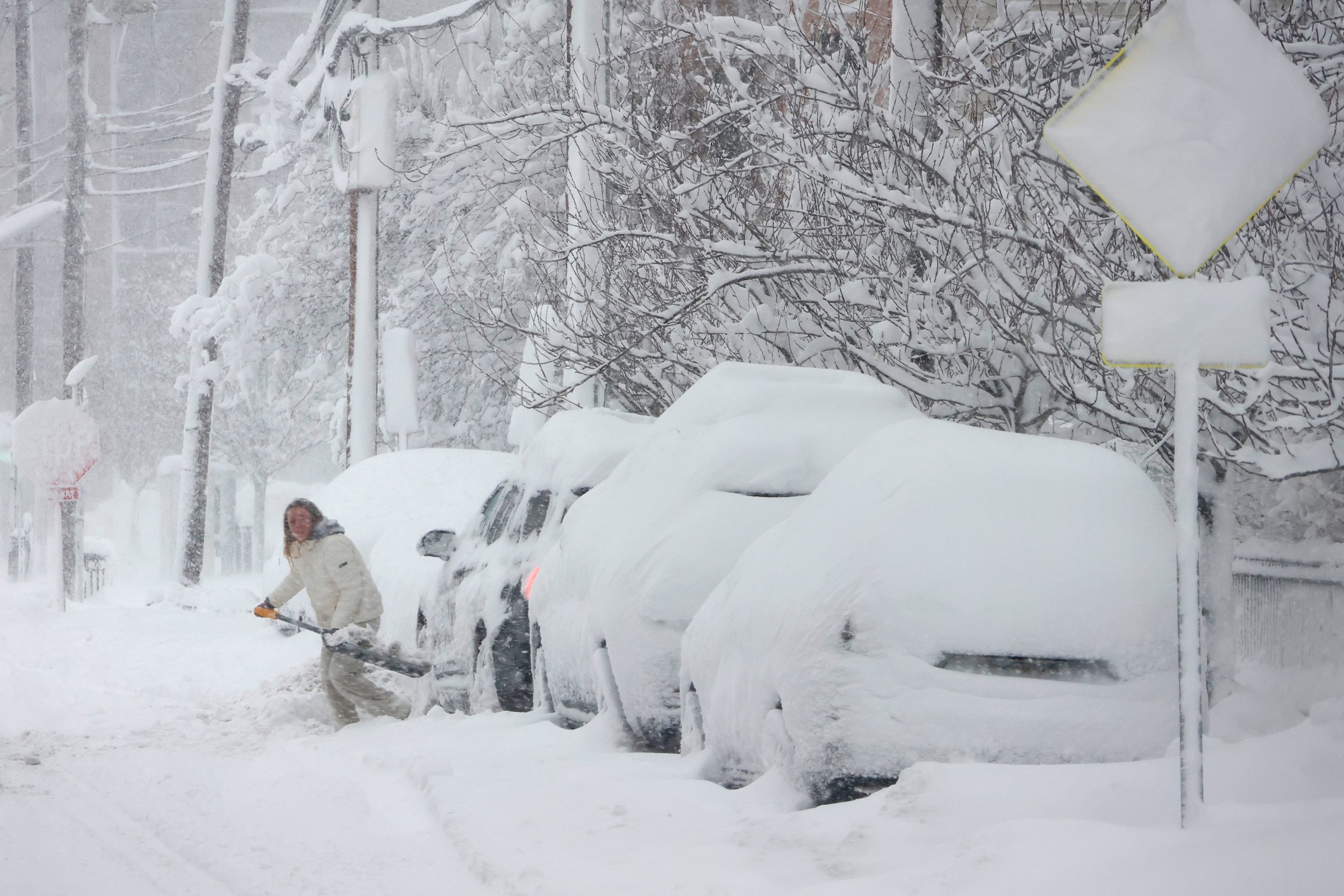


New Jersey is among the states hit hardest by the blizzard that battered the Northeast Sunday and Monday, with two feet of snow or more and extremely high winds, causing flooding in coastal Atlantic City and other towns.
But as Rutgers climate scientist Anthony Broccoli explains, storms like this are not only inland snow events. In New Jersey, nor’easters can also push water onshore and trigger coastal flooding, a risk often associated more with hurricanes than winter storms.
New Jersey has more miles of highway per square mile than any other state, which means a storm in the state can leave an unusually large road network to plow and salt. The Garden State also has about 1,792 miles of shoreline, with major population concentrations along the coast, so winter storms can be both a transportation emergency inland and a coastal flooding threat at the same time.
Broccoli is a distinguished professor of atmospheric science at Rutgers University and directs the Center for Environmental Prediction. His research focuses on how the climate system changes over time and the mechanisms that drive those changes, including the role of human-caused warming. This interview has been edited for length and clarity.
RAMBO TALABONG: There were a lot of forecasts about this winter being colder than the winters before. Were you surprised that it would cause at least two major storms?
ANTHONY BROCCOLI: Storms of this size are not common. Snowfall is kind of a capricious type of event because you need to have just the right combination of a storm, plenty of moisture, and just enough cold to allow the precipitation to fall in the form of snow.
In the case of the storm we’re having now, the day before was a very mild day with temperatures approaching 50 degrees. And even the storm began as a little bit of rain because there wasn’t any exceptionally cold air near us. But once the storm got going, the air was just cold enough to bring the temperature below freezing and enable us to get this much snow.
TALABONG: Is New Jersey more vulnerable to snowstorms than other places?
BROCCOLI: Vulnerability to snow is probably similar in many places, although we have a high population density. That means a lot of people work to get the roads clear. But another element of this storm has been the intensity and the strong winds that it produced and the capacity that has to produce coastal flooding.
One of the things that maybe New Jersey residents don’t think about enough is that it’s not just hurricanes like Hurricane Sandy that are a threat for coastal flooding, but nor’easters like the storm we’re having right now.
TALABONG: Could you explain this to me?

BROCCOLI: Well, in plain terms, when we get a strong storm, if the winds from that storm push water onshore, push water toward the coast, that can raise water levels above what they would normally be. And this is, of course, what happened in Hurricane Sandy in a very big way, because that was an extremely powerful storm. But even winter storms like this one, nor’easters, can produce higher than normal water levels.
This storm has produced some coastal flooding because the water levels are about two feet higher than they would normally be. And that creates the potential for more coastal flooding. It’s quite common when these storms move up the coast. They’re called nor’easters because the wind blows from the northeast and a wind from the northeast is going to be pushing water toward the coast.
TALABONG: Does the cold make it more dangerous? Does the snow make it more dense?
BROCCOLI: When it comes to coastal flooding, it probably doesn’t have any direct effect on the flooding. But of course, if people are dealing with the effects of heavy snow at the same time, that’s going to make things more difficult. The snow is a potential driver of inland flooding when it melts.
In New Jersey, it’s been relatively dry for the better part of six months or more so we wouldn’t necessarily expect flooding if the snow melts gradually. If it were to be followed by a heavy rainstorm, that would be a potential driver of inland flooding, but the connection between snow and coastal flooding is not very direct. It’s just that heavy snow adds to the difficulty of coping with nature’s hazards.
TALABONG: Does research predict there would be more winter storms like these in the future?
BROCCOLI: It’s an active area of research. There was a recent study that indicated trends for nor’easters to be strengthening. These changes are not necessarily dramatic changes, but detectable changes in intensity. But when you’re thinking about a particular area, what you really care about is whether or not the storms that directly affect that area will change.
We still have some work to do to try to understand that better in terms of what the effects of future changes in climate will be. Even if storms get stronger, they may not necessarily have a more drastic impact if there are changes in the paths of those storms.
TALABONG: Some people are saying that climate change isn’t real because of the winter that we’re having. It’s very cold. We have a lot of snow. How do you respond to that?
BROCCOLI: Climate change is not going to abolish cold and snow. The long-term effects of climate change do mean that we get less cold extremes and more warm extremes, but less cold extremes doesn’t mean no cold extremes.
Furthermore, even though this winter has been cold, it’s been far from being as cold as some of the coldest winters on record.
Wintertime temperatures can be very variable and it depends on exactly where you are. There are always going to be some places that are colder than average and warmer than average during the winter. What climate change is doing is skewing the odds in favor of more places being warmer than average and fewer places being colder than average.
TALABONG: Are there any specific policy recommendations you’d suggest for the state?
BROCCOLI: I wouldn’t say I have any specific recommendations, except to recognize that events like this are still possible even in a warming climate. I would also point out that a warming climate makes the atmosphere capable of holding more moisture so that if you do get a storm, it has the capacity to be a very wet storm if it’s rain or a very snowy one if it’s snow.
Over the long haul, there may be fewer storms like this, but that doesn’t mean in the short run, we can’t have a winter with a couple of big snow storms like we’ve had this year.
About This Story
Perhaps you noticed: This story, like all the news we publish, is free to read. That’s because Inside Climate News is a 501c3 nonprofit organization. We do not charge a subscription fee, lock our news behind a paywall, or clutter our website with ads. We make our news on climate and the environment freely available to you and anyone who wants it.
That’s not all. We also share our news for free with scores of other media organizations around the country. Many of them can’t afford to do environmental journalism of their own. We’ve built bureaus from coast to coast to report local stories, collaborate with local newsrooms and co-publish articles so that this vital work is shared as widely as possible.
Two of us launched ICN in 2007. Six years later we earned a Pulitzer Prize for National Reporting, and now we run the oldest and largest dedicated climate newsroom in the nation. We tell the story in all its complexity. We hold polluters accountable. We expose environmental injustice. We debunk misinformation. We scrutinize solutions and inspire action.
Donations from readers like you fund every aspect of what we do. If you don’t already, will you support our ongoing work, our reporting on the biggest crisis facing our planet, and help us reach even more readers in more places?
Please take a moment to make a tax-deductible donation. Every one of them makes a difference.
Thank you,

Rambo Talabong
Contributor
Rambo Talabong is a multimedia climate reporter based in New York City. Before moving to the U.S., he led award-winning investigations into the Duterte drug war for Rappler, the Nobel Prize-winning newsroom in Manila. His reporting has been recognized by the Global Investigative Journalism Network, the Society of Publishers in Asia, and the Human Rights Press Awards. He studied data journalism at Columbia University and is currently pursuing a master’s in science journalism at New York University. He has faced—and won—two libel suits in the Philippines over his reporting.