

As temperatures dropped below freezing in New York City last month, boilers in the basements of city buildings insulated New Yorkers from the cold. But they often rely on a fuel that pumps greenhouse gases into the atmosphere.
The vast majority of the city’s greenhouse gas emissions come from buildings. In residential properties, most emissions come from burning natural gas for heating and cooking.
New York City has local laws that aim to drastically reduce residents’ reliance on this fossil fuel. If the laws remain in effect, residents will use much less natural gas by 2050. This could pose a big financial problem for utilities in the area—along with their remaining gas customers.
That’s because the cost of building and repairing pipelines to deliver that gas is paid by consumers over the life of the infrastructure, tucked into gas bills as part of the delivery charge. The region is full of old pipes, and New York utilities are replacing hundreds of miles of them to reduce leaks. The new pipes will last around a half-century.
These long-term investments conflict with the city and state’s climate goals, which push households to electrify heating and cooking. If enough homes move off gas in the next few decades, utilities will have to spread infrastructure costs across fewer ratepayers, significantly increasing gas bills.
The rising costs could push even more people to electrify. That’s what some experts call a “death spiral,” a vicious cycle for a utility and its customers.
How Gas Utilities Work
According to the Future of Heat Initiative, a think tank that examines energy affordability, delivery charges account for three-quarters of total gas bill costs in the Empire State. This represents a significant shift from two decades ago, when the split between delivery and the cost of the fuel itself was closer to 50-50.
The think tank found that capital investments, including the baked-in profit margin and financing costs, account for about 45 percent of delivery charges imposed by the six largest utilities in the state. Gas pipe replacement and extension make up a large portion of those investments.
“If you try to reduce your gas usage by turning down your thermostat, you realize your bills aren’t going down very much because there’s all these delivery charges that have to be recovered,” said Jamie Van Nostrand, a former chair for the state body that regulates Massachusetts’ utilities, and now the policy director for the Future of Heat Initiative.
An example of what is pushing up New Yorkers’ rates can be found in National Grid’s most recent gas bill increases for parts of Queens, Brooklyn and Staten Island that the utility serves. In 2024, the Public Service Commission—the state body that regulates utilities—approved a 19.4 percent increase in the average residential rate, followed by subsequent increases.
The utility specified that the rate increase was partly to fund energy-efficiency programs and to replace aging gas pipes.
Dean Murphy, a principal at economic consulting firm the Brattle Group who has provided expert testimony for utilities and other groups before regulators in New England, said utilities must replace old, leak-prone pipes to ensure the safety of the gas system.
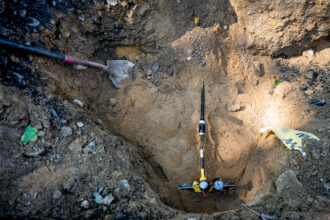
It’s pricey to replace gas mains in places like New York City, where the work requires digging up streets in dense urban environments. According to a spokesperson for National Grid, swapping out a mile of pipe in New York City costs about $10 million.
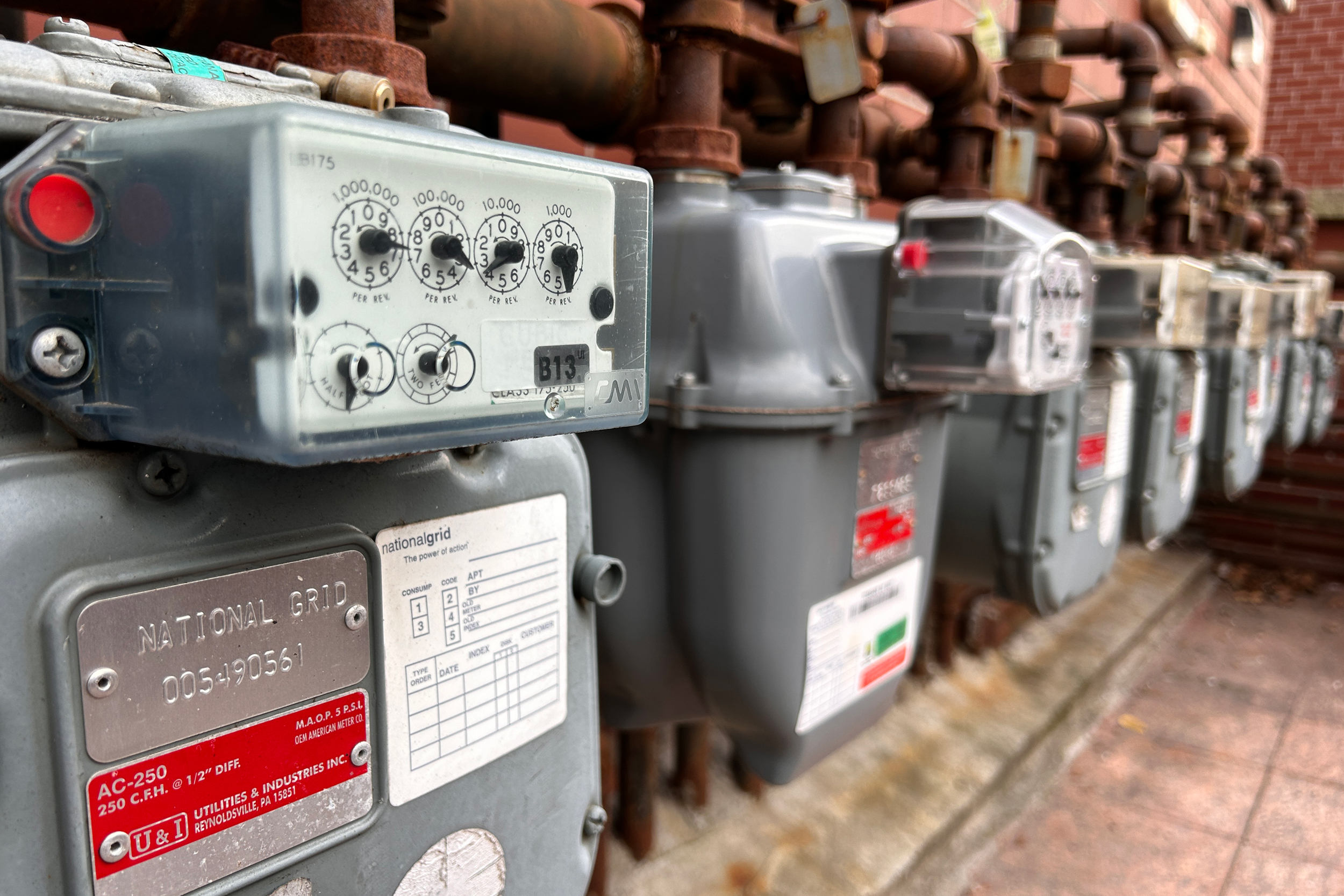
Advocates often argue that it is more expensive than installing electric heat pumps and induction stoves in buildings served by the gas main.
Filings by the state Department of Public Service, which oversees the process for increasing utility bills, indicate that the 2024 agreement with National Grid required that the utility “engage much more deeply with the development of [non-pipe alternatives] instead of traditional infrastructure projects.” Among those alternatives: heat pumps and geothermal energy networks.
Instead of replacing old pipes, Van Nostrand said, the utility can make repairs that could extend the gas main’s life by a few years, allowing more time for the transition to electric appliances in a neighborhood’s homes.
The problem for regulators, he said, is that there isn’t always enough evidence to convince them it is equally safe.
“If you’re a regulator, you don’t want to be the person who cuts the spending and then something bad happens,” Van Nostrand said.
A spokesperson for National Grid said the utility made 2,480 leak repairs last year. Since 2008, National Grid has reduced annual emissions from leaks in New York by more than 35 percent, the company said, by replacing and repairing pipes.
A Looming Upheaval
The city’s Local Law 97 places escalating limits on greenhouse gas emissions from large buildings. By 2040, if the limits remain unchanged, many buildings must move away from using gas, at least for heating. Additionally, another law mandates that some newly constructed buildings be fully electrified.
On the state level, the Climate Act will ultimately require “a substantial reduction of fossil natural gas use and a strategic downsizing of the gas system,” according to the state’s plan for complying with the law.
If the city meets these goals, or even comes close, it will completely disrupt gas utilities’ current business model, Murphy said. When a utility constructs a new underground gas main, it recovers construction costs over time from ratepayers. The pipe is also added to its “asset base,” from which utility shareholders earn a profit.
All these costs, as well as operations and maintenance, are spread over time among all the households a utility serves.
According to Allan Drury, the corporate affairs manager at Con Edison, a gas and electric utility that serves New York City, the utility’s gas main replacement is “primarily focused on leak-prone pipe.” Over the next three years, he said, the utility is targeting 240 miles of replacement. In 2026, Con Edison will spend approximately $445.4 million on replacing leak-prone pipes, Drury said.
National Grid said it replaced 220 miles of leak-prone pipe across the Empire State last year.
Many utilities continue to invest in the gas system, which pushes up overall costs that must be recovered, while city and state policies mandate reductions in gas use, Murphy said.
If the city and state remain on track with their climate goals, utilities will likely have to spread the cost of their systems across fewer ratepayers, significantly increasing gas bills.
In this scenario, Van Nostrand is concerned that low-income communities will suffer because they lack the funds to pay the high upfront costs of heat pumps and electric stoves—even though the switch may be cheaper in the long run.
Many low-income New Yorkers are already struggling to pay their bills. About 414,000 of Con Edison’s customers in the city and Westchester County were over 60 days late on their utility payments in December, according to documents the company submitted to state regulators. Gas bills for its customers will increase 4.4 percent this year and by more than 5 percent next year.
Without “proactive management,” energy costs in the state could rise to “unacceptably high levels,” according to the state’s recent energy plan. Though the plan includes some new cost-recovery practices that could mitigate the risk of a crisis, it is not enough, said Anshul Gupta, the policy and research director at New Yorkers for Clean Power.
This story is funded by readers like you.
Our nonprofit newsroom provides award-winning climate coverage free of charge and advertising. We rely on donations from readers like you to keep going. Please donate now to support our work.
Donate NowThe spokesperson for National Grid said the state’s energy plan affirms that the gas network “has an enduring role in New York’s future.” But the plan also forecasts declines in residential and commercial gas use with efficiency improvements and customers switching to heat pumps. If the state meets its zero-emission electricity goal by 2040, the decline would likely be steeper.
“New York, I believe, is on a sort of unsustainable path with respect to new gas investments,” Gupta said. He thinks that preventing the construction of new gas mains should be a higher priority for regulators.
Asked about that, Con Edison’s Drury referred to the company’s Clean Energy Commitment and said the utility is “reimagining our gas system in a way that supports decarbonizing and reducing the use of fossil natural gas, while exploring new ways to use our existing, resilient gas infrastructure to serve our customers’ future needs.”
“There’s No Clear Solution”
Though state regulators encourage utilities to consider alternatives to pipe replacement or extension, state laws limit utilities’ ability to do so.
In New York, gas utilities are required to provide service to anyone who requests it under a rule known as the “obligation to serve.” If a gas utility wants to decommission a gas main and electrify the homes it serves, it must contact every homeowner and get their approval for the change.
If even one of them wants to remain on gas, Gupta said, the gas main stays.
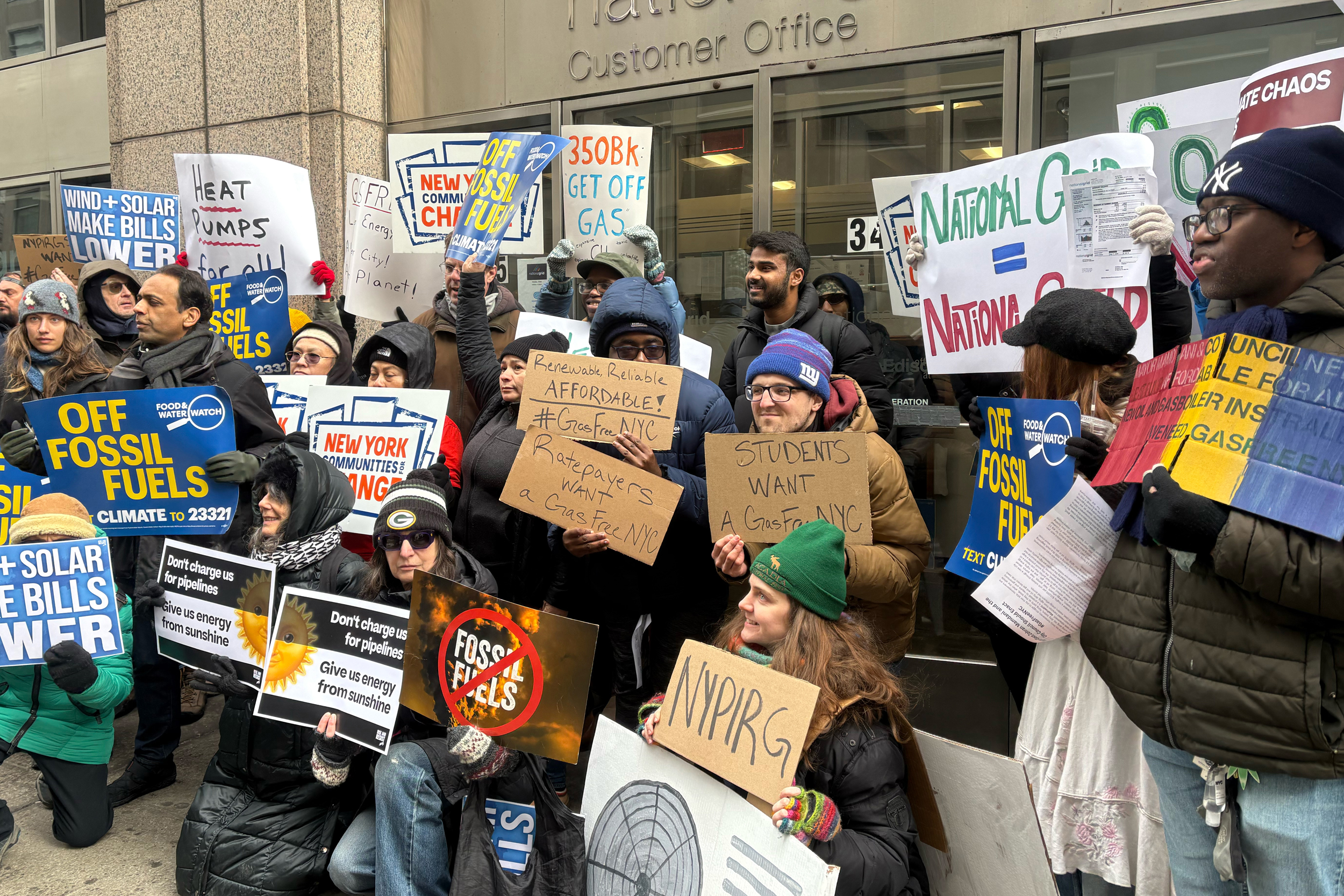
Advocates have fought for a change to this rule for years. The New York Home Energy Affordable Transition (HEAT) Act would repeal the obligation to serve, allowing utilities to offer heating alternatives and redirect funds for pipe replacement to building decarbonization. Lawmakers in the state Senate have approved the legislation for three consecutive years, but it has stalled in the state Assembly.
The bill would also compel state regulators to figure out how to cap utility bills at 6 percent of household income.
In addition to this legislation, advocates have called for limits on gas system investments. Currently, state utilities forecast that pipe replacement will account for 40 percent of annual investment through 2028, according to the state energy plan.
Other options to avoid a financial crisis for the utilities include rethinking the rate calculation process and accounting for the potential decline in the value of new pipes before the end of their service life.
“There’s no clear solution, and there’s no easy solution, I can say that with a fair amount of confidence,” Murphy said, “because a lot of the investments have already been made.”
Currently, Con Edison has a program to electrify homes near some of its gas mains, and National Grid has been encouraged by regulators in recent years to consider alternatives to gas hookups—but change has been slow.
According to Drury, Con Edison continues to exceed state regulators’ requirements for non-pipe alternatives. So far, he said, Con Edison has facilitated electrification and gas disconnection for 63 buildings.
The spokesperson for National Grid said that the utility offers customers who are served by a leak-prone pipe “an opportunity to convert to a non-gas alternative … in exchange for an incentive.” If all the affected customers accept, the pipe replacement is avoided.
Both utilities have considered the possibility that natural gas demand could decrease considerably. But if more people in the city and Long Island shift from heating oil to gas, demand could increase, they note.
Climate change, which is bringing fewer cold days, could also impact utilities’ natural gas businesses. Even without widespread electrification, Con Edison projects that its natural gas and steam businesses could each experience sizable declines in winter energy sales.
The future of the state’s gas infrastructure is hard to predict, especially as New York Gov. Kathy Hochul has said she does not believe the state will meet its climate goals. And the gas system investments are already underway.
“Those numbers don’t get any better over time,” Van Nostrand said. “Regulators need to be aware, if you don’t get out, the longer you wait, the worse it’s going to be.”
About This Story
Perhaps you noticed: This story, like all the news we publish, is free to read. That’s because Inside Climate News is a 501c3 nonprofit organization. We do not charge a subscription fee, lock our news behind a paywall, or clutter our website with ads. We make our news on climate and the environment freely available to you and anyone who wants it.
That’s not all. We also share our news for free with scores of other media organizations around the country. Many of them can’t afford to do environmental journalism of their own. We’ve built bureaus from coast to coast to report local stories, collaborate with local newsrooms and co-publish articles so that this vital work is shared as widely as possible.
Two of us launched ICN in 2007. Six years later we earned a Pulitzer Prize for National Reporting, and now we run the oldest and largest dedicated climate newsroom in the nation. We tell the story in all its complexity. We hold polluters accountable. We expose environmental injustice. We debunk misinformation. We scrutinize solutions and inspire action.
Donations from readers like you fund every aspect of what we do. If you don’t already, will you support our ongoing work, our reporting on the biggest crisis facing our planet, and help us reach even more readers in more places?
Please take a moment to make a tax-deductible donation. Every one of them makes a difference.
Thank you,

Lauren Dalban
Reporter, New York City
Lauren Dalban is a New York City-based reporter with a background in local journalism. A former ICN fellow, she now covers environmental issues in all five boroughs. Originally from London, she earned a B.A. in History and English from the University of Virginia, and an M.S. from Columbia Graduate School of Journalism.