

From Baltimore to Honolulu, cities have made their views clear: Oil companies whose pollution contributed to climate change should be financially responsible for a fair share of the consequences.
Fossil fuel companies, in turn, have argued that cities and states should have no ability to sue them over climate impacts in state courts. Instead, they’ve said in legal filings that such disputes should be resolved in federal courts, a venue legal experts say is much more open to their arguments.
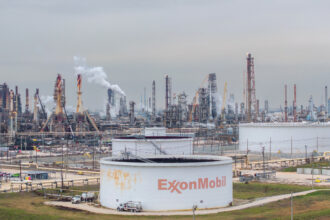
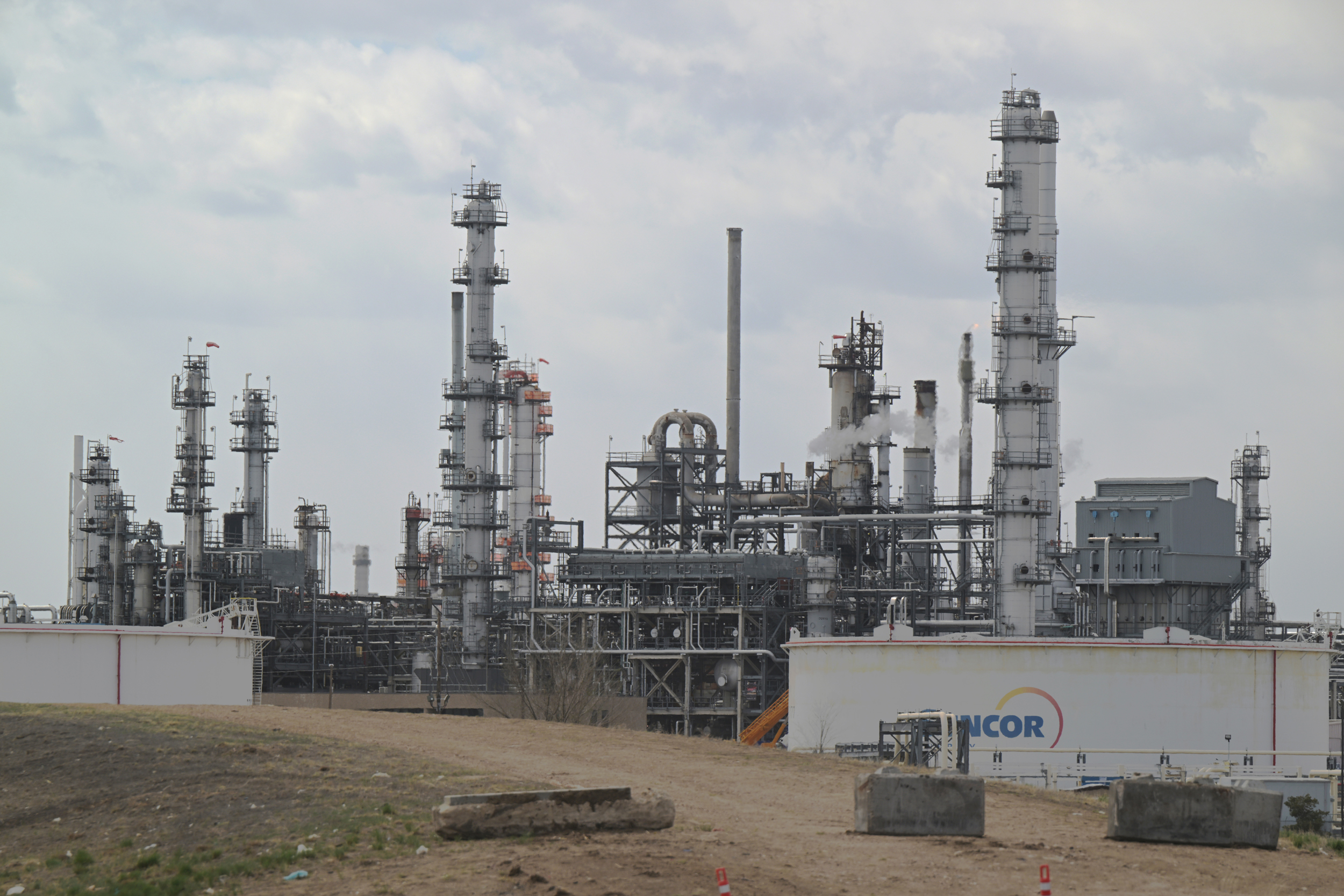
In May 2025, the Colorado Supreme Court ruled that a climate impact lawsuit filed by city and county officials in Boulder against two of the state’s largest oil companies, Suncor Energy and ExxonMobil, could move forward. Now, nine months later, the U.S. Supreme Court has announced it will hear the fossil fuel companies’ appeal of that decision.
“The oil companies have tried every avenue to delay our climate accountability case or move it to an out of state court system,” Boulder County Commissioner Ashley Stolzmann said in a statement about the decision. “As everyone continues to face rising costs that put budgets under pressure, we must hold oil companies accountable for the significant harm they’ve caused our communities. We move forward with renewed energy and purpose for the next step toward justice.”
Boulder Mayor Aaron Brockett said he believes the case is fundamentally about fairness.
“Boulder is already experiencing the effects of a rapidly warming climate, and the financial burden of adaptation should not fall solely on local taxpayers,” he said in a statement. “We are hopeful that the Supreme Court will not hamstring our right under Colorado law to seek the resources needed to build a safer, more resilient future.”
Neither Suncor Energy nor ExxonMobil responded to a request for comment on the court’s decision to hear their appeal.
In its suit, lawyers for Boulder wrote that Suncor Energy and ExxonMobil should be held responsible for their “substantial role that their production, promotion, refining, marketing and sale of fossil fuels played and continues to play in causing, contributing to and exacerbating alteration of the climate.”
Ultimately, the suit argues, the companies’ actions damaged “the health, safety and welfare” of residents.
“Climate change will bring more (and more serious) heat waves, wildfires, droughts, and floods to the State, as well as myriad other consequences caused by rapidly rising temperatures,” the lawsuit said. “The damages will only multiply as climate change worsens. Plaintiffs are taking reasonable and necessary measures to address and abate these impacts within their respective jurisdictions.”
Exxon and Suncor argued the case should be dismissed, but both lower courts and the Colorado Supreme Court ruled that the suit could move forward.
Both the Trump administration and more than two dozen states filed briefs encouraging justices to take the case.
In a brief to the court, Alabama Attorney General Steve Marshall wrote on behalf of a group of 26 states, all with Republican attorneys general, arguing that cities like Boulder have no legal authority to sue polluters based elsewhere for their conduct.
“There is no world in which Boulder, Colorado, gets to set global energy policy,” the brief said in part.
The Supreme Court has previously resisted efforts to have the justices weigh in on climate litigation playing out across the country, but its announcement that it will hear the Colorado case signals a shift in that hands-off approach.
This is not the only climate litigation on the court’s docket. In January, justices heard arguments on whether the court should overturn a landmark, $745 million jury verdict against Chevron, which Louisiana jurors found had contributed to the decline of the state’s shoreline and wetlands. That case is still pending, with a decision expected sometime before the court’s summer recess.
This story is funded by readers like you.
Our nonprofit newsroom provides award-winning climate coverage free of charge and advertising. We rely on donations from readers like you to keep going. Please donate now to support our work.
Donate NowBoth the Colorado and Louisiana cases could have significant impacts for dozens of climate lawsuits making their way through courts across the country.
The Supreme Court’s decision to take the case has also resurfaced concerns about the participation of Justice Samuel Alito, given his significant fossil fuel investments.
According to disclosures, fossil fuel stocks make up nearly one-quarter of the value of Alito’s individual stock holdings.
Last year, the high court’s clerk notified parties in the Louisiana climate case that Alito would not participate due to his financial interest in ConocoPhillips, the parent company of Burlington Resources Oil and Gas Co., one of the firms accused of extensive wetlands destruction that has left Louisiana more vulnerable to costly storms.
Alito owns stock in ConocoPhillips, part of a portfolio that includes seven fossil fuel industry equity investments he holds that are worth from $60,000 to $245,000, according to his most recent financial disclosure. ConocoPhillips is not a petitioner in the Boulder case, but it is facing climate litigation in other cases that could be affected by a Supreme Court ruling, including a lawsuit by the state of California. The decision about whether to recuse in any particular case is largely left up to the individual justices themselves.
Even as the Supreme Court considers the issue, fossil fuel interests are also seeking relief through another avenue: Congress.
Republican attorneys general from across the country have advocated for Congress to pass a law shielding fossil fuel companies from climate litigation—a law with immunity provisions similar to those applicable to gun manufacturers.
Carly Phillips, a research scientist with the Science Hub for Climate Litigation at the Union of Concerned Scientists, said that Exxon and Suncor’s appeal and their effort to gain legal immunity both amount to an effort to keep the truth about the fossil fuel industry and its impacts from public view and out of reach of public accountability.
“This development represents one piece of a multipronged campaign by Big Oil to avoid accountability, including through efforts to secure sweeping legal immunity and to undermine the role of climate science in the courtroom,” she said. “Justice has been delayed for far too long—it’s time these cases are heard in state court on their merits.”
Oral arguments in the case have not yet been scheduled.
About This Story
Perhaps you noticed: This story, like all the news we publish, is free to read. That’s because Inside Climate News is a 501c3 nonprofit organization. We do not charge a subscription fee, lock our news behind a paywall, or clutter our website with ads. We make our news on climate and the environment freely available to you and anyone who wants it.
That’s not all. We also share our news for free with scores of other media organizations around the country. Many of them can’t afford to do environmental journalism of their own. We’ve built bureaus from coast to coast to report local stories, collaborate with local newsrooms and co-publish articles so that this vital work is shared as widely as possible.
Two of us launched ICN in 2007. Six years later we earned a Pulitzer Prize for National Reporting, and now we run the oldest and largest dedicated climate newsroom in the nation. We tell the story in all its complexity. We hold polluters accountable. We expose environmental injustice. We debunk misinformation. We scrutinize solutions and inspire action.
Donations from readers like you fund every aspect of what we do. If you don’t already, will you support our ongoing work, our reporting on the biggest crisis facing our planet, and help us reach even more readers in more places?
Please take a moment to make a tax-deductible donation. Every one of them makes a difference.
Thank you,

Lee Hedgepeth
Reporter, Alabama
Lee Hedgepeth is Inside Climate News’ Alabama reporter. Raised in Grand Bay, Alabama, a small town on the Gulf Coast, Lee holds master’s degrees in community journalism and political development from the University of Alabama and Tulane University. Lee is the founder of Tread, a newsletter of Southern journalism, and has also worked for news outlets across Alabama, including CBS 42, Alabama Political Reporter and the Anniston Star. His reporting has focused on issues impacting members of marginalized groups, including homelessness, poverty, and the death penalty. His award-winning journalism has appeared in publications across the country and has been cited by the New York Times, the Wall Street Journal and the Washington Post, among others.