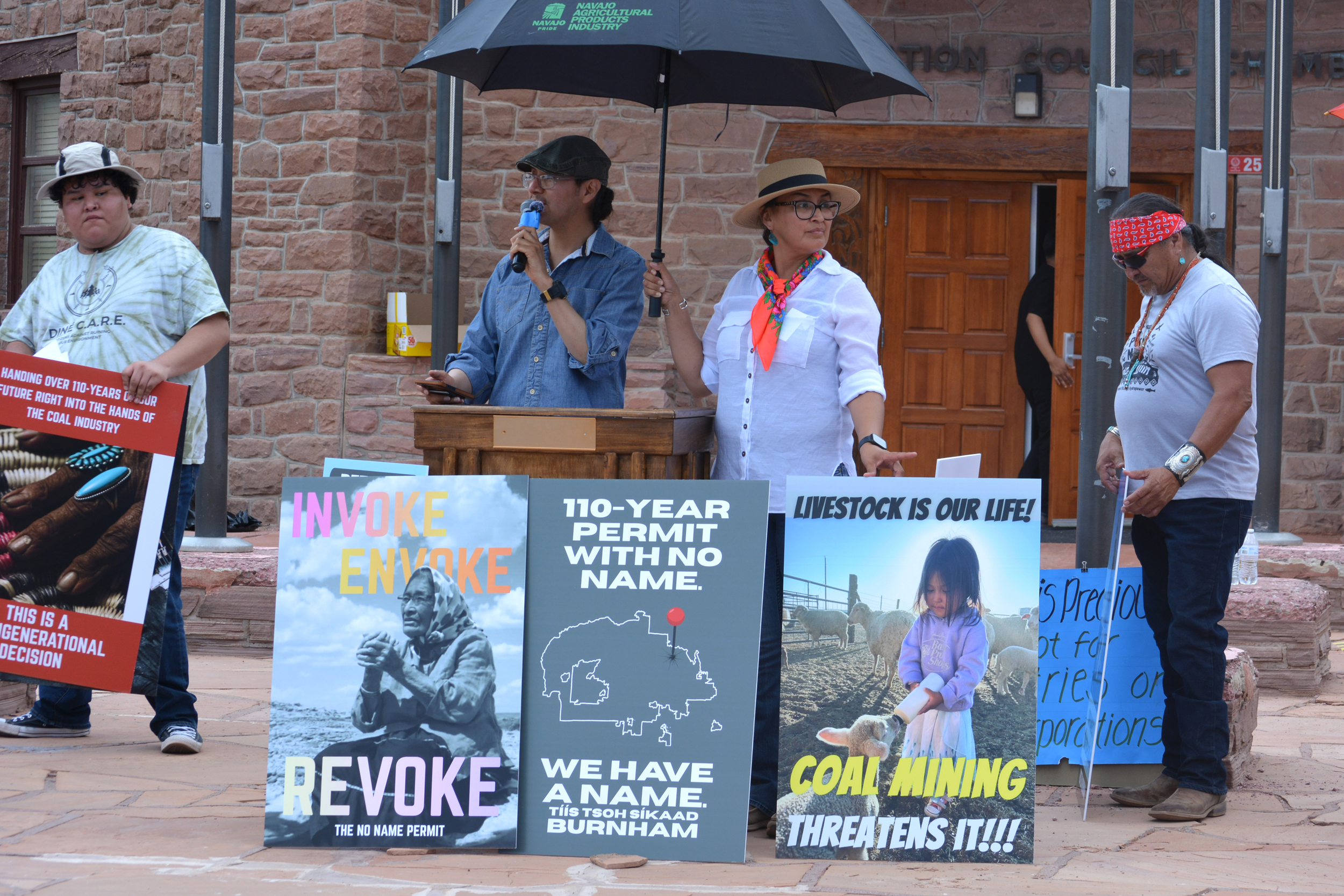


Window Rock, Ariz.—Dáilan Long has fought coal developments before. So he wasn’t surprised to see a permit application to expand operations at a coal mine on the Navajo Nation near the Burnham Chapter community, where he lives.
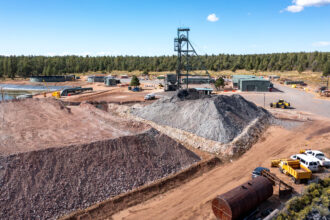
But Long was surprised by the scope: a massive 11,526-acre enlargement of the mine, which is currently 16,744 acres, with a potential life of 110 years. Navajo Mine’s No Name permit application is one of the biggest proposed coal mine expansions in the country.
And he was surprised by the lack of details about the project’s impact on his community as well as the limited opportunity the public would be given to comment on it by the federal agency reviewing the project, the Office of Surface Mining Reclamation and Enforcement (OSMRE).
Residents would just get one chance to give their thoughts on the expansion during the federal permitting process, and that would be in the “public scoping period,” when no environmental reviews have been done assessing the potential impacts.
Little has been shared with the community, residents say, despite their concerns about the expansion’s impacts on water, air quality and grazing. Some residents have even been notified their homes fall within the boundary of the proposed expansion and the individuals affected will have to move, though few details have been shared on where to or how they would be compensated. The final environmental impact statement is slated to arrive at the end of August, after which OSMRE will issue its record of decision. The OSMRE would not comment on the community’s concerns.
Under the National Environmental Policy Act, public comment periods typically last for 30 days, and occur at several points in the process—during scoping, after the release of a draft environmental impact statement or assessment and then again after the final environmental impact report is issued. But under new policies from the Trump administration, some projects needing federal approval are getting far less public review.
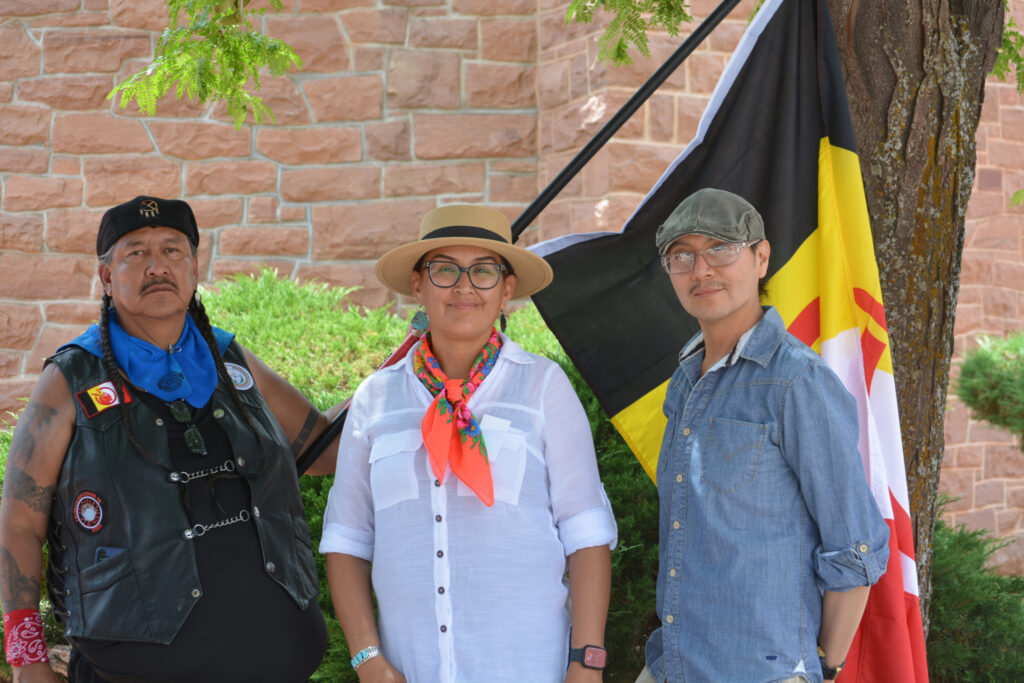
“Our community has not benefited from any part of the Navajo coal mine so far,” Long said during a press conference held at Window Rock, the capitol of the Navajo Nation, to raise attention about the permit and to call on the tribal council to stop the project. “And we have yet to be told about the specific details of how we’re going to be impacted.”
The Navajo Mine, located 22 miles from Farmington, New Mexico, acquired its mineral lease in 1957, and operations at the mine began in 1962. It’s now owned by the Navajo Transitional Energy Company (NTEC), which the tribal government formed in 2013 and acquired the mine shortly thereafter. It extracts 4.7 million tons of coal annually and is the sole supplier for the Four Corners Power Plant.
That plant, operated by Arizona Public Service Company, is slated to close down in 2031, with a possible extension to 2038. Where the coal mined by NTEC at the Navajo Mine would go afterwards remains unclear, according to documentation from OSMRE.
The 11,526 acres of land and mineral rights at stake are owned by the Navajo Nation, but mining them requires a permit from OSMRE under the Surface Mining Control and Reclamation Act of 1977.
That permit requires renewal every five years, and when the operation expands into new leased areas, according to documents from NTEC.
NTEC did not respond to a request for comment. But in a letter sent to Navajo President Buu Nygren on April 2, NTEC CEO Vern Lund said there is a “considerable amount of misinformation” being spread by opponents of the mine.
At the time of the letter, NTEC had given 83 presentations to communities about the expansion and obtained 22 resolutions from various agency councils and community chapters in support of it (the letter states the Burnham chapter supports the expansion, but the chapter passed a resolution in February opposing it). OSMRE has already and will conduct more studies on the impacts to water and cultural resources, as well as grazing leaseholders, during permitting, and those effects would be minimal, Lund wrote.
The mine, and NTEC, Lund wrote, “is an extension of tribal sovereignty over the Navajo Nation’s resources.”
Ultimately, Lund wrote, the permit “is an administrative necessity,” and “NTEC’s ongoing operations at the Navajo Mine are central to NTEC’s ability to fulfill its mission of exercising the Navajo Nation’s sovereignty over its natural resources, and to assist in building the Navajo Nation’s economic stability.”
President Buu Nygren was up for reelection this year, but lost during this week’s primary election. Nygren’s term has been controversial. Multiple ethics complaints have been filed against him, and he was accused of sexual harassment by the Navajo Nation’s vice president, but cleared of wrong doing in an investigation from the tribe’s attorney general’s office.
In January, OSMRE began a 20-day public comment period on the project. The agency held just one public scoping meeting on Jan. 29 at the Burnham Chapter House in New Mexico.
“[OSMRE’s] responsibility is to ensure that permitting decisions for surface mining on Indian lands are transparent and grounded in sound environmental analysis,” said Lanny E. Erdos, OSMRE’s director, in the press release initially announcing the agency was seeking public comment. “Through the public scoping process, we are inviting input that will help ensure any action taken respects the sovereignty of the Navajo people, their land, and considers the potential environmental and community impacts.”
But transparency about the project has been hard to come by, Burnham residents told Inside Climate News.
“Their idea of community participation was providing a single USB drive with the permit information for 500 people,” Long said. That USB drive was provided during the public scoping meeting and contained thousands of pages of information, all in English, a language many elders in the community do not speak. Internet access in Burnham is limited, hindering residents’ ability to research the project.
In February, the Burnham Chapter formally opposed the expansion via a resolution.
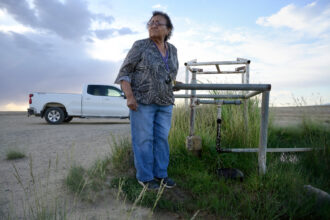
“One of our biggest concerns is how is it going to impact our community?” said Joni Lapahie, the Burnham Chapter manager, who is also Long’s sister. “Is this something we’re going to be trying to clean up decades from now, like we did with the uranium?”
This story is funded by readers like you.
Our nonprofit newsroom provides award-winning climate coverage free of charge and advertising. We rely on donations from readers like you to keep going. Please donate now to support our work.
Donate NowThe Navajo Nation has a long legacy of dealing with the pollution and subsequent impacts from mining and energy development. Tribal members continue to face increased rates of cancer, autoimmune conditions and cardiovascular diseases linked to the pollution from mining, largely for uranium and coal, in the region, according to various studies done across the reservation.
Lapahie said she has asked NTEC, the Navajo Council and officials at public meetings to conduct studies on the Navajo Mine’s health impacts on her community, but none have been done, despite former coal miners in Burnham dealing with black lung disease.
The expansion, Lapahie and others worry, will only worsen those threats.
Five generations of Lapahie’s family have lived in the area. The lineage of the sheep they herd can be traced back to when her family returned from the Long Walk, the forced relocation of thousands of Diné families in the 1860s. She worries all of that is at risk.
“This is not just the permit: it’s a decision that risks the community’s health, their environment, their culture, and their sovereignty,” said Devon Norberto, an organizer for DINÉ C.A.R.E., a local nonprofit focused on environmental justice issues across the Navajo Nation. “It threatens to displace families and destroy sacred sites. This is a burden no community should ever bear.”
The mine’s expansion would also affect some community members’ homes.
Neither NTEC or OSMRE have said how many homes may be affected, and there aren’t up to date maps available to analyze the impacts to properties, Lapahie and Long said. But some community members have been notified their homes could be affected. In the letter sent by the NTEC CEO, “there are only three potentially affected permittees living within the No Name Permit boundary,” and the permit would not lead to their removal until the time comes to mine the area where they are located.
Gilfred Hogue is one of them. His father built the home where he now lives in 1972. He’s been told if the expansion is approved, he will have to be relocated. But no information has been given on where he would move to, he said, or what compensation would be provided for his property and expenses.
His bigger concern, however, are his family members buried on the property, including his mother, who fought the last major coal development in the area, the Desert Rock proposal.
“I want to defend her right there, no matter what. I want to defend that one,” he said. “They can take whatever they want, but not my mother.”
About This Story
Perhaps you noticed: This story, like all the news we publish, is free to read. That’s because Inside Climate News is a 501c3 nonprofit organization. We do not charge a subscription fee, lock our news behind a paywall, or clutter our website with ads. We make our news on climate and the environment freely available to you and anyone who wants it.
That’s not all. We also share our news for free with scores of other media organizations around the country. Many of them can’t afford to do environmental journalism of their own. We’ve built bureaus from coast to coast to report local stories, collaborate with local newsrooms and co-publish articles so that this vital work is shared as widely as possible.
Two of us launched ICN in 2007. Six years later we earned a Pulitzer Prize for National Reporting, and now we run the oldest and largest dedicated climate newsroom in the nation. We tell the story in all its complexity. We hold polluters accountable. We expose environmental injustice. We debunk misinformation. We scrutinize solutions and inspire action.
Donations from readers like you fund every aspect of what we do. If you don’t already, will you support our ongoing work, our reporting on the biggest crisis facing our planet, and help us reach even more readers in more places?
Please take a moment to make a tax-deductible donation. Every one of them makes a difference.
Thank you,

Wyatt Myskow
Reporter, Phoenix
Wyatt Myskow covers drought, biodiversity and the renewable energy transition throughout the Western U.S. Based in Phoenix, he previously reported for The Arizona Republic and The Chronicle of Higher Education. Wyatt has lived in the Southwest since birth and graduated from Arizona State University with his bachelor’s degree in journalism.