

Agriculture is widely known to be the biggest driver of forest destruction globally, especially in sprawling, high-profile ecosystems like the Amazon rainforest.
But new research published this week finds that non-forest ecosystems—the world’s grasslands, savannas and wetlands—are being devoured for agriculture at nearly four times the rate as forests. As with forests, the primary driver is livestock.
“The goal of this research was really just to understand where in the world this is happening,” said Elise Mazur, a researcher with the Land and Carbon Lab at the World Resources Institute and one of the report’s authors. “We know where deforestation is occurring. But we were less sure about where non-forest ecosystems are being lost.”
The study, published in Proceedings of the National Academy of Sciences, is a unique attempt to analyze which types of agriculture are forcing the conversion of natural ecosystems on a global scale, and then to attribute that conversion to demand for specific commodities.
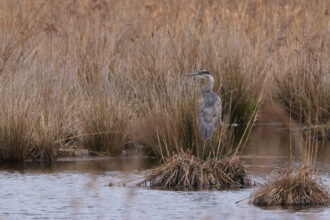
Making that link is critical. Grasslands occupy more of the world’s surface than any other ice-free land, and store a significant chunk of terrestrial carbon—about 34 percent compared to 39 percent for forests. Researchers say they are the most at-risk ecosystems on Earth and yet get relatively little policy attention relative to forests, largely because their disappearance and the causes behind it are not as well understood. Wetlands are being converted to crop and pastureland at about half the rate of dry lands, the researchers found, but are especially important climate sinks.
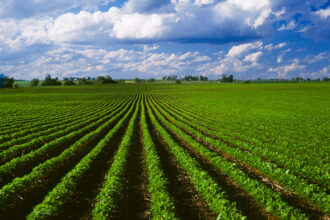
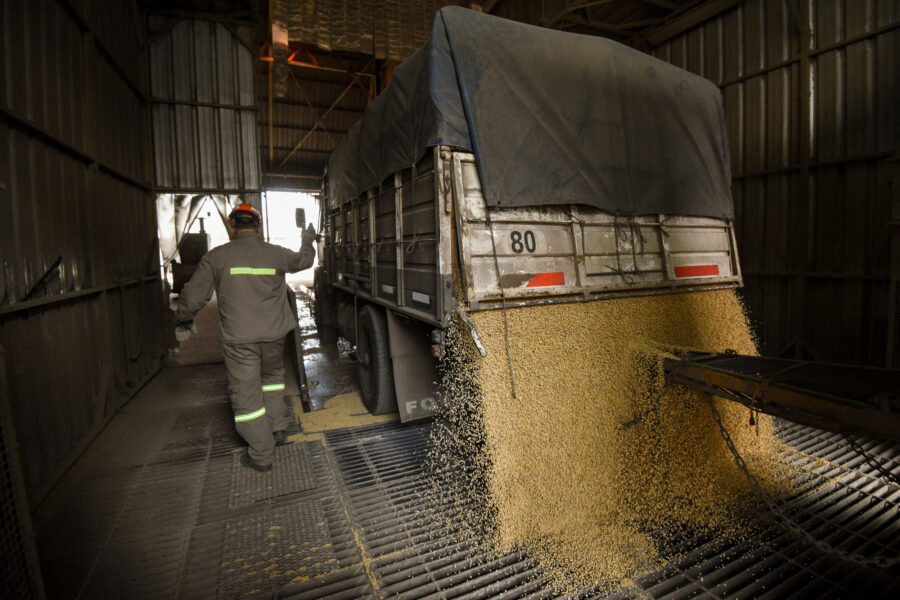
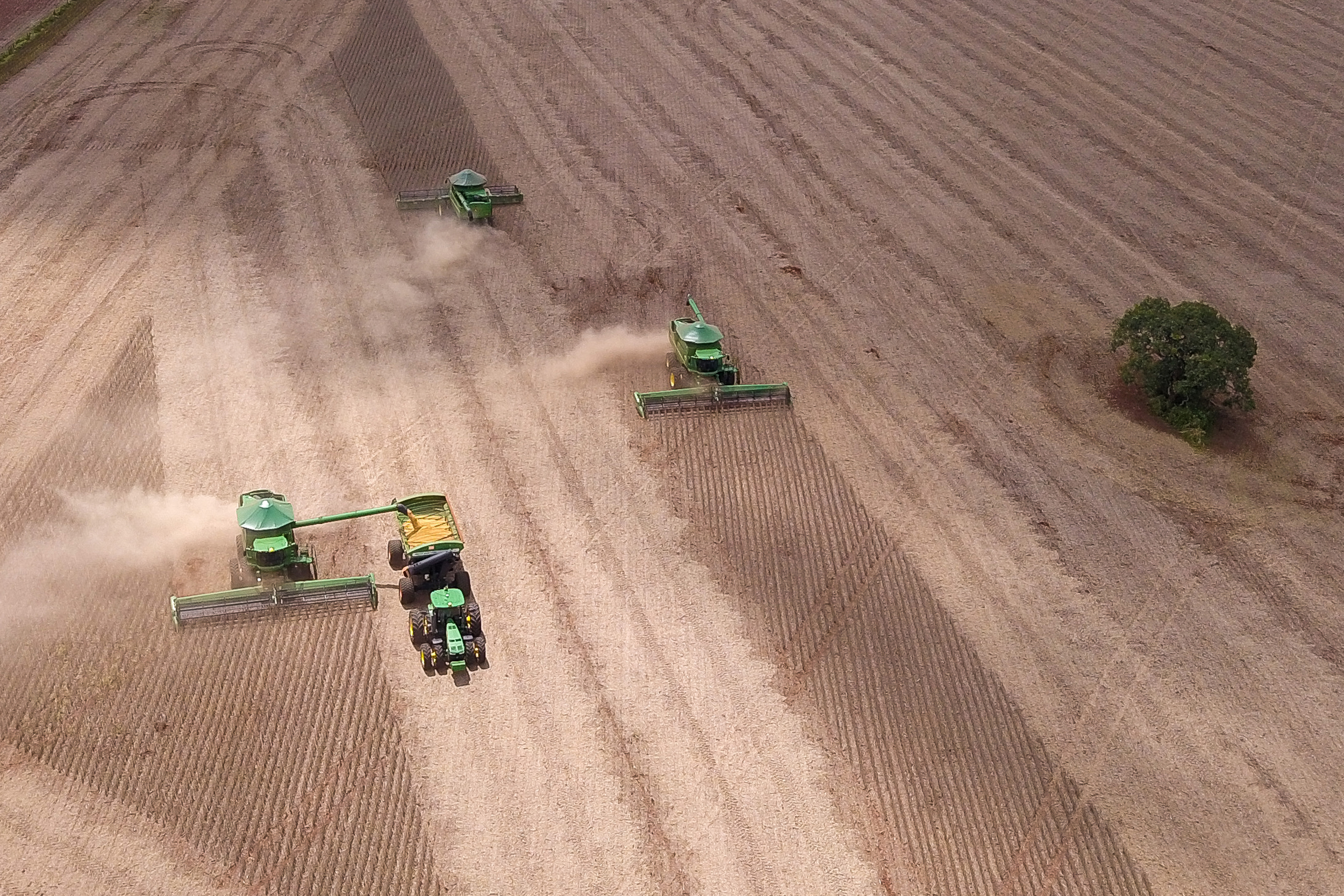
The new study, which looked at the period from 2005 to 2020, found that, as with forests, the biggest driver of grassland loss is livestock production—from both conversion into pasture for grazing and cropland for growing feed. About half of all non-forest conversion is to pasture, 27 percent to cropland for food and 17 percent into cropland to grow feed for animals, including corn and soybeans.
“When you add together how much conversion there is to pasture and to cropland that’s being used for animal feed, that’s the majority of the conversion,” Mazur said. “The takeaway from this is that livestock and dairy play an outsized role in the loss of our non-forest ecosystems when compared to other commodities or foods.”
The researchers found that feed for livestock accounted for more than one-third of the overall cropland conversion globally, yet in certain growing regions, including Brazil, Argentina, the United States and China, that percentage reached more than 50 percent. More than 30 percent of those crops were destined for export, driven by demand for livestock-based food elsewhere.
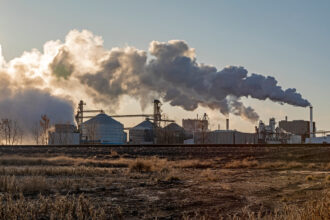
The researchers found that biofuels, including ethanol and biodiesel, were major drivers of grassland loss, especially in countries with high demand linked to policy incentives, like the Renewable Fuel Standard in the U.S. So while just over 12 percent of global non-forest land was converted to cropland for biofuels, that percentage rose to 28 percent in the U.S., mostly in the prairies of the upper Midwest.
Globally, food consumption accounted for 54 percent of cropland-driven land conversion, meaning much of the world’s finite arable land mass is not being used directly for calories.
The team behind the report, which also included experts from the Rainforest Alliance and Germany’s Senckenberg Biodiversity and Climate Research Centre, looked at extensive land-use change datasets, then used models to allocate the change to particular types of agriculture. Finally, they analyzed trade data to determine how market demand contributed to the conversion.
Land-use datasets, historically, have been unable to adequately distinguish pasture from cropland, mostly because one is often converted to the other and existing measurements aren’t sensitive enough to determine the difference. That has meant previous research either focused just on conversion to cropland or failed to capture the distinction between pasture and cropland or the contribution of particular agricultural commodities to either.
Mazur says her hope is that policy makers and companies that depend on agricultural commodities start to incorporate grassland conversion into conservation targets. Some voluntary initiatives, including the Soy Moratorium in Brazil, were credited with reducing deforestation there, but also pushed agricultural expansion into the neighboring Cerrado, a vast savanna.
“Both forests and non-forest ecosystems need to be addressed together,” Mazur said. “If you only look at one, it can push the conversion to another ecosystem. We want to make sure that any policy or voluntary targets address all natural ecosystems.”
About This Story
Perhaps you noticed: This story, like all the news we publish, is free to read. That’s because Inside Climate News is a 501c3 nonprofit organization. We do not charge a subscription fee, lock our news behind a paywall, or clutter our website with ads. We make our news on climate and the environment freely available to you and anyone who wants it.
That’s not all. We also share our news for free with scores of other media organizations around the country. Many of them can’t afford to do environmental journalism of their own. We’ve built bureaus from coast to coast to report local stories, collaborate with local newsrooms and co-publish articles so that this vital work is shared as widely as possible.
Two of us launched ICN in 2007. Six years later we earned a Pulitzer Prize for National Reporting, and now we run the oldest and largest dedicated climate newsroom in the nation. We tell the story in all its complexity. We hold polluters accountable. We expose environmental injustice. We debunk misinformation. We scrutinize solutions and inspire action.
Donations from readers like you fund every aspect of what we do. If you don’t already, will you support our ongoing work, our reporting on the biggest crisis facing our planet, and help us reach even more readers in more places?
Please take a moment to make a tax-deductible donation. Every one of them makes a difference.
Thank you,