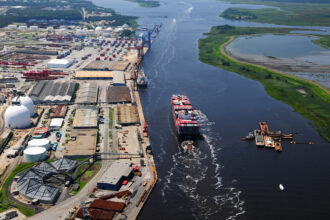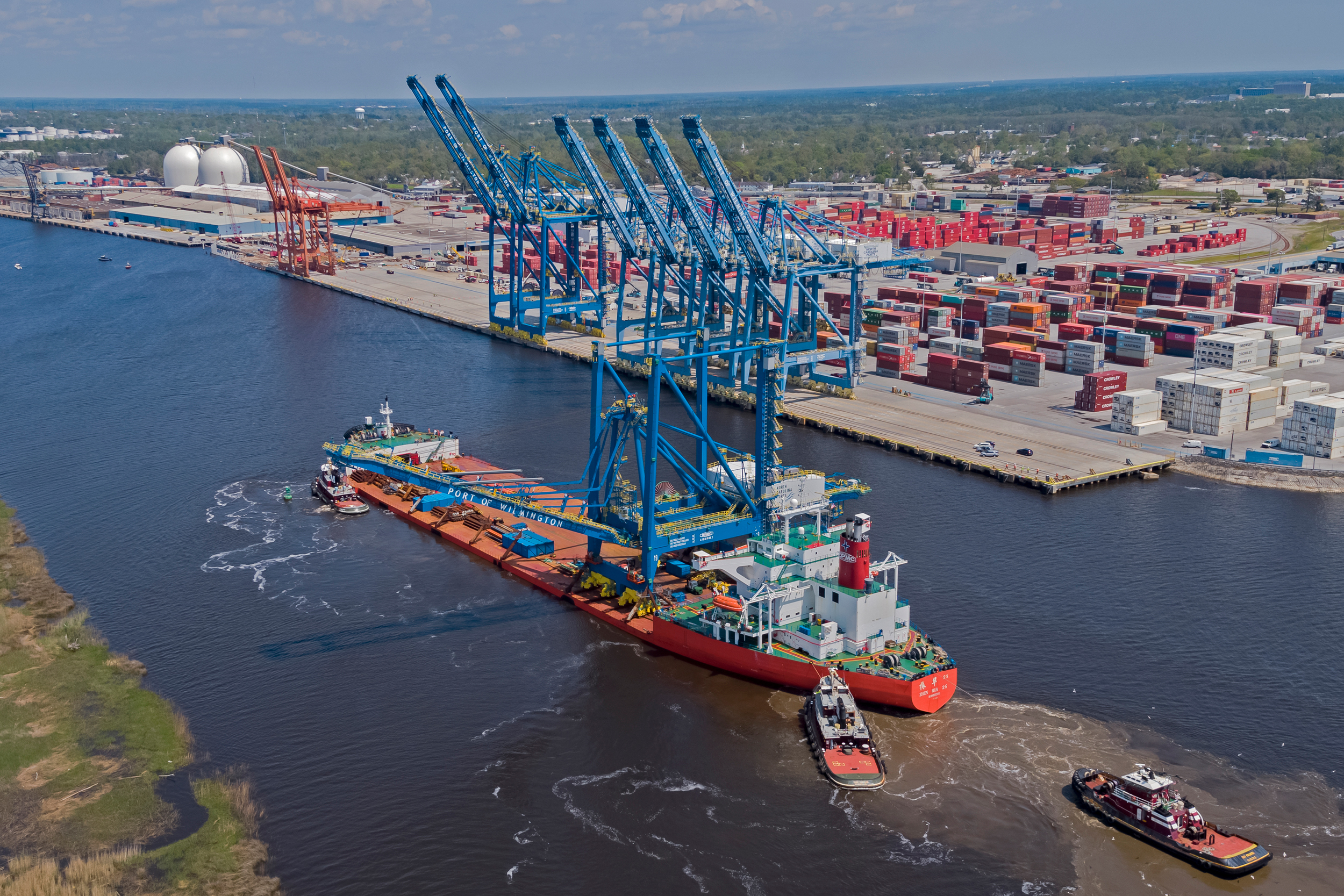


The U.S. Army Corps of Engineers can’t dredge 28 miles of the Wilmington Harbor as planned, after North Carolina environmental regulators determined the billion-dollar proposal would be inconsistent with the state’s coastal management policies.
Tancred Miller, director of the Division of Coastal Management (DCM), sent a letter Feb. 24 to the Corps that listed reasons for the formal objection, including cumulative flooding impacts, sea level rise, PFAS contamination, the loss of freshwater wetlands and fisheries.
The Corps also failed to provide adequate information in its Draft Environmental Impact Statement about how it would mitigate many of the harms incurred by the project, according to the letter.
“The DEIS lacks rigorous analysis of net economic benefits and does not adequately evaluate potential economic losses associated with environmental degradation,” Miller wrote.
The Corps had proposed dredging the Lower Cape Fear River from Bald Head Island to the Port of Wilmington to accommodate larger ships. The dredging would have deepened the shipping channel to 47 feet, from its current depth of 42 feet, and widened some segments by as much as 500 feet—equivalent of one and a half football fields.
The dredging would have excavated 35 million cubic yards of silt and sand from the riverbed, half of which would have been placed on hundreds of acres of public beaches, bird-nesting islands and imperiled wetlands. The Cape Fear River is heavily contaminated with several types of PFAS, also known as forever chemicals; the dredged material would almost certainly have contained the toxic compounds.
The cost of the project is estimated at $1.2 billion, a quarter of which—$339 million—would have been paid by the state.
Kerri Allen, coastal management program director for the N.C. Coastal Federation, has been among the project’s critics.
“Seeing DCM take a close look at the potential impacts to our water quality, fisheries, and wetlands—and thoughtfully weigh those resource concerns in this decision—is a powerful reminder of what responsible stewardship looks like,” she said. “Our coast is more than projects and infrastructure; it’s the natural systems and livelihoods that depend on them. When those impacts are carefully considered and public voices are heard, we’re making progress toward protecting what makes our coast so special.”
The state issued the objection as part of the Federal Consistency Determination under the Coastal Zone Management Act. It authorizes DCM to review any proposed federal action within the state’s 20 coastal counties that could affect uses and resources in those areas. If DCM finds a proposal inconsistent with coastal policies, it can issue an objection.
States are authorized to object to a proposal if a federal agency fails to provide sufficient information.
“This objection is disappointing as we … felt we had been working hand in hand with all our state and federal partners and resource agencies since we began coordination regarding this project nearly three and a half years ago,” said Jed Cayton, an Army Corps of Engineers public affairs specialist, in a written statement.
The Corps had assembled a technical working group, which included state agencies, to resolve concerns about the proposal. “Given all the integration and engagement throughout this process, the objection provided at this late stage in the process is disconcerting,” Cayton said.
The State Ports Authority proposed the dredging project in 2020 and claimed it was essential for the viability of the port. However, federal reviewers criticized the findings, some of which they said were unfounded or downplayed the environmental harms.
Congress subsequently authorized more than $839 million for the project, but it wouldn’t release the funding until the problems with the State Port’s proposal were addressed, in this case, by the Corps.
Over the past three and a half years, environmental advocates, residents, state agencies and local governments submitted hundreds of written and verbal comments to the Corps and DCM opposing the project.
As part of the consistency review process, DCM told the Corps it was concerned about many aspects of the proposal, particularly regarding the lack of information about how the Corps would mitigate the many environmental harms.
This story is funded by readers like you.
Our nonprofit newsroom provides award-winning climate coverage free of charge and advertising. We rely on donations from readers like you to keep going. Please donate now to support our work.
Donate NowEarlier this year, the Corps and the State Ports Authority requested DCM pause their deliberations on the consistency review while they tried to address those concerns. During the hiatus, Miller wrote, the Corps and DCM met to discuss possible resolutions that would allow state officials to find the project was consistent with coastal policy.
By Feb.16, the Corps hadn’t provided DCM the requested information, but asked the agency to restart the consistency review process and complete it by Feb. 24.
“This decision is welcome news for the people of Wilmington and beyond who cherish the lower Cape Fear River and its surrounding natural areas,” said Ramona McGee, senior attorney at the Southern Environmental Law Center, in a written statement. “The Lower Cape Fear is already threatened by sea-level rise and industrial pollution—we shouldn’t be further damaging this special place with an unnecessary and costly project. We are grateful that the Division of Coastal Management is standing up for North Carolina’s coastal resources and communities.”
The Corps could still enter mediation with the state environmental officials. Should that happen, DCM “is committed to working with the Corps to try to resolve the concerns detailed in this objection,” Miller wrote.
Cayton said the Corps “remains committed” to finishing documentation related to the project, including a final Environmental Impact Statement. The Corps and the State Ports Authority are also determining how to proceed, but it’s too early in the process to give a specific date for completion, he said.
About This Story
Perhaps you noticed: This story, like all the news we publish, is free to read. That’s because Inside Climate News is a 501c3 nonprofit organization. We do not charge a subscription fee, lock our news behind a paywall, or clutter our website with ads. We make our news on climate and the environment freely available to you and anyone who wants it.
That’s not all. We also share our news for free with scores of other media organizations around the country. Many of them can’t afford to do environmental journalism of their own. We’ve built bureaus from coast to coast to report local stories, collaborate with local newsrooms and co-publish articles so that this vital work is shared as widely as possible.
Two of us launched ICN in 2007. Six years later we earned a Pulitzer Prize for National Reporting, and now we run the oldest and largest dedicated climate newsroom in the nation. We tell the story in all its complexity. We hold polluters accountable. We expose environmental injustice. We debunk misinformation. We scrutinize solutions and inspire action.
Donations from readers like you fund every aspect of what we do. If you don’t already, will you support our ongoing work, our reporting on the biggest crisis facing our planet, and help us reach even more readers in more places?
Please take a moment to make a tax-deductible donation. Every one of them makes a difference.
Thank you,

Lisa Sorg
Reporter, North Carolina
Lisa Sorg is the North Carolina reporter for Inside Climate News. A journalist for 30 years, Sorg covers energy, climate environment and agriculture, as well as the social justice impacts of pollution and corporate malfeasance.
She has won dozens of awards for her news, public service and investigative reporting. In 2022, she received the Stokes Award from the National Press Foundation for her two-part story about the environmental damage from a former missile plant on a Black and Latinx neighborhood in Burlington. Sorg was previously an environmental investigative reporter at NC Newsline, a nonprofit media outlet based in Raleigh. She has also worked at alt-weeklies, dailies and magazines. Originally from rural Indiana, she lives in Durham, N.C.