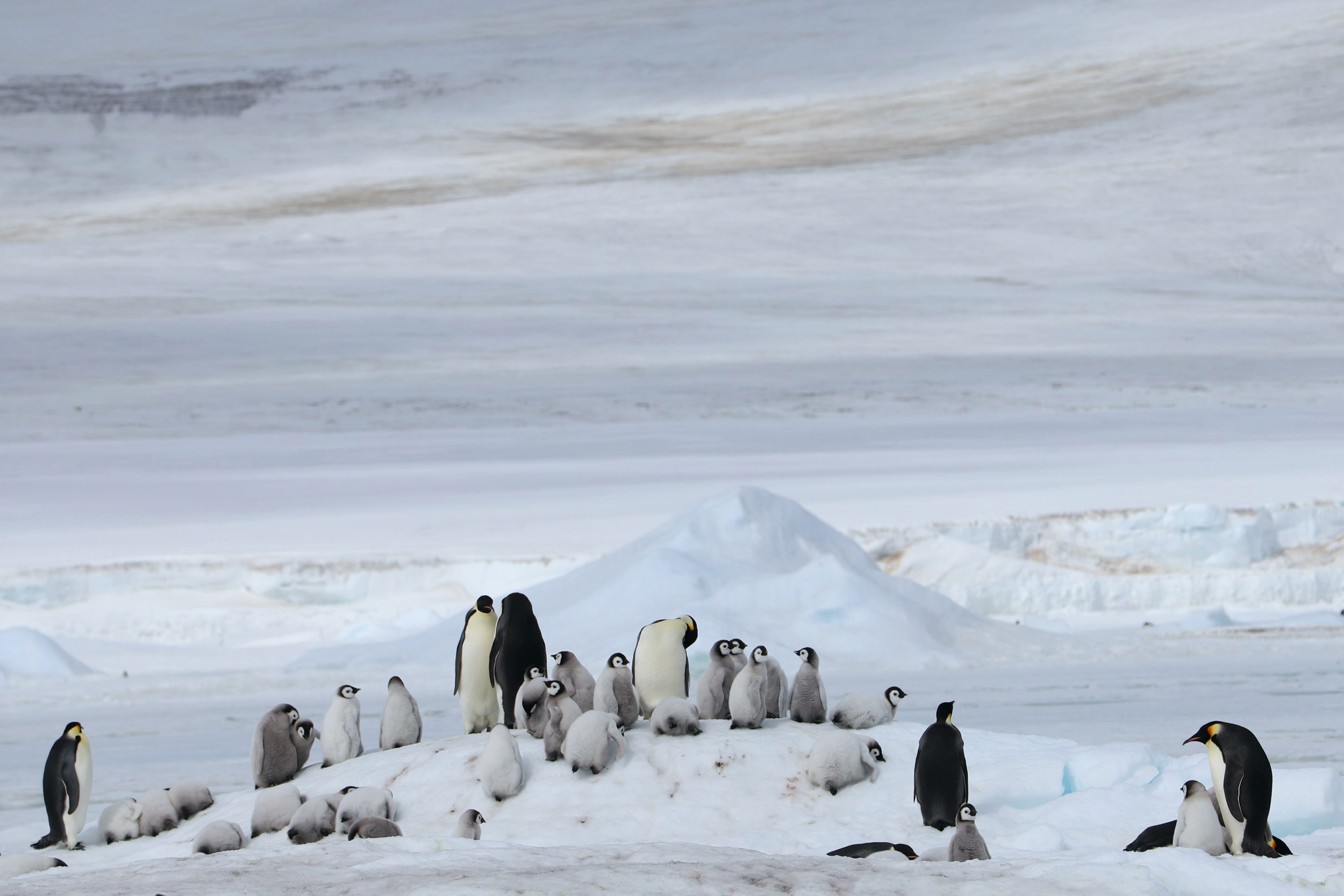


Each year for millennia, emperor penguins have molted on coastal sea ice that remained stable until late summer—a haven during a span of several weeks when it’s dangerous for the mostly aquatic birds to enter the ocean to feed because they are regrowing their waterproof feathers.
But as overall Antarctic sea ice extent dwindled to record lows in recent years, some of the frozen penguin platforms melted earlier than ever, forcing the weakened birds into smaller areas and possibly to a premature death in the icy ocean, according to British Antarctic Survey geographer Peter Fretwell, who helped pioneer counting emperor penguins from space.
“The sea ice wasn’t just breaking up into floes. In some years, it just disintegrated,” said Fretwell, author of a paper published Wednesday that matched the fate of the molting penguins against the ice records for seven years.
“If they go into the water half-molted, they’re really in trouble because they just aren’t very strong,” he said, adding that the birds lose up to half their body weight during molt. If they enter the water before they’re ready, they can get hypothermia and become easy prey for leopard seals.
The United States listed emperor penguins as an endangered species in 2022 because multiple studies project large population losses, to near-extinction, this century under continued warming. About a quarter-million breeding pairs remain worldwide, scattered among colonies ringing Antarctica.
The study is the first to map emperor penguin molting sites from satellite images. It shows that a major molting refuge along the Marie Byrd Land coast of West Antarctica has shrunk dramatically during recent record-low sea-ice years, potentially a major new threat to a species that is losing habitat to climate change at different life stages, he said.
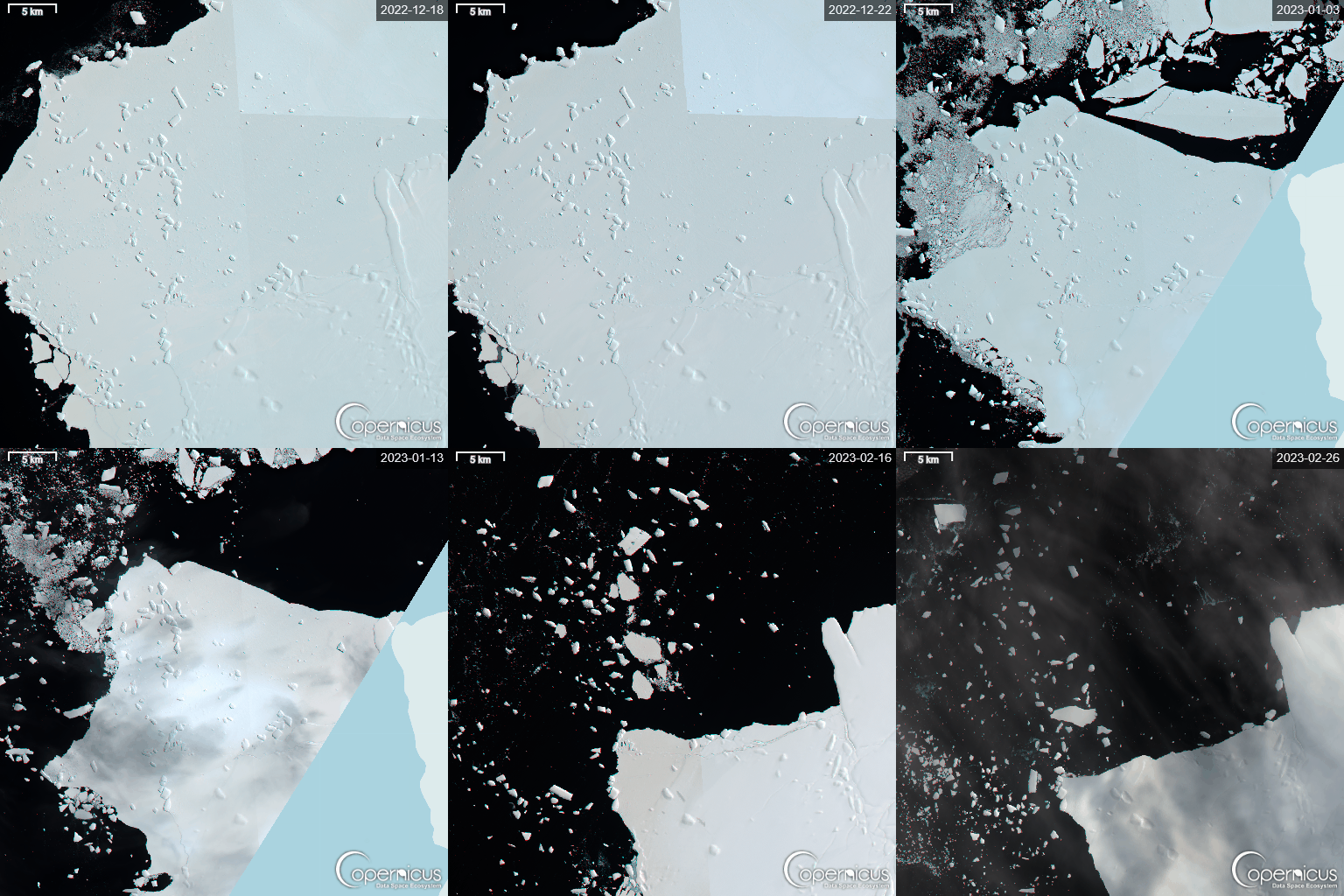
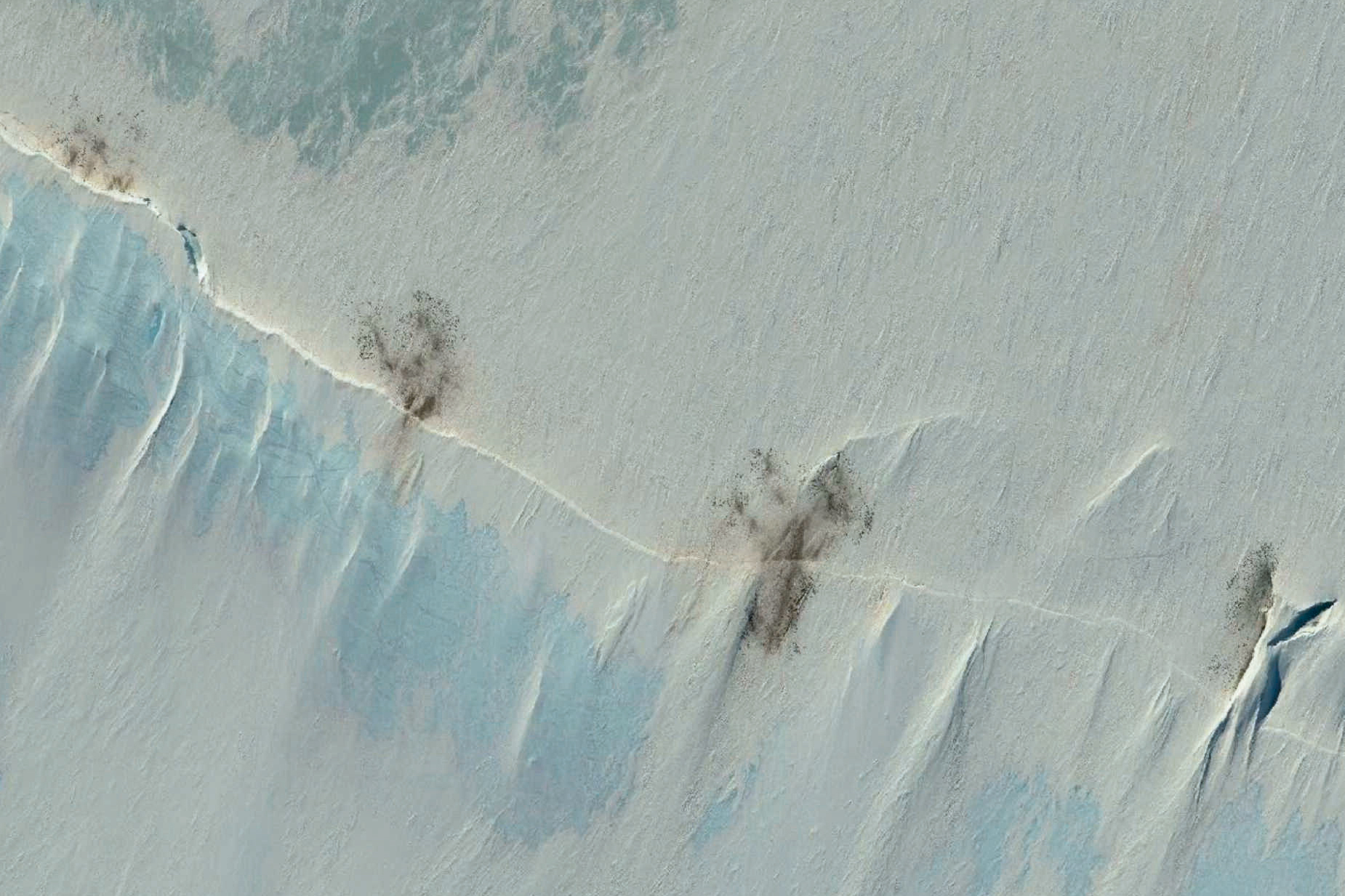
Studying satellite images from 2018 to 2024, Fretwell mapped molting emperor penguin groups along about 200 kilometers of the Marie Byrd Land coast, using the birds’ characteristic guano stains to pinpoint the groups. The analysis showed that in low-ice years the coastal ice platform shattered before molting ended.
The impacts may already be tangible. Before 2022, over 100 groups of penguins had been identified in the same region, but in 2025, only 25 small groups were visible in satellite images, despite more favorable sea ice conditions.
Some research suggests that the recent sharp decline in sea ice marks a permanent shift in the Antarctic climate, he said.
The remote section of West Antarctica where he studied the penguins has lost more sea ice than anywhere else. Until a few years ago, researchers rarely reached the coast, which is why there are no research stations in the region. But now, in some years, almost all of it melts in summer.
“Nobody predicted it,” he said, describing the meltdown as a sudden re-adjustment after warmer ocean water thinned the ice from below, and worked its way near the surface until “the sea ice basically went,” he said.
Previous research by Fretwell and others has already suggested that climate-driven ice loss is disrupting breeding by penguins and other seabirds. The new analysis suggests that climate-driven ice loss may also be affecting adult molting, potentially exposing large portions of the global emperor penguin population to a new mortality risk.
This life stage is critical because it is the only period when adults are unable to enter the ocean safely to feed. And emperor penguins don’t reproduce prolifically, so adults must survive for years to sustain populations.
Very Little Good News for Penguins
If adult survival is threatened, population declines can accelerate, said Rose Foster-Dyer, a marine ecologist at the University of Canterbury in New Zealand, who researches emperor penguin global population trends.
Foster-Dyer said the Marie Byrd Land sector has long been a predictable molting stronghold because of its persistent summer sea ice, meaning its recent decline could force birds to shift habitats, if suitable ice remains.
This story is funded by readers like you.
Our nonprofit newsroom provides award-winning climate coverage free of charge and advertising. We rely on donations from readers like you to keep going. Please donate now to support our work.
Donate Now“There has been very little good news for emperor penguins recently, and they appear to be under great pressure through the changes to their sea ice environment,” she said. Ship-based surveys over many years suggest that penguins have historically chosen areas with high sea ice concentrations as their redoubts for molting. “If the sea ice becomes less reliable,” she said, “the birds will need to adapt and change their behaviours to survive.”
Over the past three million years, emperor penguins have survived by adapting to huge sea ice variations, but they need somewhere to go, as well as time to adapt. That process typically unfolds over millennia during slow planetary climate cycles.
But the speed of human-caused warming is a new and different shock to Earth’s climate and to emperor penguins, Fretwell said.
“They’re probably the slowest-adapting bird species genetically, and unless they’ve got it in the locker already, they’re not going to adapt.”
That means if emperor penguins don’t already have the biological capacity to adapt to swift sea ice loss, they are unlikely to evolve fast enough now.
It’s still not certain what happened to the penguins on the coast of Marie Byrd Land, and Fretwell said he hopes that at least some of them were able to find new molting areas.
But he’s been in touch with another group of researchers counting emperors at breeding sites, and he’s afraid their new data from the latest census will confirm the bad news.
Fretwell said it’s possible that huge numbers of penguins perished after entering the Southern Ocean before they had replaced their waterproof feathers. “If this has happened,” he said, “the situation for emperors as a species is even worse than we thought.”
About This Story
Perhaps you noticed: This story, like all the news we publish, is free to read. That’s because Inside Climate News is a 501c3 nonprofit organization. We do not charge a subscription fee, lock our news behind a paywall, or clutter our website with ads. We make our news on climate and the environment freely available to you and anyone who wants it.
That’s not all. We also share our news for free with scores of other media organizations around the country. Many of them can’t afford to do environmental journalism of their own. We’ve built bureaus from coast to coast to report local stories, collaborate with local newsrooms and co-publish articles so that this vital work is shared as widely as possible.
Two of us launched ICN in 2007. Six years later we earned a Pulitzer Prize for National Reporting, and now we run the oldest and largest dedicated climate newsroom in the nation. We tell the story in all its complexity. We hold polluters accountable. We expose environmental injustice. We debunk misinformation. We scrutinize solutions and inspire action.
Donations from readers like you fund every aspect of what we do. If you don’t already, will you support our ongoing work, our reporting on the biggest crisis facing our planet, and help us reach even more readers in more places?
Please take a moment to make a tax-deductible donation. Every one of them makes a difference.
Thank you,

Bob Berwyn
Reporter, Austria
Bob Berwyn is an Austria-based reporter who has covered climate science and international climate policy for more than a decade. Previously, he reported on the environment, endangered species and public lands for several Colorado newspapers, and also worked as editor and assistant editor at community newspapers in the Colorado Rockies.