

With an icy white sheet still blanketing much of the Eastern United States after an intense storm this week, it’s hard to imagine a future with less snow at this time of year.
But over time, climate change has decreased snowpack by as much as 20 percent per decade in parts of the Northern Hemisphere.
This trend is already causing trouble for the Winter Olympics and Paralympics, global events reliant on snow to succeed. In a landmark 2024 study, researchers found that potential host locations are dwindling as temperatures warm.
Just weeks before this year’s Olympics-Paralympics events kick off in Italy, scientists published a follow-up study analyzing how the games can adapt. The most effective option: shifting when they are held.
Disappearing snow isn’t just affecting Olympians. Around the world, the warming climate is shortening recreational ski and snowboarding seasons, which could have cascading impacts for the towns that have long relied on this winter economy.
Winter Tradition: For more than a century, the Winter Olympics have been held almost every four years in snowy cities across the globe, from the first games in Chamonix, France, to the most recent in Beijing. The Paralympic Games take place in the same location shortly afterward.
Olympic competitions such as alpine skiing and snowboarding are dependent on consistent snowpack. Rapid levels of warming across the Northern Hemisphere disrupt that. In 2010, Vancouver saw a record-warm January, partially due to the weather phenomenon known as El Niño, and had to drive and fly in enough snow to fill 20 Big Bens for snowboarding and freestyle skiing events, The Christian Science Monitor reports.
Warm weather also threatens the quality of the snow already on the ground, as shown at Russia’s Sochi Olympics and Paralympics in 2014, which saw an uptick in injury rates compared with the previous games as athletes struggled in the slush.
With this in mind, the International Olympic Committee, which governs the games, recently commissioned a study to determine future climate impacts. Researchers analyzed 93 regions around the world that have previously hosted the Olympic Winter and Paralympic Games to determine whether they’d be “climate-reliable” by the 2050s. Under the most likely emissions scenario, only 52 locations met the criteria for the Olympics and just 22 for the Paralympics, given that it is slightly later in the season, according to their 2024 study.
But there are ways to adapt, according to co-author Daniel Scott, a climate expert at the University of Waterloo in Ontario. In a follow-up study published last week, Scott and his colleagues found that shifting both the Olympic and Paralympic Games to earlier dates could increase the number of climate-suitable host countries, particularly for the Paralympics.
As I reported last year, experts have called for a similar timing change for the Summer Olympics to reduce the risk of extreme heat, which has harmed both competitors’ and fans’ health in recent years.
It’s a seemingly simple shift but comes with its own set of complexities. Moving the Winter Olympics up a few weeks would mean the games are happening right after the holiday season. Cities may struggle to secure pre-games housing, ensure there’s sufficient infrastructure or find volunteers shortly after Christmas.
Another added nuisance, according to Scott: Television rights. Broadcasters and advertisers pay billions and plan years ahead for the rights to air the Olympics, which provides the financial foundation for the games. Changing the time of the games could disrupt this model, at least in the short term.
Artificial Snow Paradox: Other experts have pointed out that organizers must reckon with the Olympic Games’ own rampant emissions to secure a future less threatened by climate change. Cities often raze ecosystems to build new facilities, companies use copious amounts of energy to broadcast the competitions and people travel from around the world in carbon-emitting planes to spectate.
For the Winter Games specifically, environmentalists are concerned about the growing amount of artificial snow cities must pump out to supplement dwindling natural supplies. In 2022, Beijing made Olympics history as the first host to use artificial snow almost exclusively to support the games.
It was a mammoth task. China pulled water from key reservoirs to help create a wintry snowscape in a historically dry city. But critics said the effort strained water supplies for local communities, disrupted soil and plant growth and used large amounts of energy.
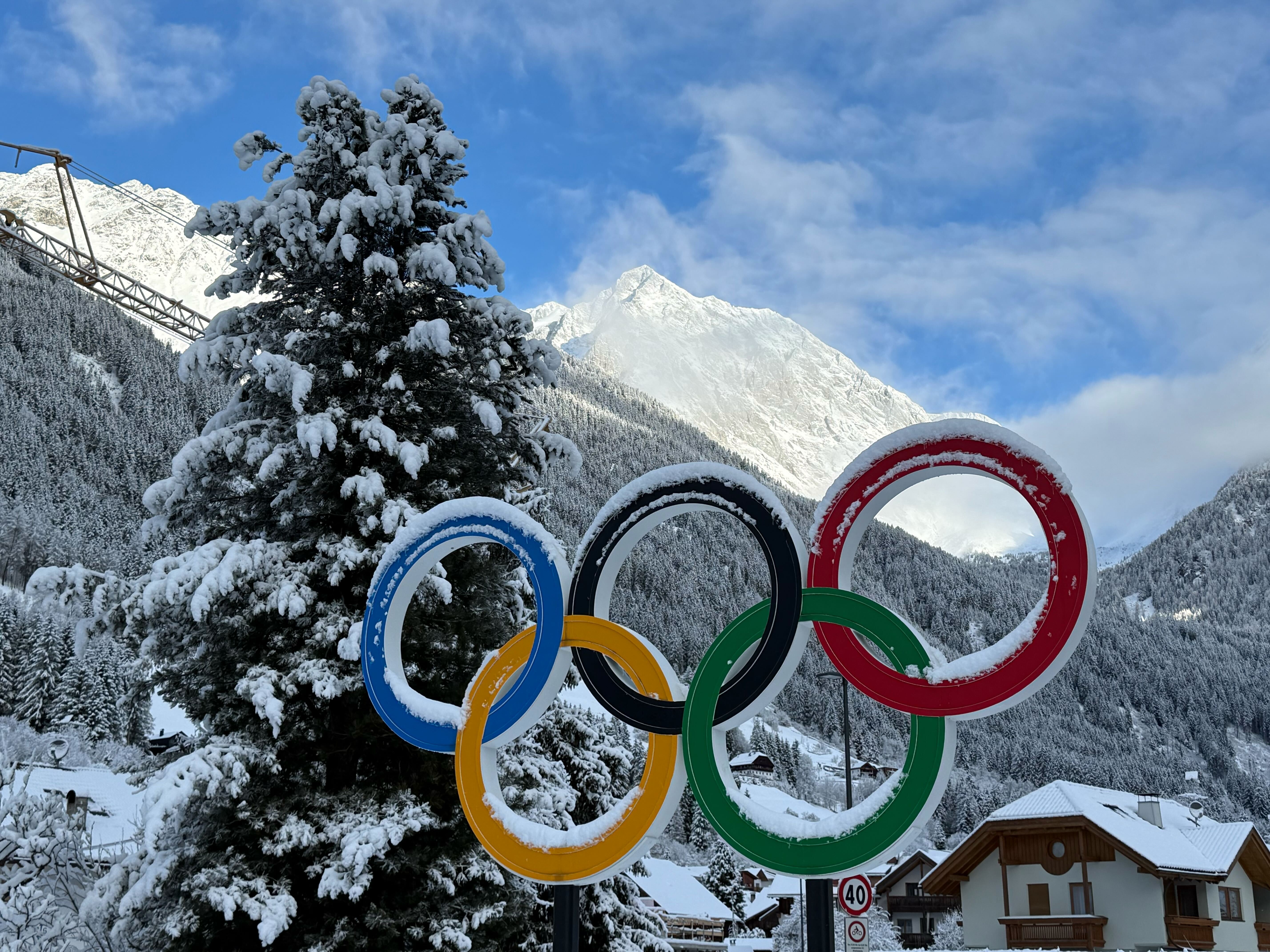
The 2026 Olympics is in a snowier region, the Italian Alps. But still, the International Olympic Committee told The Associated Press it has produced more than 2 million cubic yards of artificial snow for the upcoming games.
Since the last time Italy’s Cortina d’Ampezzo hosted in 1956, February temperatures have warmed in the area by 6.4 degrees Fahrenheit, according to a recent analysis by the nonprofit Climate Central.
Environmentalists have pointed to the climate feedback loop this can create: As places pump out more artificial snow, the emissions from this process—if fossil fuels are used—feed the climate change that will reduce future natural snowpack.
Artificial snow is becoming similarly important for recreational winter sports as temperatures rise. Some resorts have taken to stockpiling snow under giant insulating blankets to keep it from melting during warmer seasons, Wired reports. But these efforts are costly, and it may soon become untenable for certain regions in the Northern Hemisphere, including some parts of the Northeastern U.S. such as New York and Pennsylvania, to save or make enough snow for a lucrative ski operation.
Scott told me there will be “winners and losers” as winter resort towns face global warming.
“As some of those businesses go out of business, the others are there to pick up market share, if demand stays the same,” he said.
Though Scott recognizes the energy and water required to produce machine-made snow, he believes the sustainability of snowmaking gets a bit of a bad rep. He noted that up to 90 percent of the water is returned to the same watershed once the snow melts, and the process likely has a lower emissions footprint than traveling farther to ski elsewhere or flying to watch the Olympics.
Nonetheless, winter sport enthusiasts—professional and amateur—will have to adapt to changing conditions. A survey of Olympic winter athletes and coaches from 20 countries found 90 percent had concerns about how climate change will affect the future of their sport.
“When it comes to the Olympics, you hope you deliver [athletes] the best conditions possible,” Scott said. “These people have trained their whole damn lives for these things.”
More Top Climate News
The United States officially withdrew from the Paris Agreement on Tuesday, one year after President Donald Trump began the process of dropping out from the global climate accord, Lisa Friedman reports for The New York Times. Trump made the same move during his first term, but the U.S. rejoined under former President Joe Biden. This latest withdrawal means the world’s second-largest greenhouse gas emitter is the only major country no longer part of the Paris Agreement, and reflects a broader effort by the Trump administration to stop fighting climate change.
The National Park Service recently dismantled a slavery exhibit at Independence National Historical Park in Philadelphia following a March executive order from Trump directing the agency to remove materials that “inappropriately disparage Americans,” Tassanee Vejpongsa and Graham Lee Brewer report for The Associated Press. Many local residents were outraged at the removal, which they say is “whitewashing history.” The city of Philadelphia last Thursday filed a lawsuit to stop the permanent removal. The Trump administration is also pulling materials discussing climate change and racial inequality at other national park sites around the country.
A Washington Post analysis found that breathing the polluted air in Delhi is equivalent to smoking roughly nine cigarettes a day. Coal power plants, millions of vehicles and rampant industrialization have made India’s capital region one of the most polluted in the world, particularly in the winter. Millions of people are harmed by this toxic air, which can increase cancer risk, worsen respiratory problems and cause reproductive issues.
“If there were jobs back in my village, I would go back,” Vijay Kumar, a steel factory worker in Delhi, told The Post. “I’m here because I don’t have a choice.”
Postcard from … New York
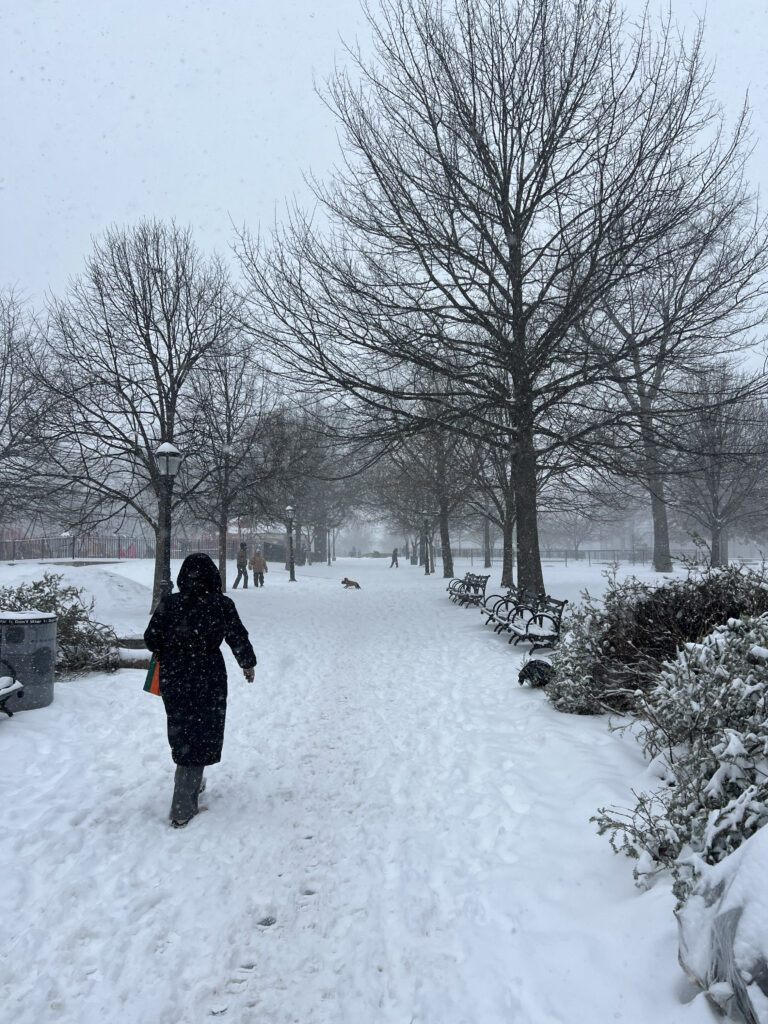
For this week’s installment of “Postcards From,” ICN reader Calli sent a photo from her snow day at a local park in New York City this past weekend.
“My roommate and I braved the winter storm on Sunday and trekked to our neighborhood park in Brooklyn,” Calli said. “It’s not as glamorous as the famous New York City parks—Central and Prospect—but it was still magical to see everything enveloped in thick blankets of snow. We stood for a while and watched the snowflakes tumble down. Before we left, a husky pranced by, having the best day of her life.”
Today’s Climate readers, we want to feature your photos from nature, whether you are in a city, suburb, forest or anywhere in between. For us folks trapped inside during the coldest days of winter, sunny photos from beach vacations would also be much appreciated. Please send your photos to [email protected].
About This Story
Perhaps you noticed: This story, like all the news we publish, is free to read. That’s because Inside Climate News is a 501c3 nonprofit organization. We do not charge a subscription fee, lock our news behind a paywall, or clutter our website with ads. We make our news on climate and the environment freely available to you and anyone who wants it.
That’s not all. We also share our news for free with scores of other media organizations around the country. Many of them can’t afford to do environmental journalism of their own. We’ve built bureaus from coast to coast to report local stories, collaborate with local newsrooms and co-publish articles so that this vital work is shared as widely as possible.
Two of us launched ICN in 2007. Six years later we earned a Pulitzer Prize for National Reporting, and now we run the oldest and largest dedicated climate newsroom in the nation. We tell the story in all its complexity. We hold polluters accountable. We expose environmental injustice. We debunk misinformation. We scrutinize solutions and inspire action.
Donations from readers like you fund every aspect of what we do. If you don’t already, will you support our ongoing work, our reporting on the biggest crisis facing our planet, and help us reach even more readers in more places?
Please take a moment to make a tax-deductible donation. Every one of them makes a difference.
Thank you,

Kiley Price
Reporter
Kiley Price is a reporter at Inside Climate News, with a particular interest in wildlife, ocean health, food systems and climate change. She writes ICN’s “Today’s Climate” newsletter, which covers the most pressing environmental news each week.
She earned her master’s degree in science journalism at New York University, and her bachelor’s degree in biology at Wake Forest University. Her work has appeared in National Geographic, Time, Scientific American and more. She is a former Pulitzer Reporting Fellow, during which she spent a month in Thailand covering the intersection between Buddhism and the country’s environmental movement.