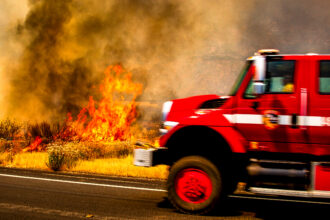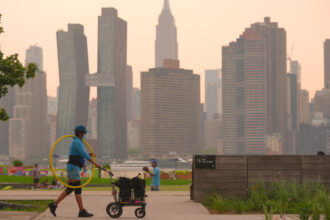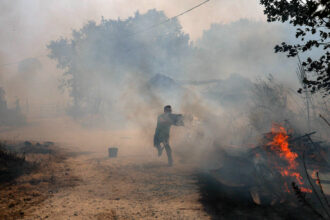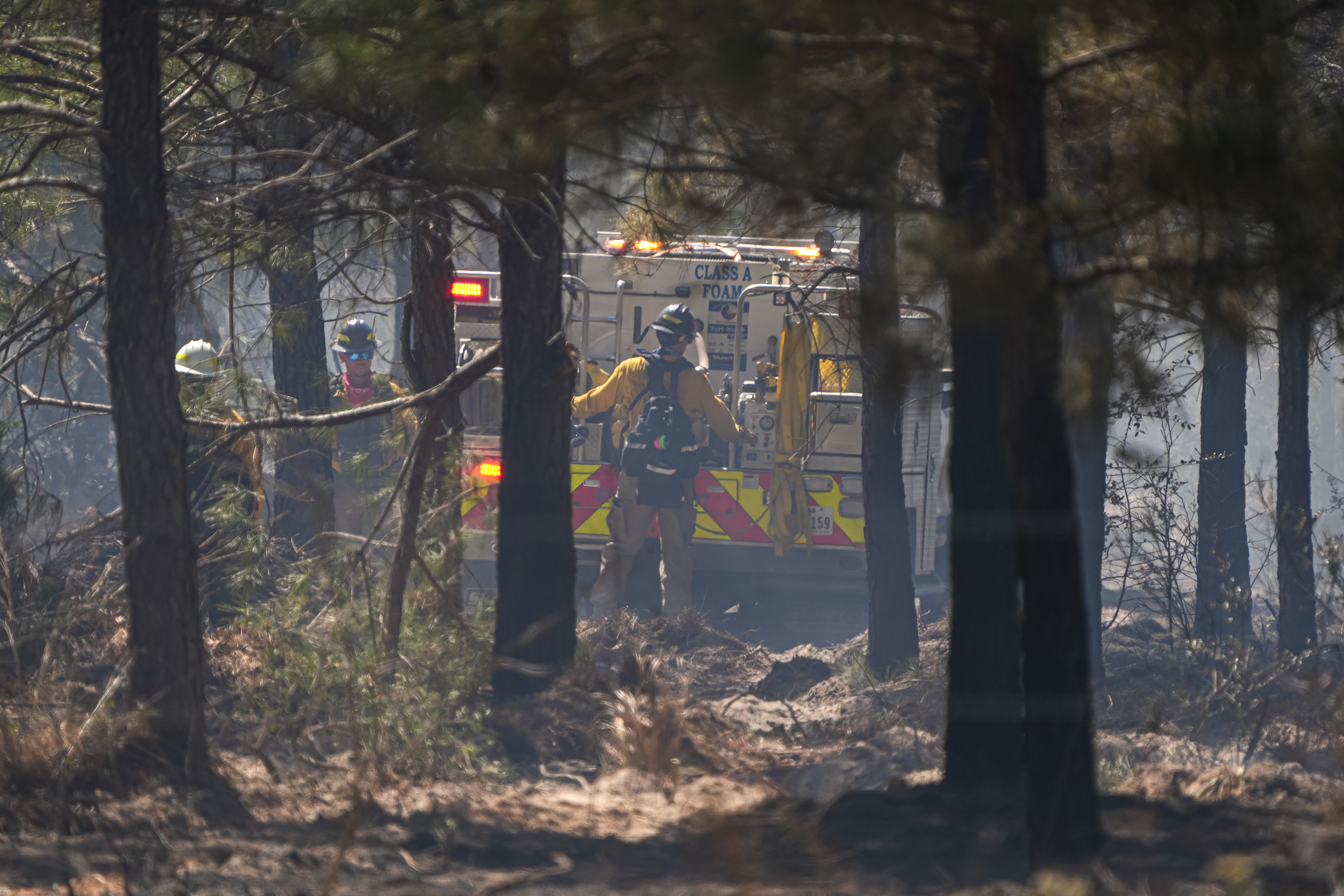


As the Western United States limps away from one of the warmest and driest winters on record, wildfires have burned over 127 percent more acreage so far in 2026 than the 10-year average, potentially setting the stage for a long, fiery summer.
Updated data from the National Interagency Fire Center on the number of ignitions and total acres burned through March 27 shows the country has experienced over 15,000 starts that have consumed more than 1.5 million acres so far this year. The 10-year averages through March 27 are about 9,195 starts and 664,792 acres burned.
While 2024 and 2017 both saw higher total acreage burned to this point, 2026 ranked first for the number of ignitions by late March in any year of the past decade, with 587 more fires than the next-highest year.
More fires in what has historically been a wetter part of the year “is becoming less a trend, more a pattern and normality,” said Timothy Ingalsbee, co-founder and executive director of Firefighters United for Safety, Ethics, and Ecology. “It is a clear signal of ongoing climate change.”
Climate change—driven primarily by the burning of fossil fuels—is magnifying the megadrought gripping the West, where drier forests, diminished snowpack and changes in hydrology can conspire to deliver a more destructive and deadly fire season. The recent record-shattering heatwave that gripped the West would be “virtually impossible” without climate change, a team of scientists found recently.
Much of the contiguous U.S. is experiencing a drought, according to United States Department of Agriculture data. Some of the largest fires are raging in the Great Plains, particularly Nebraska, where over 180,000 acres are burning, federal data indicates.
The Nebraska fires have already set a record for acreage burned in that state.
“It’s normal that we’d have range fires” this time of year, said Andy Norman, a retired fuels specialist with the Forest Service, “but not the scope, the size and intensity of them,” as has occurred in 2026.
Ingalsbee warned that the large and frequent blazes in March could overwhelm federal firefighting capacity come summer—despite President Donald Trump’s push to consolidate firefighting resources from the various federal agencies that manage wildfires.
“I’m getting calls almost every day from federal firefighters, and right now the prevailing mood is uncertainty and anxiety, because no one really knows what’s going to happen next, what they’re supposed to be doing, who they’re supposed to answer to,” Ingalsbee said. “This whole process of developing this U.S. Wildland Fire Service (USWFS) has been a black box operation conducted top down and top secret within the Secretary of Interior’s office.”
The Interior Department did not respond to a request for comment.
Despite the hot start to the wildfire season, and the confusion surrounding the creation of the new USWFS, Ingalsbee still believes implementing changes like decentralizing the power grid (power lines are a common culprit behind wildfires), placing firefighting crews in cooler, moister areas where their odds of containing a blaze are higher, and conducting more prescribed burns would help the federal government better mitigate wildfire risks.
“That’s the paradigm shift that, as a society, we need to get to to adapt to this age of reckoning we’re having with these climate and weather-driven wildfires,” he said.
About This Story
Perhaps you noticed: This story, like all the news we publish, is free to read. That’s because Inside Climate News is a 501c3 nonprofit organization. We do not charge a subscription fee, lock our news behind a paywall, or clutter our website with ads. We make our news on climate and the environment freely available to you and anyone who wants it.
That’s not all. We also share our news for free with scores of other media organizations around the country. Many of them can’t afford to do environmental journalism of their own. We’ve built bureaus from coast to coast to report local stories, collaborate with local newsrooms and co-publish articles so that this vital work is shared as widely as possible.
Two of us launched ICN in 2007. Six years later we earned a Pulitzer Prize for National Reporting, and now we run the oldest and largest dedicated climate newsroom in the nation. We tell the story in all its complexity. We hold polluters accountable. We expose environmental injustice. We debunk misinformation. We scrutinize solutions and inspire action.
Donations from readers like you fund every aspect of what we do. If you don’t already, will you support our ongoing work, our reporting on the biggest crisis facing our planet, and help us reach even more readers in more places?
Please take a moment to make a tax-deductible donation. Every one of them makes a difference.
Thank you,

Jake Bolster
Reporter, Wyoming and the West
Jake Bolster reports on Wyoming and the West for Inside Climate News. Previously, he worked as a freelancer, covering climate change, energy, and the environment across the United States. He holds a Masters in Journalism from Columbia University.