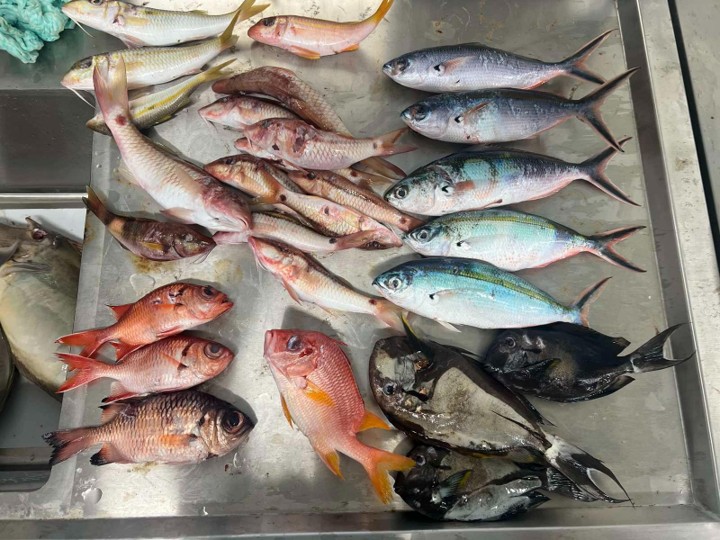


From the coral-covered coastlines of Tonga to the remote sandy atolls of Tuvalu, microscopic synthetic fibers are infiltrating the region’s species and food systems. One-third of fish living in Pacific island waters—like Fiji’s thumbprint emperor or Vanuatu’s dash-and-dot goatfish—are contaminated with microplastics, according to data published Wednesday by researchers at the University of the South Pacific.
Commonly misperceived to be a remote wilderness insulated from global waste, this study establishes the first regional baseline of Pacific marine microplastic ingestion. Such pollution threatens delicate ecosystems and the coastal populations who rely on fish as a primary source of protein.
The report provides Pacific Island Countries and Territories (PICTs) crucial weight in their push for an ambitious, legally binding Global Plastics Treaty, as negotiations re-start in February.
“The results were both encouraging and sobering,” said Jasha Dehm, a marine climate crisis researcher at the University of the South Pacific. “Encouraging because they show that lower contamination is possible, and sobering because they highlight how common microplastics are in coastal environments.”
Scientists assessed the contamination rates of 878 coastal fish—across 138 different species—caught in Fiji, Tonga, Tuvalu and Vanuatu, using data published by the Global Information Biodiversity Facility. Microplastics—particles 5 mm or smaller—permeate all layers of the ocean, from surface waters to the deep-sea floor, and are often consumed by fish mistaking them for zooplankton.
In Fiji, nearly 75 percent of fish contained microplastics—significantly higher than the 49 percent worldwide average. Though the quantity of plastic in each fish remained relatively low, researchers highlighted how PICTs are particularly vulnerable to this pollution: Rapid urbanization of limited land has led to high population densities and limited waste management systems.
The lack of water treatment facilities in many such nations allows plastic debris to easily enter marine ecosystems. However, the report found huge regional variation: Only 5 percent of fish were contaminated in Vanuatu.
“National disparities highlight the failure of current waste management systems, or lack thereof to protect even remote island ecosystems,” said Dehm, referring to Fiji’s 15-fold higher rate.
Researchers discovered ecological traits had similar impacts on contamination levels. Species that consume invertebrates, bottom feed or use ambush tactics to catch their prey had the highest microplastic rates. Meanwhile, geographically, reef fish had higher plastic ingestion levels than lagoon or open ocean fish.
Though limited research has been performed on contaminated fish consumption in Pacific island nations, many coastal communities rely heavily on seafood as a primary protein source.
“This study delivers a stark warning about the vulnerability of our food systems,” said Rufino Varea, a marine ecotoxicologist and the director of the Pacific Islands Climate Action Network.
Plastics may leach harmful additives or act as carriers for pathogens and toxic chemicals when consumed. “The reef-associated and bottom-feeding fish most accessible to our subsistence fishers are acting as reservoirs for synthetic pollution,” said Varea.
Synthetic fibers were the most common microplastic found—discovered in 66 percent of fish in Fiji, Tonga and Tuvalu, and roughly 95 percent in Vanuatu. “It indicates a pervasive infiltration of textile and gear-derived contaminants into the very diet of our communities,” said Varea. This is likely driven by the use of synthetic fibers in textiles, ropes, mooring lines and fishing gear.
“By providing robust, locally generated evidence that even remote atoll nations such as Tuvalu are experiencing plastic pollution, it reinforces that this pollution is not a distant or hypothetical issue, but a global one,” said Amanda Ford, coral reef ecologist and senior lecturer in marine science at the University of the South Pacific.
This story is funded by readers like you.
Our nonprofit newsroom provides award-winning climate coverage free of charge and advertising. We rely on donations from readers like you to keep going. Please donate now to support our work.
Donate NowIn February, the United Nations’ Intergovernmental Negotiating Committee on Plastic Pollution will attempt to elect a new chair after previous negotiations collapsed in August 2025. “This kind of data gives Pacific Island countries a stronger evidence base to argue for ambitious, upstream solutions,” said Ford.
Indeed, many island nations have pushed for strict caps on primary plastic production to safeguard the health of oceans and the food security of Pacific peoples.
While many marine ecosystems remain healthy and resilient in the region, “climate change and plastic pollution know no boundaries,” said Ford. To combat this borderless threat, researchers suggest the need for future interventions that prioritize global equity and responsibility.
As UN negotiators meet next month, researchers recommend solutions must be community-led and culturally grounded in Indigenous Pacific knowledge—ensuring those most dependent on the ocean are empowered to protect it.
About This Story
Perhaps you noticed: This story, like all the news we publish, is free to read. That’s because Inside Climate News is a 501c3 nonprofit organization. We do not charge a subscription fee, lock our news behind a paywall, or clutter our website with ads. We make our news on climate and the environment freely available to you and anyone who wants it.
That’s not all. We also share our news for free with scores of other media organizations around the country. Many of them can’t afford to do environmental journalism of their own. We’ve built bureaus from coast to coast to report local stories, collaborate with local newsrooms and co-publish articles so that this vital work is shared as widely as possible.
Two of us launched ICN in 2007. Six years later we earned a Pulitzer Prize for National Reporting, and now we run the oldest and largest dedicated climate newsroom in the nation. We tell the story in all its complexity. We hold polluters accountable. We expose environmental injustice. We debunk misinformation. We scrutinize solutions and inspire action.
Donations from readers like you fund every aspect of what we do. If you don’t already, will you support our ongoing work, our reporting on the biggest crisis facing our planet, and help us reach even more readers in more places?
Please take a moment to make a tax-deductible donation. Every one of them makes a difference.
Thank you,

Johnny Sturgeon
Fisheries Reporter
Johnny Sturgeon is a London-based reporter covering fisheries and aquaculture. Joining us from the Outlaw Ocean Project, he has experience producing in-depth maritime investigations for nonprofit newsrooms. A former boatbuilder, he holds a B.A. in History & Politics from the University of Oxford, and an M.S. from Columbia Journalism School.