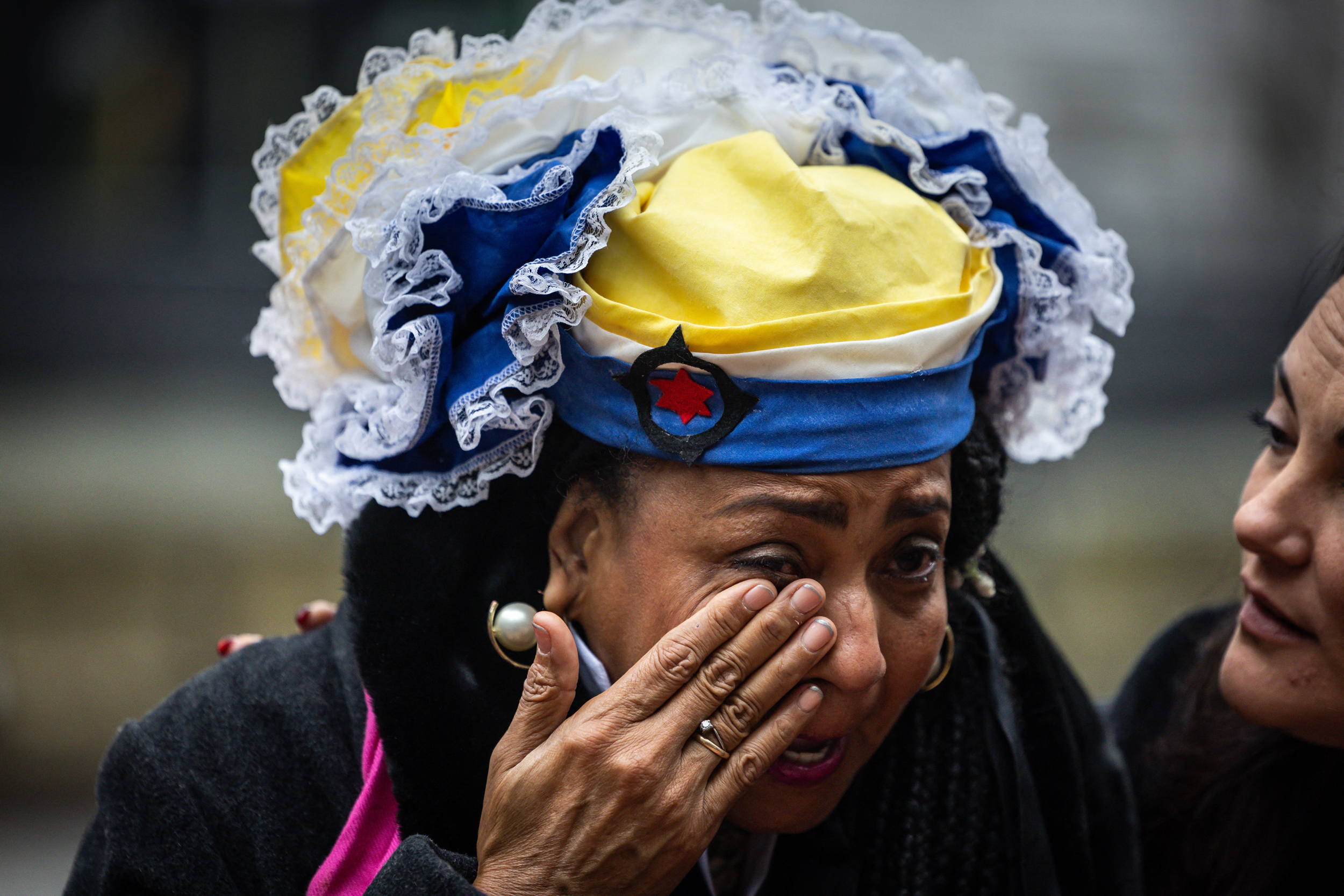


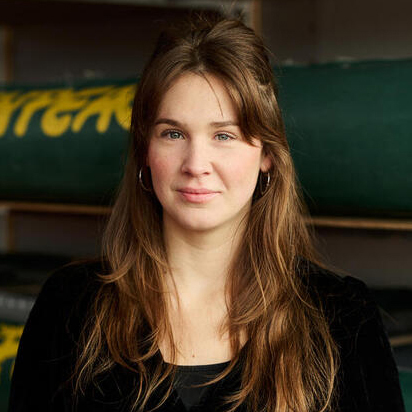
From our collaborating partner Living on Earth, public radio’s environmental news magazine, an interview by Paloma Beltran with Greenpeace Netherlands campaigner Eefje de Kroon.
Due to climate disruption, scientists forecast huge rises in temperatures across the tropics. According to the IPCC, tropical regions are projected to experience significant warming—nearly 6 degrees Fahrenheit—by 2100.
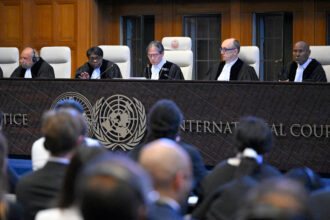
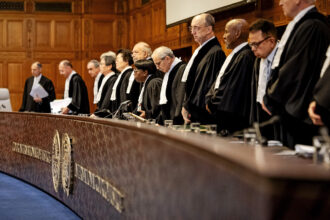
One region already feeling the increasing heat is the Caribbean, where islands are facing sea level rise. One of those islands is Bonaire, a special Dutch municipality just off the coast of Venezuela. In a landmark January decision, the Hague District Court of the Netherlands ruled that its government must better protect residents of Bonaire from climate change, finding current policies are inadequate and discriminatory. The decision requires a specific, binding climate adaptation plan for Bonaire by 2030.
The case could pave the way for climate-related lawsuits by other islands and territories such as Puerto Rico, which has long sought justice from the U.S. government without success.
Greenpeace Netherlands campaigner Eefje de Kroon worked with eight Bonaire residents to bring their case. This interview has been edited for length and clarity.
PALOMA BELTRAN: The court ruled that the Netherlands breached human rights by treating Bonaire residents as second-class citizens compared to residents in the Netherlands. How is the Dutch government’s approach to climate change in Europe different from what happens in Bonaire?
EEFJE DE KROON: A third of people on Bonaire live in poverty. The plaintiffs have several jobs just to maintain their families. And these people are inhabitants of the Netherlands. They deserve equal protection.
For the European part of the Netherlands, there are all sorts of policies, there are plans. Measures are being taken, often also very expensive measures, to protect the Netherlands from climate change. A large part of the Netherlands is six meters under sea level, but we don’t experience that because we have dikes and we have protection against the water. On Bonaire, not even the research had been done into what the impact would be, let alone that there will be a plan, or that there will be financing for it.
BELTRAN: Just under how much threat is the island of Bonaire to sea level rise?
DE KROON: A fifth of the island will disappear underwater by the end of this century if no measures are taken, if we keep emitting the way that we are and no protective measures are taken. But obviously, what we hope with this campaign and with this lawsuit, which we won, [is] that that will be prevented.
BELTRAN: You’ve had the opportunity to talk with the plaintiffs in this case, you know them personally. Is there a story you can share from one of your interactions about how they’re experiencing climate change firsthand in Bonaire?
DE KROON: Oh gosh, there are so many, and I’m so impressed by all of them. When we went to Bonaire some years ago, people already complained about the extreme heat that they were experiencing.
For example, Onnie, a farmer, said within just a few years’ time, I already see that my crops aren’t growing as well as they used to. It’s too hot and also it’s too dry. Water has become too expensive to let the crops grow.
Helen, a grandmother, still has her own mother, who she cares for, living on the island. She says it’s really difficult to walk my mother to the elderly home because it’s too hot during the day, and we hardly see kids play in the streets. Kids don’t walk to school anymore, like she used to. They take buses now because it’s just too hot.
Angelo is the head of a union, a spokesperson for the union. Angelo very powerfully said in court, we’re not asking for charity. We’re demanding justice. They’re tired of being treated as second-class citizens, losing a part of their island, [and] losing the possibility to pass it on to future generations, while the Dutch government just has such a clear moral, historical and legal responsibility to protect them.
BELTRAN: What are Bonaire residents expecting from this decision? What would make them whole?
DE KROON: In terms of this verdict, it’s quite clear that the Netherlands needs to cut its CO2 emissions much more quickly than it is planning to do, and it’s not even living up to the promises that it has made. That is something that the plaintiffs are very curious about, how fast the Netherlands will reduce its CO2 emissions.
But at least as important is what the Netherlands will now do in terms of the measures that it takes on Bonaire to actually protect people against the heat and against the rising sea levels.
[The court also] found that you need to look at social and economic impacts of the climate crisis and have measures that alleviate that as well, really take holistic measures that help people.
When you live in poverty, climate change is not the first thing on your mind. So the Dutch government really needs to take responsibility for getting people out of poverty, but also, for example, making sure that people have air conditioning that they can afford, keeping the energy bills low. In addition to that, having green spaces, sheltered spaces where people can go outside, for kids to play, for people to do exercise outside, this is really important in terms of a heat measure.
This story is funded by readers like you.
Our nonprofit newsroom provides award-winning climate coverage free of charge and advertising. We rely on donations from readers like you to keep going. Please donate now to support our work.
Donate NowYou can also think about protecting the corals and the mangroves, because they are very important in terms of identity for the island and for the people and economy, because it also protects the island from incoming waves. It’s a natural sort of protective measure.
The plaintiffs also think about adaptation measures that need to be taken. The people from the island need to be heard in what they think is an appropriate measure, and the Dutch government really needs to pay up for it.
BELTRAN: Why is this victory significant? What are the implications for other Dutch, British and even French overseas territories?
DE KROON: This case is a wake-up call that governments can be held to a standard of care, and moves the conversation from “Should we help these islands?” to “Governments are legally obligated to protect all citizens equally.” This was the first time that a court ruled that a state discriminated against its own people by failing to develop a climate adaptation plan. It’s not just about the responsibility for causing climate change, but also about failing to prepare for the inevitable impacts.
The U.S. has overseas territories, and in Europe, there are still a lot of countries that have overseas territories. They are on notice now, because if this holds true for the Netherlands—and this case is built on international human rights law—a case like this is a universal standard that is being developed. U.S. judges also look at international rulings as persuasive authority. This case shows that climate change is a fundamental human rights violation, and there’s also customary law that lies at the basis of it.
This case can be copied in many jurisdictions. It is really like a blueprint. I think we’ll start to see cases that will go even further, because people are actually suffering financial and personal and health damages, and countries and people need to be held responsible.
About This Story
Perhaps you noticed: This story, like all the news we publish, is free to read. That’s because Inside Climate News is a 501c3 nonprofit organization. We do not charge a subscription fee, lock our news behind a paywall, or clutter our website with ads. We make our news on climate and the environment freely available to you and anyone who wants it.
That’s not all. We also share our news for free with scores of other media organizations around the country. Many of them can’t afford to do environmental journalism of their own. We’ve built bureaus from coast to coast to report local stories, collaborate with local newsrooms and co-publish articles so that this vital work is shared as widely as possible.
Two of us launched ICN in 2007. Six years later we earned a Pulitzer Prize for National Reporting, and now we run the oldest and largest dedicated climate newsroom in the nation. We tell the story in all its complexity. We hold polluters accountable. We expose environmental injustice. We debunk misinformation. We scrutinize solutions and inspire action.
Donations from readers like you fund every aspect of what we do. If you don’t already, will you support our ongoing work, our reporting on the biggest crisis facing our planet, and help us reach even more readers in more places?
Please take a moment to make a tax-deductible donation. Every one of them makes a difference.
Thank you,