

Amid political pressure and rising energy prices, the European Commission is considering pausing a part of its landmark methane regulation, which is set to take effect in January.
The move comes after French President Emmanuel Macron urged the Commission in a September 18 letter to postpone new methane reporting requirements and ease other fuel-related rules in response to increasing costs exacerbated by the Iran war.
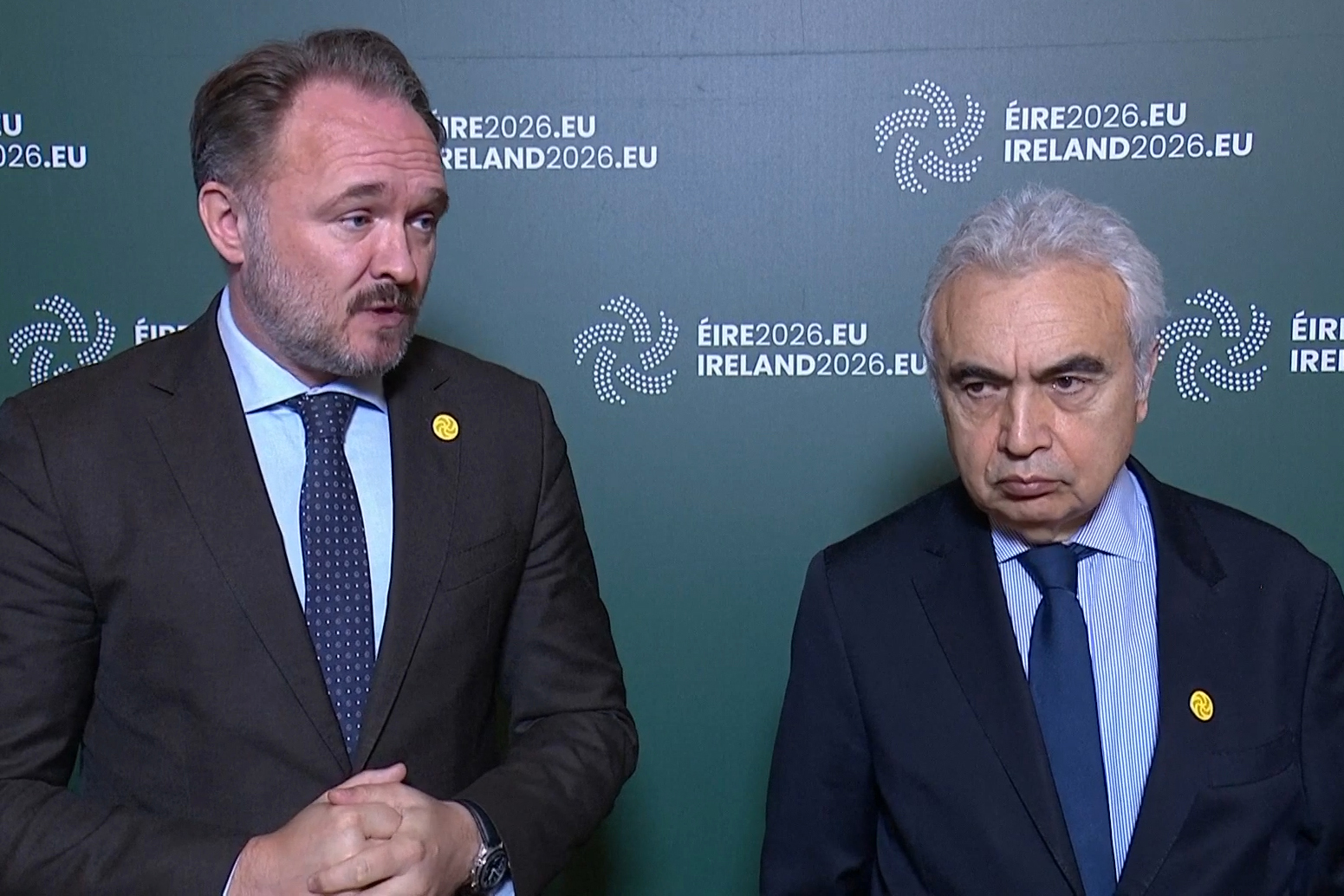
The European Union has spent an additional $100 billion euros on energy this year due to rising costs, said Dan Jørgensen, European Commissioner for Energy and Housing.
At a meeting of EU energy ministers in Dublin on Tuesday, Jørgensen proposed postponing parts of the methane regulation related to energy imports for a year.
The current methane regulation would require oil, gas and coal companies importing into the European Union to monitor, report and verify their methane emissions starting January 1.
Companies said their energy imports would not comply with EU laws because suppliers would not provide information required under the methane regulation. According to reporting from Bloomberg, the U.S., Europe’s largest supplier of LNG, also warned that it could take its supply elsewhere if the regulation was not eased.
The requirement is part of a broader set of rules aimed at reducing methane emissions from energy imports and domestic energy production. Methane intensity requirements for imports will take effect in 2030. Methane is the primary component of natural gas and the second-largest contributor to global warming after carbon dioxide.
Jørgensen stressed that any pause would be “targeted and temporary” and would not undermine the emission reduction goal.
However, he noted that during a typical winter, Europe has close to 50 million people who cannot adequately heat their homes.
“This winter might be even worse, so we take it very, very seriously,” Jørgensen said.
Europe experienced soaring energy prices in 2022 after Russia invaded Ukraine and shut off a key gas pipeline to Germany.
Noting that Europe and the world are “facing a major energy security risk,” Fatih Birol, executive director of the International Energy Agency, said he supported the European Commission’s proposed pause.
Work to formally propose postponing part of the methane regulation is underway, a spokesperson for the European Commission said in a written statement.
In July, the Commission recommended that member states pause penalties for three years for various requirements, including those requiring oil, gas and coal importers to monitor, report and verify their methane emissions. It is up to individual member countries to set their own penalties. Importers are still required to begin such monitoring and reporting in January, but the anticipated postponement could delay those requirements.
Maas Goote, the European Union’s former lead climate negotiator and an independent policy advisor, said there is no evidence that the methane regulations, if left in place, would cause price spikes or reduce supply.
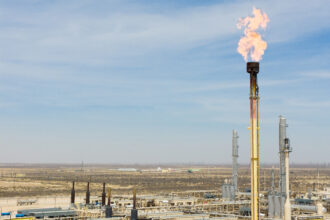
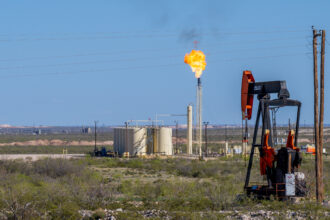
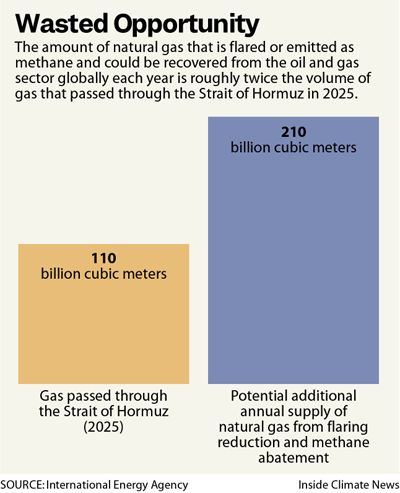
Globally, the amount of gas wasted each year through flaring or methane emissions is twice the volume shipped through the Strait of Hormuz in 2025, Goote said. Shipping through the Strait ceased when the Iran war began in February and remains significantly constrained, causing oil and gas prices to spike as supply declines.
“We’re not just talking about climate here,” Goote said of the methane emissions. “We’re also talking about [an] enormous waste of energy.”
Rob Jennings, vice president of natural gas markets for the American Petroleum Institute, an industry group representing U.S. oil and gas companies, said they welcome the Commission’s efforts to address implementation concerns with the methane regulation and want to continue working with them to secure long-term certainty for the industry.
Michael Button, a senior policy specialist for the Institutional Investors Group on Climate Change, said another postponement would create uncertainty and could disadvantage companies that have already invested in compliance.
“Legitimate implementation challenges should be addressed through clear, harmonised guidance and the practical compliance solutions available—not through delay or dilution,” Button said in a written statement.
About This Story
Perhaps you noticed: This story, like all the news we publish, is free to read. That’s because Inside Climate News is a 501c3 nonprofit organization. We do not charge a subscription fee, lock our news behind a paywall, or clutter our website with ads. We make our news on climate and the environment freely available to you and anyone who wants it.
That’s not all. We also share our news for free with scores of other media organizations around the country. Many of them can’t afford to do environmental journalism of their own. We’ve built bureaus from coast to coast to report local stories, collaborate with local newsrooms and co-publish articles so that this vital work is shared as widely as possible.
Two of us launched ICN in 2007. Six years later we earned a Pulitzer Prize for National Reporting, and now we run the oldest and largest dedicated climate newsroom in the nation. We tell the story in all its complexity. We hold polluters accountable. We expose environmental injustice. We debunk misinformation. We scrutinize solutions and inspire action.
Donations from readers like you fund every aspect of what we do. If you don’t already, will you support our ongoing work, our reporting on the biggest crisis facing our planet, and help us reach even more readers in more places?
Please take a moment to make a tax-deductible donation. Every one of them makes a difference.
Thank you,

Phil McKenna
Reporter, Boston
Phil McKenna is a Boston-based reporter for Inside Climate News. Before joining ICN in 2016, he was a freelance writer covering energy and the environment for publications including The New York Times, Smithsonian, Audubon and WIRED. Uprising, a story he wrote about gas leaks under U.S. cities, won the AAAS Kavli Science Journalism Award and the 2014 NASW Science in Society Award. Phil has a master’s degree in science writing from the Massachusetts Institute of Technology and was an Environmental Journalism Fellow at Middlebury College.