

When the Trump administration moved to curtail wetland protections in November, environmental groups warned the rollback could endanger millions of acres of freshwater resources and critical wildlife habitat.
But at least one state has put protections in place that may offer a roadmap for preserving wetlands: New Jersey.
“We in New Jersey are really fortunate because, at the state level, we have some really strong environmental protections,” said Alison Mitchell, executive director of the advocacy group New Jersey Conservation Foundation.
The Trump policy rollback involves further implementing the Supreme Court’s 2023 decision in Sackett v. EPA. In the ruling, the court sharply limited which wetlands qualify as federally protected waters, holding that the Clean Water Act reaches only relatively permanent waters and wetlands that have a “continuous surface connection” to those protected waters.
For example, in the Sackett case, the wetlands area on the Sackett couple’s property was near Priest Lake in Idaho, but not physically joined to the lake by a continuous sheet of surface water, which is exactly the kind of borderline wetland the court said falls outside the Clean Water Act.
New Jersey is insulated from this shift for a reason most residents have never heard of: It is one of only two states, along with Michigan, that has decided to enact stricter regulations on wetlands.
“States can’t lower protections below that which is afforded by the Clean Water Act, but they can be more protective. So New Jersey is one of two states that has done that through the law’s Section 404,” said Christopher Miller, the executive director of the Eastern Environmental Law Center.
The New Jersey Department of Environmental Protection has said as much, announcing in an October 2023 advisory after the Sackett decision that for “the vast majority” of waters and wetlands it regulates, the decision “does not impact” its authority under state programs.
At the heart of that system is the state’s permitting authority under the state Water Pollution Control Act, which makes it unlawful to discharge pollutants, including dredged or fill material, into “waters of the State” without a permit. That state framework includes permits for dredged or fill material discharged into freshwater wetlands or state open waters.
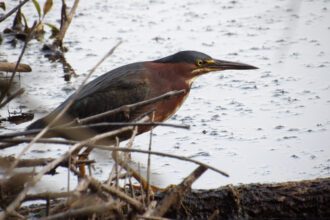
New Jersey’s wetland rules also protect adjacent “transition areas,” or buffers, up to 150 feet wide. These give wildlife refuge during high water, provide habitat and help filter sediment and stormwater from development.
More broadly, the state act outlines a public policy goal that echoes the Clean Water Act’s own language: “to restore, enhance and maintain the chemical, physical and biological integrity” of New Jersey’s waters.
How New Jersey Did It
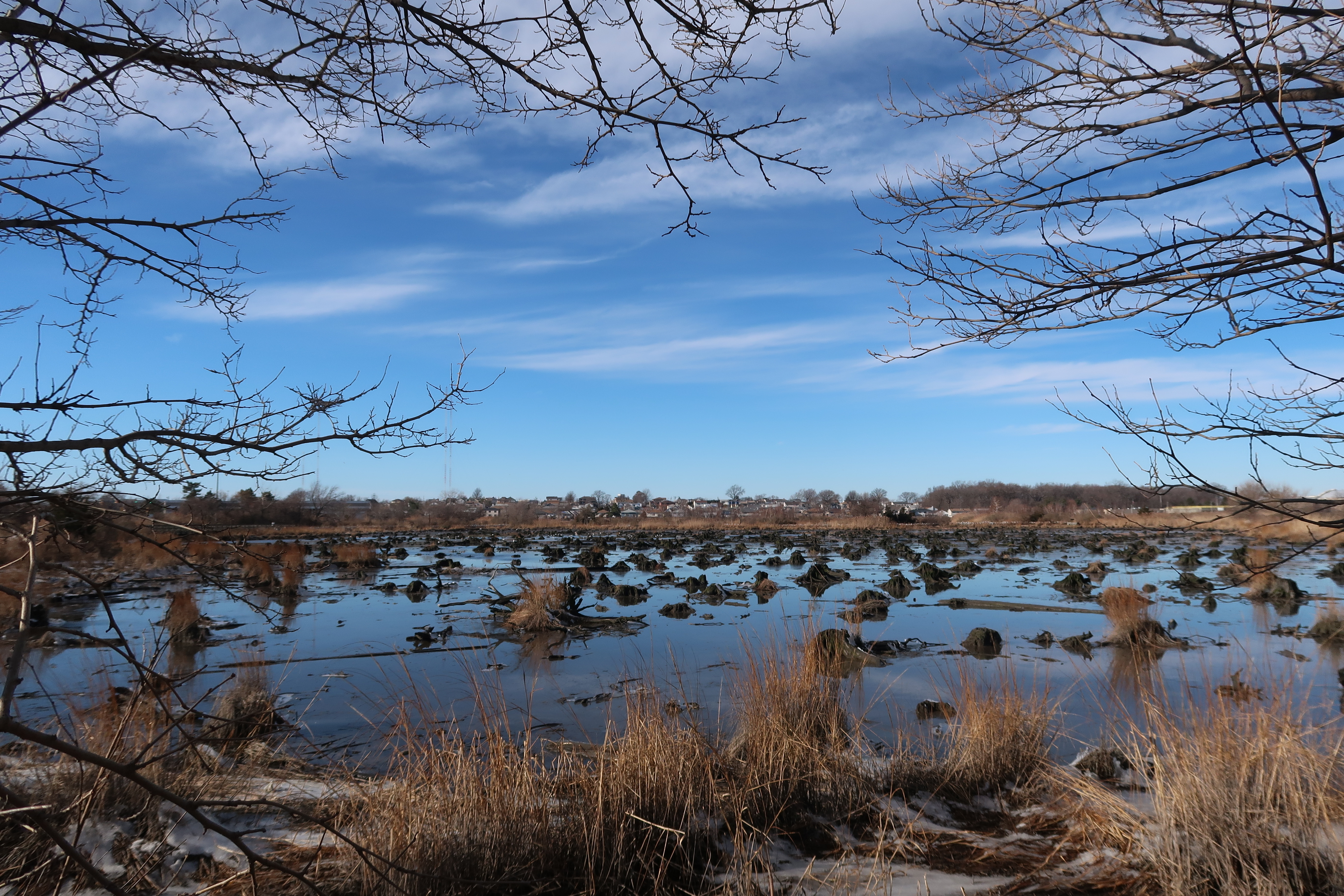
The stakes are high in New Jersey because wetlands are not a niche habitat. They are a defining feature woven into the coast, the Pinelands and the crowded suburban seams between highways and rivers. They cover 17 percent of the Garden State, according to state data.
The legal scaffolding didn’t appear by accident. It grew out of a history of filling, draining and industrial alteration that reshaped New Jersey’s landscape for centuries.
Between the 1780s and the 1980s, New Jersey lost about 39 percent of its wetlands as they were drained for agriculture and filled for housing and industrial development.
In the early 1970s, New Jersey began mapping and regulating its coastal wetlands, producing more than 1,000 official coastal wetland maps. In 1977, the state enacted the Water Pollution Control Act, establishing the wetland protections stricter than federal standards. By the late 1980s, the state’s Freshwater Wetlands Protection Act took effect, adding another layer of permitting and standards for wetlands beyond the coast.
Miller, of the Eastern Environmental Law Center, said the state saw the importance of wetlands as “part of the ecosystem,” a “sponge” that is “essentially the engine that drives the health of our ecosystems.” He added that wetlands can also store carbon, making them relevant not just to water quality, but to climate.
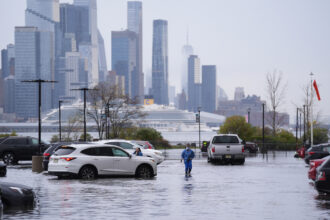
NJ Conservation’s Mitchell emphasized another side of the equation, one that’s critical as stronger storms hit a more paved-over state like New Jersey. Wetlands, she said, hold stormwater and help prevent flooding.
This story is funded by readers like you.
Our nonprofit newsroom provides award-winning climate coverage free of charge and advertising. We rely on donations from readers like you to keep going. Please donate now to support our work.
Donate NowWhy Two States Are Not Enough
New Jersey’s advocates warn against treating a strong state framework as a substitute for national policy. Water, they said, does not honor any man-made borders, moving through watersheds, pipes, tributaries and groundwater systems regardless of where they fall on legislative maps.
Mitchell explained the limit of being alone: Upstream waters with weaker protections will flow down the Delaware River and can harm New Jersey.
Miller argued that states will increasingly be forced to “pick up slack” as federal jurisdiction narrows and that communities will need to pay closer attention to how their state manages water and wetlands. But he also framed the federal role as a baseline that states should be able to exceed, not replace.
Sean Jackson, the national campaigns coordinator for Clean Water Action, said “the only fix” that would ensure comprehensive protection again is congressional legislative action.
New Jersey advocates, meanwhile, are also looking inward to see whether the state can further harden its own legal foundation.
Stephen Elliott, director of watershed programs for the Pinelands Preservation Alliance, pointed to the “Green Amendment,” a proposed state constitutional right to “clean air, pure water and a healthy environment.”
“With all of the federal actions to dismantle longstanding environmental protections and move backwards in our energy transition, we think it is well past time for New Jerseyans to demand these rights in writing,” Elliott said.
About This Story
Perhaps you noticed: This story, like all the news we publish, is free to read. That’s because Inside Climate News is a 501c3 nonprofit organization. We do not charge a subscription fee, lock our news behind a paywall, or clutter our website with ads. We make our news on climate and the environment freely available to you and anyone who wants it.
That’s not all. We also share our news for free with scores of other media organizations around the country. Many of them can’t afford to do environmental journalism of their own. We’ve built bureaus from coast to coast to report local stories, collaborate with local newsrooms and co-publish articles so that this vital work is shared as widely as possible.
Two of us launched ICN in 2007. Six years later we earned a Pulitzer Prize for National Reporting, and now we run the oldest and largest dedicated climate newsroom in the nation. We tell the story in all its complexity. We hold polluters accountable. We expose environmental injustice. We debunk misinformation. We scrutinize solutions and inspire action.
Donations from readers like you fund every aspect of what we do. If you don’t already, will you support our ongoing work, our reporting on the biggest crisis facing our planet, and help us reach even more readers in more places?
Please take a moment to make a tax-deductible donation. Every one of them makes a difference.
Thank you,

Rambo Talabong
Contributor
Rambo Talabong is a multimedia climate reporter based in New York City. Before moving to the U.S., he led award-winning investigations into the Duterte drug war for Rappler, the Nobel Prize-winning newsroom in Manila. His reporting has been recognized by the Global Investigative Journalism Network, the Society of Publishers in Asia, and the Human Rights Press Awards. He studied data journalism at Columbia University and is currently pursuing a master’s in science journalism at New York University. He has faced—and won—two libel suits in the Philippines over his reporting.