Skip to content
  • Science
  • Politics
  • Justice & Health
  • Fossil Fuels
  • Clean Energy
  • ICN Local
  • Projects
  • Impact
  • About Us
Inside Climate News
Pulitzer Prize-winning, nonpartisan reporting on the biggest crisis facing our planet.
Donate
Trump 2.0: The Reckoning
Inside Climate News
Donate

Search

  • Science
  • Politics
  • Justice & Health
  • Fossil Fuels
  • Clean Energy
  • ICN Local
  • Projects
  • Impact
  • About Us
  • Newsletters
  • ICN Sunday Morning
  • Contact Us

Topics

  • A.I. & Data Centers
  • Activism
  • Arctic
  • Biodiversity & Conservation
  • Business & Finance
  • Climate Law & Liability
  • Climate Treaties
  • Denial & Misinformation
  • Environment & Health
  • Extreme Weather
  • Food & Agriculture
  • Fracking
  • Nuclear
  • Pipelines
  • Plastics
  • Public Lands
  • Regulation
  • Super-Pollutants
  • Water/Drought
  • Wildfires

Information

  • About
  • Job Openings
  • Reporting Network
  • Whistleblowers
  • Memberships
  • Ways to Give
  • Fellows & Fellowships

Publications

  • E-Books
  • Documents

air monitoring

Air Monitors Used in California Tank Crisis Were Inadequate in the Past, Leaving Returning Residents Uneasy

About 50,000 people fled when a chemical tank from aircraft parts manufacturer GKN Aerospace threatened to explode in Orange County. Some of them say they no longer trust the air or the company after the incident.

By Steven Rodas
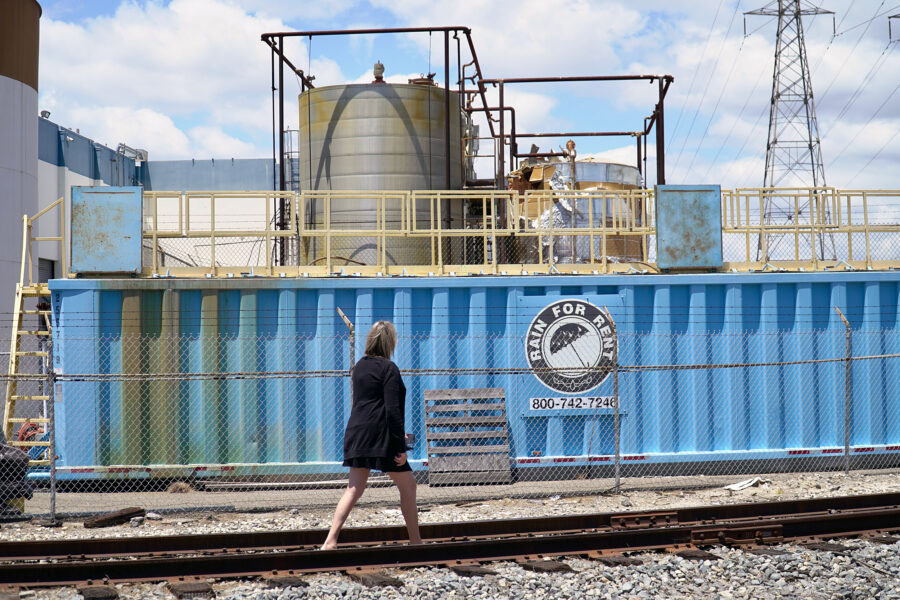
A GKN Aerospace chemical tank became pressurized and threatened to explode in Orange County, California, ahead of Memorial Day weekend. Credit: Steven Rodas/Inside Climate News
A view of the Chevron Richmond Refinery in Contra Costa County, California. Credit: Justin Sullivan/Getty Images

Mapping Unequal Climate Risks in a Northern California County

By Liza Gross

Professor Ralph Keeling, son of Charles David Keeling, demonstrates how a sample of air is collected to measure carbon dioxide in the atmosphere on April 11 as part of the Keeling Curve monitoring study at the UC San Diego Scripps Institution of Oceanography. Credit: Patrick T. Fallon/AFP via Getty Images)

Global Scientists Anticipate Less Reliance on the US in Future Carbon Monitoring

By Marianne Lavelle

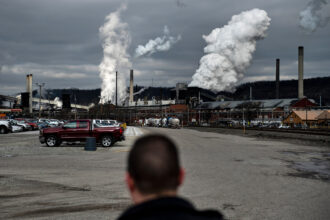
White plumes of smoke billow above U.S. Steel’s Clairton Coke Works in Clairton, Pa. Credit: Brendan Smialowski/AFP via Getty Images

EPA Drops Planned Delay in Compliance With Fenceline Monitoring at Coke Plants

By Jon Hurdle

A thick haze blankets New York City as smoke from Canadian wildfires impacts air quality on August 5. Credit: Selcuk Acar/Anadolu via Getty Images

‘It’s Never Good!’: A Street-Level Look at New York City’s Air Quality

By Lauren Dalban

Samuel Corona (right) and Katia Balba give a “toxic tour” at Steelworkers Park in Chicago with their organization, Alliance of the Southeast, on July 17. Credit: Fern Alling/Inside Clean Energy

Despite HUD Mandate Withdrawal, the Push for Clean Air Moves Forward in Chicago

By Fern Alling

A lifeguard stands watch amid a haze of Canadian wildfire smoke at Loyola Beach on Chicago’s North Side in June. The West and South sides of the city get heavy air pollution all year. Credit: Anthony Vazquez/Sun-Times

Chicago Aims To Have Most Air Pollution Sensors in the US

By Brett Chase, Chicago Sun-Times

The majority-Black residents of north Birmingham continue to face the impacts of the idled Bluestone Coke facility. Credit: Lee Hedgepeth/Inside Climate News

In One of the Nation’s Most Polluted Communities, Trump Terminates Funding for Air Monitoring

By Lee Hedgepeth

A view of the Moriah Energy Center construction site on Aug. 12, 2024 in Person County N.C., where BREDL is considering setting up an air monitoring station. Credit: Lisa Sorg for Inside Climate News/The Assembly

How the Money Stopped at One Environmental Nonprofit, Causing Hardship and Alarm

By Lisa Sorg

Lancaster County residents Suzy Hamme and Stephen Haldeman bought their own air quality sensor, as government pollution monitoring is inadequate in the region. Credit: Rambo Talabong/Inside Climate News

Millions Left in Air Pollution ‘Blind Spots’ Despite Stricter EPA Standards

By Rambo Talabong

A view of Deer Park Stadium with refineries in the background in Deer Park, Texas. Credit: Mark Felix/The Texas Tribune

How Texas Diminished a Once-Rigorous Air Pollution Monitoring Team 

By Dylan Baddour, Peter Aldhous

The Wisconsin state capitol rises behind lakeside buildings in Madison, Wisconsin, where the Latino Academy of Workforce Development, a nonprofit aimed at building community through adult education, sponsored a community air monitoring program this summer. Credit: Education Images/Universal Images Group via Getty Images.

Monitoring Air Quality as a Lesson in Climate Change, Civic Engagement and Latino Community Leadership

By Lydia Larsen

Xinrong Ren, a climate scientist with National Oceanic and Atmospheric Administration (NOAA), notes down readings from air pollution monitoring instrument fitted on the mobile lab after surveying methane hotspots in and around Baltimore. Credit: Aman Azhar

NOAA Climate Scientists Cruise Washington and Baltimore for Hotspots—of Greenhouse Gases and Air Pollutants

By Aman Azhar

Newsletters

We deliver climate news to your inbox like nobody else. Every day or once a week, our original stories and digest of the web's top headlines deliver the full story, for free.

Keep Environmental Journalism Alive

ICN provides award-winning climate coverage free of charge and advertising. We rely on donations from readers like you to keep going.

Donate Now
Inside Climate News
  • Science
  • Politics
  • Justice & Health
  • Fossil Fuels
  • Clean Energy
  • Home
  • About
  • Contact Us
  • Whistleblowers
  • Privacy Policy
  • Charity Navigator
Inside Climate News uses cookies. By continuing to use this site, you accept this policy. Learn More