Skip to content
  • Science
  • Politics
  • Justice & Health
  • Fossil Fuels
  • Clean Energy
  • ICN Local
  • Projects
  • Impact
  • About Us
Inside Climate News
Pulitzer Prize-winning, nonpartisan reporting on the biggest crisis facing our planet.
Donate
Trump 2.0: The Reckoning
Inside Climate News
Donate

Search

  • Science
  • Politics
  • Justice & Health
  • Fossil Fuels
  • Clean Energy
  • ICN Local
  • Projects
  • Impact
  • About Us
  • Newsletters
  • ICN Sunday Morning
  • Contact Us

Topics

  • A.I. & Data Centers
  • Activism
  • Arctic
  • Biodiversity & Conservation
  • Business & Finance
  • Climate Law & Liability
  • Climate Treaties
  • Denial & Misinformation
  • Environment & Health
  • Extreme Weather
  • Food & Agriculture
  • Fracking
  • Nuclear
  • Pipelines
  • Plastics
  • Public Lands
  • Regulation
  • Super-Pollutants
  • Water/Drought
  • Wildfires

Information

  • About
  • Job Openings
  • Reporting Network
  • Whistleblowers
  • Memberships
  • Ways to Give
  • Fellows & Fellowships

Publications

  • E-Books
  • Documents

Louisville

Helping Trees—and a City—Outrace Climate Change

Arborists and land managers are trying “assisted migration” as global warming threatens livability in communities and the health of urban and rural forests.

By James Bruggers
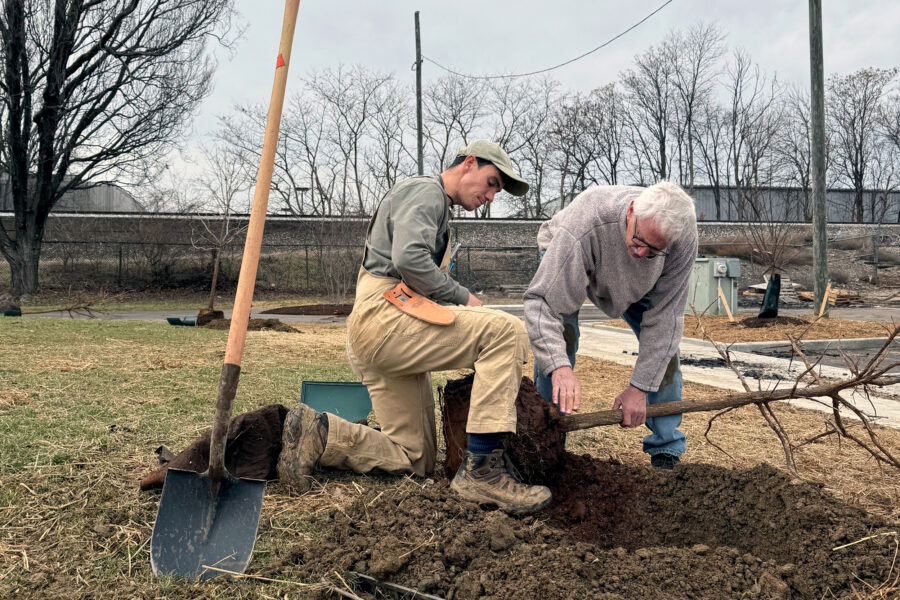
TreesLouisville staffers Matt Thomas (left) and Mike Hayman plant an oak tree in Louisville, Ky., as part of an assisted tree migration effort. Credit: James Bruggers/Inside Climate News
Sam Satterly investigates a hazardous waste dump site known as Gully of the Drums in Jefferson Memorial Forest, a public park in Louisville, Ky. Credit: Courtesy of Sam Satterly

Louisville, Kentucky, Moves Toward Cleaning Up Its ‘Gully of the Drums’ After More Than Four Decades

By James Bruggers

Sam Satterly investigated a hazardous waste dump known as the “Gully of the Drums” in Jefferson Memorial Forest, a Louisville public park, while she was a graduate student at the University of Louisville. Credit: Courtesy of Sam Satterly

The EPA Cleaned Up the ‘Valley of the Drums’ Outside Louisville 45 Years Ago. Why Did it Leave the ‘Gully of the Drums’ Behind?

By James Bruggers

Chemical plants in the Rubbertown area of Louisville stand near the Ohio River in February 2018 during flood conditions on the river. The Chemours chemical plant is located within the wedge-shaped Chemours property in the lower half of the photo. Credit: Pat McDonogh/Courier Journal

Chemours’ Process for Curtailing Greenhouse Gas Emissions Could Produce Hazardous Air Pollutants in Louisville

By James Bruggers, Phil McKenna

Chemical plants in the Rubbertown area of Louisville stand near the Ohio River in February 2018 during flood conditions on the river. The Chemours chemical plant is located within the wedge-shaped Chemours property in the lower half of the photo. Credit: Pat McDonogh/Courier Journal

The EPA Proposes a Ban on HFC-23, the Most Potent Greenhouse Gas Among Hydrofluorocarbons, by October 2022

By Phil McKenna, James Bruggers

Chemical plants in the Rubbertown area of Louisville stand near the Ohio River in February 2018 during flood conditions on the river. The Chemours chemical plant is located within the wedge-shaped Chemours property in the lower half of the photo. Credit: Pat McDonogh/Courier Journal

Chemours Says it Will Dramatically Reduce Greenhouse Gas Emissions, Aiming for Net Zero by 2050

By Phil McKenna

Louisville, Kentucky skyline as photographed from the Ohio River Greenway on July 16, 2015 in Clarksville, Indiana. Credit: Raymond Boyd/Getty Images

Louisville’s Super-Polluting Chemical Plant Emits Not One, But Two Potent Greenhouse Gases

By Phil McKenna, James Bruggers

Chemical plants in the Rubbertown area of Louisville stand near the Ohio River in February 2018 during flood conditions on the river. The Chemours chemical plant is located within the wedge-shaped Chemours property in the lower half of the photo. Credit: Pat McDonogh/Courier Journal

A Single Chemical Plant in Louisville Emits a Super-Pollutant That Does More Climate Damage Than Every Car in the City

By Phil McKenna, James Bruggers

Newsletters

We deliver climate news to your inbox like nobody else. Every day or once a week, our original stories and digest of the web's top headlines deliver the full story, for free.

Keep Environmental Journalism Alive

ICN provides award-winning climate coverage free of charge and advertising. We rely on donations from readers like you to keep going.

Donate Now
Inside Climate News
  • Science
  • Politics
  • Justice & Health
  • Fossil Fuels
  • Clean Energy
  • Home
  • About
  • Contact Us
  • Whistleblowers
  • Privacy Policy
  • Charity Navigator
Inside Climate News uses cookies. By continuing to use this site, you accept this policy. Learn More