Skip to content
  • Science
  • Politics
  • Justice & Health
  • Fossil Fuels
  • Clean Energy
  • ICN Local
  • Projects
  • Impact
  • About Us
Inside Climate News
Pulitzer Prize-winning, nonpartisan reporting on the biggest crisis facing our planet.
Donate
Trump 2.0: The Reckoning
Inside Climate News
Donate

Search

  • Science
  • Politics
  • Justice & Health
  • Fossil Fuels
  • Clean Energy
  • ICN Local
  • Projects
  • Impact
  • About Us
  • Newsletters
  • ICN Sunday Morning
  • Contact Us

Topics

  • A.I. & Data Centers
  • Activism
  • Arctic
  • Biodiversity & Conservation
  • Business & Finance
  • Climate Law & Liability
  • Climate Treaties
  • Denial & Misinformation
  • Environment & Health
  • Extreme Weather
  • Food & Agriculture
  • Fracking
  • Nuclear
  • Pipelines
  • Plastics
  • Public Lands
  • Regulation
  • Super-Pollutants
  • Water/Drought
  • Wildfires

Information

  • About
  • Job Openings
  • Reporting Network
  • Whistleblowers
  • Memberships
  • Ways to Give
  • Fellows & Fellowships

Publications

  • E-Books
  • Documents

phytoplankton

Earth’s Oceans Lose Some of Their Luster

New research reveals that a key biological carbon pump is weakening, threatening ecosystems and the climate.

By Bob Berwyn
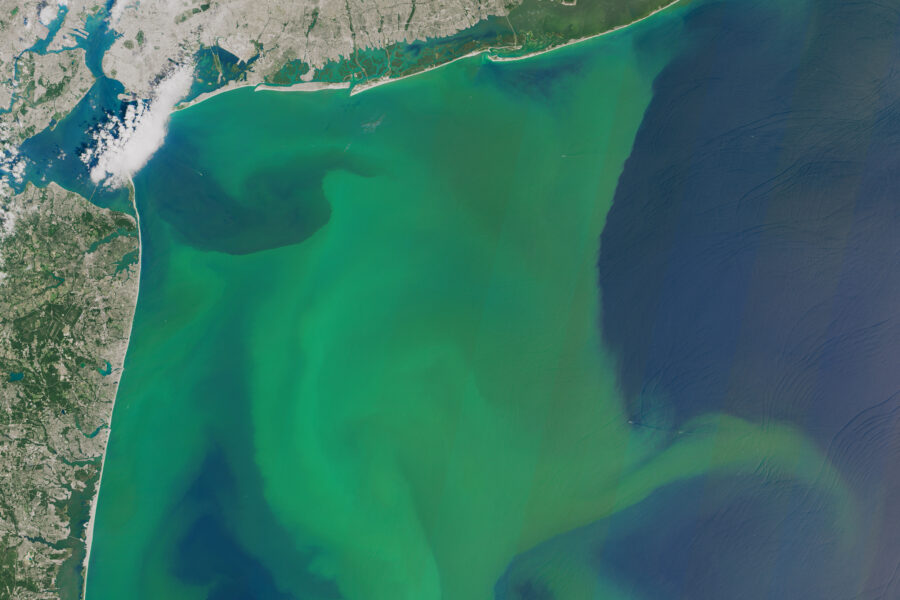
A phytoplankton bloom off the East Coast of the United States shows how the chlorophyll produced by photosynthesis tints the ocean green. A new study finds that concentrations of plankton are declining in many ocean regions. Credit: NASA Earth Observatory
Alizee Zimmermann applies antibiotic paste to a star coral affected by Stony Coral Tissue Loss Disease in Turks and Caicos. Credit: Patricia Guardiola Slattery

Biobanking Corals: One Woman’s Mission to Save Coral Genetics in Turks and Caicos to Rebuild Reefs of the Future

By Teresa Tomassoni

Wildfires burn over the town of Lahaina as seen in the neighboring Kaanapali Alii resort on Aug. 8, 2023 in Maui, Hawaii. Credit: Gonzalo Marroquin/Getty Images

As Wildfire Season Approaches, Phytoplankton Take On Fires’ Trickiest Emissions

By Jenaye Johnson

A team of scientists work on the PACE satellite in May 2023. Credit: NASA

New NASA Mission Tracks Microscopic Organisms in the Ocean and Tiny Particles in the Air to Monitor Climate Change

By Teresa Tomassoni

Newsletters

We deliver climate news to your inbox like nobody else. Every day or once a week, our original stories and digest of the web's top headlines deliver the full story, for free.

Keep Environmental Journalism Alive

ICN provides award-winning climate coverage free of charge and advertising. We rely on donations from readers like you to keep going.

Donate Now
Inside Climate News
  • Science
  • Politics
  • Justice & Health
  • Fossil Fuels
  • Clean Energy
  • Home
  • About
  • Contact Us
  • Whistleblowers
  • Privacy Policy
  • Charity Navigator
Inside Climate News uses cookies. By continuing to use this site, you accept this policy. Learn More