Skip to content
  • Science
  • Politics
  • Justice & Health
  • Fossil Fuels
  • Clean Energy
  • ICN Local
  • Projects
  • Impact
  • About Us
Inside Climate News
Pulitzer Prize-winning, nonpartisan reporting on the biggest crisis facing our planet.
Donate
Trump 2.0: The Reckoning
Inside Climate News
Donate

Search

  • Science
  • Politics
  • Justice & Health
  • Fossil Fuels
  • Clean Energy
  • ICN Local
  • Projects
  • Impact
  • About Us
  • Newsletters
  • ICN Sunday Morning
  • Contact Us

Topics

  • A.I. & Data Centers
  • Activism
  • Arctic
  • Biodiversity & Conservation
  • Business & Finance
  • Climate Law & Liability
  • Climate Treaties
  • Denial & Misinformation
  • Environment & Health
  • Extreme Weather
  • Food & Agriculture
  • Fracking
  • Nuclear
  • Pipelines
  • Plastics
  • Public Lands
  • Regulation
  • Super-Pollutants
  • Water/Drought
  • Wildfires

Information

  • About
  • Job Openings
  • Reporting Network
  • Whistleblowers
  • Memberships
  • Ways to Give
  • Fellows & Fellowships

Publications

  • E-Books
  • Documents

seafood

Federal Law Requires US Seafood Imports to Not Threaten Marine Mammals. A Lawsuit Is Pushing the Government to Finally Act.

Bycatch is the biggest threat to whales and dolphins, but many seafood-exporting countries fail to take protective measure.

By Georgina Gustin
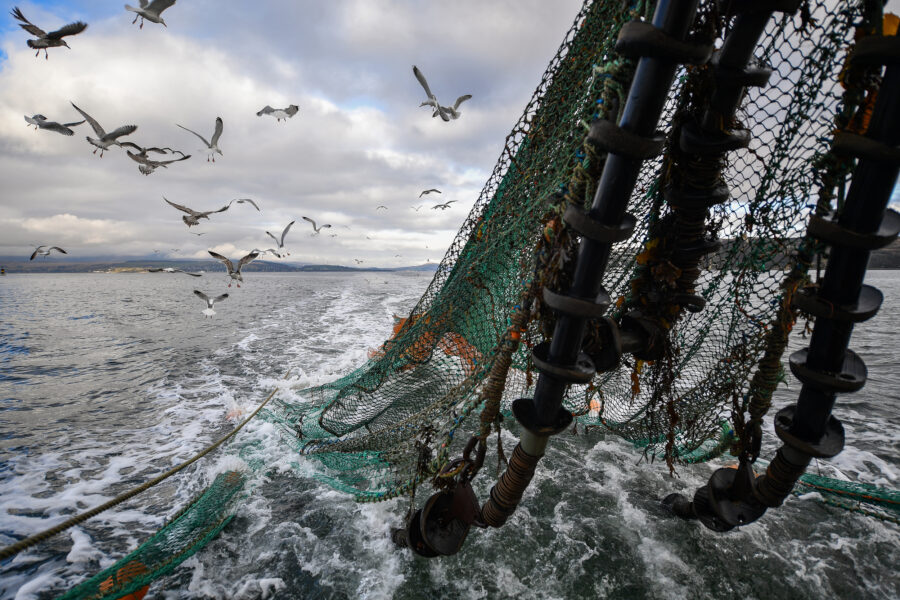
A fishing trawler drags its net through the waters near Greenock, Scotland, on March 5, 2019. Credit: Jeff J Mitchell/Getty Images
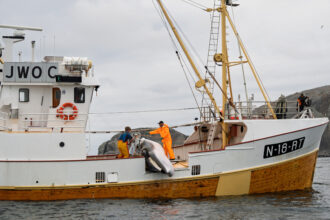
On April 1, Norway reopened its annual commercial whaling season. It is one of three countries, including Japan and Iceland, that still kill whales for profit. Credit: WDC/ESPA Hunt Monitoring 2025

Norway Reopens Annual Whale Hunt Despite Pressure to End Commercial Whaling

By Teresa Tomassoni

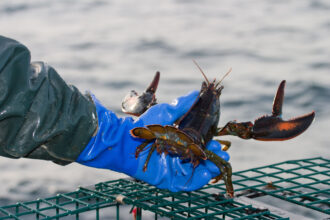
Researchers catch lobsters as part of long-term ecosystem survey in Maine. Credit: Gulf of Maine Research Institute (GMRI.org)

Warming Waters in the Gulf of Maine May Affect the Future of Lobsters

By Nicole Williams

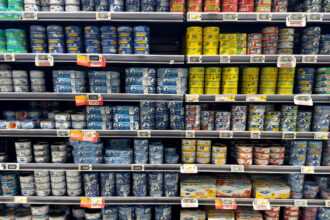
Cans of tuna, sardines, and other canned fish are displayed on a supermarket shelf in southwestern France on Jan. 16. Credit: Véronique Tournier/Hans Lucas/AFP via Getty Images

One in Five Fish Products Tied to Fraud

By Johnny Sturgeon

Commercial shrimper Ray Mallet aboard his boat, Cajun Memories, on the Calcasieu River near Cameron, La. Credit: Phil McKenna/Inside Climate News

Fishermen in Southwest Louisiana Say LNG Terminals Are to Blame for Shrimp Harvest Decline

By Phil McKenna

Freshly cleaned oysters are seen in Nova Scotia’s Chance Harbour. Credit: Molly MacNaughton/IJB

Sewage Taints Canadian Oysters. Then Americans Eat Them

By Agatha Khishchenko, Andy Lehren, Dori Seeman, Robert Cribb and Molly MacNaughton

On Feb. 24, 2018, the Argentine Coast Guard discovered the Jing Yuan 626 fishing illegally within Argentina’s EEZ. Here, an Argentine Coast Guard member watches as Jing Yuan 626 and several other foreign fishing vessels crowd around during a pursuit. Credit: Javier Giannattasio

Taking Over from the Inside: China’s Growing Reach Into Local Waters

By Ian Urbina, Pete McKenzie and Milko Schvartzman

A worker steps out of a cement-mixing truck at a cement production plant, part of Thailand's largest industrial conglomerate Siam Cement Co. Credit: Emmanuel Dunand/AFP via Getty Images

Warming Trends: Carbon-Neutral Concrete, Climate-Altered Menus and Olympic Skiing in Vanuatu

By Katelyn Weisbrod

Newsletters

We deliver climate news to your inbox like nobody else. Every day or once a week, our original stories and digest of the web's top headlines deliver the full story, for free.

Keep Environmental Journalism Alive

ICN provides award-winning climate coverage free of charge and advertising. We rely on donations from readers like you to keep going.

Donate Now
Inside Climate News
  • Science
  • Politics
  • Justice & Health
  • Fossil Fuels
  • Clean Energy
  • Home
  • About
  • Contact Us
  • Whistleblowers
  • Privacy Policy
  • Charity Navigator
Inside Climate News uses cookies. By continuing to use this site, you accept this policy. Learn More