Skip to content
  • Science
  • Politics
  • Justice & Health
  • Fossil Fuels
  • Clean Energy
  • ICN Local
  • Projects
  • Impact
  • About Us
Inside Climate News
Pulitzer Prize-winning, nonpartisan reporting on the biggest crisis facing our planet.
Donate
Trump 2.0: The Reckoning
Inside Climate News
Donate

Search

  • Science
  • Politics
  • Justice & Health
  • Fossil Fuels
  • Clean Energy
  • ICN Local
  • Projects
  • Impact
  • About Us
  • Newsletters
  • ICN Sunday Morning
  • Contact Us

Topics

  • A.I. & Data Centers
  • Activism
  • Arctic
  • Biodiversity & Conservation
  • Business & Finance
  • Climate Law & Liability
  • Climate Treaties
  • Denial & Misinformation
  • Environment & Health
  • Extreme Weather
  • Food & Agriculture
  • Fracking
  • Nuclear
  • Pipelines
  • Plastics
  • Public Lands
  • Regulation
  • Super-Pollutants
  • Water/Drought
  • Wildfires

Information

  • About
  • Job Openings
  • Reporting Network
  • Whistleblowers
  • Memberships
  • Ways to Give
  • Fellows & Fellowships

Publications

  • E-Books
  • Documents

whales

Malnourished Gray Whales of the Eastern North Pacific Are in ‘Serious Trouble’

The population has plummeted over the past seven years as climate change triggers mass starvation in warming Arctic waters.

By Blaine Harden
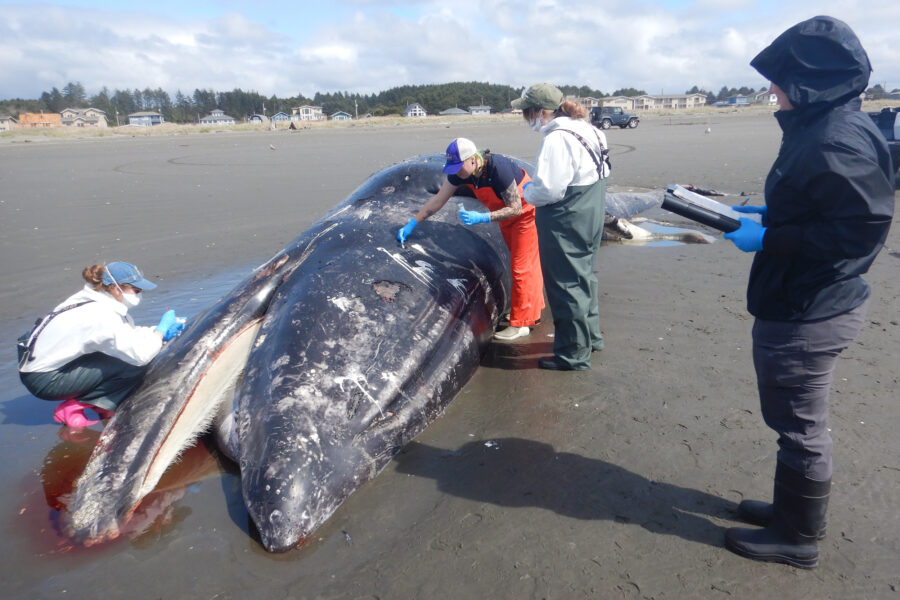
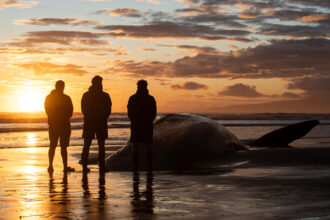
Researchers take samples from a male gray whale on a beach near Moclips, Wash., on April 11. Post-mortem showed cause of death as malnutrition and blunt force trauma, probably from colliding with a boat. Credit: Courtesy of Cascadia Research Collective
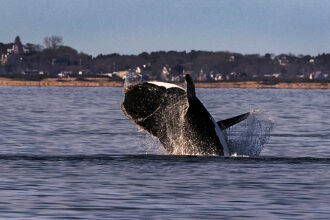
A North Atlantic right whale is seen in the waters of Cape Cod Bay, Mass. Credit: Stan Grossfeld/The Boston Globe via Getty Images

A Bit of Good News for Right Whales

Interview by Aynsley O’Neill, Living on Earth

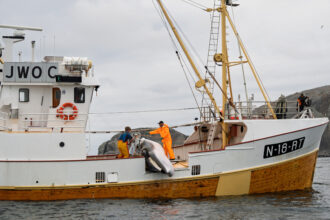
On April 1, Norway reopened its annual commercial whaling season. It is one of three countries, including Japan and Iceland, that still kill whales for profit. Credit: WDC/ESPA Hunt Monitoring 2025

Norway Reopens Annual Whale Hunt Despite Pressure to End Commercial Whaling

By Teresa Tomassoni

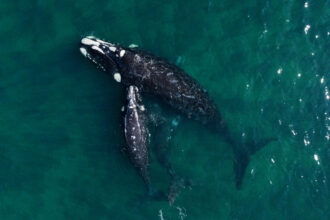
A southern right whale swims with its calves in the waters of the South Atlantic Ocean on Oct. 5, 2022. Southern right whales are no longer reproducing at normal rates due to climate-induced changes in Antarctica. Credit: Luis Robayo/AFP via Getty Images

Southern Right Whales Are Having Fewer Calves; Scientists Say a Warming Ocean Is to Blame

By Teresa Tomassoni

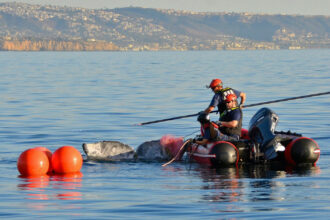
A trained team from the West Coast Large Whale Entanglement Response Program works to free an entangled gray whale off the coast of Orange County, Calif., in December 2017. Credit: West Coast Marine Mammal Stranding Network

Whale Entanglements in Fishing Gear Surge Off U.S. West Coast During Marine Heatwaves

By Teresa Tomassoni

Members of a Māori community perform “karakia” to pay their respects to the carcass of a sperm whale that washed up on the shores of New Brighton, New Zealand, on Nov. 5, 2023. Credit: Sanka Vidanagama/NurPhoto via Getty Images

How a Groundbreaking Indigenous Treaty on Whales’ Rights Could Change National Laws

By Katie Surma

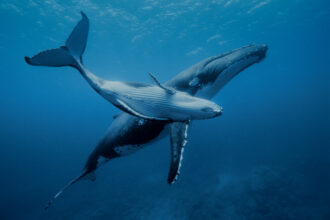
A young humpback whale swims with its mother in the warm waters of the Pacific Ocean near the island of Rurutu in the Austral archipelago of French Polynesia. Credit: Alexis Rosenfeld/Getty Images

How a ‘Powerful Vision’ on Whales and Oceans Could Change Worldviews

By Katie Surma

For 33 hours, Elissa Phillips and Anahita Sahar Babaei locked themselves into the crow’s nests of a whaling ship, as dozens of supporters gathered to protest whaling in Iceland on Sept. 4, 2023. Credit: Hard to Port

Peaceful Protest Against Whaling in Iceland Lands Two Activists in Court

By Teresa Tomassoni

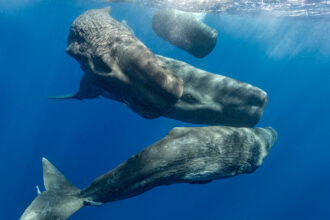
Sperm whales swim near the Eastern Caribbean island of Dominica. Sperm whales are the deepest diving mammals on Earth, going as far as 3,000 meters. Credit: Amanda Cotton/CETI

AI Is Decoding Whales’ Communications. Could That Be a Turning Point in the Push for Their Rights?

By Katie Surma

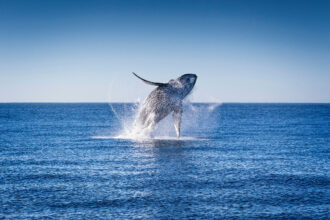
A humpback whale jumps out of the waters of the Pacific Ocean near Cabo San Lucas, Mexico. Credit: Alfredo Martinez/Getty Images

Whale and Dolphin Migrations are Being Disrupted by Climate Change

By Teresa Tomassoni

An AI-generated humpback whale (left) is seen next to an actual photo of a humpback whale. This hyperrealistic duplicate shows how far generative AI has come, experts say. Credit: Duke MaRRS Lab

Could These ‘Deepfake’ Whales Aid Conservation Efforts?

By Kiley Price

U.S. Bans on Certain Foreign Fish Imports Could Help Conserve Marine Mammals Worldwide, Experts Say

By Kiley Price

A humpback whale feeds on Antarctic krill in Fournier Bay of the Antarctic Peninsula. Credit: Chris Johnson/WWF-AUS

Charting Whale ‘Superhighways’ for Conservation

By Teresa Tomassoni

Gentoo penguins on Cuverville Island in the western Antarctic. Like seals and whales, they eat krill, an inch-long shrimp-like crustacean that forms the basis of the Southern Ocean food chain. But penguin-watchers say the krill are getting scarcer in the western Antarctic peninsula, under threat from climate change and fishing. Credit: Eitan Abramovich/AFP via Getty Images

Record Krill Catch Prompts Early End to Fishing Season in Antarctica and Growing Calls to Protect its Fragile Ecosystems

By Teresa Tomassoni

Changes in Nature’s Symphony Can Reflect Climate Impacts

By Kiley Price

Tourists snorkel next to a whale shark in a protected area at Bahía de La Paz on January 25, 2021, in La Paz, Mexico. Credit: Alfredo Martinez/Getty Images

Marine Tourism in Mexico Remains Damaging to Wildlife Despite Regulations, Research Finds

By Andrés Muedano

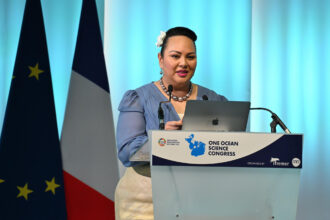
Princess Angelika Lātūfuipeka Tukuʻaho from the Kingdom of Tonga speaks at the One Ocean Science Congress on June 4 ahead of the U.N. Ocean Conference in Nice, France. Credit: Stephane Lesbats/Ifremer

Tonga Poised to Be the First Country to Recognize Rights of Whales

By Katie Surma

Staff at the International Bird Rescue in Los Angeles examine a sick brown pelican suffering from domoic acid poisoning. Credit: Ariana-Gastelum, courtesy of the International Bird Rescue

California Toxic Algal Bloom Blamed for Months-long Marine Life Poisoning

By Teresa Tomassoni

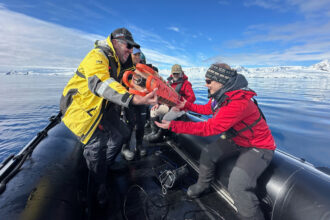
Tudor Morgan, with HX Expeditions, passes a recording device called a SoundTrap to Heidi Ahonen, a bioacoustician who has launched the first long-term project to monitor whales in the Gerlache Strait using passive acoustic monitoring. Credit: Teresa Tomassoni/Inside Climate News

Listening for Whale Sounds 1,000 feet Deep in the Antarctic Ocean

By Teresa Tomassoni

Posts pagination

1 2 Next

Newsletters

We deliver climate news to your inbox like nobody else. Every day or once a week, our original stories and digest of the web's top headlines deliver the full story, for free.

Keep Environmental Journalism Alive

ICN provides award-winning climate coverage free of charge and advertising. We rely on donations from readers like you to keep going.

Donate Now
Inside Climate News
  • Science
  • Politics
  • Justice & Health
  • Fossil Fuels
  • Clean Energy
  • Home
  • About
  • Contact Us
  • Whistleblowers
  • Privacy Policy
  • Charity Navigator
Inside Climate News uses cookies. By continuing to use this site, you accept this policy. Learn More