Skip to content
  • Science
  • Politics
  • Justice & Health
  • Fossil Fuels
  • Clean Energy
  • ICN Local
  • Projects
  • About Us
Inside Climate News
Pulitzer Prize-winning, nonpartisan reporting on the biggest crisis facing our planet.
Donate
Trump 2.0: The Reckoning
Inside Climate News
Donate

Search

  • Science
  • Politics
  • Justice & Health
  • Fossil Fuels
  • Clean Energy
  • ICN Local
  • Projects
  • About Us
  • Newsletters
  • ICN Sunday Morning
  • Contact Us

Topics

  • A.I. & Data Centers
  • Activism
  • Arctic
  • Biodiversity & Conservation
  • Business & Finance
  • Climate Law & Liability
  • Climate Treaties
  • Denial & Misinformation
  • Environment & Health
  • Extreme Weather
  • Food & Agriculture
  • Fracking
  • Nuclear
  • Pipelines
  • Plastics
  • Public Lands
  • Regulation
  • Super-Pollutants
  • Water/Drought
  • Wildfires

Information

  • About
  • Job Openings
  • Reporting Network
  • Whistleblowers
  • Memberships
  • Ways to Give
  • Fellows & Fellowships

Publications

  • E-Books
  • Documents

Oceans

Fish swim underwater at the North Seymour Island dive site in the Galapagos archipelago, Ecuador. Credit: Ernesto Benavides/AFP via Getty Images

A Turning Point for the Ocean: What the High Seas Treaty Means

By Teresa Tomassoni
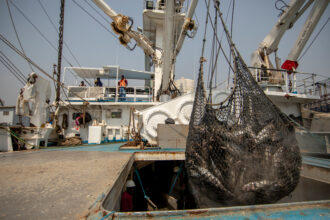
Freshly caught tuna are offloaded from the hold of a fishing vessel in Ghana’s Port of Tema. Credit: Kyle LaFerriere/WWF-US

Human Impacts on Ocean Could Double or Triple by 2050, a New UC Santa Barbara Study Warns

By Teresa Tomassoni
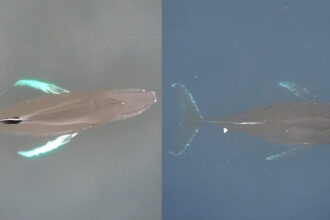
An AI-generated humpback whale (left) is seen next to an actual photo of a humpback whale. This hyperrealistic duplicate shows how far generative AI has come, experts say. Credit: Duke MaRRS Lab

Could These ‘Deepfake’ Whales Aid Conservation Efforts?

By Kiley Price
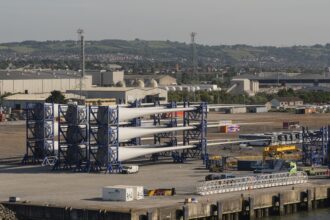
At Climate Week NYC, an official said the United Kingdom would expand offshore wind as part of its national climate action plan. Here, in Belfast, Norther Ireland, wind turbine blades are assembled in Belfast Harbor. Credit: Peter Titmuss/UCG/ Universal Images Group via Getty Images

At Climate Week, Chile and the UK Commit to Ocean-Based Action Plans Ahead of COP30

By Teresa Tomassoni
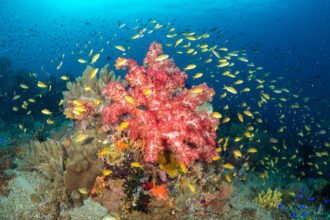
More than 500 reef building coral species are found around Panaon Island, recently designated by the Phillipine government as a protected seascape. Credit: Danny Ocampo/Oceana Philippines

In the Philippines, a New Protected Seascape Safeguards ‘Super Reefs’

By Teresa Tomassoni
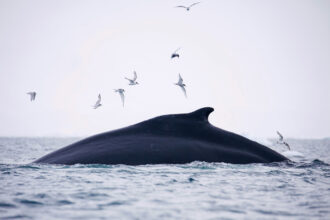
A humpback whale feeds on Antarctic krill in Fournier Bay of the Antarctic Peninsula. Credit: Chris Johnson/WWF-AUS

Charting Whale ‘Superhighways’ for Conservation

By Teresa Tomassoni
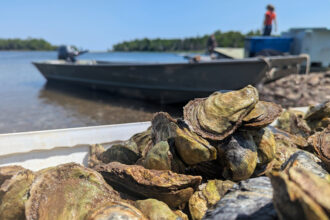
Freshly cleaned oysters are seen in Nova Scotia’s Chance Harbour. Credit: Molly MacNaughton/IJB

Sewage Taints Canadian Oysters. Then Americans Eat Them

By Agatha Khishchenko, Andy Lehren, Dori Seeman, Robert Cribb and Molly MacNaughton

Woods Hole researchers, Adam Subhas (left) and Chris Murray, conducted a series of lab experiments earlier this year to test the impact of an alkaline substance, known as sodium hydroxide, on copepods in the Gulf of Maine. Credit: Daniel Hentz/Woods Hole Oceanographic Institution

Can We Alter the Ocean to Counter Climate Change Faster? This Experiment Aims to Find Out

By Teresa Tomassoni

Gentoo penguins on Cuverville Island in the western Antarctic. Like seals and whales, they eat krill, an inch-long shrimp-like crustacean that forms the basis of the Southern Ocean food chain. But penguin-watchers say the krill are getting scarcer in the western Antarctic peninsula, under threat from climate change and fishing. Credit: Eitan Abramovich/AFP via Getty Images

Record Krill Catch Prompts Early End to Fishing Season in Antarctica and Growing Calls to Protect its Fragile Ecosystems

By Teresa Tomassoni

Researcher Alyssa Gehman from the Hakai Institute counts and measures sunflower sea stars in Burke Channel on the Central Coast of British Columbia. Credit: Bennett Whitnell/Hakai Institute

Scientists Pinpoint Cause of Massive Sea Star Die-Offs, and Suspect a Link to Global Warming 

By Bob Berwyn

Tourists snorkel next to a whale shark in a protected area at Bahía de La Paz on January 25, 2021, in La Paz, Mexico. Credit: Alfredo Martinez/Getty Images

Marine Tourism in Mexico Remains Damaging to Wildlife Despite Regulations, Research Finds

By Andrés Muedano

The deep-sea mining vessel “Hidden Gem,” owned by AllSeas and commissioned by The Metals Co., is seen anchored at sea in Labuan, Malaysia. Credit: Jurnasyanto Sukarno/Greenpeace

Nations Denounce Deep Sea Mining Company’s Bid to Exploit Metals in the Pacific Under US Law

By Teresa Tomassoni

Global leaders are gathered in Kingston, Jamaica, for several weeks this month to debate a set of regulations that would govern future deep sea mining activities. Credit: Andrés Felipe Carvajal Gómez for IISD/ENB

Deep Sea Mining Negotiations Resume Amid Industry Pushback and Environmental Alarm

By Teresa Tomassoni

A green sea turtle rests in the Galapagos. Credit: Carlos Espinosa/Charles Darwin Foundation

At UN Ocean Conference, Nations and Funders Seek to Create and Expand Large-Scale Marine Protected Areas

By Teresa Tomassoni

A crew works to construc a sea wall to reduce the risk of coastal flooding and erosion due to sea level rise on March 4 in La Baule, France. Credit: Loic Venance/AFP via Getty Images

New Climate Study Highlights Dire Sea Level Warnings

By Bob Berwyn

Costa Rica President Rodrigo Chaves Robles speaks at the U.N. Ocean Conference on June 9 in Nice, France. Credit: IISD/ENB - Kiara Worth

‘We’ve Treated it as a Global Waste Dump’: Costa Rica’s President Calls for Action on the Ocean

By Teresa Tomassoni

Princess Angelika Lātūfuipeka Tukuʻaho from the Kingdom of Tonga speaks at the One Ocean Science Congress on June 4 ahead of the U.N. Ocean Conference in Nice, France. Credit: Stephane Lesbats/Ifremer

Tonga Poised to Be the First Country to Recognize Rights of Whales

By Katie Surma

A woman stands with a bucket of mussels in front of the sea at Magoito Beach in Portugal. Credit: Patricia De Melo Moreira/AFP via Getty Images

The World’s Oceans Are a ‘Ticking Time Bomb,’ Reaching Dangerous Acidification Levels  Earlier Than Scientists Thought

By Georgina Gustin

Posts pagination

Prev 1 2 3 4 … 8 Next

Newsletters

We deliver climate news to your inbox like nobody else. Every day or once a week, our original stories and digest of the web's top headlines deliver the full story, for free.

Keep Environmental Journalism Alive

ICN provides award-winning climate coverage free of charge and advertising. We rely on donations from readers like you to keep going.

Donate Now
Inside Climate News
  • Science
  • Politics
  • Justice & Health
  • Fossil Fuels
  • Clean Energy
  • Home
  • About
  • Contact Us
  • Whistleblowers
  • Privacy Policy
  • Charity Navigator
Inside Climate News uses cookies. By continuing to use this site, you accept this policy. Learn More