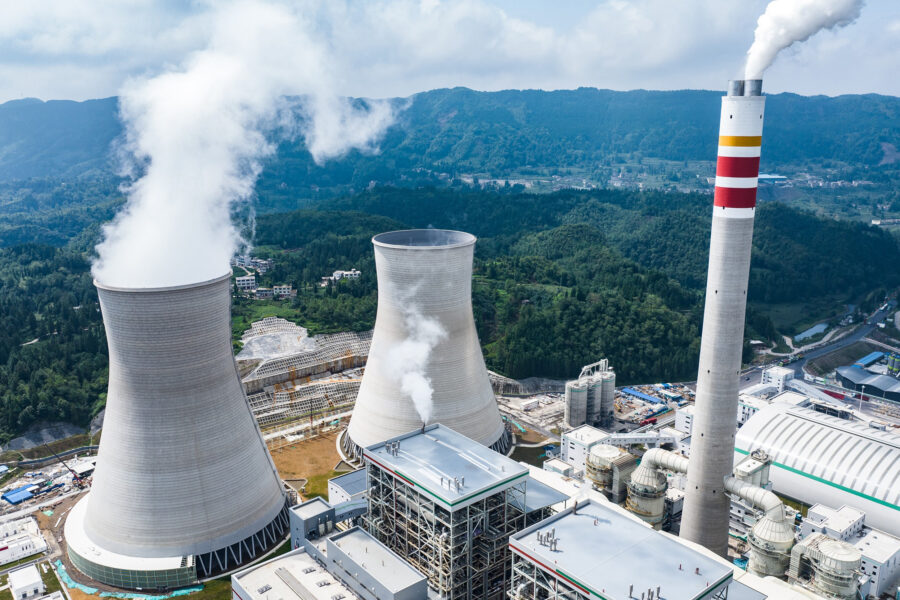
Just about every agency in Canada has expressed alarm about water use in the tar sands.
The Petroleum Technology Alliance of Canada, a Calgary-based nonprofit research group, declares water use and reuse to be the region’s biggest issue, because “bitumen production can be much more fresh water intensive than other oil production operations.”
The National Energy Board, no radical group, has questioned the sustainability of water withdrawals for bitumen mining.
The World Wildlife Fund warns that warming temperatures “will significantly reduce both water quality and water quantity in the region.”
Downstream users are already sounding alarm bells about water quality.
“Everybody is convinced that the oil sands is having an impact on the basin,” says Michael Miltenberger, minister of environment and natural resources for the government of the Northwest Territories. “We have tremendous concerns in terms of the pace of development and contamination issues. What happens on the Athabasca affects people as far away as Inuvik.”
The open-pit mines that scar the banks of the Athabasca River north of Fort McMurray are water consumers as formidable as California irrigation projects.
Shell’s Albian Sands project will not only destroy 31,000 acres of water-conserving forest and wetlands but drink nearly 1.9 billion cubic feet of water a year from the Athabasca River.
In addition to trashing 320 acres of fish habitat along the Muskeg and Firebag rivers, Imperial’s Kearl project will suck up another 3.7 billion cubic feet from the Athabasca River (2.3 per cent of the river’s flow) as well as 317 million cubic feet of groundwater. Kearl will also destroy enough forest, fens, bogs, and wetlands to cover twenty thousand football fields.
CRNL’s Horizon mine, in addition to destroying much of the Tar River and its tributaries, the Calumet River and its tributaries, a tributary to the Pierre River, an unnamed tributary to the Athabasca, and an unnamed lake, will suck up 3.2 billion cubic feet of water from the Athabasca River. The mine will also reduce groundwater flow into the river by a million cubic feet a day.

Bitumen is one of the most water-intensive hydrocarbons on the planet. (Shale oil is a close second. Colorado shale-oil developments proposed by Shell and Exxon, for example, will use as much water as the tar sands and already threaten what’s left of the depleted Colorado River.) On average, the open-pit mines require twelve barrels of water to make one barrel of molasses-like bitumen.
Most of the water is needed for a hot-water process (similar to that of a giant washing machine) that separates the hydrocarbons from sand and clay. Although companies such as Syncrude recycle their water as many as eighteen times, every barrel of bitumen consumes a net average of three barrels of potable water. Given that the industry produces one million barrels of bitumen a day, the tar sands industry virtually exports three million barrels of
water from the Athabasca River daily
The tar sands industry accounts for more than 76 percent of the water allocations on the Athabasca River. Current permits allow industry to suck out 2.3 billion barrels of fresh water a year, enough to supply two cities the size of Calgary. Planned expansions could bring the total to 3.3 billion barrels per year, a volume Natural Resources Canada admits “would not be sustainable because the Athabasca River does not have sufficient flows.”
For nearly a decade, scientists, as well as environmental and Aboriginal groups, have asked the government to study how these city-scale withdrawals are impacting the river’s health and instream flows. To date, nobody can say with any certainty whether the province’s promiscuous permission-granting has left enough water in the Athabasca for the fish.
In the wintertime, water levels drop so low that by 2015 industry will be withdrawing more than 12 percent of the river’s flow.
Investing in Our Future, a scathing report on rapid oil sands development by Doug Radke, a former deputy minister of the environment, confirmed the depth of fundamental government neglect in February 2007.
The candid document acknowledged that the Alberta government didn’t have the capacity to properly review environmental impact assessments on tar sands projects and defined the province’s ability to enforce environmental regulations as “inadequate.” The study also characterized cumulative-effects planning in the tar sands as “unclear, outdated and incomplete.”
It concluded:
The Athabasca River “may not have sufficient flows to meet the needs of all the planned mining operations and maintain adequate instream flows.”
Three months later, Alberta Environment and the federal Department of Fisheries and Oceans finally produced an interim framework for the Athabasca River: The plan gives the province until 2010 to figure out if the industry permits it’s issued have left enough water in the river to sustain fish.
In the meantime, the provincial plan works like a primitive stoplight. Green-light conditions allow industry to withdraw up to 15 percent of the Athabasca’s flow; a yellow light encourages industry to proceed with caution by reducing water consumption to 10 percent of flow; and a red light, or fish-killing zone, restricts allocations further. But even during a drought, industry will get enough water to fill fifty bathtubs per second.
Bitumen, in other words, comes before fish.
David Schindler, one of the world’s foremost water ecologists, published a reality check on industry’s water addiction for the Program on Water Issues at the University of Toronto and the University of Alberta’s Environmental Research and Study Centre. The findings were shocking. Net water runoff in the summer and winter months, when the Athabasca River is most vulnerable, had declined by 30 percent since 1971 due to climate change and could drop to as low as 50 percent by 2050. The report said:
“The declines in winter flows are as if someone had added an oil sands plant to the river every two years.”
Schindler, who supports a moratorium on future projects, believes that climate change and industry’s escalating demand for water are on a hellish collision course. He reckons that both the Alberta government and Canada’s federal government have failed to collect the necessary data for calculating how much water is required to feed the marshes and wetlands of the Athabasca Delta, let alone to keep fish alive.
When Schindler delivered these startling findings to a select audience at the University of Alberta in Edmonton in May 2007, neither industry leaders nor the ERCB attended his talk.
“It was telling,” Schindler said. "Industry is so smug that they can do what they want that they don’t want to know what they are doing to the environment.”
Not all industry players have been so oblivious.
Suncor, the first enterprise in the sands, has reduced its water consumption by 30 percent in the last two years. “We are flipping the paradigm from the myth of water abundance to the reality of water scarcity,” says Gord Lambert, Suncor’s vice-president of sustainable development. John Robertson, a senior manager with global engineering giant CH2M Hill, adds, “With pressure on water in northern Alberta, one thing is for sure: the industry will have to spend hundreds of millions in the next few years to treat and reuse water.”
If water shortages occur, industry and government have limited courses of action.

Companies can reduce water consumption or build upstream, off-site storage for water taken from the Athasbasca during high spring flows. (After consultation with David Schindler, at least one CEO ordered his company to build an extra 30-day storage facility.) The government could also limit or shut down bitumen production altogether.
Another Tar Sands Water Guzzler: SAGD
City-sized open-pit mines will soon be eclipsed by another water hog in the tar sands: in situ production.
About 80 percent of all bitumen deposits lie so deep under the forest that industry must melt them into black syrup with technologies such as steam-assisted gravity drainage (SAGD). Twenty-five SAGD projects worth nearly $80 billion could produce four million barrels of bitumen a day by 2020 and easily surpass mine production. But as Robert Watson, president of Giant Grosmont Petroleum Ltd., warned in 2003 at a regulatory hearing: “SAGD is not sustainable.”
Although industry spin doctors calculate that it takes about one barrel of raw water (most from deep salty aquifers) to produce four barrels of bitumen, most SAGD engineers admit to much higher water-to-bitumen ratios. Actually, SAGD could be removing as much water from underground aquifers as the mines are withdrawing from the Athabasca River within a decade.
Due to spectacular growth in SAGD (nearly $4 billion worth of construction a year until 2015), Alberta Environment can no longer accurately predict industry’s water needs.
“SAGD is just as big a problem as the mines, and it’s not going away. We don’t have a plan or strategy for it other than reducing water usage as fast as possible,” says Bruce Peachey, president of Edmonton-based New Paradigm Engineering and one of Alberta’s most clear-headed analysts.
[Read Chapter 5: The Water Barrons for the full discussion of SAGD’s development and problems]
Only a nation without a water policy could allow such rapid development of the tar sands in the world’s third-largest water basin. (Only the Amazon and the Mississippi beat out the Mackenzie watershed in size.) Canada is not only without a water strategy; it collects little groundwater data and has one of the industrial world’s poorest freshwater
monitoring programs.
It’s not as though Ottawa doesn’t understand the scale of its neglect. Classified government documents obtained by Ottawa public-interest researcher Ken Rubin confirm “that the absence of a common strategic federal vision for freshwater” is a “limiting factor for ensuring the long-term sustainable development of the resource.”
Statistics Canada reported in 2007 on the nation’s Third World water state: 23 percent of Canada’s waterways can no longer support aquatic life, due to phosphorous, nitrogen, and ammonia pollution.
Alberta’s water record is just as dismal. After over-allocating resources in every major watershed in drought-prone southern Alberta, the province reluctantly closed the South Saskatchewan River basin three years ago, due to fish kills and declining river health. It seems poised to repeat the same mistake on the Athabasca.
Brad Stelfox, a prominent land-use ecologist who works for both industry and government, notes that a century ago all water in Alberta was drinkable.
“Three generations later all water is non-potable and must be chemically treated,” he points out. “Is that sustainable?”
These are excerpts from Tar Sands: Dirty Oil and the Future of a Continent, reprinted with permission. The author continues the discussion tomorrow.
See also:
Canada’s Tar Sands, America’s Problem
CCS Can’t Make the Tar Sands Clean
Canada’s Montaintop Mining: The Tar Sands
Alberta Tar Sands to Poison U.S. Great Lakes Region, Too
Tar Sands: If You Have Tears, Prepare To Shed Them Now
About This Story
Perhaps you noticed: This story, like all the news we publish, is free to read. That’s because Inside Climate News is a 501c3 nonprofit organization. We do not charge a subscription fee, lock our news behind a paywall, or clutter our website with ads. We make our news on climate and the environment freely available to you and anyone who wants it.
That’s not all. We also share our news for free with scores of other media organizations around the country. Many of them can’t afford to do environmental journalism of their own. We’ve built bureaus from coast to coast to report local stories, collaborate with local newsrooms and co-publish articles so that this vital work is shared as widely as possible.
Two of us launched ICN in 2007. Six years later we earned a Pulitzer Prize for National Reporting, and now we run the oldest and largest dedicated climate newsroom in the nation. We tell the story in all its complexity. We hold polluters accountable. We expose environmental injustice. We debunk misinformation. We scrutinize solutions and inspire action.
Donations from readers like you fund every aspect of what we do. If you don’t already, will you support our ongoing work, our reporting on the biggest crisis facing our planet, and help us reach even more readers in more places?
Please take a moment to make a tax-deductible donation. Every one of them makes a difference.
Thank you,