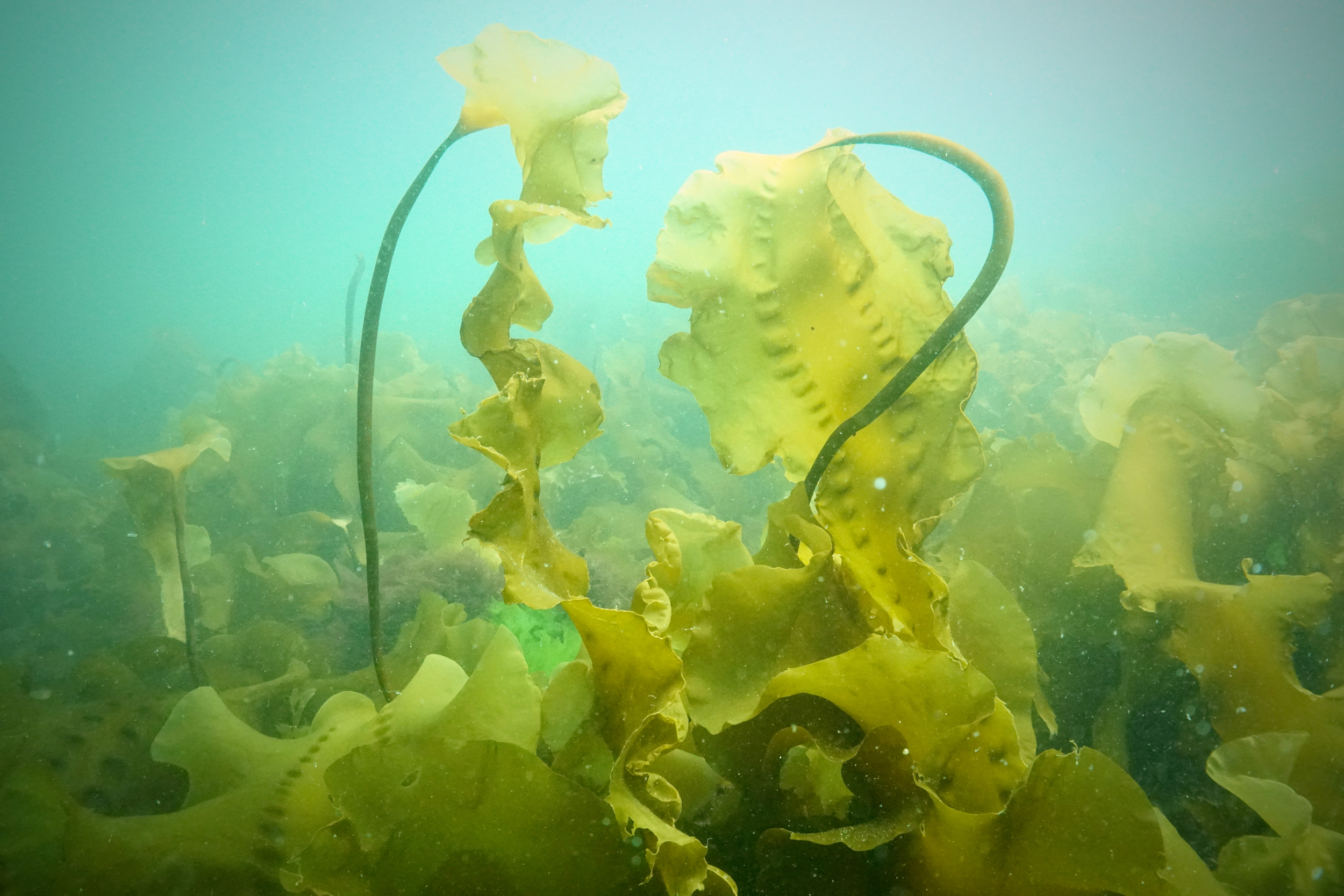


Shane Farrell has spent the better part of the last three years underwater, diving off the coast of Maine. The University of Maine Ph.D. student and his team at the Bigelow Laboratory for Ocean Sciences are surveying the rapid decline of kelp forests in the warming waters.
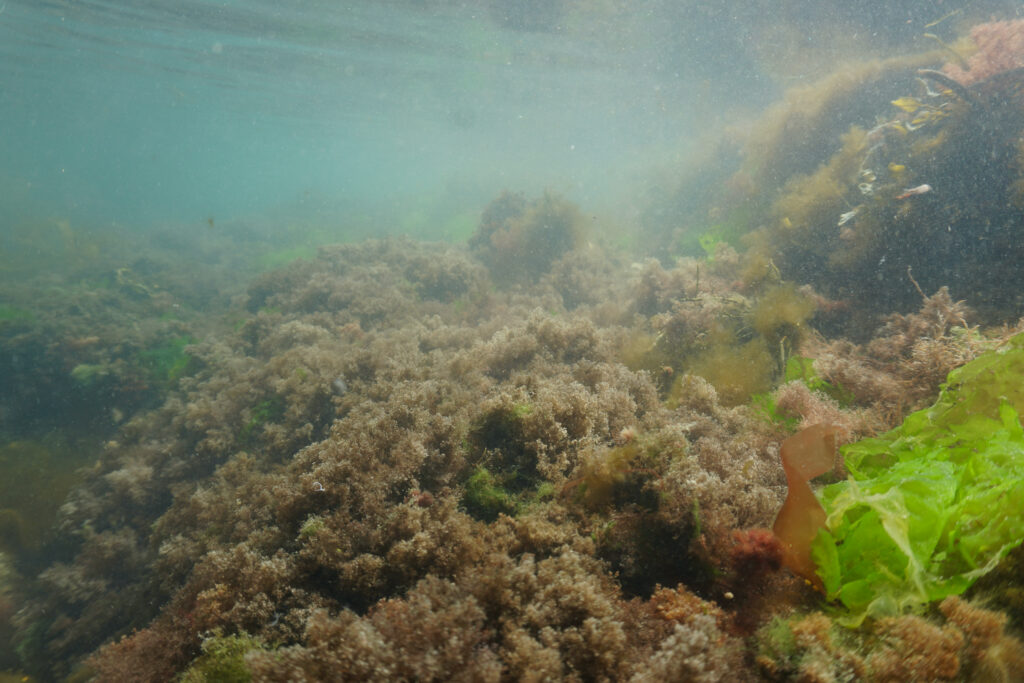
While the marine heatwaves killing the kelp ecosystem were alarming on their own, the researchers have discovered a new threat—the rise in red turf algae, a filamentous invasive species—that is taking over the place of the kelp that has collapsed from the heat.
The team published its findings in a recent study published in Science, stating that the predatory algae were releasing waterborne, allelopathic chemicals into the water that were preventing the regeneration of juvenile or baby kelp. These molecules were specifically affecting the gametophyte phase—when the kelp reproduces to produce gametes—which is particularly important for their recruitment and survival on the reefs.
“What was most shocking was that the types of chemicals found in the study are also found behind the lack of recovery in certain coral reefs and tropical rainforests,” Farrell said, alluding to the bigger impact of these invasive species.
One of the most abundant varieties of the red algae originally came from Asia. Doug Rasher, a senior research scientist heading Bigelow’s Rasher Lab, where Farrell works, points out that the warming waters of this part of the North Atlantic match the temperature of the red algae’s native habitat, which is why the algae does well compared to kelps, which are a cold-water species. Through underwater surveys and laboratory experiments, the team found the warming water to have helped the proliferation of the red algae.
Even though they span all the way from Canada to certain regions of Massachusetts, the kelp forests are a foundational fixture on Maine’s coasts. The state remains one of the largest homes for this ecosystem on the East Coast. However, between 2004 and 2018, southern Maine experienced an 80 percent decline in kelp cover, mainly because the south is one of the warmest regions on the coast.
“This transition from kelp to turf algae is not just happening here in Maine. It’s happening in places of rapid ocean warming around the world,” Farrell said.
However, this is far from the only threat the kelp faces. A host of environmental and biological stressors continue to thwart the survival and regeneration of kelp, putting the alarming numbers about the steady decline in perspective. For instance, the sea urchin remains one of the main reasons for the decimation of abundant kelp cover in the country. “Sea urchins are locusts, they crawl across the substrate [and act as] underwater lawn mowers—they eat everything in their path,” said Jon Witman, a marine biologist who has taught at Brown University and spent most of his research life studying marine food webs across the Gulf of Maine, Galapagos Islands and the reefs of Easter Island.
Witman also said storm surges can destroy the kelp forests, with intense hurricanes uprooting and tossing up the fronds. When he was conducting his Ph.D. research in Maine, he remembers tens of thousands of plants washing ashore after a storm.
Such extreme weather events are known to leave dead corals, kelp and fish in their wake. But with climate change, such events are becoming more frequent and intense. In 2024 alone, the country has faced 27 extreme weather events ranging from heatwaves and droughts to severe and tropical storms.
Scientists have predicted that by the end of the century, the world might potentially warm by 2.3 degrees C to 2.5 degrees C, leading to a surge in extreme weather events.
A map measuring marine heatwaves in the United States between 1982 and 2023 found that they have increased in intensity and duration. The Gulf of Maine in the last three decades has warmed at a rate of 0.06 degrees Celsius per year (0.11 degrees Fahrenheit), which is three times more than the global average. In 2019, the region suffered a marine heatwave that continued for over a month.
The impact of this thermal stress on the kelp is a complex process. They tend to do poorly in warming waters and begin to disintegrate when temperatures reach higher than 20 degrees Celsius (68 degrees Fahrenheit), Witman said.
Farrell attests to this. In the Gulf of Maine, at 16.5 degrees Celsius (62 degrees Fahrenheit), he says the kelp start to erode from the very tip of the plant, which limits the plant’s ability to release spores, which are vital for reproduction.
This makes Farrell concerned for the aquaculture industry. “[The kelp farmers] rely on wild kelp beds for their seed, and use the reproductive tissue of these kelp and use their spores to grow for seed,” he said. The loss of kelp can affect the seed bank and, in turn, the kelp aquaculture industry in Maine, which is leading kelp farming in the country.
Rasher’s team also found that two common or widespread fish species depend heavily on kelp forests, getting most of their energy from kelp. This is not to say the fish are herbivores directly feeding on the kelp, Rasher said, Instead, they benefit from a chain of interactions that move kelp-derived carbon up the food web and into their tissues. “[Before this study], people didn’t know that Maine’s kelp forests play an important role in creating energy that fuels the nearshore food web,” he added.
As kelp has been a viable habitat and nutrient deposit for fishes, their escalating loss can reduce the abundance of reef fish and potentially impact local fisheries, which has happened in California. But the authors don’t know just yet how this would play out for Maine’s fisheries.
Soon, however, they intend to tease out what the cascading impacts of the red turf algae invasion will mean for the state’s most economically viable crustacean—the lobster.
“Physical removal of invasive algae like Caulerpa in the Mediterranean does work with a lot of effort, but those plants are large and easy to target, compared to red algal turf, which is filamentous,” Witman said, which means one cannot really grab and pull it off the bottom, as a method of controlling it.
Rasher emphasized the need for more research into the long-term resilience of kelp forests. If the goal is to bring the kelp forests back, he said, improving the receptivity of reefs would involve not only getting rid of the turf algae but also identifying kelp cultivars that can withstand the warming ocean temperatures.
The research received funding from the National Science Foundation and the National Oceanic and Atmospheric Administration, both of which have undergone significant reductions in their funding during President Donald Trump’s second term. The cuts will reverberate across labs such as Rasher’s, which depended on the organizations to sustain their cutting-edge research.
However, Rasher is not deterred. He said his lab is further diversifying its funding sources by seeking foundational and philanthropic support, in addition to federal support.
About This Story
Perhaps you noticed: This story, like all the news we publish, is free to read. That’s because Inside Climate News is a 501c3 nonprofit organization. We do not charge a subscription fee, lock our news behind a paywall, or clutter our website with ads. We make our news on climate and the environment freely available to you and anyone who wants it.
That’s not all. We also share our news for free with scores of other media organizations around the country. Many of them can’t afford to do environmental journalism of their own. We’ve built bureaus from coast to coast to report local stories, collaborate with local newsrooms and co-publish articles so that this vital work is shared as widely as possible.
Two of us launched ICN in 2007. Six years later we earned a Pulitzer Prize for National Reporting, and now we run the oldest and largest dedicated climate newsroom in the nation. We tell the story in all its complexity. We hold polluters accountable. We expose environmental injustice. We debunk misinformation. We scrutinize solutions and inspire action.
Donations from readers like you fund every aspect of what we do. If you don’t already, will you support our ongoing work, our reporting on the biggest crisis facing our planet, and help us reach even more readers in more places?
Please take a moment to make a tax-deductible donation. Every one of them makes a difference.
Thank you,