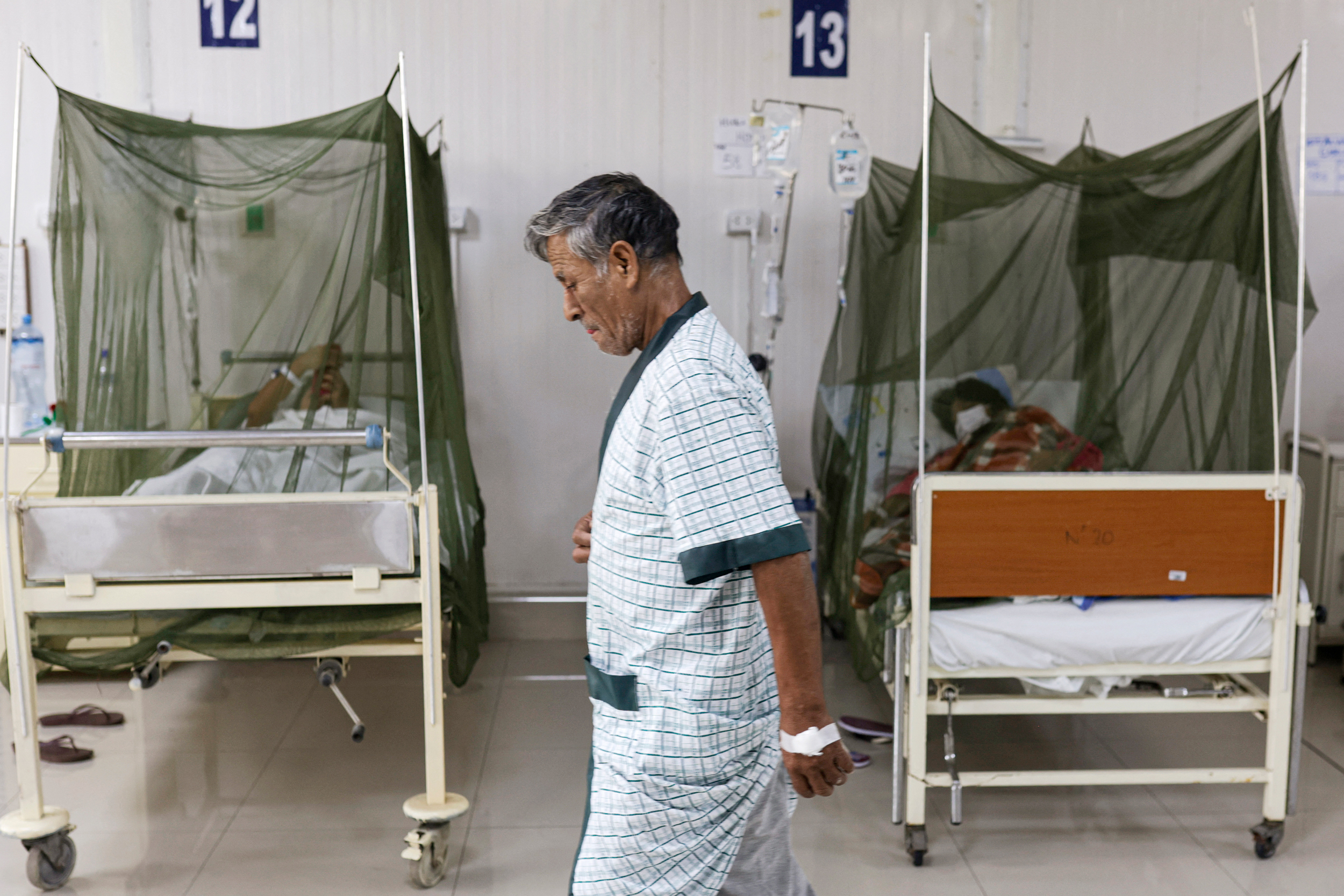


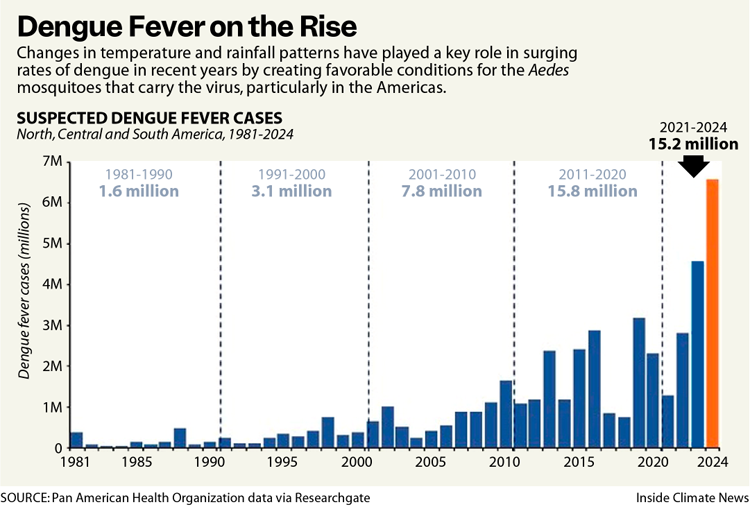
Every year, mosquitoes in mostly tropical and subtropical countries cause millions of cases of dengue fever, a virus that induces potentially lethal flu-like symptoms. Cases surged in 2019, after rising for decades, making dengue one of the World Health Organization’s top-10 global health threats and the fastest-growing mosquito-borne disease.
In 2023, 6.5 million people contracted dengue and more than 6,800 people died in what was the largest outbreak of the disease ever recorded—until the following year, when cases doubled. South America saw record outbreaks in both years, with hotspots in Brazil and Peru. Many factors may have contributed to these grim milestones, the WHO concluded, including a strong El Niño, when warmer ocean waters can trigger heavy rains and flooding in the tropics.
Now, a new study has harnessed a relatively new modeling method to determine whether the catastrophic cyclone that pummeled the normally dry northwestern coast of Peru in 2023 helped drive the historic outbreak of dengue fever that killed more than 380 people in six months. In the study, published Tuesday in the peer-reviewed journal One Earth, a team of scientists from the United States, Peru and Ecuador attributed 60 percent of dengue cases over nearly three months in the most affected regions to the relentless, torrential rains brought by Cyclone Yaku and a strong El Niño.
The study, among the first to estimate the number of mosquito-borne illness cases caused by extreme weather, suggests that climate change made those conditions more likely.
Climate change, the team concluded, “has increased the risk of warm and unusually wet conditions in northwestern Peru, which in turn caused the majority of cases during an unprecedented dengue outbreak even after controlling for region-wide increases in dengue.”
“People already thought there was a contribution of climate, but I didn’t necessarily expect it to be 60 percent (of cases),” said Mallory Harris, a postdoctoral scholar at the University of Maryland who led the research while getting her Ph.D. at Stanford University. “The magnitude did surprise me.”
More than 22,000 people likely would not have contracted dengue in the absence of the unusually extreme weather conditions, the team found. One in 4 people gets sick from dengue, typically developing a high fever, nausea, vomiting, severe headache and muscle pain. Infants, pregnant women, adults over 65 and people who’ve had dengue before face higher risk of serious illness, which can quickly lead to life-threatening internal bleeding and multi-organ failure.
The study shows that past disruptions of climatic conditions are having a measurable impact on human health, Harris said.
The northwestern coast of Peru sustained unusually heavy rains from the cyclone while there was also a strong coastal El Niño, similar to the one that hit the region in 2017, when there was also a major dengue outbreak. Since both cyclones and coastal El Niños bring extreme precipitation, Harris said, it’s difficult to distinguish their effects.
Human contributions to climate change made events like the extreme rainfall of 2017 at least one and a half times more likely, researchers reported in 2019, but no similar climate attribution study had been done for the extreme rain events of 2023 when the team started their study.
“So we ended up bringing in our own climate modelers,” Harris said.
Instead of conducting a full climate attribution study, the team asked how the likelihood of the type of extreme precipitation that can spark large dengue outbreaks changed in the region by comparing the recent era to the pre-industrial era.
“It’s a great study,” said Colin Carlson, an assistant professor of microbial diseases at Yale University School of Public Health, who was not involved in the research. Other studies have examined how a specific event, like a storm or wildfire, influences health outcomes. But until now, most of the work on dengue has focused on temperature, a major driver of outbreaks along with extreme weather, Carlson explained.
This study is the first to look at one specific infectious disease outbreak and one specific extreme weather event, he said. “It’s a big step forward for the methods of the field, and it’s a really nice proof of concept that, yes, one of the consequences of extreme weather is infectious disease outbreaks.”
A Climate Supercharged Cyclone
The torrents of rain unleashed by Cyclone Yaku and a strong coastal El Niño in 2023 led to widespread flooding and mudslides that killed scores of Peruvians, by some accounts, and destroyed homes, roads and bridges. They also created the ideal conditions for a mosquito-borne illness like dengue to flourish in this normally dry region.
But determining the cause of an outbreak is notoriously difficult. Weather, infrastructure, human behavior, mosquito biology and other factors all influence disease risk.
“We predict that it would have been one of the worst years ever for dengue, regardless. But then this cyclone, this extreme precipitation, is what really kind of supercharged it.”
— Mallory Harris, University of Maryland postdoctoral scholar
Dengue mosquitoes thrive in humid climates with frequent, heavy rains where warm temperatures hover around 84 degrees Fahrenheit. Flooding can create mosquito breeding sites in damaged infrastructure. And people and the conditions they live in can increase disease transmission, when poorly maintained buildings or destroyed water and sanitation infrastructure create spots where water collects.
To tease apart the likely influence of extreme precipitation on the dengue outbreak, the team turned to a statistical method that’s been used by infectious disease experts to evaluate how new vaccines affect case rates and by environmental epidemiologists to see how severe wildfires alter hospitalization rates.
They identified the regions with the most extreme precipitation and compared them with areas less affected by the cyclone, choosing regions with the most historically similar climate conditions before the cyclone as control groups. Then they used the method to determine what share of the outbreak could be attributed to the extraordinarily wet conditions by estimating how many cases might have occurred without the cyclone.
This story is funded by readers like you.
Our nonprofit newsroom provides award-winning climate coverage free of charge and advertising. We rely on donations from readers like you to keep going. Please donate now to support our work.
Donate Now“We predict that it would have been one of the worst years ever for dengue, regardless,” Harris said. “But then this cyclone, this extreme precipitation, is what really kind of supercharged it to where you could get this tenfold higher (case rate) than the historic average.”
The cyclone caused such widespread destruction that even the less-affected control regions likely sustained damage, Harris said. That means the analysis probably underestimated the total number of cases attributable to the saturated conditions.
Preparing for the Next Epidemic
Interestingly, just a few places accounted for the huge increase in cases while some areas affected by the cyclone actually had a slight decrease.
“Extreme precipitation is a very important part of the story, but it’s not everything,” Harris said.
Places where outbreaks occurred tended to have more urban infrastructure, greater flood susceptibility and were warmer—“closer to the temperatures where we know the mosquito transmits the best,” she said.
The findings can help public health and policy experts figure out how to develop interventions and target resources to places likely to be at greatest risk of a large outbreak after a massive storm, she added.
“Public health doesn’t have a lot of tools to control the temperature or reduce greenhouse gas emissions, but preparing for storms and preparing for infectious disease outbreaks, that’s our wheelhouse,” said Yale’s Carlson, noting that this study’s findings can be directly translated into policy.
“We can put this in the hands of clinicians and say, ‘Hey, when you have a major cyclone coming in, it’s time to really start thinking about preparing for a dengue outbreak,’ or ‘Here’s what you could do to prevent a dengue outbreak from starting,’” he said. “That’s going to be a huge thing in Latin America and the Caribbean.”
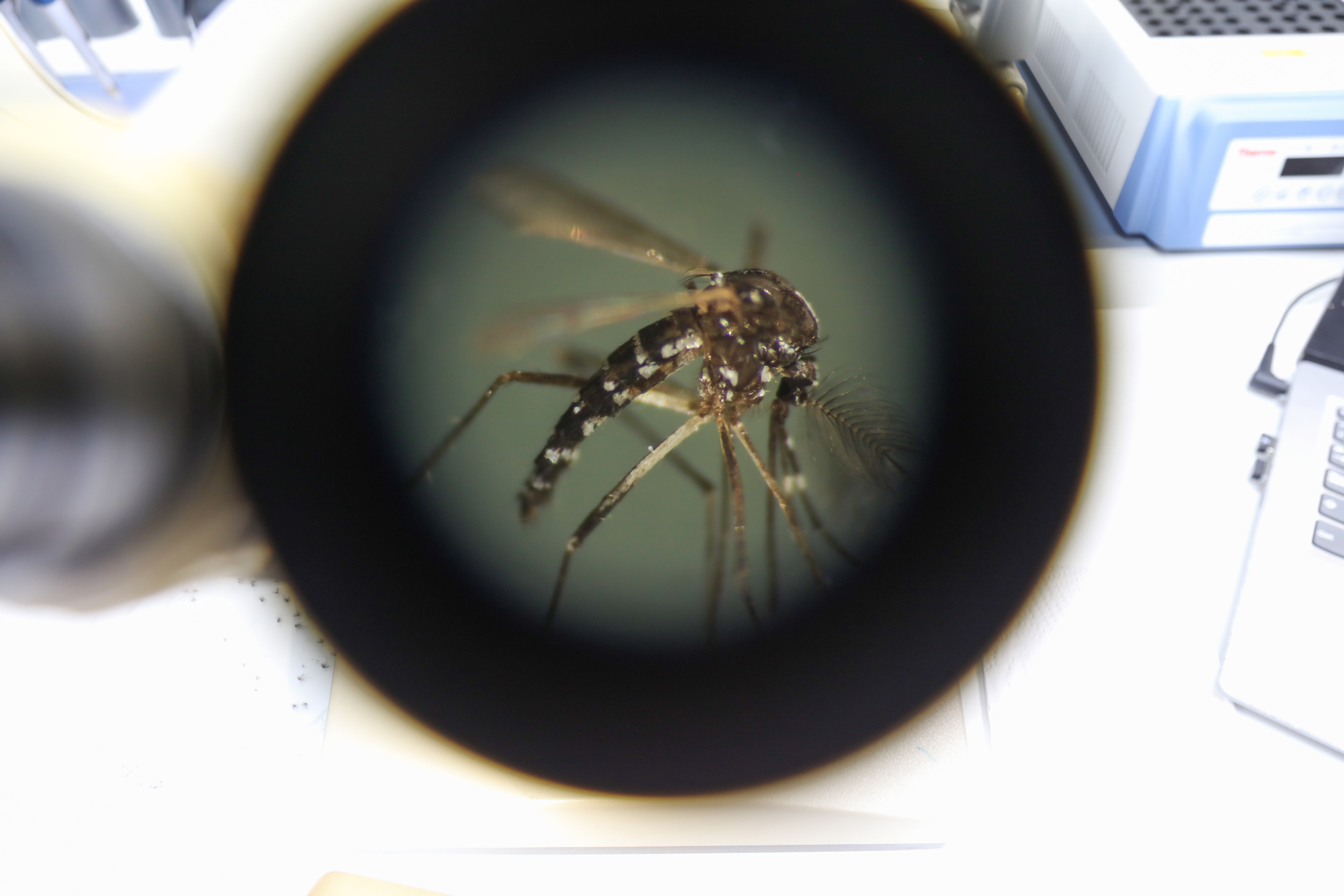
About 4 billion people live in areas vulnerable to dengue outbreaks, though the risk appears particularly high in the Americas and Southeast Asia.
“We’re headed into probably a very strong El Niño year, which means we are probably going to see some pretty major dengue outbreaks,” Carlson said. “This might even be the year that something serious happens in the U.S.”
The Centers for Disease Control and Prevention issued a health advisory in 2024, after seeing a spike in dengue cases among U.S. travelers, and the U.S. territory of Puerto Rico, where the disease is common, declared a public health emergency.
Local transmission has also been reported in California, where tuberculosis is also on the rise, as well as in Arizona, Florida, Hawaii and Texas.
Carlson is not particularly concerned about outbreaks in California, which has strong mosquito control and public health programs and even joined the WHO’s global outbreak response network after the Trump administration pulled out last year.
He thinks the threat is greater in Florida, which has the most imported cases and is likely where local transmission will become common. “I think there’s a long way to go between what we would want from political leadership in Florida and where they need to be,” Carlson said, referring to the state’s efforts to ban childhood vaccine requirements.
“We do know that climate conditions in the U.S. are becoming increasingly suitable for the mosquitoes that transmit these diseases,” Harris said. “It certainly is a concern that we could see more and more local transmission of things like dengue moving forward.”
On a positive note, getting ready for an outbreak supercharged by climate change looks the same as preparing for any other outbreak, Carlson said. It means gearing up to eliminate mosquitoes, doing surveillance, screening for cases and rolling out vaccines.
There’s a vaccine that targets all four strains of the dengue virus, which is a “huge step forward,” he said.
Even though the current administration has been gutting the programs that study, track and prevent infectious diseases, much of the wherewithal to respond to global public health threats rests with international organizations, including the WHO, the Pan American Health Organization and Gavi, which helps ensure global access to vaccines.
“If we want to be ready for climate change here or if we want to get back to a point where the U.S. has any credible reputation in global health, or climate for that matter, we have to be working with those organizations, and we have to be financing them,” Carlson said. “Every vaccine that we purchase that goes to a yellow fever outbreak or dengue outbreak makes it a little bit less likely that one of those diseases comes here.”
Being able to roll out vaccines when an outbreak starts is critical, he said. “We know this is going to be a dengue year because it’s going to be an El Niño year. Let’s get ready.”
About This Story
Perhaps you noticed: This story, like all the news we publish, is free to read. That’s because Inside Climate News is a 501c3 nonprofit organization. We do not charge a subscription fee, lock our news behind a paywall, or clutter our website with ads. We make our news on climate and the environment freely available to you and anyone who wants it.
That’s not all. We also share our news for free with scores of other media organizations around the country. Many of them can’t afford to do environmental journalism of their own. We’ve built bureaus from coast to coast to report local stories, collaborate with local newsrooms and co-publish articles so that this vital work is shared as widely as possible.
Two of us launched ICN in 2007. Six years later we earned a Pulitzer Prize for National Reporting, and now we run the oldest and largest dedicated climate newsroom in the nation. We tell the story in all its complexity. We hold polluters accountable. We expose environmental injustice. We debunk misinformation. We scrutinize solutions and inspire action.
Donations from readers like you fund every aspect of what we do. If you don’t already, will you support our ongoing work, our reporting on the biggest crisis facing our planet, and help us reach even more readers in more places?
Please take a moment to make a tax-deductible donation. Every one of them makes a difference.
Thank you,

Liza Gross
Reporter, California
Liza Gross is a reporter for Inside Climate News based in Northern California. She is the author of The Science Writers’ Investigative Reporting Handbook and a contributor to The Science Writers’ Handbook, both funded by National Association of Science Writers’ Peggy Girshman Idea Grants. She has long covered science, conservation, agriculture, public and environmental health and justice with a focus on the misuse of science for private gain. Prior to joining ICN, she worked as a part-time magazine editor for the open-access journal PLOS Biology, a reporter for the Food & Environment Reporting Network and produced freelance stories for numerous national outlets, including The New York Times, The Washington Post, Discover and Mother Jones. Her work has won awards from the Association of Health Care Journalists, American Society of Journalists and Authors, Society of Professional Journalists NorCal and Association of Food Journalists.